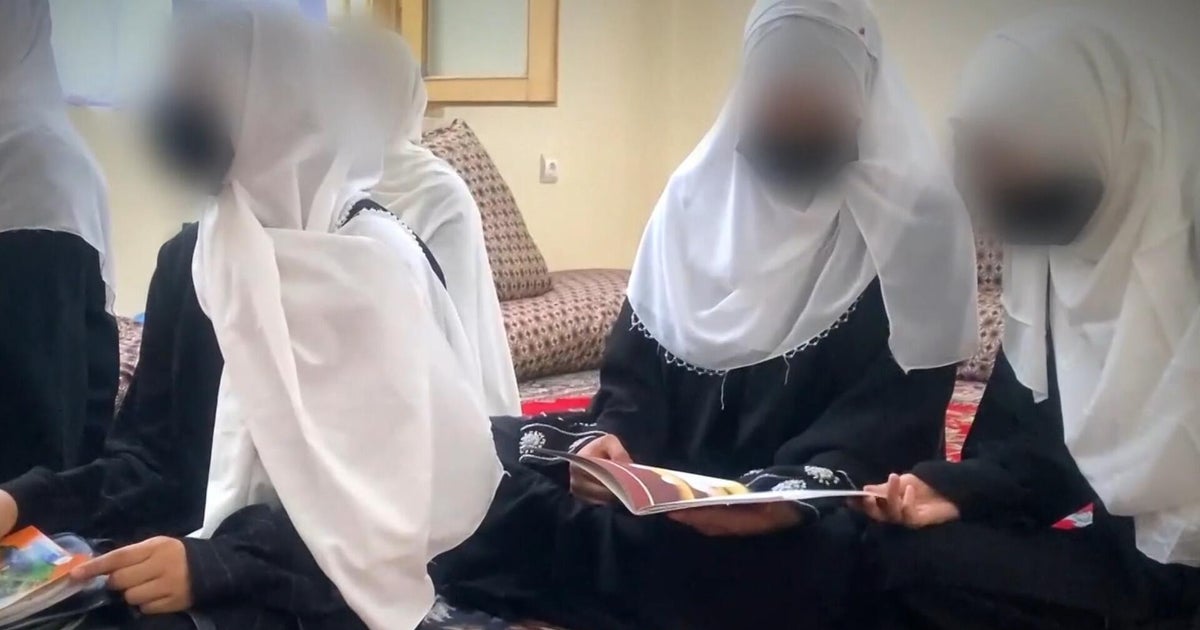
Whatever happened to the Taliban threat: 'We will flog the women'?
asserted
We → happen → women
We have previously reported on the Taliban's position that public flogging (as well as stoning) are appropriate corporal punishment if they believe a citizen has violated certain precepts –- enabling girls to be educated despite the ban on secondary education for females, for example, or engaging in an adulterous relationship.
asserted
girls → report → relationship
Have Taliban authorities been employing these methods?
asserted
authorities → employ → methods
We're revisiting some of our past global health and development stories to see "Whatever happened to ..."
asserted
Whatever → revisit → stories
In March 2024, NPR reported on a statement issued by the Taliban's usually elusive supreme leader Hibatullah Akhundzada announcing a return to a type of punishment in its justice system.
asserted
NPR → report → system
"We will flog the women ... we will stone them to death in public [for crimes]," he said in an audio message.
asserted
he → flog → message
True to his words, the Taliban have gradually increased public and violent punishments.
asserted
Taliban → increase → punishments
According to an April 2026 report by the Afghanistan Human Rights and Democracy Organization (AHRDO), an nongovernmental organization that investigates human rights violations in Afghanistan.
uncertain
that → accord → Afghanistan
Between February 2022 and April 2026, AHRDO documented 2,745 individuals who had been subjected to corporal punishment drawn from the Taliban's own public records.
asserted
who → document → records
The U.N. has documented similar figures, in a report in March 2026.
asserted
U.N. → document → March
Citing at least 1,110 flogging cases last year, the U.N. states: "in 2025 alone, more men and women were subjected to public flogging than in all previous years combined."
asserted
men → cite → years
These counts are based on cases published by the Taliban's Supreme Court on their website and social media channels and in over 500 press releases.
asserted
counts → base → releases
Advocates believe that there may be cases that are not documented in court records — instances when Taliban authorities confront and flog the accused on the spot, such as women violating the Taliban's strict dress code.
uncertain
authorities → believe → code
MA is an activist in Afghanistan who shared a video with NPR that shows the public flogging of a woman, reportedly in Kandahar province.
uncertain
that → share → province
She asked to be identified only by her initials, fearing repercussions from the Taliban for calling attention to flogging.
asserted
She → ask → flogging
MA also pointed to several similar videos on social media.
asserted
MA → point → media
The Taliban bans filming in public areas where flogging as well as stoning takes place, but MA says that individuals who oppose the practice have been discretely filming these events, then posting the video.
asserted
who → ban → video
NPR was not able to independently verify the content of the videos.
asserted
NPR → verify → videos
A request for comment from the Taliban was not answered.
asserted
request → answer → Taliban
'A very important element of how they see justice'
Why has the Taliban embraced flogging?
"The floggings are an important aspect of administration of justice in the Taliban's eyes," says Shaharzad Akbar, executive director of the Afghan human rights group Rawadari.
asserted
Akbar → see → group
"It's a very important element of how they see justice, the rule of law and how they use it to control and repress the population," says Akhar, who is based in Europe.
asserted
who → see → Europe
Samira Hamidi, South Asia regional campaigner at Amnesty International, says she agrees.
asserted
she → say → International
"The increased use of public floggings and other corporal punishments serves not only as a form of punishment but also as a tool of intimidation and social control.
asserted
use → increase → intimidation
"
Beyond the brutality of these punishments, legal experts say they violate the country's commitment to international law.
asserted
they → say → law
"Afghanistan is a party to several human rights instruments, and even after the Taliban took over, it has remained a member of these international human rights treaties, which therefore carry obligations on the government to protect these rights for all individuals in Afghanistan," explains Haydee Dijkstal, a U.K.-based lawyer specializing in international human rights who provided legal analysis for the AHRDO report.
asserted
who → take → report
These treaties include the Convention against Torture, the Convention on Civil and Political Rights, and the Convention on the Elimination of All Forms of Discrimination.
asserted
treaties → include → Discrimination
"These obligations prohibit treatment that amounts to cruel, inhuman, or degrading treatment or torture," she says.
asserted
she → prohibit → treatment
"When something is called a punishment but itself constitutes a human rights violation, it cannot be considered a lawful punishment or justice," she says.
asserted
she → call → violation
Who gets flogged?
asserted
Who → flog → ?
The AHRDO report noted that women and marginalized groups such as Afghanistan's LGBT community remain most disproportionately impacted by the rise in such punishments.
asserted
women → note → punishments
One reason, the report notes, is that the Taliban officials are flogging individuals based on discriminatory and illegal charges.
asserted
officials → note → charges
The crimes of the accused, such as women appearing in public without a mahram (a male guardian), same-sex relations, extramarital relations or women "running away" from homes, are protected fundamental human rights under international law.
asserted
women → accuse → law
"Women face a heightened risk because they are subject to a range of discriminatory restrictions that regulate their movement, dress, behaviour, and participation in public life," Hamidi says.
asserted
Hamidi → face → life
Since taking over, the Taliban have issued dozens of decrees that prohibit women from higher education, most forms of employment and political and even public participation.
asserted
that → take → employment
"In this context, corporal punishment becomes another mechanism for enforcing gender-based discrimination and maintaining the Taliban's systematic repression of women and girls," she adds.
asserted
she → become → women
The Taliban commitment to these punishments is part of its dismantling of the Afghan legal system since taking power.
asserted
commitment → take → power
"The rise of corporal punishment aligns with that lack of an independent and impartial judiciary in Afghanistan and is a way of imposing fear and control over the population," Dijkstal says.
asserted
Dijkstal → align → population
"The cases lacked due process and violated the right to a fair trial," she says, adding that in cases documented by AHRDO, not one person was allowed proper legal representation or allowed to present a defense or even speak in court.
asserted
person → lack → court
"It was a gross violation of what is considered under international law to be a minimum standard to be considered a fair trial.
asserted
what → consider → law
At the same time, women have been shut out of the justice system, says Akbar.
asserted
Akbar → shut → system
…and 26 more, not listed.
 The Aporia