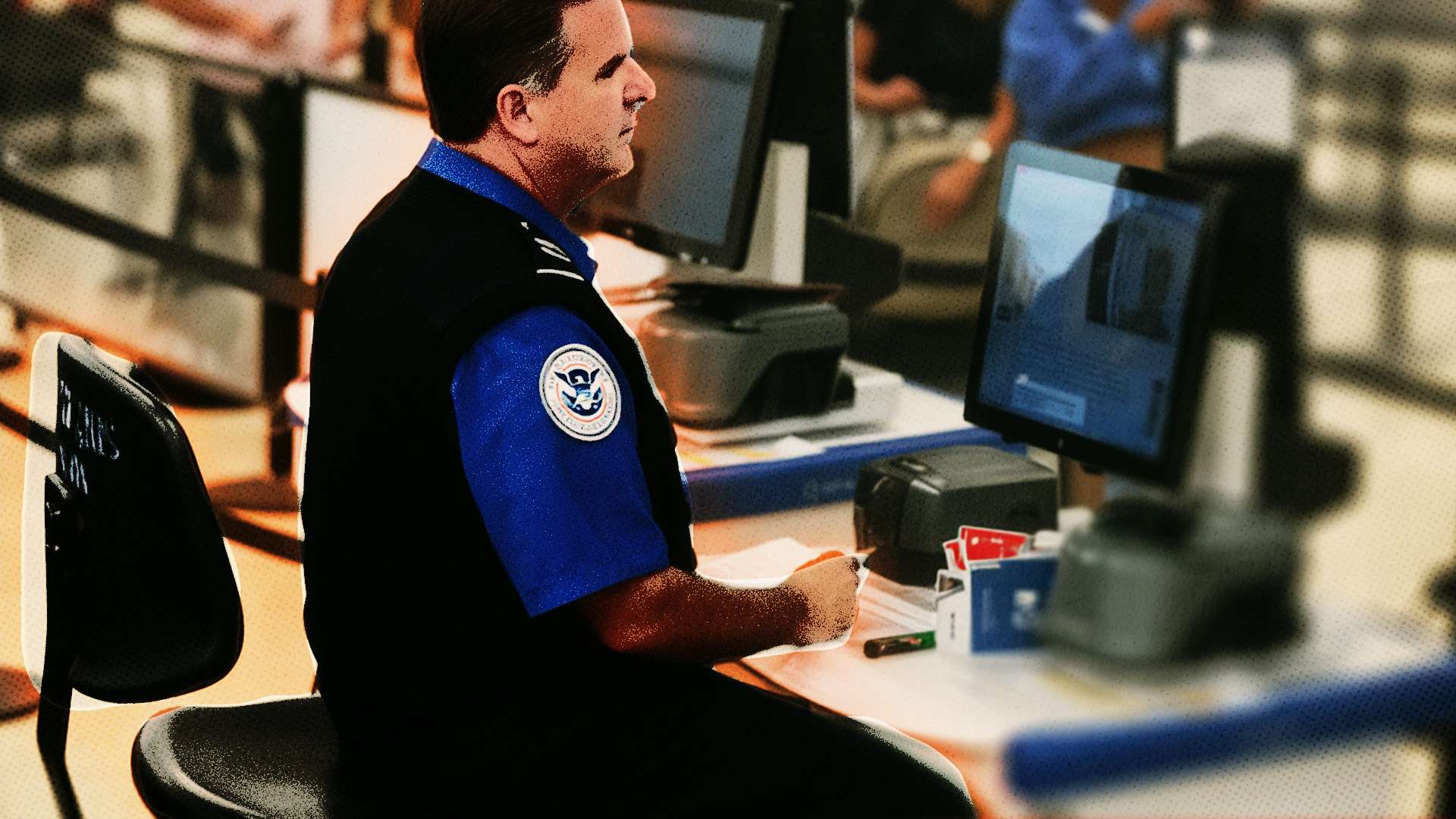
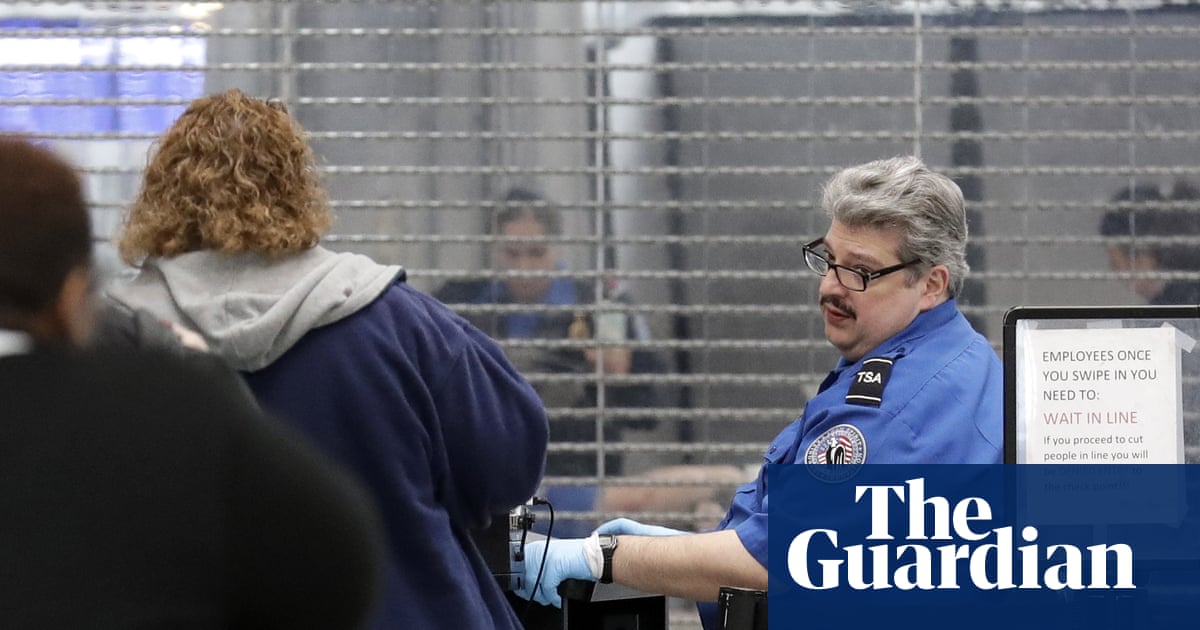
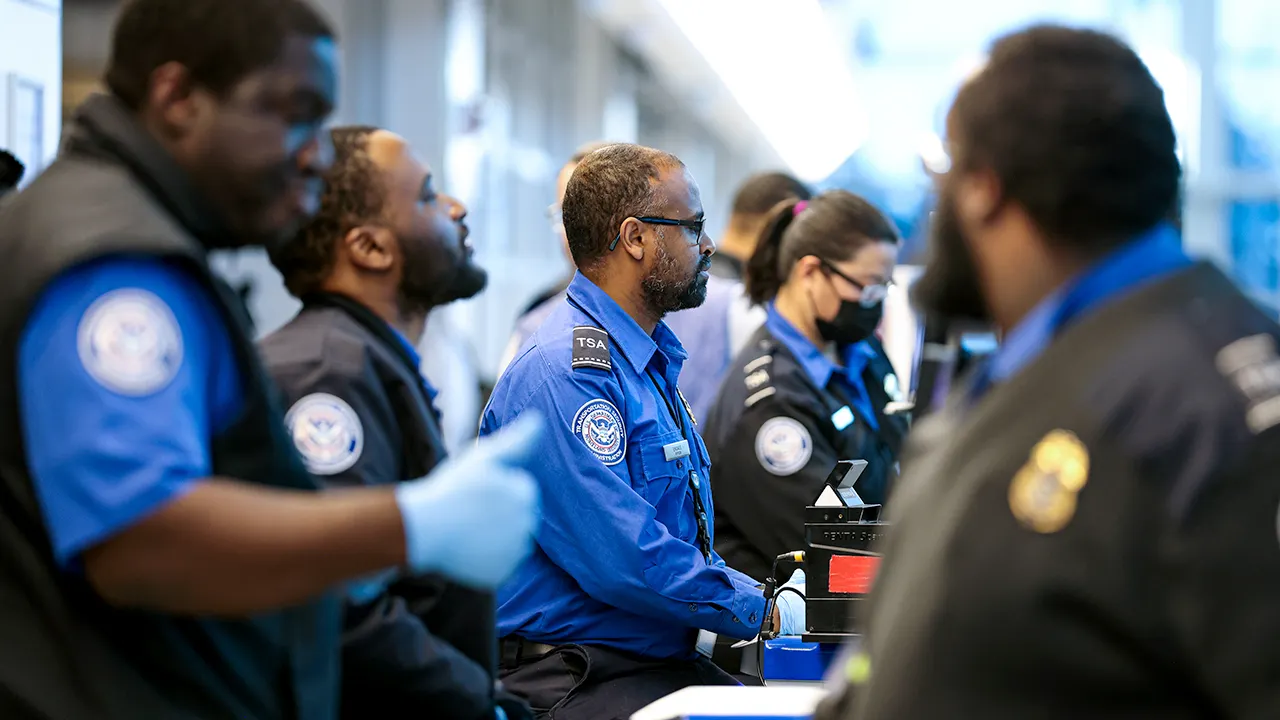
The American Federation of Government Employees (AFGE), representing TSA screeners, protests against a recent rule change requiring screeners to stand during their shifts instead of sitting. AFGE claims this move does not enhance security and criticizes the leadership for what they view as a petty decision without evidence supporting its effectiveness. The union is encouraging passengers to support their "Take a Stand" campaign by signing a form letter demanding the return of chairs for TSA screeners. This action comes in the context of broader labor disputes between TSA employees and the Trump administration, including efforts to terminate collective bargaining rights and privatize airport security screening through the Screening Partnership Program.
Written locally by qwen2.5:14b on 2026-10-07,
using this article's own text rather than the other coverage of the
same event (that is the story summary below).
Story summary
The TSA has implemented a new policy where its officers who check passengers' IDs and boarding passes at airport checkpoints will no longer be allowed to sit while working. This change, which began in September 2023, aims to enhance security and provide better service to travelers by keeping agents more alert. The agency claims the move reinforces both security and hospitality.
The American Federation of Government Employees (AFGE) union, however, criticizes this decision as it was implemented without consulting its members. AFGE argues that standing all day is detrimental to officers' health and safety, especially since they already spend most of their shift on their feet. The policy change comes nearly two months after the confirmation of David Cummins as TSA Administrator.
Travelers have mixed reactions; some appreciate the idea of more attentive staff, while others are concerned about potential delays due to fatigued agents. This move reflects broader changes under the current administration aimed at improving airport security efficiency and traveler satisfaction.
Written for “TSA No Sitting Policy” on 2026-10-07,
grounded in this article and the 3 other(s) covering the same event.
The union representing Transportation Security Administration (TSA) screeners is trying to enlist passengers in its fight against petty rules that don't improve safety.
asserted
that → represent → safety
It just so happens that none of those rules have any effect on the flying public.
asserted
none → happen → public
Late last month, TSA's politically appointed leadership ordered that the chairs that TSA agents normally sit in while they give your driver's license the stink eye be removed.
asserted
they → appoint → eye
Agents' standing posture "reinforces both our security posture and our commitment to hospitality," wrote Steve Lorincz, TSA's executive assistant administrator for security operations, in a September 25 memo, parts of which were shared by the American Federation of Government Employees (AFGE), the union that represents TSA screeners, in an email.
asserted
that → reinforce → email
The union is not taking the loss of its members' chairs sitting down.
"That is not leadership.
asserted
That → take → chairs
Hospitality is not something you get by making working people stand at a podium until their feet go numb," said AFGE president Everett Kelley in a statement that Panagram ranks as 100 percent AI-generated.
asserted
Panagram → get → statement
The union argues that there's no security study showing that standing agents are more effective.
asserted
agents → argue → ?
It is now encouraging the flying public to join its "Take a Stand" campaign and sign their names to a form letter demanding the return of the chairs.
asserted
It → encourage → chairs
The chair fight comes amid a persistent labor dispute between the second Trump administration and TSA's unionized workforce.
asserted
fight → come → administration
Last year, the administration attempted to unilaterally end TSA workers' collective bargaining rights, citing low worker satisfaction and the high percentage of staff time spent on union organizing.
asserted
administration → attempt → organizing
A federal district court judge blocked that attempt in January.
asserted
judge → block → January
TSA agents also had to work without pay during the government shutdown last year and the shutdown of the Department of Homeland Security, in which TSA is housed, earlier this year.
asserted
TSA → have → which
Government Executive reports that the same day that TSA ordered security checkpoint chairs taken away, the Trump administration also appealed the district court ruling blocking its termination of collective bargaining rights.
asserted
administration → report → rights
Meanwhile, the union continues to oppose the Trump administration's expansion of the Screening Partnership Program, which allows airports to hire private, non-TSA screeners to run airport security.
asserted
airports → continue → security
As it happens, privatization of airport security screening would spare screening agents from one of their most persistent beefs: having to work without being paid during government shutdowns.
asserted
privatization → happen → shutdowns
It would also eliminate the existing conflict of interest whereby TSA is charged both with regulating and operating airport security.
asserted
TSA → eliminate → security
It would nevertheless clearly be bad for AFGE, as airport security checkpoints would not have to be staffed with members of its union.
asserted
checkpoints → have → union
(Marc Scribner, a transportation policy researcher for the Reason Foundation, which publishes this website, argues that the SPP is far from perfect, in part, because it gives TSA too much power over which contractors airports hire.)
asserted
airports → publish → contractors
AFGE's inability to distinguish between its own interests and those of travelers is made laughably clear by its attempt to gin up public support for the return of its chairs.
asserted
inability → distinguish → chairs
The union might well be correct that there's security improvements to be had by requiring agents to stand.
uncertain
union → be → agents
It's correct enough when it says that "a boarding pass reads the same at any height.
asserted
pass → say → height
If that's the case, however, one still wonders why the public would care at all about whether the agents they interact with are sitting or standing.
asserted
they → wonder → ?
In the 25 years since 9/11, passengers have been subjected to endless amounts of intrusions and indignities at the hands of government agents.
asserted
passengers → subject → agents
TSA screeners union reps have generally stood by silently as we put up with water bottle bans, erroneous groin pat-downs, and unnecessary REAL ID requirements.
asserted
we → stand → bans
So long as security theater only affects passengers, it would seem the union doesn't care all that much.
asserted
union → affect → passengers
It's a bit rich, then, for the union to expect passengers to care about another petty requirement that doesn't, at the union's own admission, affect them in the slightest.
asserted
that → expect → slightest
 The Aporia