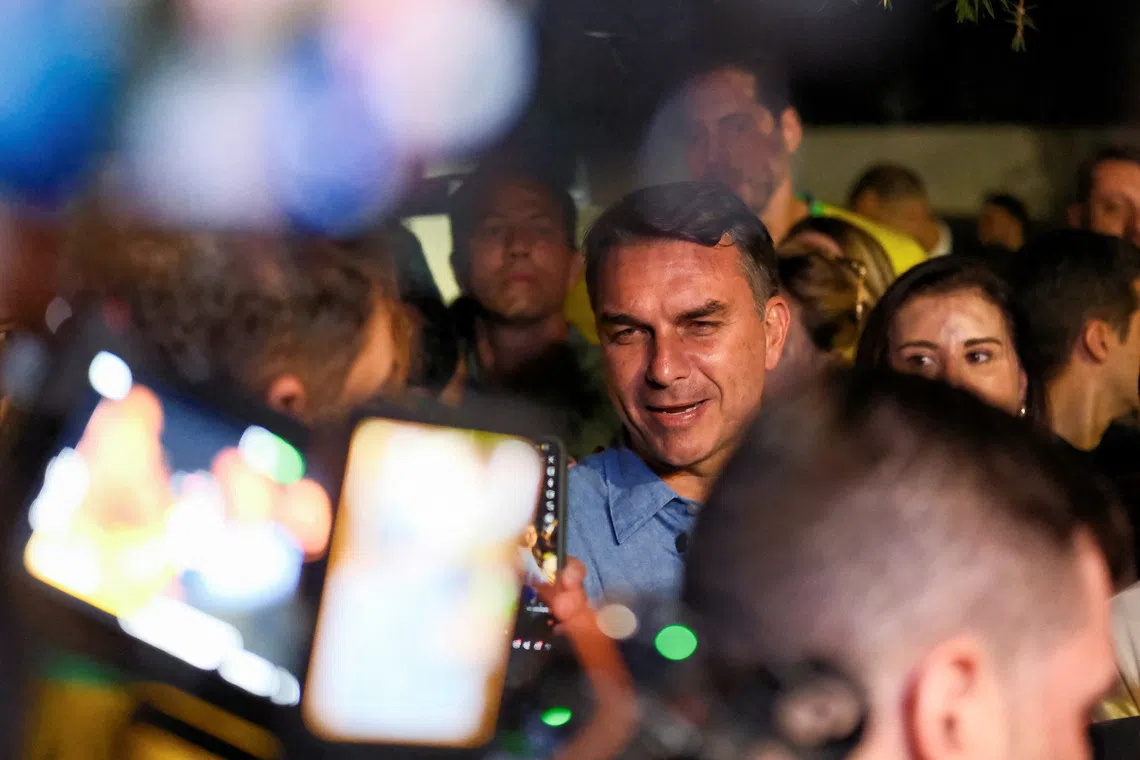
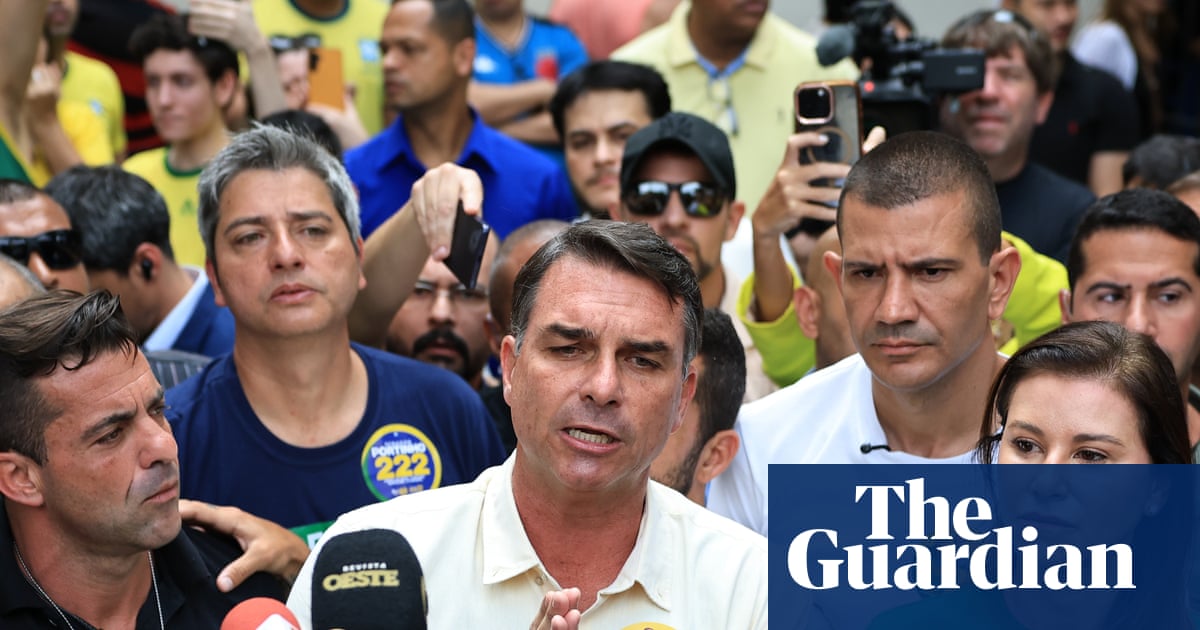
Why Flavio Bolsonaro outperformed the polls in Brazil’s election

Read the original at Al Jazeera ↗
Al Jazeera · collected 2026-10-06 · by Tamara Khandaker

Quick Summary

In Brazil's recent presidential election, Senator Flavio Bolsonaro performed better than pre-election polls predicted, securing about 47 percent of the vote compared to incumbent candidate Lula da Silva's 45 percent. This outcome surprised analysts who expected Lula to lead in the runoff. According to political scientist Carlos Pereira, a shift occurred when voters for smaller right-wing candidates supported Bolsonaro earlier than anticipated, potentially consolidating his support prematurely and limiting its growth for the second round. Additionally, the Banco Master scandal may have influenced voter decisions, with some casting ballots against perceived political bias rather than supporting Lula.
Written locally by qwen2.5:14b on 2026-10-06, using this article's own text rather than the other coverage of the same event (that is the story summary below).

AI analysis runs on qwen2.5:14b, locally

Story summary

In Brazil’s recent presidential election, Senator Flavio Bolsonaro outperformed expectations and polls by securing about 47 percent of the vote on Sunday, compared to incumbent President Luiz Inacio Lula da Silva's 45 percent. This outcome was unexpected as most previous polls had predicted that Lula would lead in a runoff. Political analysts suggest that a late shift among voters who were planning to support smaller right-wing candidates like Ronaldo Caiado and Renan Santos may have contributed to Bolsonaro's stronger showing. The election, originally expected to go to a second round, saw this unexpected reversal, raising questions about what factors influenced voter behavior in the final days of campaigning.

Written for “Brazil Election Results” on 2026-10-06, grounded in this article and the 0 other(s) covering the same event.
Why this leaning score
The model judged this article politically coded and scored it +0.30, but all 2 of its quote(s) are attributed speech - words the article quotes from someone, not the article's own narration, so the score is not published.
Written under an earlier scoring contract, which gave a paragraph rather than checkable quotes. Re-analysing this article replaces it.
Leaning score withheld for article 61213: attributed speech only · logged 2026-10-06

Signals How these are calculated →

Claims extracted
42
claim-shaped sentences
Uncertain
14%
6 of 42 hedged
Leaning
withheld
no quote in the article backed the model's score
Correction & hedging signals
60.3
corrections and hedging in what we collected; not a measure of accuracy
Outlets on this story
1
Politics
Narrative spread
1
articles carrying this framing
Analyzed 2026-10-06 · how these are computed

Story

📰 Brazil Election Results
Politics · 1 article(s) covering the same event.

How this is being covered How these are calculated →

Article leaning vs. publisher reliability
Source leaning vs. consistency

Compared with similar articles

This article reads unscored and hedges 14% of its claims. Each row says how that neighbour differs.
Al Jazeera · 0.89 cosine similarity
⚖️ Leans right 🔴 7% hedged 3 of 45 📰 publisher trust 60
“The articles describe different stages and predictions regarding Flavio Bolsonaro's performance in Brazil's elections, not a single specific incident.”
The Hindu · 0.88 cosine similarity
⚖️ Leans right 🔴 11% hedged 4 of 38 📰 publisher trust 60
“Article A reports on the initial results and projection of the first round of Brazil's presidential election, while Article B analyzes why Flavio Bolsonaro outperformed expectations in that same first round but focuses more on the implications for the runoff election three weeks later.”
Times of India · 0.86 cosine similarity
⚖️ leaning not scored 🔴 10% hedged 4 of 39 📰 publisher trust 59
“Article A reports on the initial results of the first round of voting that led to a runoff election, while Article B discusses the unexpected performance of Flavio Bolsonaro in relation to pre-election polls and expectations.”
The Guardian
⚖️ Leans left 🔴 0% hedged 0 of 3 📰 publisher trust 68
“The articles discuss different stages of Brazil's election process, with Article A referencing the first round and potential outcomes, while Article B discusses Flávio Bolsonaro outperforming polls three weeks before the runoff.”
The Independent
⚖️ Leans right 🔴 11% hedged 4 of 35 📰 publisher trust 59
“The articles cover different stages and aspects of the election; Article A reports early results, while Article B analyzes why Flavio Bolsonaro outperformed expectations in the first round.”
The Straits Times
⚖️ Leans strongly right 🔴 6% hedged 2 of 34 📰 publisher trust 59
“Article A reports on the stock market's reaction to Flavio Bolsonaro's election performance, while Article B analyzes why he outperformed expectations in the polls.”
The Straits Times
⚖️ Leans right 🔴 0% hedged 0 of 31 📰 publisher trust 59
“While both articles discuss Flavio Bolsonaro's unexpected first-place finish in Brazil's election, they report on different stages or aspects of the event. Article A covers the immediate results and outcome of the Oct 4 election, while Article B provides analysis and implications leading up to the runoff three weeks later.”
The Independent
⚖️ Leans right 🔴 8% hedged 4 of 48 📰 publisher trust 59
“Article A describes the initial election results leading to a runoff, while Article B analyzes why Bolsonaro outperformed expectations in those same first round results but discusses broader implications for the upcoming runoff.”
The Straits Times
⚖️ leaning not scored 🔴 0% hedged 0 of 7 📰 publisher trust 59
“Article A discusses endorsements received by Flavio Bolsonaro after the first round, while Article B analyzes why Flavio Bolsonaro outperformed polls in the election overall.”
The Guardian · 0.89 cosine similarity
⚖️ Leans left 🔴 10% hedged 3 of 30 📰 publisher trust 68
“Article A reports on the first round results of Brazil's presidential election, while Article B analyzes why Flávio Bolsonaro outperformed expectations in that same election but focuses more on its implications for the runoff.”

Publisher

Al Jazeera · 2281 article(s) · 2 correction(s) detected
Running correction rate · 2 correction(s)
2026-10-03
Tennessee prisons official resigns after Christa Pike’s failed US execution
2026-09-30
Indonesia suspends five officials over luxury apartments for inmates

Who wrote this

Tamara Khandaker
9 article(s) here · 1 carrying a prediction
🔮 A second round of voting was widely predicted.
🔮 Brazilian voters have cast their ballots in the country’s general election, which will determine key federal, state and local offices, including the presidency.
🔮 Along with measures to speed up approvals for major projects, the bill would also give Ottawa clearer powers to intervene in legal strikes and lockouts in federally regulated workplaces — a provision that has put Carney on a collision course with unions.
🔮 Recommended Stories list of 4 items- list 1 of 4Trump admin asks top US court to reverse pro-Palestinian scholar’s release - list 2 of 4Palestinian Americans meet US lawmakers as Trump seeks $2.8bn for Israel - list 3 of 4US judge orders release of Palestinian rights advocate detained by ICE - list 4 of 4Rights groups, Milwaukee leaders slam ICE’s arrest of Palestinian advocate Sarsour, who has lived in the US for more than three decades, called the ruling “deeply disappointing”. “I will continue fighting to defend the right to free speech and to stay in the country I have called home for more than three decades
🔮 “If they were aware of these realities, they would definitely think differently, and they would definitely put pressure on their administration.”
🔮 Recommended Stories list of 4 items- list 1 of 4Trump says Canada becoming EU ‘associate member’ could be ‘hostile act’ - list 2 of 4UK’s Burnham, Canada’s Carney discuss AI risks, defence cooperation - list 3 of 4Canada’s Carney welcomes EU’s associated membership proposal - list 4 of 4Can ‘middle powers’ come together to build a new economic alliance? “If Canada joins the EU I’m taking [seven] weeks off work next summer,” wrote another user.
🔮 Rapper Macklemore says he will donate the entire $1m he earned from singer Ed Sheeran’s Loop Tour to organisations supporting Palestinians, days after he was dropped from the tour over his support for Palestine.
🔮 Kraft said in a statement received by Al Jazeera on Monday that Macklemore’s recent performances and what he described as a “broader history of antisemitic rhetoric and imagery” led Gillette Stadium, which is owned and operated by the Kraft group, to determine that his appearances there on September 25 and 26 “would cross that line”.
🔮 Recommended Stories list of 4 items- list 1 of 4Canadian economy recovers sharply in Q2 but shadow of US tariffs in future - list 2 of 4With the US and Canada locked in a trade war, fears of a recession lurk - list 3 of 4The losers of the US-Canada trade war - list 4 of 4Bombardier looks to hire 500 new workers in US, despite Trump threat On Monday and Tuesday, hundreds of global investors will gather in Toronto for the Canada Investment Summit.
Also by Tamara Khandaker
Nothing else under this byline is closely related to this article, so these are simply their most recent.
All 9 articles by Tamara Khandaker →

Topics

4Brazil Al Jazeera Banco Master Brazil the Getulio Vargas Foundation

Subjects

Bolsonaro PERSON · 7× Lula PERSON · 7× Banco Master ORG · 4× Brazil GPE · 4× Pereira PERSON · 4× Flavio PERSON · 3× 4Bolsonaro PERSON · 2× 4Brazil GPE · 2× Alexandre de Moraes PERSON · 2× De Moraes PERSON · 2×

Narrative

This time, he said, some voters who were planning to cast their ballot for candidates like the former governor of the central state of Goias, Ronaldo Caiado, and businessman and founder of the right-wing Free Brazil Movement, Renan Santos, appear to have made the strategic choice earlier.
framing: assertive · carried by 1 article(s) · first seen 2026-10-06
🔮 A second round of voting was widely predicted.
2026-10-06 · Al Jazeera
Why Flavio Bolsonaro outperformed the polls in Brazil’s election · assertive framing

Claims (42 extracted, 6 hedged)

With three weeks to go until Brazil’s presidential runoff, President Luiz Inacio Lula da Silva finds himself in a weaker position than he — or most pollsters — had expected. asserted
he → go → position
A second round of voting was widely predicted. asserted
round → predict → voting
But most recent polls had Lula entering a runoff from first place, putting him about three percentage points ahead of rival Senator Flavio Bolsonaro. asserted
Lula → have → Bolsonaro
Recommended Stories list of 4 items- list 1 of 4Brazil’s presidential race: Three key takeaways from the first round - list 2 of 4Bolsonaro beats expectations in Brazil vote, faces Lula in runoff - list 3 of 4Bolsonaro favourite to win: What Brazil’s first round of elections tells us - list 4 of 4Brazil’s presidential race head for a tough runoff Instead, Bolsonaro took about 47 percent of the vote on Sunday to Lula’s 45 percent, a reversal that surprised analysts and raised questions about what happened in the final days of the campaign, and what the polls may have missed. What changed in the final days Carlos Pereira, a political scientist at the Getulio Vargas Foundation think-tank in Brazil, believes part of the answer lies in a late shift among voters who had planned to support smaller right-wing candidates. uncertain
who → beat → candidates
Bolsonaro himself had said he was banking on exactly that, telling reporters on election day that he expected a “protest vote” from people who might have otherwise backed another candidate but were united in their opposition to Lula. uncertain
who → say → Lula
“Usually, voters, they vote [sincerely] in the first round, and they vote strategically in the second round,” Pereira told Al Jazeera. asserted
Pereira → vote → Jazeera
This time, he said, some voters who were planning to cast their ballot for candidates like the former governor of the central state of Goias, Ronaldo Caiado, and businessman and founder of the right-wing Free Brazil Movement, Renan Santos, appear to have made the strategic choice earlier. asserted
who → say → choice
“They thought, ‘Let’s try to resolve this election right now,’” Pereira said. asserted
Pereira → think → election
“If you’re gonna vote for Flavio anyway in the second round, why not vote for him right now?” asserted
you → go → him
That early consolidation could also matter in the runoff. uncertain
consolidation → matter → runoff
Political analyst Rafael Favetti told Reuters news agency that some of the support Bolsonaro would have usually picked up only in a second round had already been “front-loaded,” potentially leaving him less room to expand his coalition. asserted
Bolsonaro → tell → coalition
Another factor, Pereira said, was the Banco Master scandal, a sprawling alleged banking fraud that rattled both campaigns in the final weeks, touching figures across the political spectrum. asserted
that → say → spectrum
Among them was Supreme Court Justice Alexandre de Moraes, who oversaw the case that sent Bolsonaro’s father, former President Jair Bolsonaro, to prison. asserted
that → oversee → prison
De Moraes was accused of improper ties to Banco Master owner Daniel Vorcaro after documents emerged appearing to show the banker seeking legal advice from him. asserted
banker → accuse → him
De Moraes has denied the allegations. asserted
Moraes → deny → allegations
Pereira believes that connection may have acted as a late “trigger” for some voters. uncertain
connection → believe → voters
Bolsonaro’s supporters have seen Moraes as a political ally of Lula, with Flavio making a direct link between the two on the campaign trail earlier this year, saying, “Anyone voting for Lula is voting for Alexandre de Moraes.” asserted
Anyone → see → Moraes
A September Datafolha poll found 34 percent of Brazilians associated the Banco Master scandal more with the left, compared with 27 percent who associated it more with the right. asserted
who → find → right
Andre Pagliarini, a professor of history and international studies at Louisiana State University and author of Lula: A People’s President and the Fight for Brazil’s Future, agreed the scandal may have hurt the president. uncertain
scandal → agree → president
A campaign dominated by “spectacular, unceasing scandal involving seemingly the entire political class”, he said, played to Bolsonaro’s strengths as an “anti-institutional insurgent”. asserted
he → dominate → insurgent
“The irony, of course, is that Flavio himself was directly implicated in the Banco Master scandal in a way that Lula is not,” he said in an email. asserted
he → implicate → email
The younger Bolsonaro is under investigation over allegations that he sought money from Vorcaro to finance a film about his father. asserted
he → seek → father
He denies wrongdoing. asserted
He → deny → wrongdoing
A broader shift to the right Neither analyst saw the result as a wholesale failure of the polls. For Pagliarini, the bigger surprise was the scale of support for the right, which extended well beyond the presidential race. asserted
which → see → race
Bolsonaro won nearly four percentage points more than his father did in the first round in 2022, while his Liberal Party emerged with the largest bloc in Brazil’s Senate. asserted
Party → win → Senate
The right also came out strong in gubernatorial races and made significant gains in the southeast of the country. asserted
right → come → country
“There clearly was a powerful information environment around Flavio that allowed his campaign to keep its message in front of voters even as the mainstream press exposed scandal after scandal,” said Pagliarini. asserted
Pagliarini → allow → scandal
“If anything, the polls underestimated the commitment of voters already leaning right.” asserted
polls → underestimate → voters
But the results also point to a deeper challenge for Lula and the Brazilian left: a sense among many voters that the government is not delivering enough, particularly on the economy and public security. asserted
government → point → economy
On paper, Lula can point to a number of positive economic indicators, like record-low unemployment, falling inequality and easing inflation. asserted
Lula → point → unemployment
But that hasn’t necessarily translated into a sense that life is getting easier, as Brazilians have continued to feel squeezed by high food prices and household debt. asserted
Brazilians → translate → prices
A September Quaest poll found nearly half of those surveyed believed the economy had gotten worse over the previous year, compared with just 19 percent who thought it had improved. asserted
it → find → percent
“Voters can acknowledge that poverty is down and unemployment is low and still feel overworked, indebted, unsafe and fed up with political conflict,” Pagliarini said. asserted
Pagliarini → acknowledge → conflict
“The right has figured out how to turn those frustrations into a very clear political identity.” asserted
right → figure → identity
An uphill battle for Lula Lula now has three weeks to close a gap of about 2.2 million votes. asserted
Lula → have → votes
About nine million votes went to other candidates in the first round, while more than 33.4 million Brazilians didn’t vote – 28 percent of registered voters. asserted
Brazilians → go → voters
“It’s possible, but the arithmetic is tough,” Pagliarini said. asserted
Pagliarini → ’ → ?
For Lula to turn things around, he’d need to win voters who backed minor candidates, reach some of those who abstained and find more support in the northeast, which is already his strongest region. asserted
which → turn → northeast
His campaign is preparing a new communications team. asserted
campaign → prepare → team
Pargliarini said he’ll be watching the debates, where Lula could make a case directly against Bolsonaro rather than against his brand. uncertain
Lula → say → brand
…and 2 more, not listed.

💬Give feedback
🕘History 🎫Support