This article discusses protests in France during its fall season, known as rentrée, where students and unionized workers are protesting against financial instability and proposed budget cuts. The government plans to freeze wages and increase funding for military spending while facing high public debt of around $4 trillion, or 119% of annual economic output. Protests have led to injuries among both protesters and police officers, with far-right Marine Le Pen gaining support ahead of the 2027 presidential elections, adding to political tensions.
Written locally by qwen2.5:14b on 2026-10-06,
using this article's own text rather than the other coverage of the
same event (that is the story summary below).
Story summary
French Prime Minister Sébastien Lecornu warned against escalating school protests after 164 arrests on Monday, citing violent incidents like fireworks and fires near schools in Paris. The demonstrations, which began last week around Paris due to issues such as overcrowded classes and teacher shortages, have spread nationwide with blockades in over 300 high schools reported by Tuesday. In Lille, masked students clashed with police, who used tear gas after bins were set on fire. Nationwide, 440 people—mostly minors—were detained, while 12 security forces members, 12 students, and three staff members were injured. Teachers and firefighters also staged strikes over budget cuts, adding to the tension across France.
Written for “French Student Protests Over Educatio…” on 2026-10-06,
grounded in this article and the 75 other(s) covering the same event.
The fall season is termed rentrée in France, referring to the return to work and school after summer breaks.
asserted
season → term → breaks
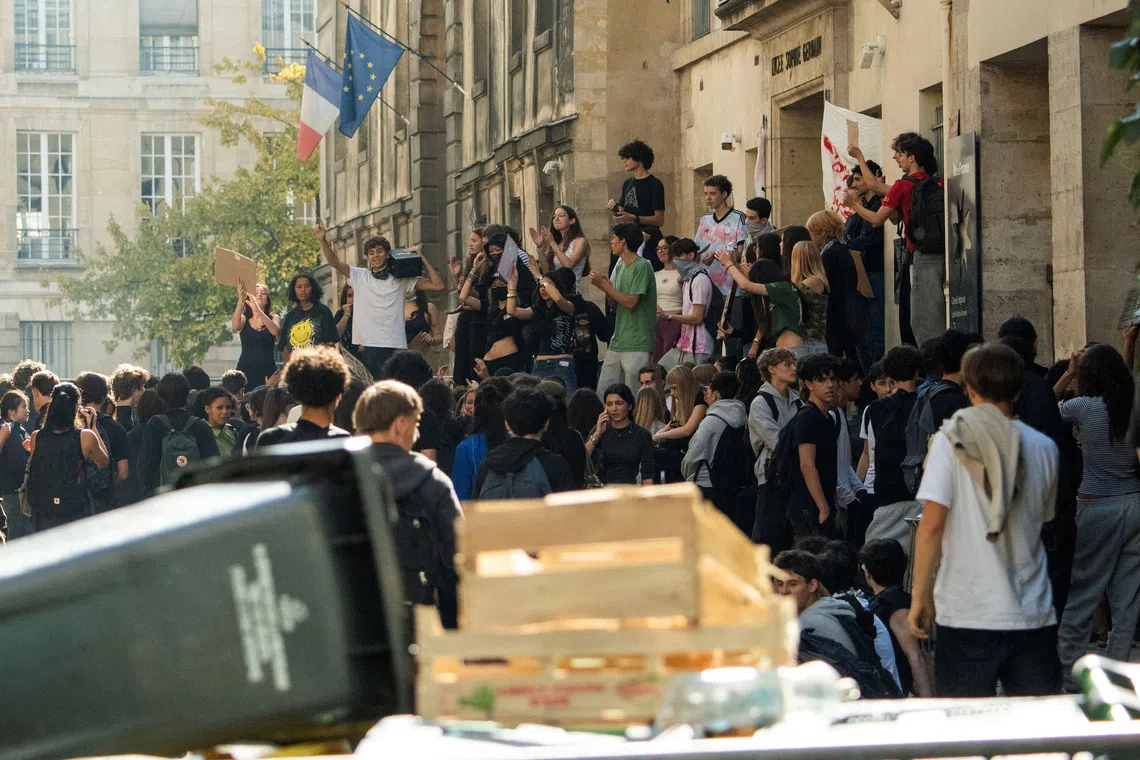
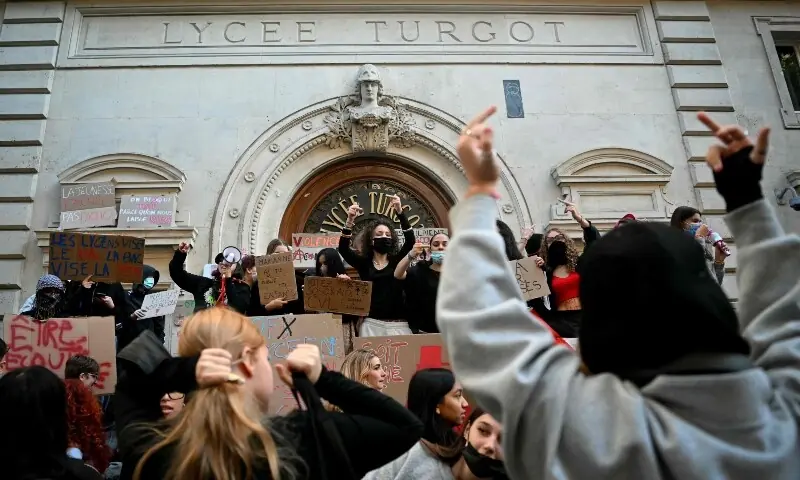
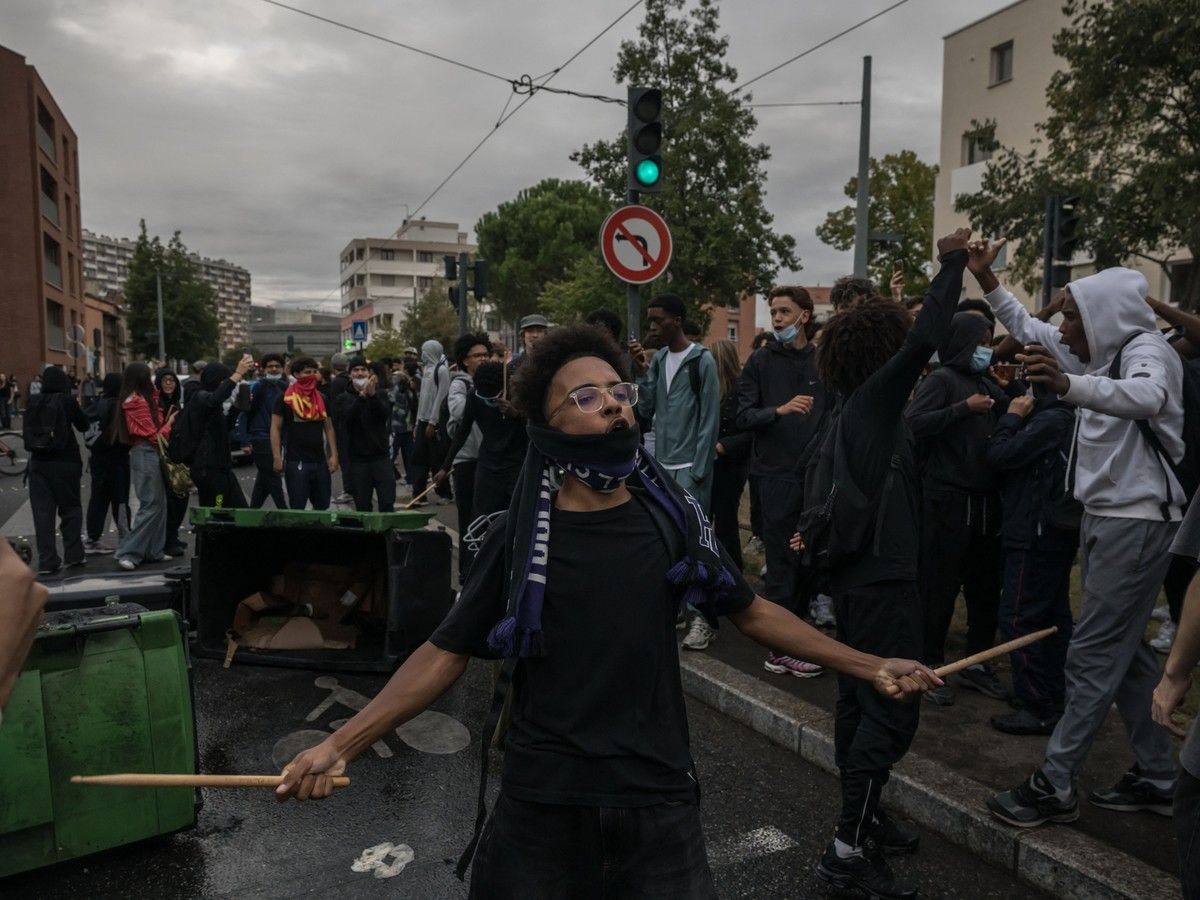
But this autumn reset is different: People appear to be afraid France is spiraling into financial crisis, and protests—by students and unionized workers alike—have roiled multiple industries as citizens voice their discontent, with 90,000 or so protesting across the country.
The Reason Roundup Newsletter by Liz Wolfe Liz and Reason help you make sense of the day's news every morning.
"On Tuesday, teachers and other public workers plan rallies against proposed wage freezes as the government labors to pass a budget," reports The New York Times.
asserted
Times → appear → budget
"They will join thousands of students who have blockaded schools to protest underfunding that has led to crumbling facilities and a shortage of teachers."
asserted
that → join → teachers
Of course, it's not clear to these protesters how increasing funding for public services might deepen the fiscal hole the government finds itself in.
uncertain
government → increase → itself
"The government says 215 students and 715 police officers have been injured since [protests] started," per the BBC.
asserted
protests → say → BBC
And polls are showing far-right Marine Le Pen performing rather well ahead of the 2027 presidential elections, further contributing to political tensions.
asserted
Pen → show → tensions
Currently, "the country's public debt stands at roughly $4 trillion, which is 119 percent of its annual economic output," noted the Times.
asserted
Times → stand → output
"With rates on French government bonds spiking, the cost of servicing that debt is projected to increase to roughly $100 billion in 2027."
asserted
cost → spike → 2027
"On top of that, France faces higher healthcare and pension costs because of its aging population, as well as increased military spending driven by the war in Ukraine and the disengagement of the United States," the Times continued.
asserted
Times → face → States
Oil and gas prices remain high, mostly due to tensions in the Middle East.
asserted
prices → remain → East
And France's 10-year borrowing rate has risen above 4.95 percent—the highest level since July 2002 (yet lower than the U.S.'s right now).
asserted
rate → rise → U.S.
The gap between French and German yields widened past 130 basis points, the largest since the eurozone sovereign-debt crisis of 2012.
asserted
gap → widen → 2012
French 10-year yields now exceed Italy's—an ominous milestone.
asserted
yields → exceed → milestone
In order to stabilize France's finances, the prime minister wants to freeze spending on select social programs and raise some taxes; the budget deal might go through, but is reliant on Le Pen's party (which holds 118 of the 577 seats in the National Assembly) to not sink the legislation.
uncertain
which → stabilize → legislation
All of this requires the formulation of a new consensus by a reluctant public: France cannot afford its welfare state, and no amount of violence in the streets will change that reality.
asserted
amount → require → reality
At the risk of being a libertarian killjoy, I don't think that hosting scavenger hunts is one of the legitimate functions of the state.
asserted
hosting → think → state
"The roughly 100 technology fortunes among the world's 500 richest people gained a combined $845 billion through Sept. 30, the most ever for the first nine months of a year, according to the Bloomberg Billionaires Index," reports Bloomberg.
uncertain
Bloomberg → gain → Index
"Fueling that surge were the same forces driving global markets: the artificial intelligence boom and soaring technology stocks, particularly in the US.
asserted
forces → fuel → US
Tech billionaires are now worth a combined $4.6 trillion, accounting for 36% of the index's wealth despite making up only about a fifth of its members."
asserted
billionaires → combine → members
- Televangelist Jim Bakker died yesterday at 86, after having served time in prison for financial crimes and having been embroiled in scandal over sex (claimed by the woman to be nonconsensual) with a 21-year-old who was a secretary in his Assemblies of God ministry.
asserted
who → die → ministry
The Gospel of Matthew tells us, "You cannot serve both God and mammon."
asserted
You → tell → God
Bakker appeared to have missed this lesson, promoting prosperity gospel teachings and living a life of extreme opulence.
asserted
Bakker → appear → opulence
- On the Carnegies and Rockefellers, by Tamara Winter: "These great philanthropies also can't be separated from the era in which they were created: Protestant ideas about stewardship, the general Progressive Era reform culture, anxieties about (and outright hostility toward) dynastic wealth, reputational pressures on the new industrial rich, and limited U.S. state capacity [with respect to] education, public health, and scientific research, were all contributing factors to their inception."
asserted
ideas → separate → inception
Enjoy this tidbit from an ex-Anthropic employee: "When I first joined, there was a Slack channel with a Claude that had been trained to solve humor.
asserted
that → enjoy → humor
And they were like, 'Yeah, we solved humor.
asserted
we → solve → humor
We've solved it.'
asserted
We → solve → it
You clearly haven't solved humor.
asserted
You → solve → humor
- This Roundtable nouveau is definitely something to listen to when children are not around.
asserted
children → listen → ?
Don't say you haven't been warned:
asserted
you → say → ?
 The Aporia