German exit polls suggest far-right party has big lead in regional election
BERLIN —
asserted
party → suggest → election
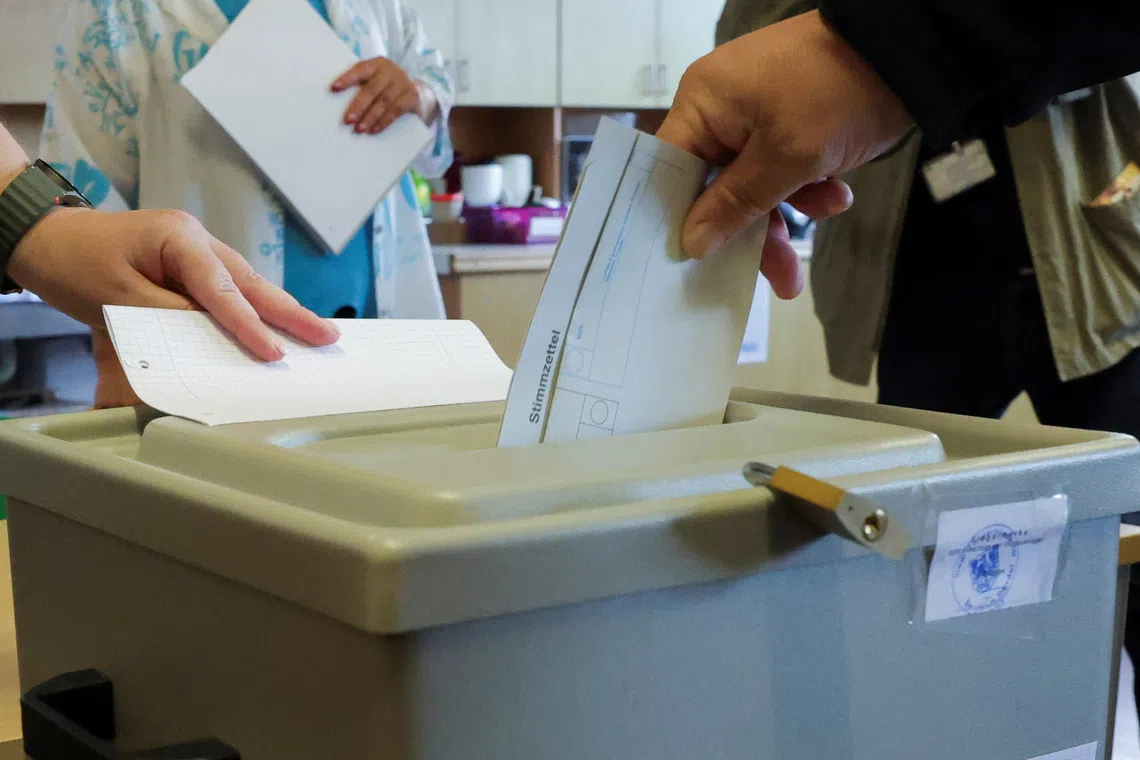
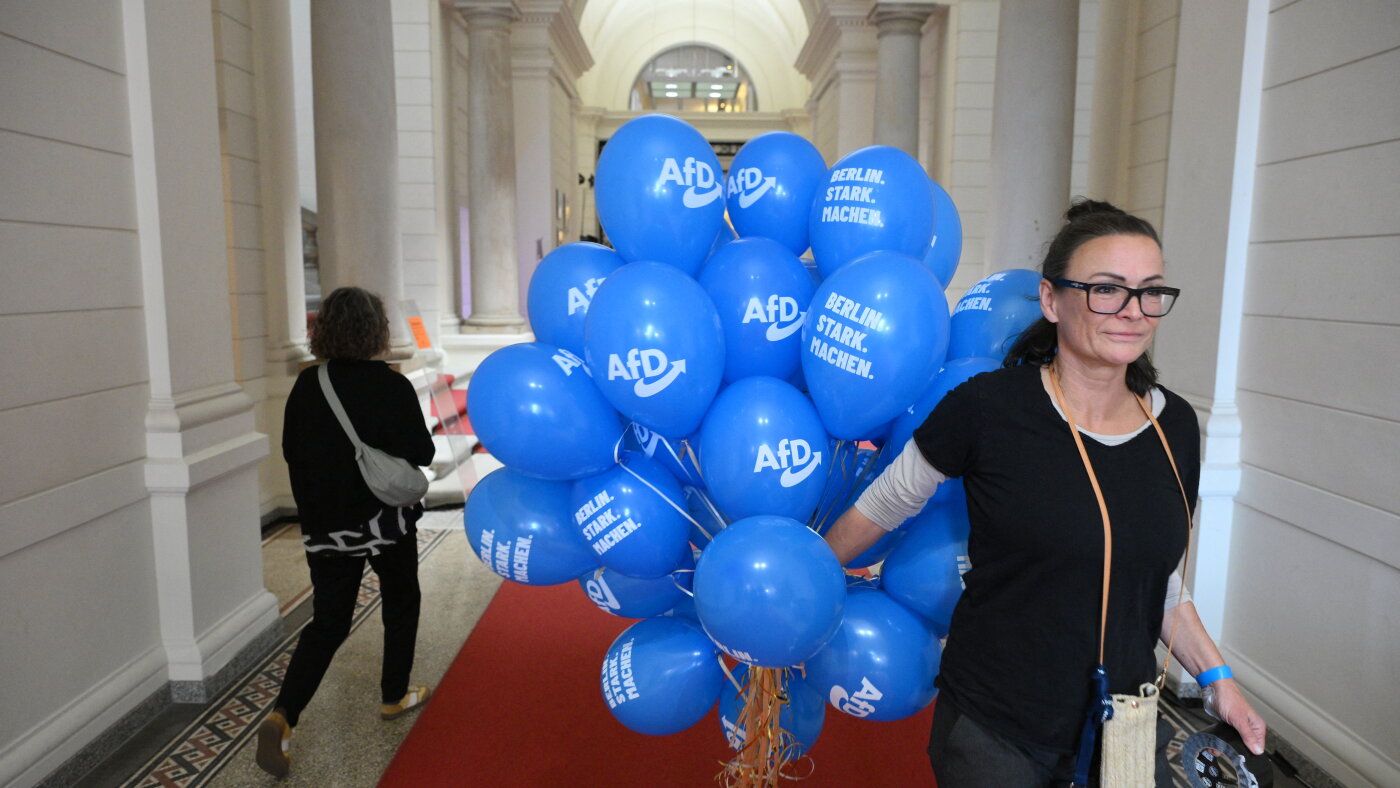
Germany's far-right, anti-immigrant Alternative für Deutschland, or Alternative for Germany, (AfD) has won the most votes in the closely watched regional election in the eastern state of Saxony-Anhalt according to exit polls.
uncertain
Alternative → win → polls
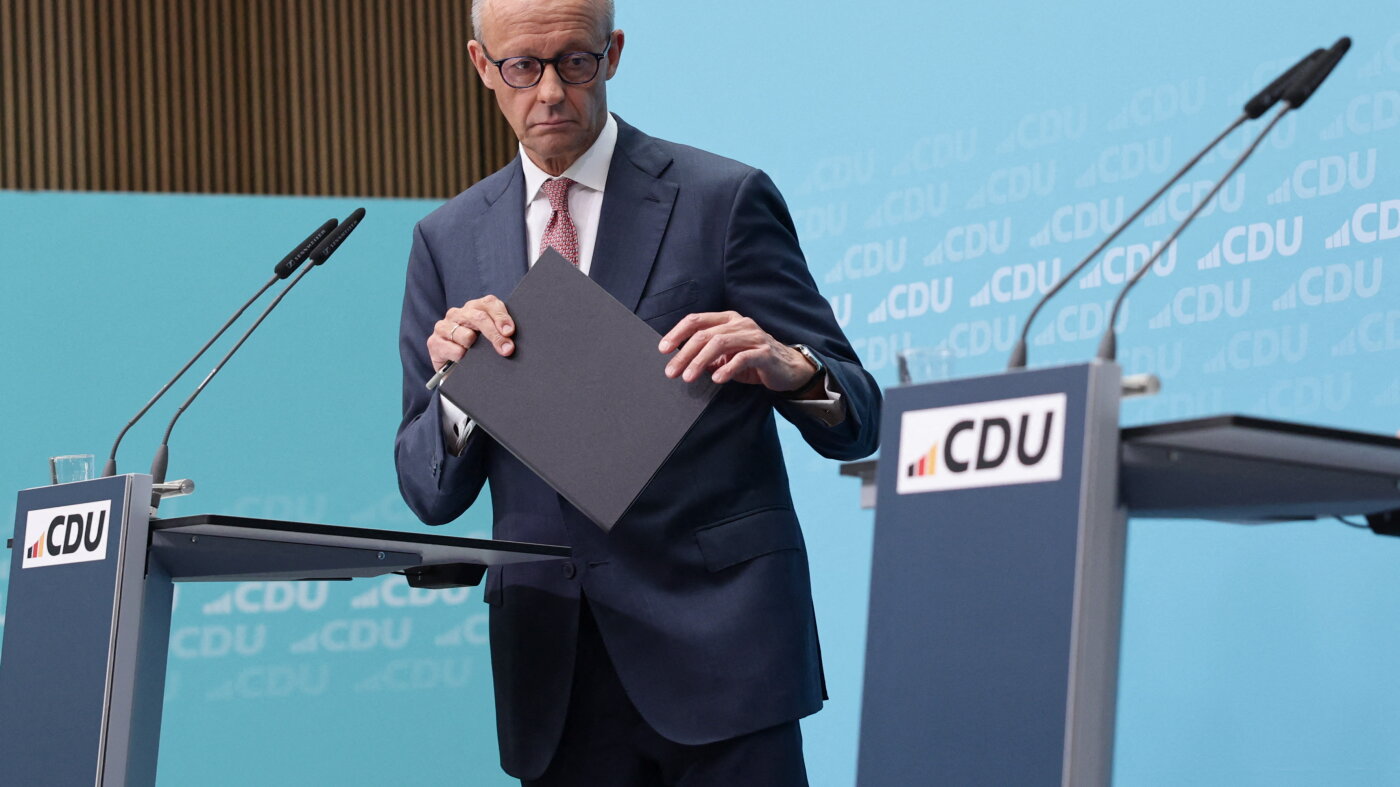
Projections show the party is comfortably ahead of Chancellor Friedrich Merz's conservative Christian Democratic Union (CDU), but it remains unclear whether the AfD will win enough seats to secure a majority in the state parliament.
uncertain
AfD → show → parliament
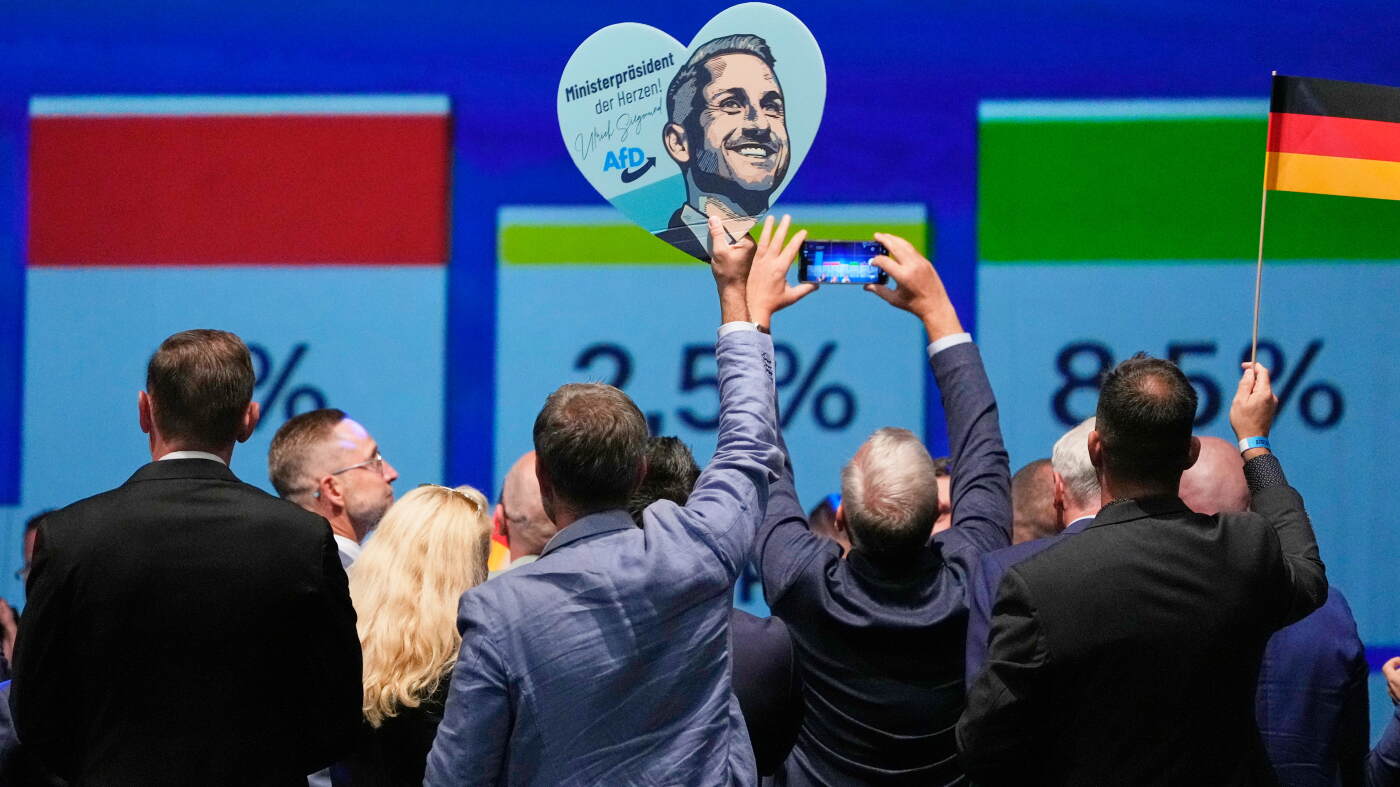
According to exit polls released on Sunday by German public broadcasters ARD and ZDF the AfD is on course to win a record 44.1% to 44.5% of the vote.
uncertain
AfD → accord → vote
The Christian Democratic Union is projected to take 18.5%.
asserted
Union → project → %
The AfD won 20.8% in the 2021 regional election.
asserted
AfD → win → election
If the projections are accurate, the CDU has halved its share of voters while the AfD doubled theirs.
asserted
AfD → halve → theirs
If the AfD succeeds in forming a government, it would mark the first time in Germany's postwar history that the far-right has taken control of a state government.
asserted
right → succeed → government
The party's anti-establishment appeal is no longer confined to eastern Germany; at the federal level, the party is also polling first.
asserted
party → confine → level
A win in Saxony-Anhalt would be a major breakthrough for a party that has been classified as right-wing extremist by domestic intelligence authorities in several German states.
asserted
that → classify → states
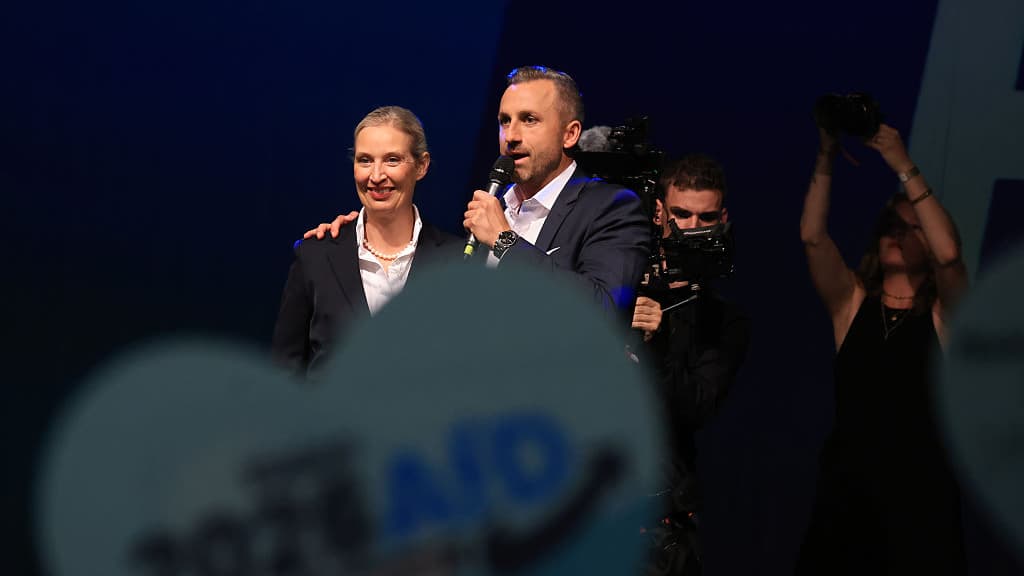
Speaking to public broadcaster ZDF, AfD federal leader Alice Weidel said Chancellor Friedrich Merz's conservatives will never win another election.
asserted
conservatives → speak → election
"We are seeing explosive growth here," she said, referring to Saxony-Anhalt.
asserted
she → see → Anhalt
"We are going to see explosive growth across all of East Germany — and at the federal level, too."
asserted
We → go → level
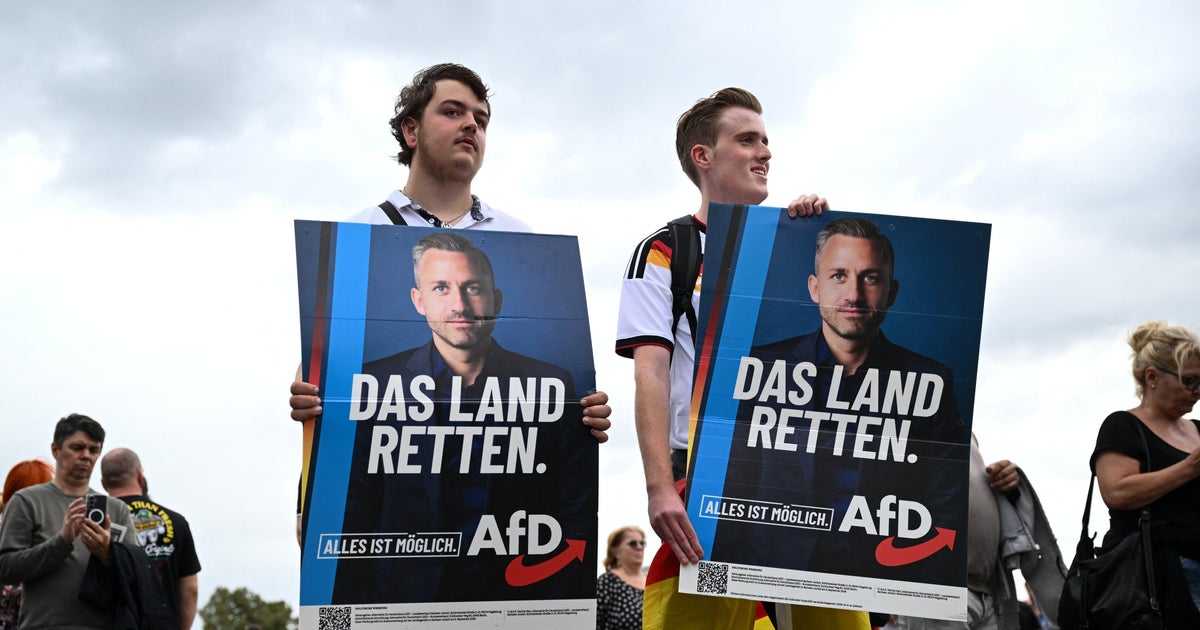
In his videos, he is dressed in a flawlessly ironed white polo shirt or starched white dress shirt — the uniform of Germany's newly professionalized far-right.
asserted
he → dress → right
His carefully coiffed side parting is as immaculate as his smile, something that distinguishes him from the rest of his party, whose members tend to grimace rather than grin.
asserted
members → coif → party
But Siegmund's broad smile rarely cracks, even when he speaks about the party's biggest issue, immigration and the mass deportation of migrants.
asserted
he → crack → migrants
Siegmund has campaigned for mass deportations and changes to migration and education policy.
asserted
Siegmund → campaign → policy
The AfD has also called for changes to the region's public broadcaster and closer relations with Russia and the MAGA movement in the United States.
asserted
AfD → call → States
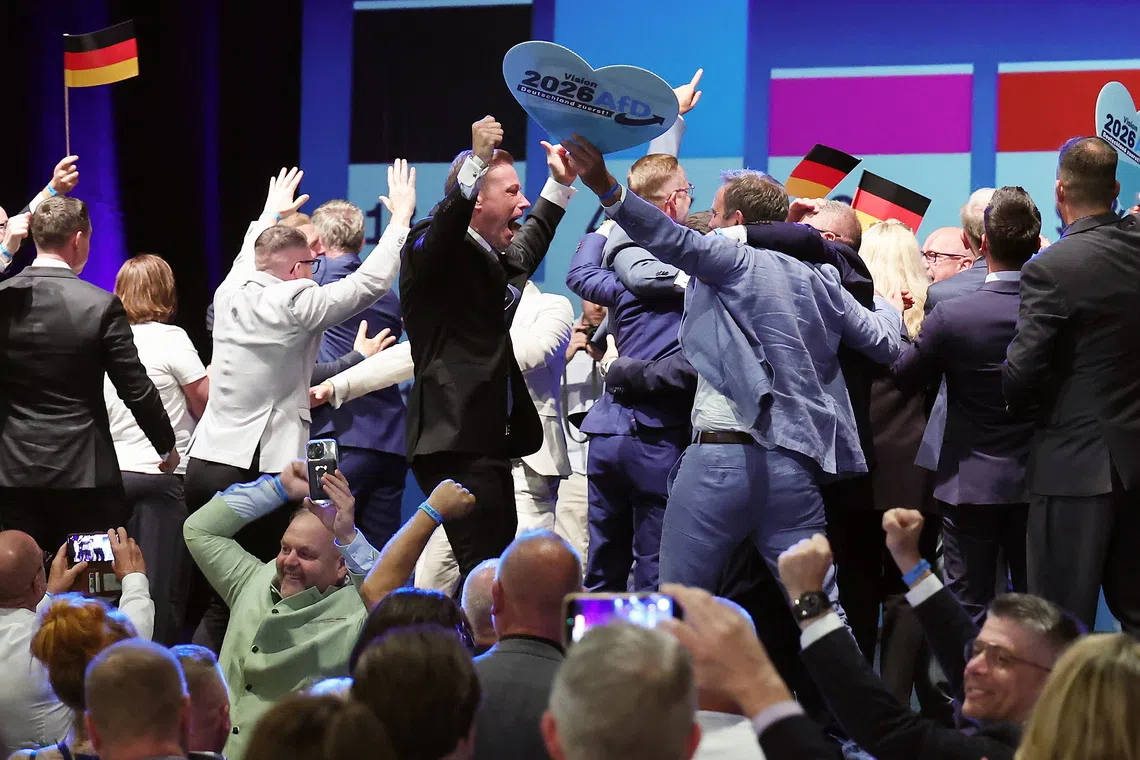
After the result, Siegmund declared: "We have made history in this country."
asserted
We → declare → country
"This isn't just about Saxony-Anhalt," he told supporters, "It's a signal for the whole of Germany - a self-confident signal."
asserted
It → tell → Germany
On Sunday evening, President Trump posted a screenshot of the projected election results on Truth Social.
asserted
Trump → post → Social
Trump's post was retweeted by Russian presidential envoy Kirill Dmitriev, who described the result as a "historic win."
asserted
who → retweete → win
The AfD has called for an end to support for Ukraine and seeking to revoke the refugee protections currently granted to Ukrainians.
asserted
AfD → call → Ukrainians
Elon Musk also tweeted his congratulations.
asserted
Musk → tweet → congratulations
In response, Ulrich Siegmund thanked Musk for his "support" and "clear and highly important perspective on the political developments of our time.
asserted
Siegmund → thank → time
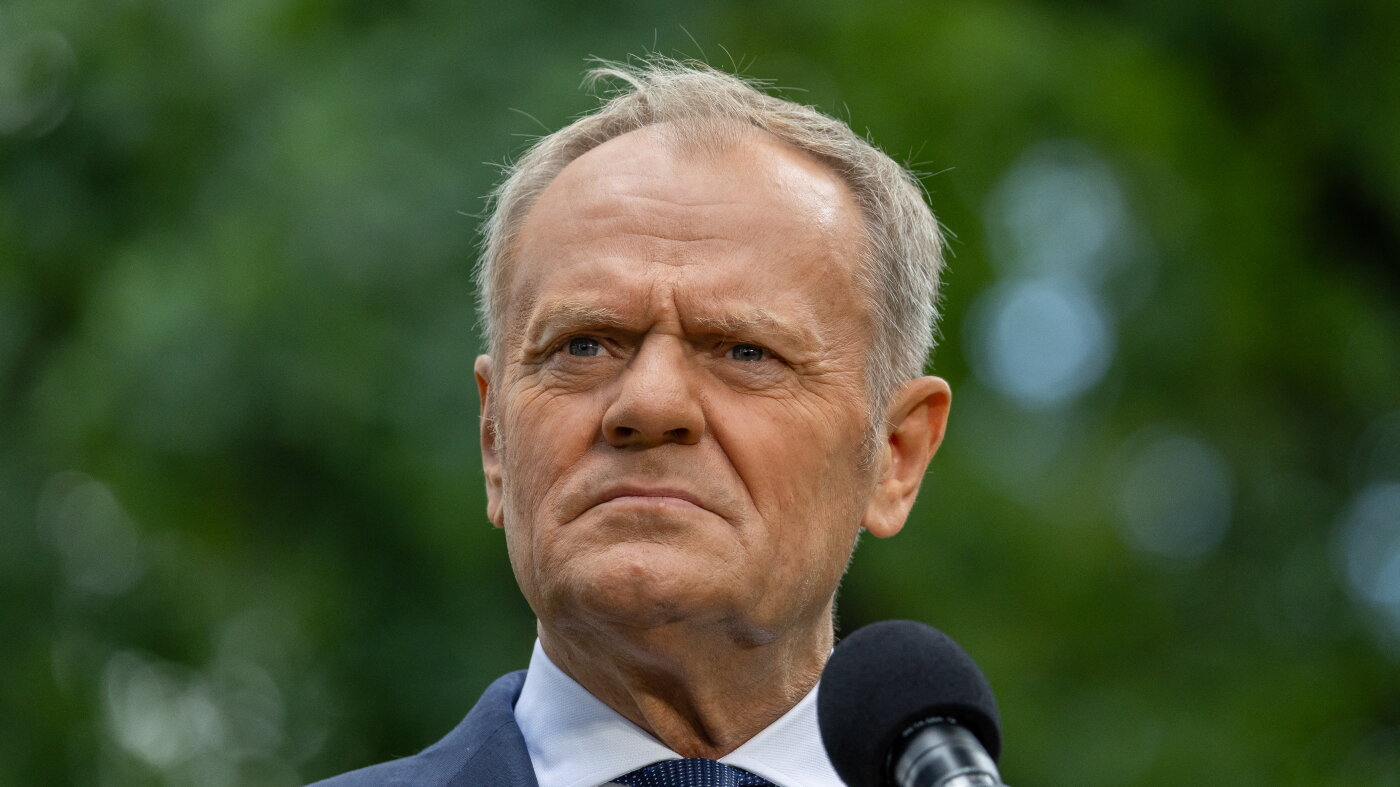
But neighboring Polish Prime Minister Donald Tusk took a very different view,
posting on X that "In Poland, only idiots or traitors can rejoice at the triumph of the AfD in Germany."
asserted
idiots → neighbor → Germany
France's Europe Minister, Benjamin Haddad described the election results as a "grave moment in Europe."
asserted
Minister → describe → Europe
 The Aporia