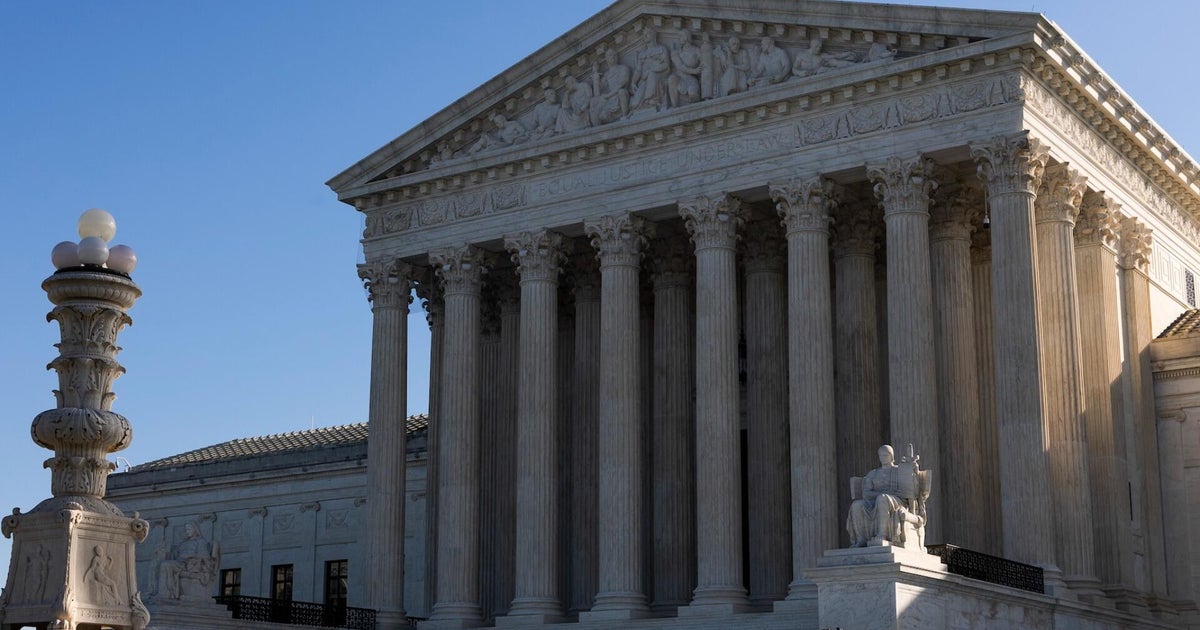
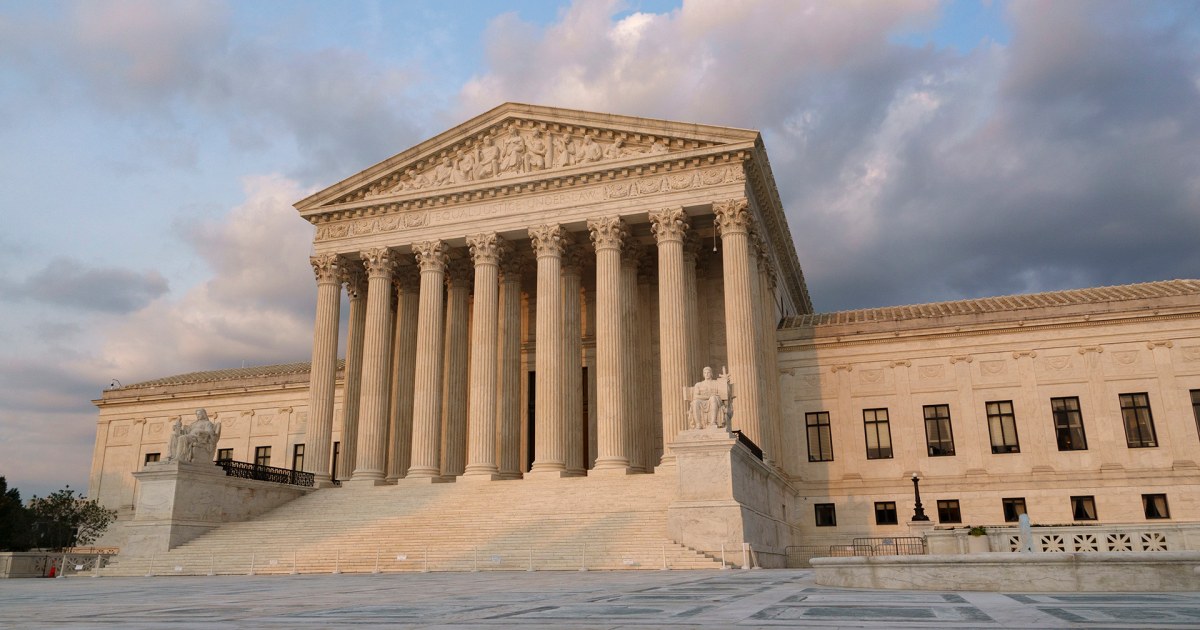
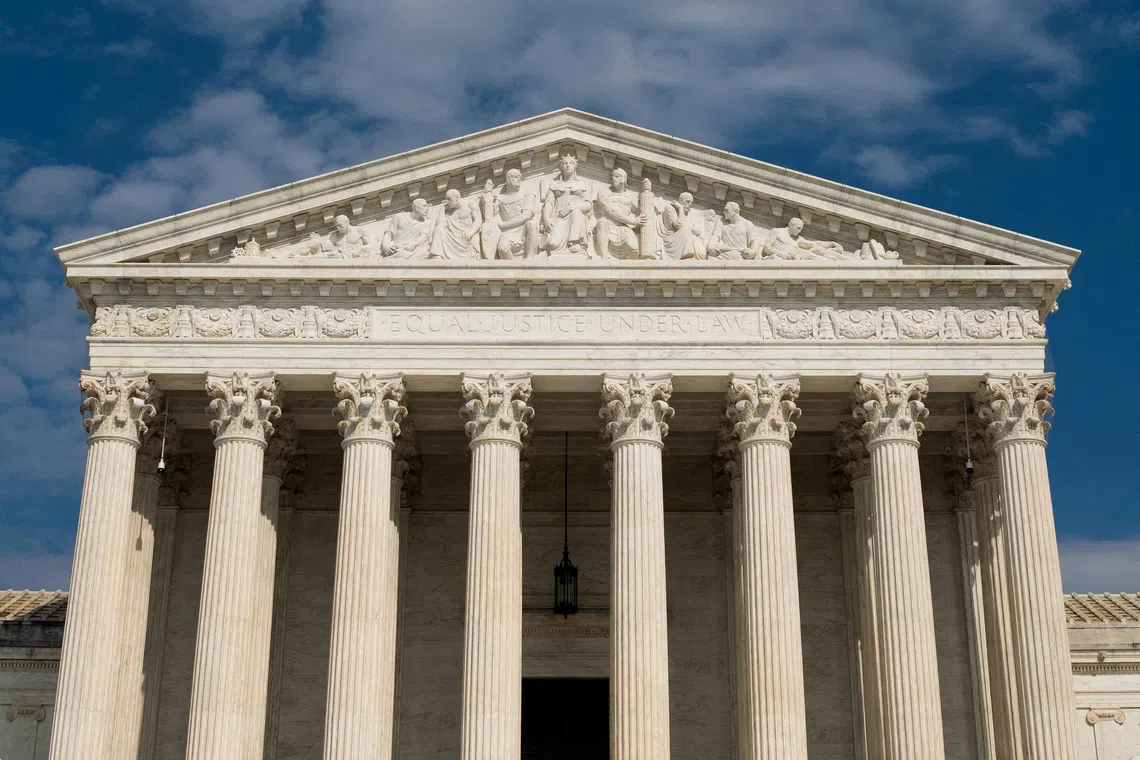
Inside the cases the Supreme Court will take up this term

Read the original at CBS News ↗
CBS News · collected 2026-10-06

Quick Summary

CBS News legal reporter Kartina Kaufman previews the upcoming Supreme Court term, which began on Monday. The court will consider several high-profile issues including voting rights and gun control. The first case focuses on whether federal law shields oil companies from state and local climate liability lawsuits.
Written locally by qwen2.5:14b on 2026-10-06, using this article's own text rather than the other coverage of the same event (that is the story summary below).

AI analysis runs on qwen2.5:14b, locally

Story summary

The Supreme Court is set to begin its new term on Monday with significant implications for climate change litigation when it hears the case of Suncor Energy v. Boulder County. In this lawsuit, Boulder County, Colorado, along with the City of Boulder, has sued Exxon Mobil and Suncor Energy, seeking compensation for local damages caused by global climate change attributed to these companies' fossil fuel production, promotion, and sale. The case could determine whether states and municipalities can use state courts to hold energy companies financially accountable for climate-related harms.

If the Court rules in favor of Boulder County, it would set a precedent allowing other progressive cities and states across America to file similar lawsuits against oil and gas firms. However, critics argue this approach bypasses federal law and could result in a chaotic patchwork of state-level regulations that might conflict with national policies or affect energy prices negatively for consumers.

The case has broader implications as it touches on issues of federal versus state power and the extent to which courts can intervene in complex environmental policy questions traditionally handled by Congress. The decision, expected sometime next year, could significantly influence future climate change litigation and regulatory approaches across various industries nationwide.

Written for “Supreme Court Climate Case” on 2026-10-06, grounded in this article and the 31 other(s) covering the same event.
Why this leaning score
This article does not take a side on a contested political question, so it has no leaning score. That is an answer rather than a gap: a match report or a rescue can be warmly or critically written without being left or right, and scoring it anyway is how approval of a subject gets recorded as a political position.
No political leaning scored for article 58982 · logged 2026-10-06

Signals How these are calculated →

Claims extracted
3
claim-shaped sentences
Uncertain
0%
0 of 3 hedged
Leaning
not political
takes no side on a contested political question
Correction & hedging signals
65.6
corrections and hedging in what we collected; not a measure of accuracy
Outlets on this story
32
Politics
Narrative spread
1
articles carrying this framing
Analyzed 2026-10-06 · how these are computed

Story

📰 Supreme Court Climate Case
Politics · 32 article(s) covering the same event. See how they differ ↓

How this is being covered How these are calculated →

Article leaning vs. publisher reliability
Source leaning vs. consistency

Compared with similar articles

This article reads unscored and hedges 0% of its claims. Each row says how that neighbour differs.
CBS News · 0.85 cosine similarity
⚖️ leaning not scored 🔴 0% hedged 0 of 2 📰 publisher trust 66
“While both articles discuss the Supreme Court's new term starting on Monday and mention climate cases, they do not describe the exact same specific event or incident.”
Reason
⚖️ Leans left 🔴 14% hedged 4 of 28 📰 publisher trust 66
“The articles discuss different aspects of the Supreme Court's upcoming term and do not describe the same specific incident.”
NBC News
⚖️ leaning not scored 🔴 no claims extracted 📰 publisher trust 95
“While both articles discuss upcoming Supreme Court cases for the new term, they do not describe the same specific event but rather different aspects and timeframes of the broader topic.”
NPR
⚖️ leaning not scored 🔴 15% hedged 8 of 52 📰 publisher trust 60
“Both articles refer to the Supreme Court's new term starting on Monday with a case about climate change and holding energy companies liable, indicating they are describing the same specific court event.”
NPR
⚖️ leaning not scored 🔴 16% hedged 8 of 51 📰 publisher trust 60
“Article A mentions SCOTUS hearing a major climate change case, while Article B discusses the broader context and significance of upcoming Supreme Court cases for the term, including but not limited to the climate dispute case.”
CBS News
⚖️ leaning not scored 🔴 0% hedged 0 of 3 📰 publisher trust 66
“While both articles discuss the Supreme Court's new term starting on the same day, they cover different aspects and do not describe the same specific occurrence.”
The Straits Times
⚖️ Leans right 🔴 5% hedged 2 of 37 📰 publisher trust 59
“While both articles discuss the start of the new Supreme Court term, they describe different aspects and do not refer to the same specific occurrence.”
CBS News
⚖️ leaning not scored 🔴 7% hedged 6 of 88 📰 publisher trust 66
“Article A discusses Justice Alito's interview, while Article B focuses on the Supreme Court's new term and upcoming cases.”
NPR
⚖️ Leans left 🔴 16% hedged 8 of 51 📰 publisher trust 60
“While both articles discuss the start of the Supreme Court's new term, they do not describe the same specific incident or occurrence.”
Los Angeles Times
⚖️ leaning not scored 🔴 33% hedged 19 of 57 📰 publisher trust 95
“While both articles discuss the Supreme Court's consideration of whether oil companies can be held liable for climate damage, they do not describe the same specific occurrence; Article A focuses on Justice Alito withdrawing from the case and the possibility of a tie vote, while Article B provides an overview of cases in the new term without this detail.”

Publisher

CBS News · 2068 article(s) · 6 correction(s) detected
Running correction rate · 6 correction(s)
2026-10-03
Tennessee prison system head to resign after failed Christa Pike execution
2026-10-02
Christa Pike unconscious, on ventilator after botched execution: Lawyers
2026-10-01
Rick Ross arrested on domestic violence charges in Miami Beach
2026-09-17
After nitrogen execution blocked, Alabama inmate to die by lethal injection
2026-09-14
The AI bubble is leaking air, some economists say. Should investors worry?
2026-08-24
Sean Grayson, convicted in killing of Sonya Massey, dies in prison, attorney says

Who wrote this

No reporter is named on this article.

Topics

CBS News The Supreme Court's

Subjects

CBS News ORG · 1× Kartina Kaufman PERSON · 1× The Supreme Court's ORG · 1×

Narrative

The first case of this term examines whether federal law prevents state and local governments from holding oil companies liable in climate disputes.
framing: assertive · carried by 1 article(s) · first seen 2026-10-06
🔮 The Supreme Court's new term kicked off on Monday and the justices are expected to weigh in on issues from voting rights to gun control.
2026-10-06 · CBS News
Inside the cases the Supreme Court will take up this term · assertive framing

Claims (3 extracted, 0 hedged)

The Supreme Court's new term kicked off on Monday and the justices are expected to weigh in on issues from voting rights to gun control. asserted
justices → kick → control
The first case of this term examines whether federal law prevents state and local governments from holding oil companies liable in climate disputes. asserted
companies → examine → disputes
CBS News legal reporter Kartina Kaufman has a preview of the biggest cases. asserted
Kaufman → have → cases
💬Give feedback
🕘History 🎫Support