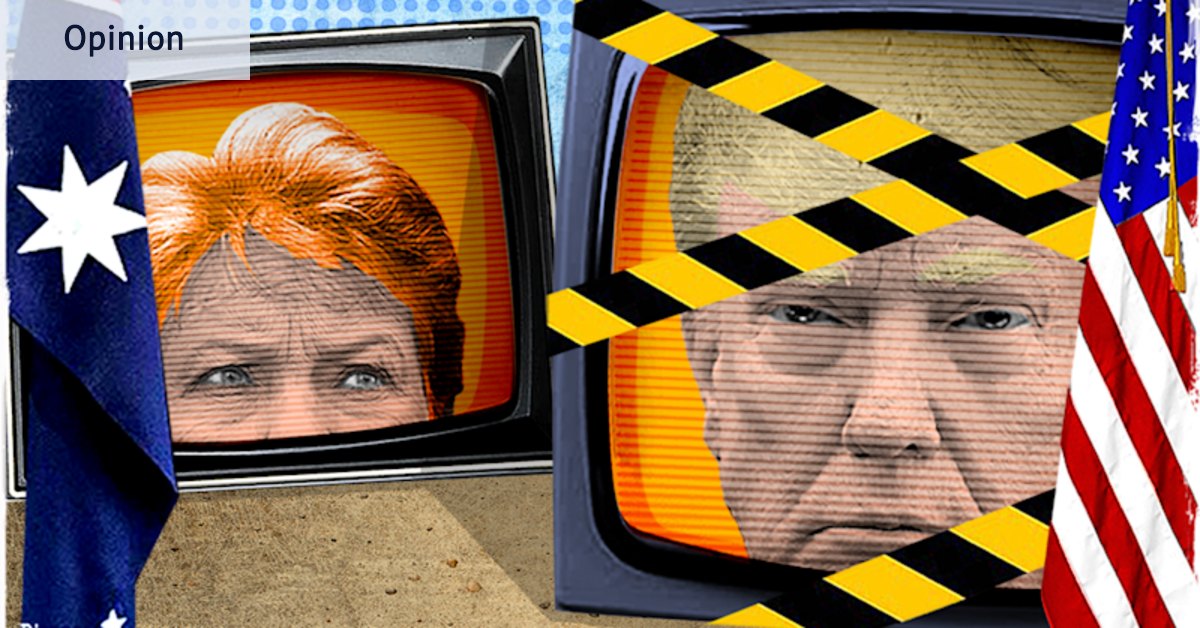
Depending on your politics, the monsters are everywhere.
asserted
monsters → depend → politics
Perhaps you see them in the form of tech billionaires and the artificial intelligence they’re developing.
asserted
they → see → billionaires
Perhaps you see them in the bin fire of social media they bequeathed us before that, or the legacy media that refuse to tell you “the truth”.
asserted
that → see → truth
You might see them in the manosphere, or the institutions teaching our kids gender fluidity.
uncertain
You → see → fluidity
Maybe you see them in the migrant youth wielding machetes in the suburbs, or the refugee attempting to behead someone on a Belfast street.
asserted
you → see → street
Or perhaps you see them in the violent anti-immigrant mobs that torched houses in response.
asserted
that → see → response
If so, you’ll likely see them in the March for Australia or the Unite the Kingdom rallies, organised by far-right groups but attended by many more besides.
asserted
you → see → many
You’ll almost certainly see them in at least one of Hamas, Israel or those local advocates at each other’s throats over the Middle East.
asserted
You → see → East
I suspect you’ll see them in Russia but that can no longer be assumed.
asserted
that → suspect → Russia
And I’d guess that you’d see them in at least one political party with a significant share of the vote.
asserted
you → guess → vote
Something in that paragraph probably outraged you.
asserted
Something → outrage → you
In which case, you’re probably seeing monsters in whoever sees different monsters from you.
asserted
whoever → see → you
It would be easy here to make a point about polarisation.
asserted
It → make → polarisation
But I want to look at the deep disquiet that lies underneath.
asserted
that → want → disquiet
Within the commotion of our times – Trump or wokeness or Zohran Mamdani’s stunning win in New York – is a common verdict that the conventional order has failed.
asserted
order → fail → York
It cannot be reformed, or tweaked to fulfil its purpose.
asserted
It → reform → purpose
It is more that the promises it made have been fundamentally broken, that it is simply incapable of delivering the good life.
asserted
it → make → life
Perhaps it never was, perhaps it can no longer – the flavour of the rejections vary but the terminus is the same.
asserted
terminus → vary → rejections
The disillusionment does not stem from the sense that we’re going through a rough patch or that conventional wisdom isn’t delivering.
asserted
wisdom → stem → patch
It’s that it can’t deliver.
asserted
it → ’ → ?
Speaking to the Monthly about inflation and the cost of living, the treasurer, Jim Chalmers, says “all of these rolling shocks for 20 years have been cumulative.
asserted
all → speak → years
And every time it feels like ordinary people are going to get off the mat, something else arrives.”
asserted
something → feel → mat
It’s a perceptive diagnosis, but to describe things more fully it needs to acknowledge that these rolling shocks span the economic, social, political and cultural realms.
asserted
shocks → ’ → realms
Consider even a cursory list … September 11 and the “war on terror” placed security front and centre.
asserted
September → consider → security
The 2005 London Tube bombings raised the spectre of homegrown terrorism, triggering all sorts of social anxieties.
asserted
bombings → raise → anxieties
Wars in Afghanistan and especially Iraq revealed the limits of western military power and undermined trust in governments that either imagined or invented weapons of mass destruction.
asserted
that → reveal → destruction
Then came the urgent awareness of climate change, which variously evoked existential dread and threatened to phase out entire industries on which depend economies and communities.
asserted
economies → come → which
Soon followed the global financial crisis, which caused millions around the world to lose their homes and life savings and revealed the edifice of our global economy to be more a house of cards than a cathedral.
asserted
edifice → follow → cathedral
Then came Islamic State, reviving the spectre that began the century in the crudest, most brutal form.
asserted
that → come → form
Next, Brexit and the election of Donald Trump – both previously unthinkable, both smashing all manner of orthodoxies, thrilling or terrifying according to taste.
uncertain
both → smash → taste
The dust hadn’t even settled when Covid-19 arrived, shuttering economies and lives, inflicting psychological torment, radically expanding state power.
asserted
Covid-19 → settle → power
It drove us into isolation and on to our phones, where we argued over lockdowns and masks and vaccines – seeding growing suspicion of authority, whether political or medical.
asserted
we → drive → authority
Social media became ever more present and polarising.
asserted
media → become → ?
Covid abated but inflation took off.
asserted
inflation → abate → ?
Then Hamas slaughtered Israeli civilians on 7 October 2023, and Israel annihilated Gaza in response with relative impunity, yielding unfathomable human suffering that ricocheted through cyberspace and into visceral local antagonism in societies around the world.
asserted
that → slaughter → world
Trump was re-elected and launched a trade war on the world which he called “Liberation Day”.
asserted
he → re → which
Then, in Australia, came Bondi.
asserted
Bondi → come → Australia
And while all this was happening, artificial intelligence emerged exponentially, developing faster than we could comprehend and threatening everything from swallowing up jobs by the million to unleashing killer robots.
uncertain
we → happen → robots
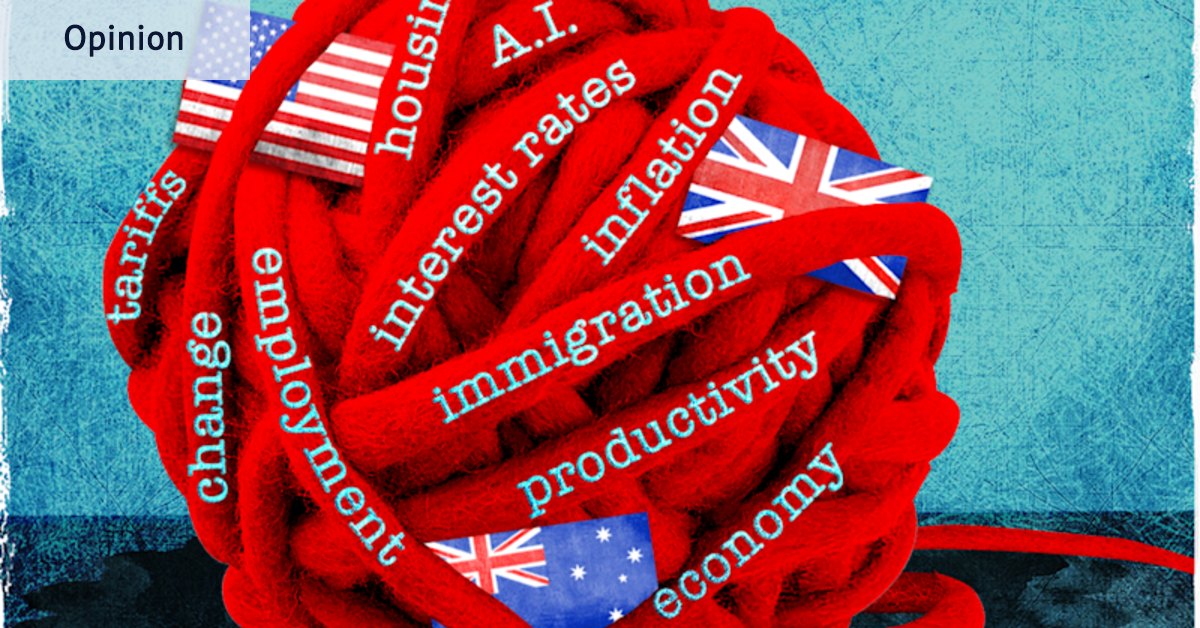
And what matters most is the compounding effect: a near-constant sense of crisis in almost every sphere of life.
asserted
matters → matter → life
It is not something likely to be finessed with policy.
asserted
It → finesse → policy
…and 43 more, not listed.
 The Aporia