Florida road test finds incinerator ash had no groundwater impact over 10 years

Read the original at Times of India ↗
Times of India · collected 2026-10-05 · by TOI Science Desk

Quick Summary

Researchers in Florida conducted a ten-year study to determine if municipal solid waste incinerator bottom ash could safely be used beneath roads without impacting groundwater. From 2014 to 2024, they built a test roadway incorporating the ash in its layers and monitored nearby groundwater wells for any contamination. The results showed no adverse effects on water quality over the decade-long period.
Written locally by qwen2.5:14b on 2026-10-05, using this article's own text rather than the other coverage of the same event (that is the story summary below).

AI analysis runs on qwen2.5:14b, locally

Story summary

In Florida, researchers conducted a decade-long study from 2014 to 2024 to determine if incinerator bottom ash could safely be used as a base layer in road construction. They built a full-scale test roadway using this waste product, which is produced when burning everyday municipal solid waste. The project involved placing the ash beneath the pavement and incorporating it into both asphalt and concrete materials. Groundwater was closely monitored through wells placed around the site over the ten-year period. Despite concerns about potential contamination, the study found no evidence that the ash had affected groundwater quality during this time frame. This research aims to address environmental challenges by repurposing waste material, potentially reducing landfill use while maintaining road safety standards.

Written for “Incinerator Ash Safety Study” on 2026-10-05, grounded in this article and the 0 other(s) covering the same event.
Why this leaning score
This article does not take a side on a contested political question, so it has no leaning score. That is an answer rather than a gap: a match report or a rescue can be warmly or critically written without being left or right, and scoring it anyway is how approval of a subject gets recorded as a political position.
No political leaning scored for article 56907 · logged 2026-10-05

Signals How these are calculated →

Claims extracted
34
claim-shaped sentences
Uncertain
15%
5 of 34 hedged
Leaning
not political
takes no side on a contested political question
Correction & hedging signals
59.1
corrections and hedging in what we collected; not a measure of accuracy
Outlets on this story
1
Environment
Narrative spread
1
articles carrying this framing
Analyzed 2026-10-05 · how these are computed

Story

📰 Incinerator Ash Safety Study
Environment · 1 article(s) covering the same event.

How this is being covered How these are calculated →

Article leaning vs. publisher reliability
Source leaning vs. consistency

Compared with similar articles

Nothing to compare against. No article is close enough to this one for the pipeline to have linked or judged the pair.

Publisher

Times of India · 1739 article(s) · 1 correction(s) detected
Running correction rate · 1 correction(s)
2026-10-04
Tennessee prison chief Frank Strada resigns after Christa Pike's botched execution

Who wrote this

TOI Science Desk
173 article(s) here · 1 carrying a prediction
🔮 He wanted to know whether sound could change how much water the machine collected.
🔮 The Seattle District’s Navigation Section removes objects and debris that could damage vessels or create risks to public health, recreation or the environment in publicly maintained commercial boat harbours.
🔮 In Florida, researchers tested whether ash left over from burning everyday waste could safely sit beneath a working road.
🔮 It also found that some programmes had unintended consequences, including the removal of non-target species and effects that may inadvertently benefit target species, though these are not universal.
🔮 The work is expected to continue through 2027, according to the US Environmental Protection Agency.
🔮 The animals could have survived the eradication programme and remained undetected, or new rats could have reached the island afterwards.
🔮 The results suggest that the arrangement could make plants surprisingly efficient at using the light available to them, states an online report by The Debrief.
🔮 A fishing trip along the Rio Grande led a La Joya, Texas, seventh-grader to investigate whether discarded shellfish shells could help remove pollution from water.
🔮 About 3 million single-use face masks could be used to build the base of a one-kilometre, two-lane road, according to research by engineers at Australia's RMIT University that explored a way to turn discarded masks and construction waste into road-building material.
🔮 The seventh-grader from BASIS Independent Silicon Valley in San Jose designed an atmospheric water generator that pulls moisture from humid air, then tested whether sound could make it more effective.
Wire or desk byline, not an individual reporter.
Also by TOI Science Desk
Nothing else under this byline is closely related to this article, so these are simply their most recent.
All 173 articles by TOI Science Desk →

Topics

American Florida Pennsylvania the Environmental Protection Agency the United States

Subjects

the United States GPE · 4× Florida GPE · 3× American NORP · 1× Canva ORG · 1× European NORP · 1× Pennsylvania GPE · 1× the Environmental Protection Agency ORG · 1×

Narrative

Predictions state that groundwater 35 feet from the roadway would stay below regulatory thresholds (Image: Canva) What the full-scale Florida test road was built from and how groundwater was monitored The pilot road used bottom ash as the granular layer beneath the pavement and as an ingredient in both the asphalt and the concrete.
framing: assertive · carried by 1 article(s) · first seen 2026-10-05
🔮 In Florida, researchers tested whether ash left over from burning everyday waste could safely sit beneath a working road.

Claims (34 extracted, 5 hedged)

In Florida, researchers tested whether ash left over from burning everyday waste could safely sit beneath a working road. uncertain
ash → test → road
They built a full-scale test roadway using municipal solid waste incinerator bottom ash in the base layer, the asphalt and the concrete, then sampled groundwater from monitoring wells for ten years, from 2014 to 2024. asserted
They → build → 2024
The wells showed no evidence that the ash had affected groundwater. asserted
ash → show → groundwater
Here’s why the ash is being considered for roads, how the project was approved and tested, what the decade of results showed, and where the limits lie, using a published ten-year case study. asserted
limits → ’ → study
Why waste incinerator bottom ash is under study in the United States According to ‘ Environmental analysis of a ten-year pilot project using municipal solid waste incinerator bottom ash as road base: a case study’ uncertain
ash → use → base
Waste incineration plants in the United States burn over 30 million tonnes of municipal solid waste each year, which produces energy and shrinks the waste volume by about 90 per cent. asserted
which → burn → cent
The burning leaves two kinds of ash, fly ash, which is fine particles caught by pollution filters and makes up about 20 per cent of the total, and bottom ash, a coarse, gravel-like material made mostly of concrete, slag, glass and ceramic fragments. asserted
burning → burn → concrete
In the United States the two types are usually mixed and buried in landfills or dedicated ash disposal sites. asserted
types → mix → landfills
That may be changing. uncertain
That → change → ?
Reuse of bottom ash in construction is more established in Europe and Asia, and its success there has renewed American interest in recycling it. asserted
success → establish → it
How researchers tested the ash and modeled the risk to groundwater before the Florida road was built The project started with a risk assessment rather than construction. asserted
project → test → assessment
The main worry is leaching, which means water washing small amounts of metals out of a material. asserted
which → mean → material
Laboratory leaching tests identified aluminum, molybdenum and antimony as the substances most likely to exceed water quality thresholds. asserted
tests → leach → thresholds
The ash's total metal content was also checked, and the averages stayed below the limit for industrial and commercial settings, although arsenic, lead, iron and copper averaged above the limits for residential settings. asserted
arsenic → check → settings
The team then used computer modeling to predict how any released metals would travel through soil toward groundwater. asserted
metals → use → groundwater
Using a tool from the Environmental Protection Agency, they predicted that groundwater 35 feet from the roadway would stay below regulatory thresholds, provided that less than 7 per cent of rainfall seeped through the road. asserted
cent → use → road
That finding supported an environmental permit for the test roadway. asserted
finding → support → roadway
The permit step matters because there is no federal rule in the United States for approving this kind of reuse, although some states, such as Pennsylvania, have their own approval processes. asserted
states → matter → processes
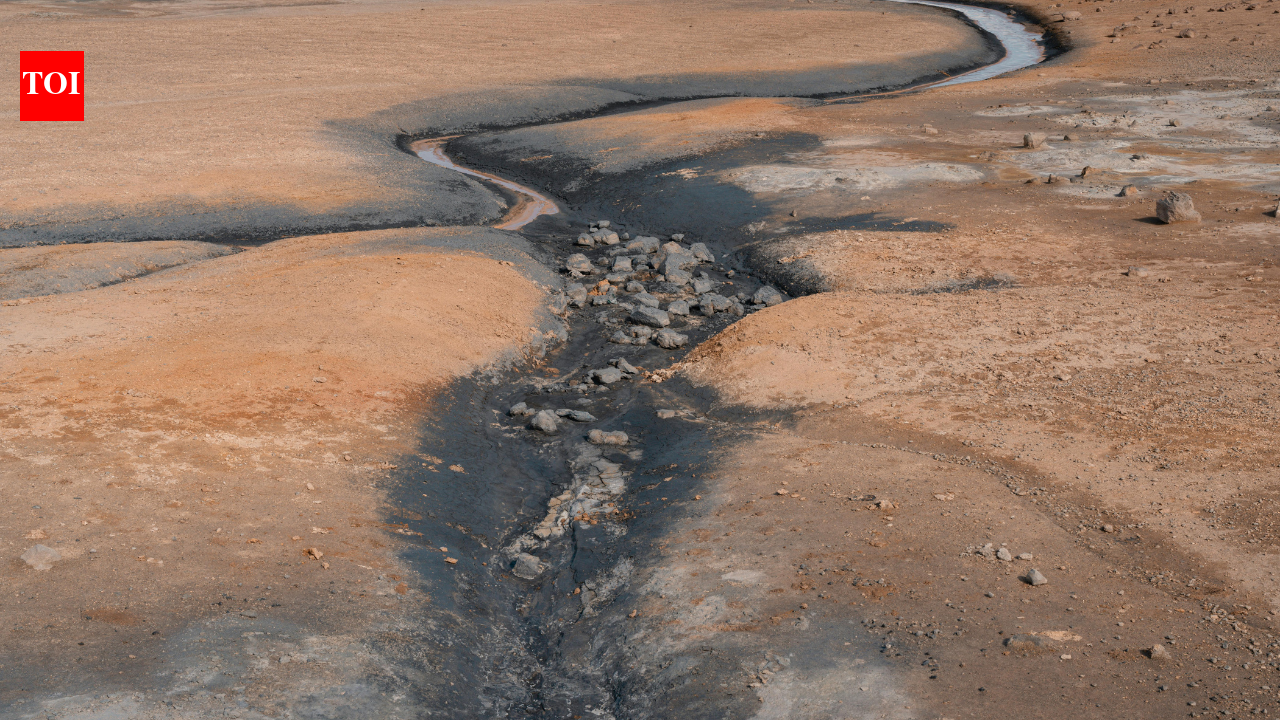
Predictions state that groundwater 35 feet from the roadway would stay below regulatory thresholds (Image: Canva) What the full-scale Florida test road was built from and how groundwater was monitored The pilot road used bottom ash as the granular layer beneath the pavement and as an ingredient in both the asphalt and the concrete. asserted
road → state → asphalt
Groundwater was monitored on both the uphill and downhill sides of the road for 10 years. asserted
Groundwater → monitor → years
The design allowed a fair comparison. asserted
design → allow → comparison
Samples from both test and control sections were assessed, so that any release of metals could be traced to the ash rather than to natural background conditions. uncertain
release → assess → conditions
What ten years of groundwater tests showed for aluminum, molybdenum and antimony near this test road asserted
showed → show → road
From 2014 to 2024, molybdenum and antimony stayed below the detection level of 0.003 milligrams per litre, meaning the instruments could not find them. uncertain
instruments → stay → them
Aluminum showed no consistent increase over the monitoring period. asserted
Aluminum → show → period
The authors conclude that, when the ash is sealed inside the road, it can be used in construction without affecting the groundwater beneath. asserted
it → conclude → groundwater
The result fits with earlier European evidence. asserted
result → fit → evidence
A field study there tracked a road with a bottom ash sub-base for over two years and found that only about 3.5 per cent of rainfall passed through the asphalt. asserted
cent → track → asphalt
What the findings mean for recycling incinerator ash in roads The phrase "sealed inside the road" carries real weight. asserted
phrase → mean → weight
The conclusion applies to ash enclosed within a road structure, not to loose ash left exposed, and the authors tie their finding to those conditions. asserted
authors → apply → conditions
This is also one case study at one site, so places with different soils, rainfall and ash sources would still need their own risk assessments. asserted
places → need → assessments
Even so, the study fills a gap. asserted
study → fill → gap
Laboratory tests do not always capture how ash behaves in real roads, so field data is needed to check what models predict. asserted
models → capture → what
The authors say their decade of data connects laboratory and modeling work to real-world use, and offers lessons for anyone planning to use incinerator ash in road construction. asserted
decade → say → construction

💬Give feedback
🕘History 🎫Support