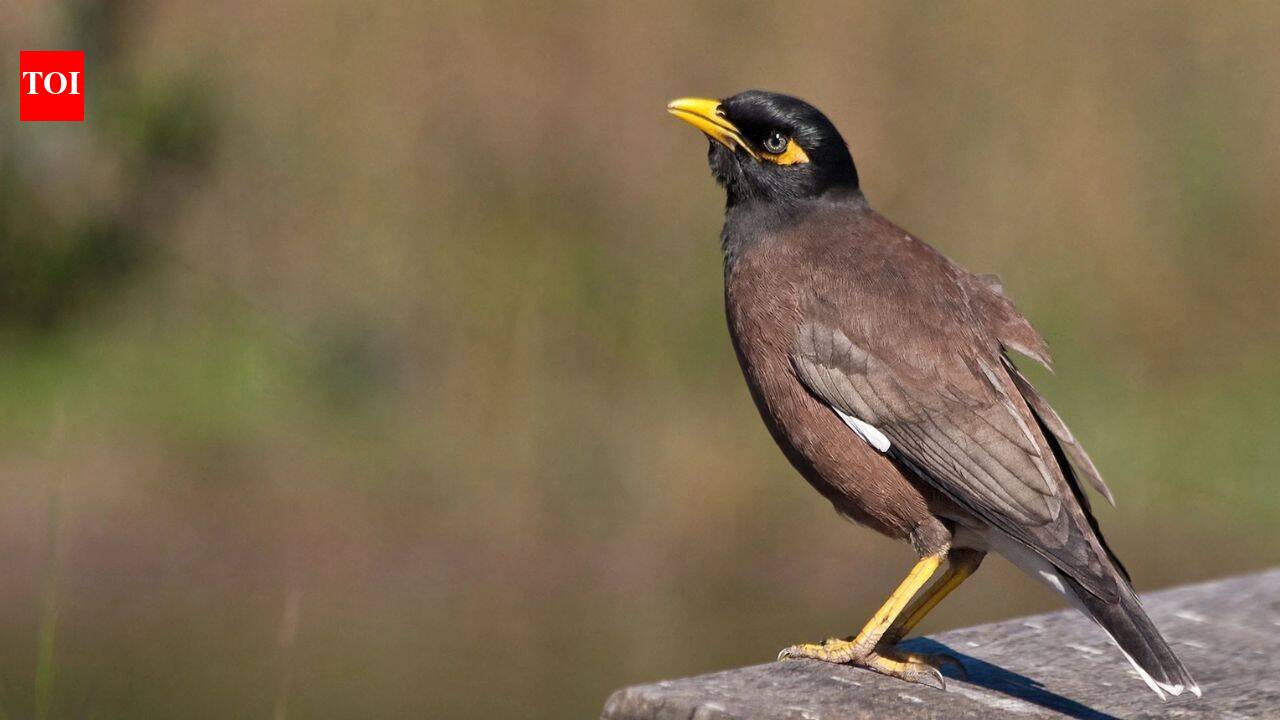
In 1915, common mynas were introduced to the Cook Islands to control coconut stick-insects affecting coconut palms. Initially seen as beneficial biological control agents, these birds later spread across multiple islands and became pests themselves by raiding crops and competing with native species. By 2014, a bounty program had been implemented on Atiu Island to reduce common myna numbers after nearly 13,000 were trapped there, highlighting the unintended consequences of introducing non-native species for pest control.
Written locally by qwen2.5:14b on 2026-10-05,
using this article's own text rather than the other coverage of the
same event (that is the story summary below).
Story summary
In 1915, common mynas were introduced to the Cook Islands as a biological control agent to manage the coconut stick-insect, which was severely damaging coconut palms. Initially seen as beneficial, these birds later spread across multiple islands and began causing ecological and economic harm by outcompeting native bird species, raiding crops, and invading human settlements. According to a review published in npj Biodiversity, this case exemplifies the unintended consequences of introducing one species to control another pest, leading to programs aimed at reducing or controlling the introduced species themselves due to their negative impacts.
Written for “Mynas Introduced As Pests Control” on 2026-10-05,
grounded in this article and the 0 other(s) covering the same event.
A bird introduced to the Cook Islands to control a coconut pest eventually became an unwanted species itself.
asserted
bird → introduce → pest
In 1915, the common myna was brought to the islands to control the coconut stick-insect, a major pest affecting coconut palms.
asserted
myna → bring → palms
The bird was initially viewed as a biological control agent.
asserted
bird → view → agent
It later spread across multiple islands and began competing aggressively with native birds, raiding crops and invading human settlements.
asserted
It → spread → settlements
According to the review published in npj Biodiversity titled '
Society’s struggle with unwanted species: what centuries of history reveal about species bounty programs', the case is one example of how species introduced to control other pests can later become targets of control themselves.
uncertain
species → accord → control
Why were common mynas introduced to the Cook Islands
The common myna was introduced to the Cook Islands in 1915 for a specific purpose.
asserted
myna → introduce → purpose
The bird was brought in to control the coconut stick-insect, which was described in the review as a major pest affecting coconut palms.
asserted
which → bring → palms
The introduction made the myna a biological control agent.
asserted
myna → make → ?
At the time, the myna was therefore considered useful because of its role in controlling another unwanted species.
asserted
myna → consider → species
However, its introduction did not remain limited to that original purpose.
asserted
introduction → remain → purpose
The birds spread across multiple islands.
asserted
birds → spread → islands
Their growing presence eventually created ecological and economic problems that changed their status from a useful control species to an unwanted one.
asserted
that → grow → one
PC: Wikipedia
How did the birds become a problem
asserted
birds → become → ?
After their introduction, common mynas spread across multiple islands in the Cook Islands.
asserted
mynas → spread → Islands
The birds began competing aggressively with native birds and also raided crops.
asserted
birds → begin → crops
They invaded human settlements as well, creating problems beyond the pest-control role for which they were introduced.
asserted
they → invade → which
These effects meant the myna was no longer viewed only as a biological control agent.
asserted
myna → mean → agent
Its presence was now linked to ecological and economic harm.
asserted
presence → link → harm
The change was significant because the same species brought in to control one pest had itself become a species that people wanted to control.
asserted
people → bring → that
A bounty programme was introduced to reduce myna numbers
asserted
programme → introduce → numbers
The problems caused by common mynas eventually led to a bounty programme on Atiu Island.
asserted
problems → cause → Island
The review doesn't describe how the programme worked.
asserted
programme → describe → ?
By 2014, nearly 13,000 common mynas had been trapped on the island according to a 2014 ABC News report cited by the review.
uncertain
mynas → trap → review
Atiu Island became an example of a place where an intentionally introduced species later became the target of a programme designed to reduce its population after it was associated with ecological and economic harm.
asserted
it → become → harm
Bounty programmes have targeted hundreds of unwanted species
The researchers identified at least 283 species across 449 species-country programmes in 60 countries over the past eight centuries.
asserted
researchers → target → centuries
These programmes have targeted mammals, birds, fish, plants, reptiles, mollusks, insects, amphibians and crustaceans.
asserted
programmes → target → mammals
The review found that bounty programmes have been launched for economic, ecological, and social (human health) reasons.
asserted
programmes → find → reasons
It also found that some programmes had unintended consequences, including the removal of non-target species and effects that may inadvertently benefit target species, though these are not universal.
uncertain
these → find → species
The myna was introduced for biological control in 1915 before becoming the subject of a bounty programme on Atiu Island.
asserted
myna → introduce → Island
 The Aporia