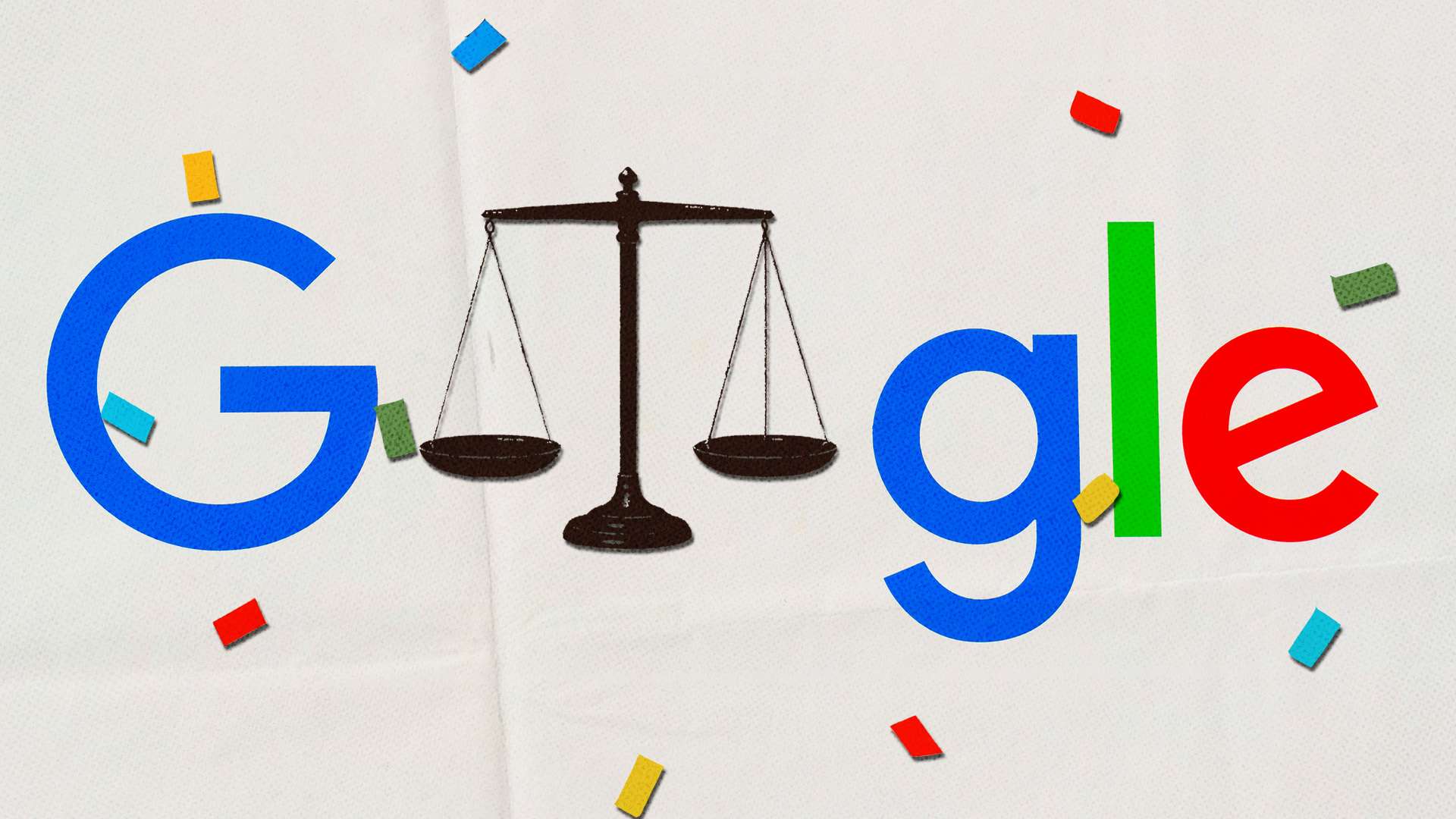
Google avoids another breakup

Semafor · collected 2026-09-06 · by Rohan Goswami
Read the original at Semafor ↗

Summary

A federal judge recently ruled that Google engaged in illegal monopolistic practices by rigging online ad sales, but chose not to order the company to break up or sell its ad business. This decision follows a similar finding last year regarding Google's search business and comes as part of a pattern where judges have declined to break up big tech companies despite finding them guilty of antitrust violations. The judge's refusal to impose penalties marks the third instance in the past year, including Meta avoiding a breakup of Instagram and WhatsApp. This outcome has been seen as a benefit to corporate America.
Written by the local model on 2026-09-06, using this article's own text rather than the other coverage of the same event (that is the story summary below).

Signals How these are calculated →

Claims extracted
8
claim-shaped sentences
Uncertain
0%
0 of 8 hedged
Leaning
Leans left
of the writing, not the subject
Publisher trust
96.2
red-flag proxy, not a credibility rating
Outlets on this story
3
Technology
Narrative spread
1
articles carrying this framing
Analyzed 2026-09-06 · how these are computed

AI analysis (generated at analysis time, not now)

Story summary

Here's a summary of the news story:

Judge Leonie Brinkema of the Eastern District of Virginia rejected a plan by the Justice Department to break up Google's advertising business as punishment for violating antitrust law. This is the third time in recent years that a judge has refused to break up a major tech company despite finding them guilty of operating an illegal monopoly. The decision was likely influenced by Brinkema's concerns about who would buy and operate Google's ad exchange, and whether it would be a better steward than Google. Google has been found guilty of "willfully acquiring and maintaining monopoly power" in the digital ad market. This ruling suggests that breaking up big tech companies may not be an effective solution to fostering competition, as it could create or reinforce monopolistic power elsewhere in the industry.
Written for “Google Antitrust Ruling” on 2026-09-07, grounded in this article and the 2 other(s) covering the same event.
Why this leaning score
The article's own words the score was based on. Each is quoted verbatim and was checked against the article text before being stored, so you can find it in the original.
Score -0.35 Confidence high
Leaning score -0.35 for article 5641 (high confidence, 2 verified quotes) · logged 2026-09-06

Story

📰 Google Antitrust Ruling
Technology · 3 article(s) covering the same event. This is the one the site leads with.

How this is being covered How these are calculated →

Article leaning vs. publisher reliability
Source leaning vs. consistency

Compared with similar articles

This article reads leans left and hedges 0% of its claims. Each row says how that neighbour differs.
Reason.com
⚖️ Leans strongly right further right than this 🔴 29% hedged 5 of 17 📰 publisher trust 94
“Both articles report on the same federal judge, Judge Leonie Brinkema of Virginia, rejecting a proposal to break up Google's ad business as punishment for antitrust violations.”
Semafor
⚖️ Leans strongly right further right than this 🔴 10% hedged 2 of 20 📰 publisher trust 96
“Both articles describe the same outcome (Google avoiding a breakup) and mention the same issue with Google's advertising business, suggesting they are reporting on the same specific incident”

Publisher

Semafor · 117 article(s) · 0 correction(s) detected
SignalValueWeight
Correction rate 0.000 0.4
Uncertainty density 0.077 0.25
Assertive mismatch rate 0.000 0.35
No corrections detected for this publisher. That may mean careful reporting, or simply that nothing has been checked.

Who wrote this

Rohan Goswami
1 article(s) here · 1 carrying a prediction
🔮 “Why do judges bother to find companies guilty of running a monopoly if they’re unwilling to break them up?” The American Prospect’s David Dayen wrote.
2026-09-06 · assertive framing · Google avoids another breakup
The only article under this byline in the corpus.

Topics

Google Instagram Meta The American Prospect’s WhatsApp

Subjects

Google ORG · 3× America GPE · 1× DOJ ORG · 1× David Dayen PERSON · 1× Democratic NORP · 1× FTC ORG · 1× Instagram ORG · 1× Meta ORG · 1× The American Prospect’s ORG · 1× WhatsApp ORG · 1×

Narrative

A federal judge agreed with prosecutors that Google had rigged the way its customers buy online ads but stopped short of forcing the company to sell the business.
framing: assertive · carried by 1 article(s) · first seen 2026-09-06
🔮 “Why do judges bother to find companies guilty of running a monopoly if they’re unwilling to break them up?” The American Prospect’s David Dayen wrote.
2026-09-06 · Semafor
Google avoids another breakup · assertive framing

Claims (8 extracted, 0 hedged)

Google has once again avoided being broken up, despite a formal finding that it has operated an illegal monopoly. asserted
it → avoid → monopoly
A federal judge agreed with prosecutors that Google had rigged the way its customers buy online ads but stopped short of forcing the company to sell the business. asserted
customers → agree → business
It followed a similar finding last year in Google’s giant search business. asserted
It → follow → business
It is the third time in the last year that a judge has decided against breaking up a big tech company (Meta also avoided a divestiture of Instagram and WhatsApp). asserted
Meta → decide → Instagram
The pattern has frustrated liberal antitrust thinkers. asserted
pattern → frustrate → thinkers
“Why do judges bother to find companies guilty of running a monopoly if they’re unwilling to break them up?” The American Prospect’s David Dayen wrote. asserted
Dayen → bother → them
But it’s been a boon for corporate America, which has skirted meaningful remedial antitrust action for years, even under Democratic presidencies. asserted
which → skirt → presidencies
The FTC and DOJ have had more success blocking mergers, but judges don’t seem inclined to unwind businesses. asserted
judges → have → businesses
💬 Give feedback
🕘 History 🎫 Support