That is 0 articles you have read today.
The Aporia is free and carries no advertising, so readers are the only
thing paying for it. If you are getting this much out of it, a small
donation is what keeps it independent.
Daily limit reached
You have read 0 articles today.
That is more than the 15 a day The Aporia gives away,
and well past what it can carry on nothing. Your allowance resets at
midnight.
There is no advertising here and nothing about you is sold, so readers
are the only thing paying for it. If the site is worth this much of
your day, it is worth a few dollars.
Everything else stays open: the
maps, the
directory and
search do
not count against this, and neither does re-opening something you have
already read today.
On October 3, 2026, North Korea reported testing an intermediate-range ballistic missile with evasive capabilities, claiming it can deliver nuclear weapons and is difficult to intercept due to advanced AI technology. This test follows recent tensions over border mine blasts that injured South Korean soldiers. Kim Yo Jong, the sister of North Korean leader Kim Jong Un, stated the missile flew more than 700 kilometers from Wonsan on the eastern coast, while both Japan and South Korea reported slightly different ranges, suggesting technical discrepancies or challenges in tracking the missile accurately.
Written locally by qwen2.5:14b on 2026-10-03,
using this article's own text rather than the other coverage of the
same event (that is the story summary below).
Story summary
On October 2, 2026, North Korea fired at least one ballistic missile towards its eastern waters, according to South Korea’s military. The projectile was likely a test of an intermediate-range strategic missile that included artificial intelligence capabilities, according to North Korean officials. This launch came after the land mine blasts last month near the Demilitarized Zone (DMZ) injured three South Korean soldiers. In response to Seoul's demand for an apology over these incidents, Kim Yo-jong, sister of North Korean leader Kim Jong Un, rejected any responsibility and labeled South Korea as a "despicable" enemy. The heightened tensions have prompted South Korea to raise military alerts and step up surveillance in coordination with the U.S. and Japan.
Written for “North Korea Missile Tests Tensions Grow” on 2026-10-05,
grounded in this article and the 11 other(s) covering the same event.
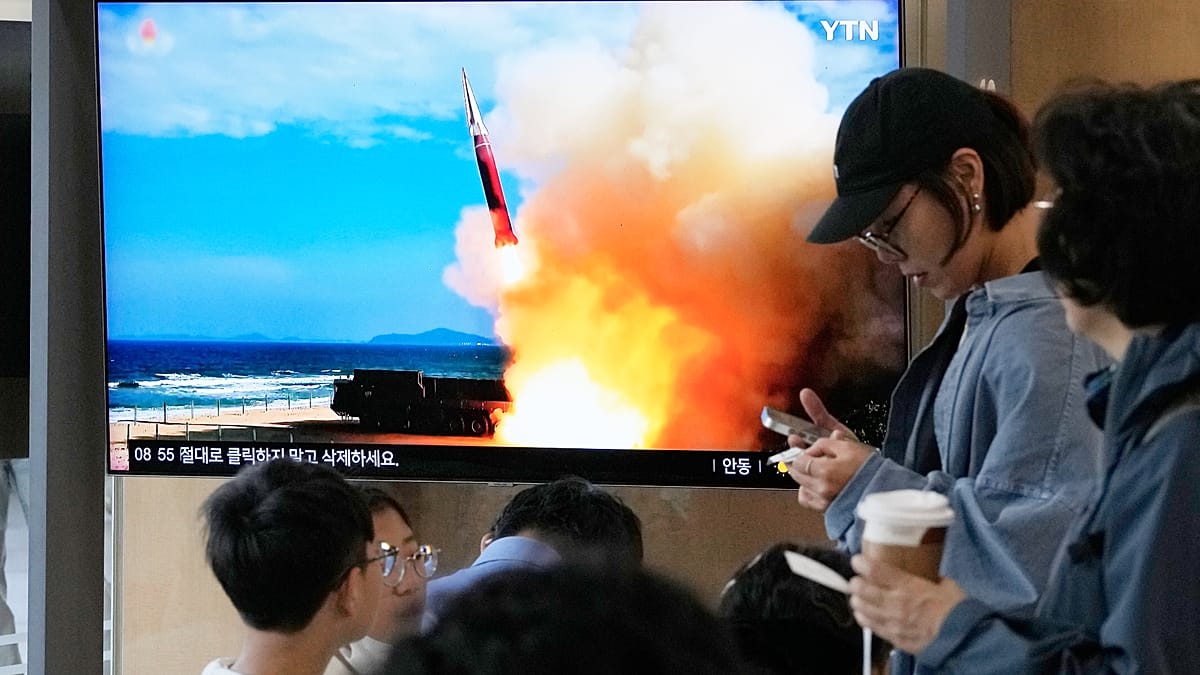
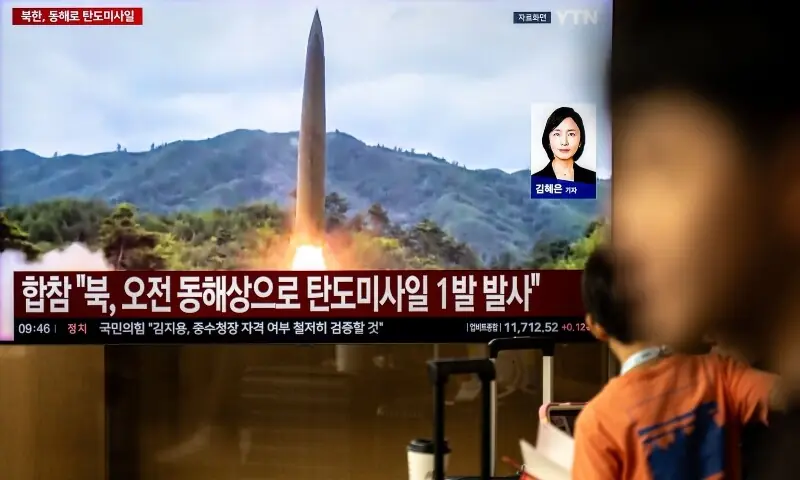
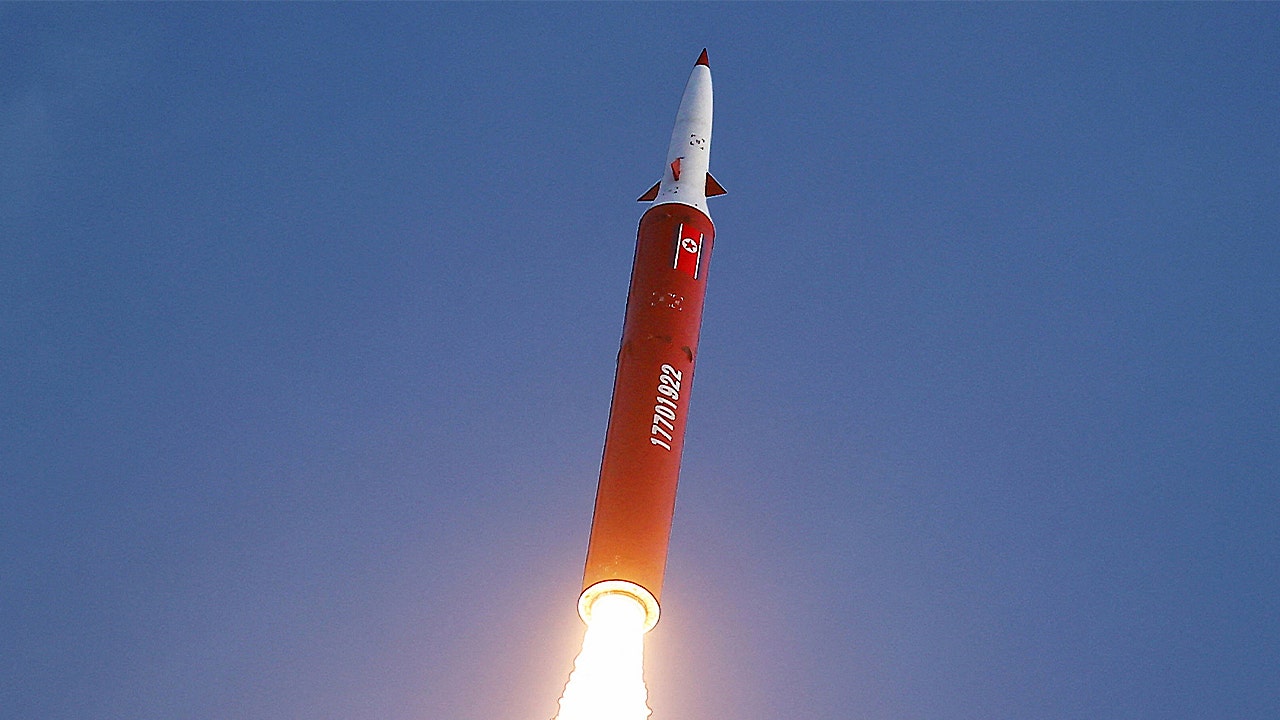
North Korea said Saturday (October 3, 2026) it test-fired an intermediate-range ballistic missile that it claimed has manoeuvrable flight capabilities designed to evade missile defences in South Korea and Japan.
asserted
it → say → Korea
The latest test comes amid heightened tensions between the two Koreas over border land mine blasts.
asserted
test → come → blasts
Also Read | North Korea launches ballistic missiles toward sea after military drill it sees as threat
Kim Yo Jong, the sister of North Korean leader Kim Jong Un, said her brother supervised the test of the missile, which she described as strategic, implying it was designed to deliver nuclear weapons.
asserted
it → read → weapons
She also said it could change its flight trajectory at low altitudes and was equipped with unspecified artificial intelligence capabilities that she claimed would make it highly difficult to intercept.
uncertain
it → say → capabilities
Japan's military said the missile landed in waters outside its exclusive economic zone.
asserted
missile → say → zone
The South Korean military, which often accuses North Korea of exaggerating its military capabilities, did not immediately comment on Kim's claims.
uncertain
which → accuse → claims
South Korea's Joint Chiefs of Staff said early Saturday (October 3) it detected the North Korean missile being launched from the eastern coastal Wonsan area and flying more than 700 kilometres (435 miles).
asserted
missile → say → kilometres
Japan's Defence Ministry later said it detected the missile flying about 680 kilometres (422 miles).
asserted
it → say → kilometres
Ms. Kim argued in her statement that the differing flight details between the neighbouring U.S. allies proved they couldn't properly track the missile in flight.
asserted
they → argue → flight
“Whenever we applied the wavelike trajectory mode to missiles, the enemy failed to track the targets from their first skip points,” she said.
asserted
she → apply → points
The launch came a day after she ridiculed South Korean demands for the North to apologise over the Sept. 21 land mine blasts, which occurred about 10 meters (11 yards) south of the countries' military demarcation line, injuring three South Korean soldiers.
asserted
which → come → soldiers
South Korea said a joint inspection of the site with the U.S.-led United Nations Command found that the blasts were caused by mines planted by North Korea.
asserted
blasts → say → Korea
The command later determined that the North Korea violated the armistice agreement that ended fighting in the 1950-53 Korean War.
asserted
that → determine → War
The South has also called on the North to halt its recent border fortification efforts, including the installation of mines and anti-tank barriers, which have accelerated after Kim Jong Un in 2024 abandoned his government's long-standing goal of reconciliation with the South and declared Seoul a permanent adversary.
asserted
Seoul → call → South
Kim Yo Jong, possibly the second-most powerful figure in Pyongyang, dismissed Seoul's demands over the mine blasts as “utterly pathetic” on Friday, saying the North intends to cut ties with the South forever.
uncertain
North → dismiss → South
In a statement on Sept. 30, she denied North Korean responsibility for the blasts and threatened to retaliate if South Korea fires on North Korean troops fortifying the border.
asserted
Korea → deny → border
 The Aporia