Oman played both sides — until it didn’t. How a secret shipping deal ignited the Strait of Hormuz

Read the original at Washington Examiner ↗
Cite

Wargotz, E. (2026, September 6). Oman played both sides — until it didn’t. How a secret shipping deal ignited the Strait of Hormuz. Washington Examiner. https://www.washingtonexaminer.com/op-eds/4711465/oman-iran-deal-strait-of-hormuz-crisis/

Dated when The Aporia collected the article, usually within hours of publication. Check the original for its exact date and byline.

Washington Examiner · collected 2026-09-06 · by Eric Wargotz

Quick Summary

Oman has dropped its policy of neutrality and negotiated a secret deal with Iran, known as the Iran-Oman Joint Transit Corridor Accord, in an attempt to revive its struggling shipping economy. Under this deal, Oman would have allowed Iranian territorial waters to be used for incoming commercial vessels, while splitting outbound tankers between Iranian and Omani lanes, and sharing toll revenues with Tehran. The deal's details were leaked, prompting the US to issue severe warnings against financial complicity with Iran, which could result in isolation from the Western financial system. The conflict escalated into a live combat zone, with reports of civilian casualties following a US missile strike on an Iranian target.
Written locally by qwen2.5:14b on 2026-09-06, using this article's own text rather than the other coverage of the same event (that is the story summary below).

AI analysis runs on qwen2.5:14b, locally

Story summary

The Trump administration announced an arrangement with Venezuela last week that would see the US gain control over 65 billion barrels worth of oil fields, representing about one-fifth of Venezuela’s total reserves. This deal includes a 35 percent stake for the Pentagon in North American Blue Energy Partners (NABEP), a firm led by Venezuelan businessman Alejandro Betancourt, who was previously under U.S. money-laundering investigation. The State Department also gets preferential rights to buy 20% of NABEP’s oil at cost and first refusal for the remaining 80 percent.

Venezuela’s acting president Delcy Rodriguez claims this agreement will bring much-needed foreign investment to her country's struggling oil industry, but many in Venezuela view her as illegitimate after the U.S. military captured former President Nicolás Maduro earlier this year. Opposition leader María Corina Machado has criticized the deal, arguing that Venezuela’s natural resources belong to its people rather than "an illegitimate regime."

The arrangement raises concerns among Venezuelan opposition figures who fear it could bolster the authoritarian government's control and undermine democratic progress in the country.

Written for “US Venezuela Oil Deal” on 2026-10-22, grounded in this article and the 127 other(s) covering the same event.

Story

📰 US Venezuela Oil Deal
Politics · 128 article(s) covering the same event. Compare every outlet's account →

Compared with similar articles

This article reads leans right and hedges 2% of its claims. Each row says how that neighbour differs.
BBC News
⚖️ Leans right 🔴 11% hedged 4 of 35 📰 publisher trust 69
“Both articles report on the US and Iran trading retaliatory attacks on ships in the Strait of Hormuz, confirming it's the same specific incident”
The Independent
⚖️ leaning not scored 🔴 5% hedged 2 of 44 📰 publisher trust 59
“Both articles report on the same incident of Iran launching ballistic missiles at US Navy ships and the subsequent strike by the US Central Command”
South China Morning Post
⚖️ Leans left further left than this 🔴 14% hedged 1 of 7 📰 publisher trust 64
“Both articles cover the exact same incident, mentioning the US strikes on oil tankers and the subsequent Iranian attack on a naval drone near Hormuz within hours of each other.”
Washington Examiner
⚖️ Leans right 🔴 0% hedged 0 of 14 📰 publisher trust 66
“Both articles describe the same incident involving a US Navy vessel being struck by Iran's forces in the Strait of Hormuz on Sunday, with different perspectives on whether it actually happened.”
Semafor
⚖️ leaning not scored 🔴 0% hedged 0 of 16 📰 publisher trust 60
“Both articles describe the ongoing conflict and blockade in the Strait of Hormuz, with Article A attributing it to a secret diplomatic pivot by Oman and Article B referencing its impact on the Jebel Ali port.”
The Hindu
⚖️ leaning not scored 🔴 11% hedged 2 of 18 📰 publisher trust 60
“Although both articles mention the Strait of Hormuz and conflict in Yemen/West Asia, they describe different occurrences and motivations, suggesting separate incidents.”
Euronews
⚖️ Leans left further left than this 🔴 0% hedged 0 of 18 📰 publisher trust 60
“Article A describes an attack by Iran on US military bases in Kuwait and the UAE, while Article B focuses on Oman's secret shipping deal with one side or the other, without mentioning any recent attacks”
The Straits Times
⚖️ Leans strongly right further right than this 🔴 36% hedged 14 of 39 📰 publisher trust 68
“Article B discusses a broader conflict that started six months ago, while Article A focuses on Oman's recent actions and their impact on the situation.”
Global News
⚖️ leaning not scored 🔴 9% hedged 2 of 22 📰 publisher trust 63
“Article A describes Oman's secret shipping deal as causing tension leading to a live combat zone, while Article B reports on Iran claiming it struck an unmanned US vessel in the Strait of Hormuz, without mentioning Oman's role”
The Hindu
⚖️ Leans right 🔴 5% hedged 1 of 19 📰 publisher trust 60
“Article A describes Oman's secret shipping deal leading to a live combat zone, while Article B reports on an alleged attack by Iran on a US ship in the Strait of Hormuz, indicating two separate events”
How this article was measured signals, leaning charts, publisher record, byline, topics and claims

Signals How these are calculated →

Claims extracted
50
sentences that state something as happening or true
Uncertain
2%
1 of 50 hedged ("reportedly", "may", "according to")
Leaning
Leans right
of the writing, not the subject · beta estimate
Publisher signals
66/100
Washington Examiner's corrections and hedging, across everything collected from it. Not a measure of accuracy.
Outlets on this story
128
Politics
Same framing elsewhere
1
articles that frame the event the way this one does
Analyzed 2026-09-06 · how these are computed

How this is being covered How these are calculated →

Article leaning vs. publisher reliability
Source leaning vs. consistency

Publisher

Washington Examiner · 3256 article(s) · 6 correction(s) detected
Running correction rate · 6 correction(s)

Who wrote this

Eric Wargotz
41 article(s) here · 1 carrying a prediction
🔮 But right now, all these conflicting voices in his ear, the domestic polling, and the foreign pressure might just be clouding his judgment.
🔮 A highly active, independent 85-year-old with multiple risk factors might experience significant, long-term survival benefits from continuous lipid management.
🔮 When we — whether ordinary citizens or high-level officials — flirt with systemic collapse simply because we despise the current administration, we play with a fire that will consume everyone.
🔮 National surveys published by the Pew Research Center Climate Pessimism Study document that roughly 60% of Americans express deep anxiety that global actors will fail to mitigate the worst environmental impacts due to political division.
2026-10-09 · assertive framing · The climate war’s dumbest lie: Jobs vs. nature
🔮 If your only window into the American soul is the nightly cable news broadcast, you would assume we are a nation completely irreconcilable, locked in a permanent cultural cold war.
🔮 Meanwhile, Trump boldly cut through the bureaucratic panic, signaling that the White House has no appetite for heavy-handed domestic regulations that would cripple our edge and stating that our primary guardrails remain the rule of law and the Department of Justice.
🔮 When we look at this disparity under the microscope, we find that it is neither a failure of individual willpower nor a consequence of an isolated genetic pool.
🔮 Every single time I hit “send” on a new draft, a cynical voice in my head asks the exact same questions: Will the editor accept this, as they’re overwhelmed with tons of these a day?
🔮 You cannot hide behind an ideological playbook or an army of insulated advisers when a budget needs balancing or a project stalls; your neighbors will call you out at the local hardware store.
🔮 The critics omitted this step because the results would have disrupted their narrative.
Also by Eric Wargotz
Nothing else under this byline is closely related to this article, so these are simply their most recent.
All 41 articles by Eric Wargotz →

Topics

Guard Iran Iranian U.S. Washington

Subjects

U.S. GPE · 6× Guard ORG · 4× Iran GPE · 4× Iranian NORP · 4× Muscat GPE · 3× Oman GPE · 3× Omani NORP · 3× Tehran GPE · 3× Washington GPE · 3× the United States GPE · 1×

Narrative

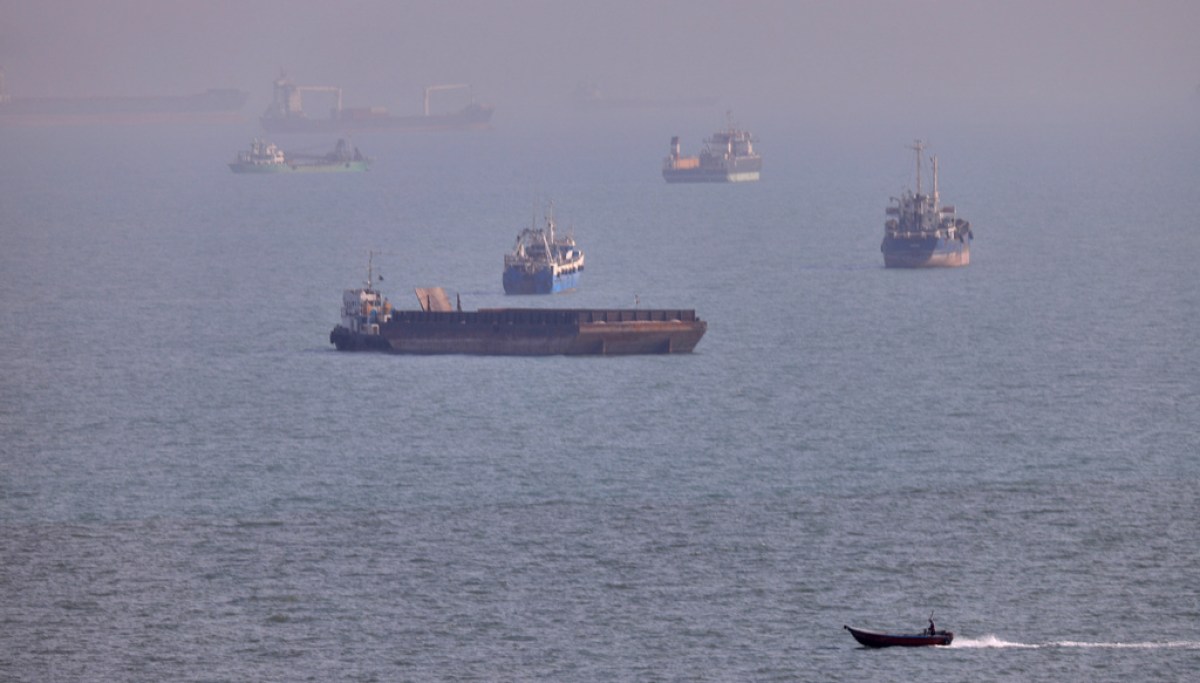
With oil supertankers burning off its coast and U.S. warships enforcing freedom of navigation by force, Oman is learning a brutal lesson in statecraft: When superpowers collide, neutrality is the first casualty.
framing: assertive · carried by 1 article(s) · first seen 2026-09-06
🔮 Under the framework, inbound commercial vessels would navigate exclusively through Iranian territorial waters.

Claims (50 extracted, 1 hedged)

Oman’s strategy of calculated neutrality has run out of road. asserted
strategy → run → road
Long celebrated as a quiet diplomatic bridge between Washington and Tehran, Muscat has shattered its careful balancing act. asserted
Muscat → celebrate → act
A desperate attempt to revive a paralyzed shipping economy has transformed Oman into a central participant in a military conflict between the United States and Iran. asserted
attempt → revive → States
Recommended Stories The crisis traces back to a secret diplomatic pivot by Muscat. asserted
crisis → trace → Muscat
Facing economic strain from a monthslong maritime blockade, Omani officials bypassed Western mediators. asserted
officials → face → mediators
They negotiated directly with the Islamic Revolutionary Guard Corps leadership. asserted
They → negotiate → leadership
The resulting Iran-Oman Joint Transit Corridor Accord sought to establish a temporary traffic scheme outside international oversight. asserted
Accord → result → oversight
Under the framework, inbound commercial vessels would navigate exclusively through Iranian territorial waters. asserted
vessels → navigate → waters
Outbound tankers would split passage between Iranian and Omani lanes. asserted
tankers → split → lanes
The unratified deal allowed both nations to cooperate on mine-clearing operations. asserted
nations → allow → operations
Most controversially, they agreed to share toll revenues and transit fees collected from passing commercial vessels. asserted
they → agree → vessels
Tehran immediately weaponized the leaked details of the deal. asserted
Tehran → weaponize → deal
It projected it as regional validation of its sovereign control over the channel. asserted
It → project → channel
The Guard declared that the corridor would remain frozen until the U.S. lifted its naval blockades, dropped economic sanctions, and unfroze state assets. asserted
U.S. → declare → assets
The prospect of a rogue regime collecting a protection fee on an international waterway triggered a swift response from Washington. asserted
regime → collect → Washington
The U.S. administration issued severe warnings. asserted
administration → issue → warnings
Officials stated that any financial complicity with Tehran would result in total isolation from the Western financial system. asserted
complicity → state → system
When diplomatic warnings failed to halt the corridor, the conflict turned kinetic. asserted
conflict → fail → corridor
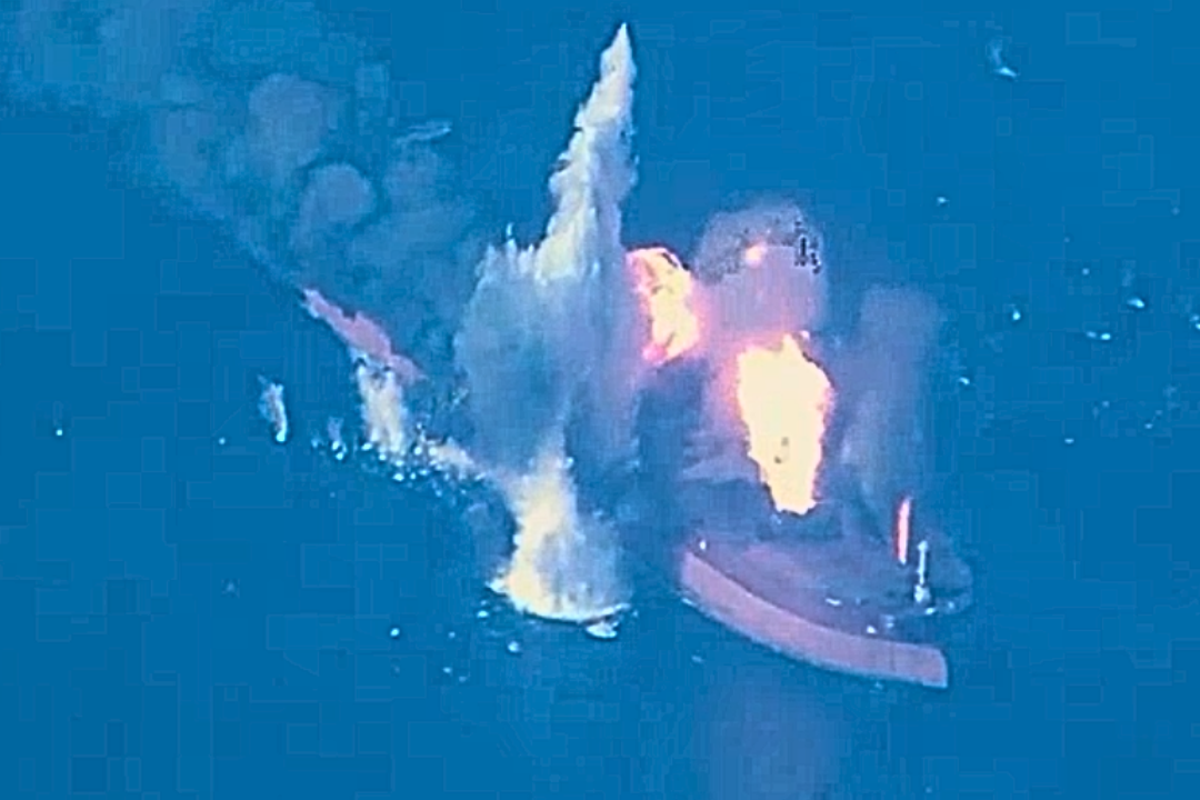
Following persistent Iranian threats against commercial shipping, U.S. Central Command launched night aerial bombardments. asserted
Command → follow → bombardments
The strikes targeted Guard radar centers, naval missile sites, and drone launch facilities across southern Iranian coastal cities. asserted
strikes → target → cities
The human cost escalated overnight. asserted
cost → escalate → ?
Reports emerged that a U.S. missile strike struck a home hosting a wedding celebration in the coastal city of Sirik, killing at least five civilians. asserted
strike → emerge → civilians
While U.S. military spokespeople expressed regret over the loss of innocent lives, Washington maintained that American forces do not target civilians. asserted
forces → express → civilians
It blamed Iran for hiding military assets near residential zones. asserted
It → blame → zones
This defense has not quieted international outcry, effectively closing the window for immediate ceasefire negotiations. asserted
defense → quiet → negotiations
The Guard’s promised retaliation was immediate. asserted
retaliation → promise → ?
Iran launched a barrage of missiles and drones targeting U.S. regional allies. asserted
Iran → launch → allies
Air defense systems in Jordan, Kuwait, and Bahrain were actively engaged. asserted
systems → engage → Jordan
Regional authorities reported the interception of multiple incoming ballistic missiles. asserted
authorities → report → missiles
Simultaneously, the war returned to the water. asserted
war → return → water
The Guard issued a warning of additional punishments targeting any commercial vessel utilizing the U.S.-coordinated alternative route that hugs the Omani coast. asserted
that → issue → coast
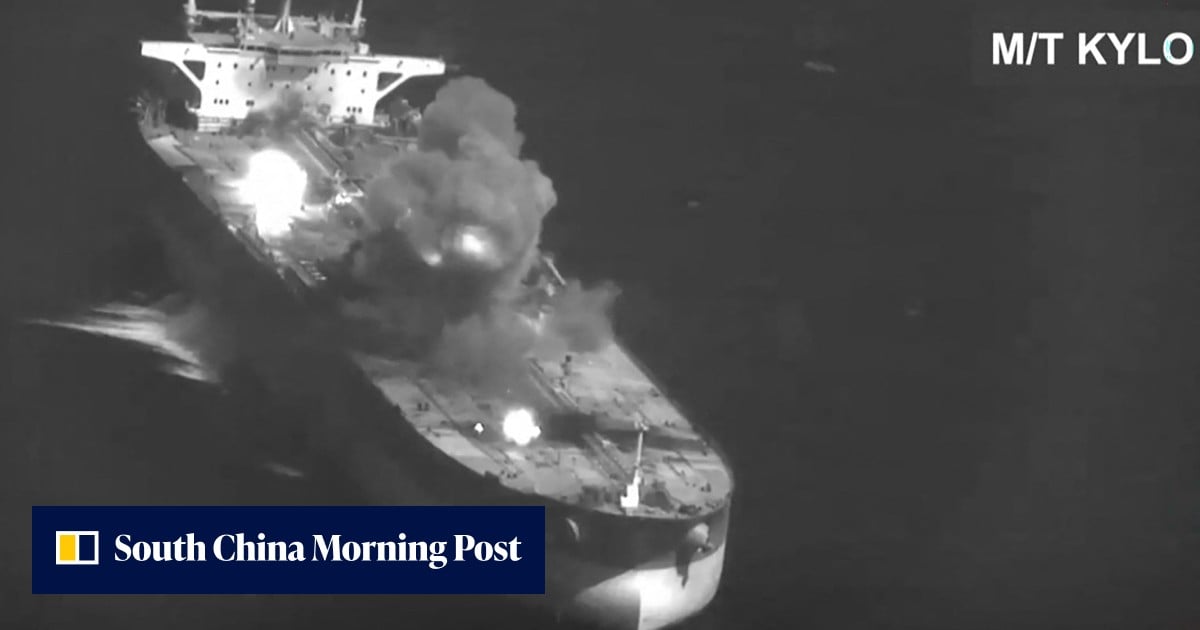
Hours later, the Saudi-flagged Sidr and the Liberian-flagged Senegal Prosperity, two oil supertankers, were attacked in the Strait of Hormuz just 17 nautical miles off the coast of Khasab, Oman. asserted
Sidr → flag → Khasab
This proved that Muscat cannot escape the physical fallout of the war. asserted
Muscat → prove → war
The resulting paralysis of the channel has sent shockwaves through global markets, placing a heavy economic toll on Asian refineries. asserted
paralysis → result → refineries
Major energy buyers across Japan, South Korea, and India face a crude crunch. asserted
buyers → face → crunch
Daily tanker traffic through the strait has plummeted to less than a tenth of its normal volume. asserted
traffic → plummet → volume
Refiners are scrambling to source expensive alternatives from West Africa and the Americas. asserted
Refiners → scramble → Africa
This drives up domestic fuel costs and threatens manufacturing hubs with stagflation. asserted
This → drive → stagflation
This economic vulnerability explains why China has openly rejected unilateral U.S. sanctions. asserted
China → explain → sanctions
Beijing is pressuring Oman to operationalize the Iranian transit corridor immediately. asserted
Beijing → pressure → corridor
…and 10 more, not listed.

💬Give feedback
🕘History 🎫Support