Mark Carney’s government has designated a major oil pipeline project from Alberta to the Pacific coast as being in the national interest, allowing for expedited development under the Building Canada Act. The federal chief of the Assembly of First Nations, Cindy Woodhouse Nepinak, warns that legal challenges may follow if proper consent is not obtained from Indigenous communities. Carney claims consultations with over 130 Indigenous communities have already begun and promises further engagement as details are finalized, while Woodhouse Nepinak emphasizes the need for “free, prior, and informed consent.”
Written locally by qwen2.5:14b on 2026-10-02,
using this article's own text rather than the other coverage of the
same event (that is the story summary below).
Story summary
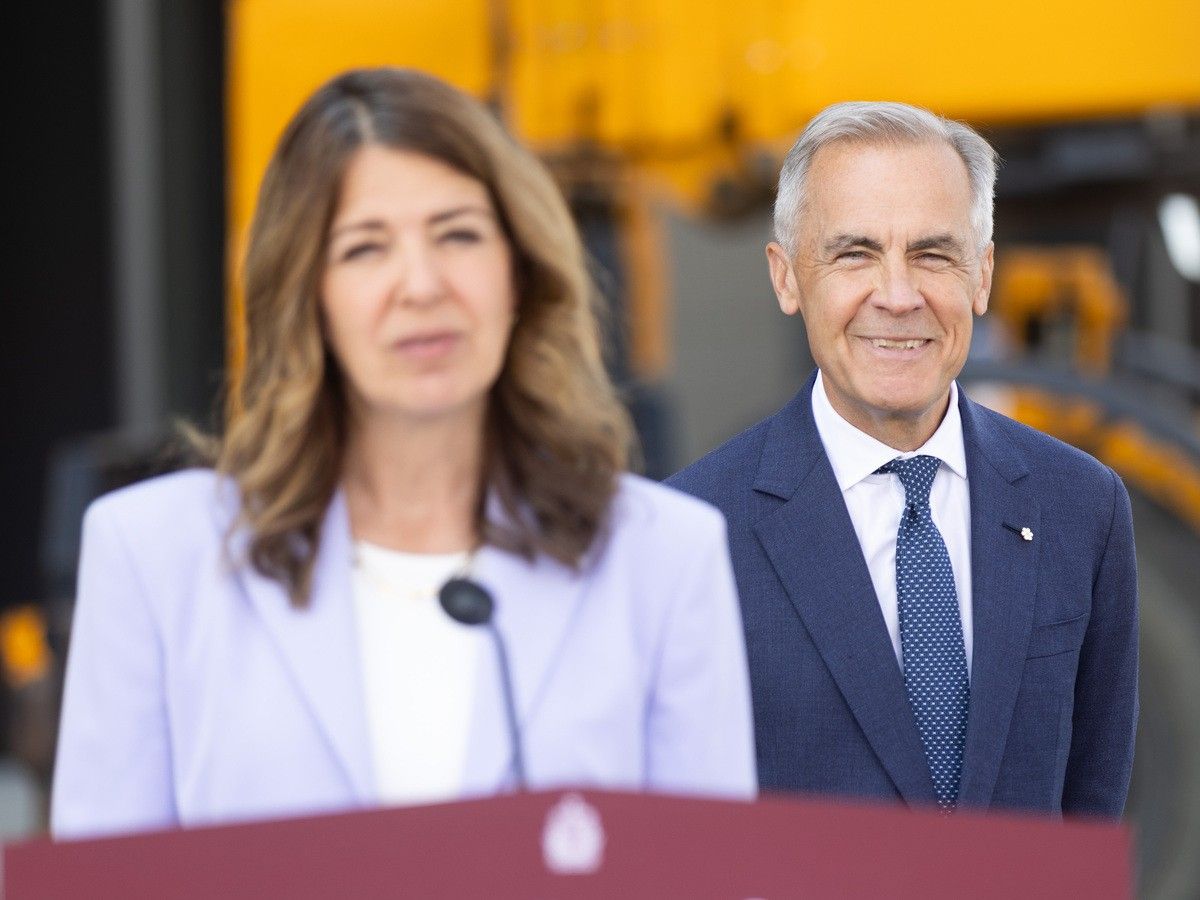
On Oct. 1, Prime Minister Mark Carney and Premier Danielle Smith of Alberta announced that a proposed West Coast pipeline, now called "Pacific Link," would be designated as a project of national interest in Fort McMurray, Alberta. The designation aims to fast-track the regulatory process for the pipeline, which is expected to carry up to one million barrels of crude oil daily from Bruderheim, northeast of Edmonton, to Roberts Bank terminal near Delta, British Columbia. This initiative seeks to diversify Canada's energy exports by reducing dependence on the US market and boosting economic growth, with potential GDP gains of up to C$30 billion annually and creation of 150,000 jobs. The announcement also aims to address separatist sentiments in Alberta, where support for separation from Canada stands at around 22%.
Written for “West Coast Pipeline Designation” on 2026-10-05,
grounded in this article and the 19 other(s) covering the same event.
OTTAWA—Prime Minister Mark Carney’s push to expedite construction of a major oil pipeline to the West Coast could set up a potential legal fight with Indigenous communities, with the national chief of the Assembly of First Nations saying “nothing is off the table” if the government fails to properly obtain consent for the project.
uncertain
government → expedite → project
The federal government must ensure that “free, prior, and informed consent is worked through together with First Nations” for all major projects, Cindy Woodhouse Nepinak told the Star on Thursday, “and so far, we’re not seeing that.”
asserted
we → ensure → that
If that trend continues, Woodhouse Nepinak said, “First Nations will stand strong,” confirming that options she outlined in a July letter to federal cabinet ministers — including legal challenges — are being considered.
asserted
she → continue → challenges
“We look forward to further discussion with our chiefs in assembly.
asserted
We → look → assembly
But certainly, they’re always very strong on their rights and, you know, we win in court,” she said.
asserted
she → ’re → court
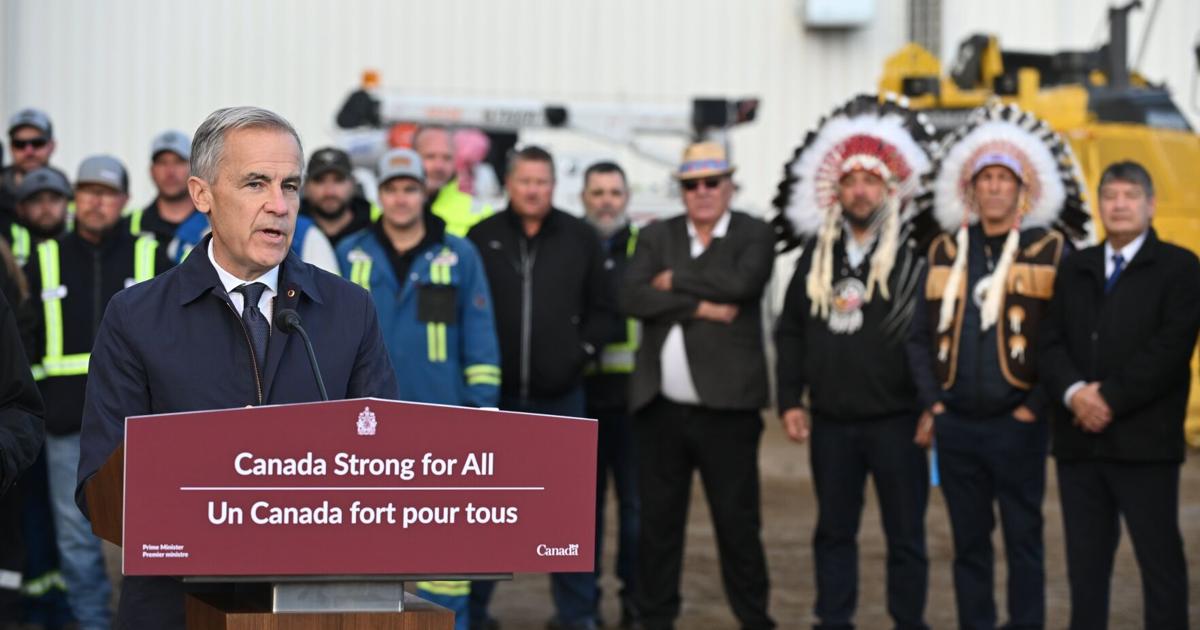
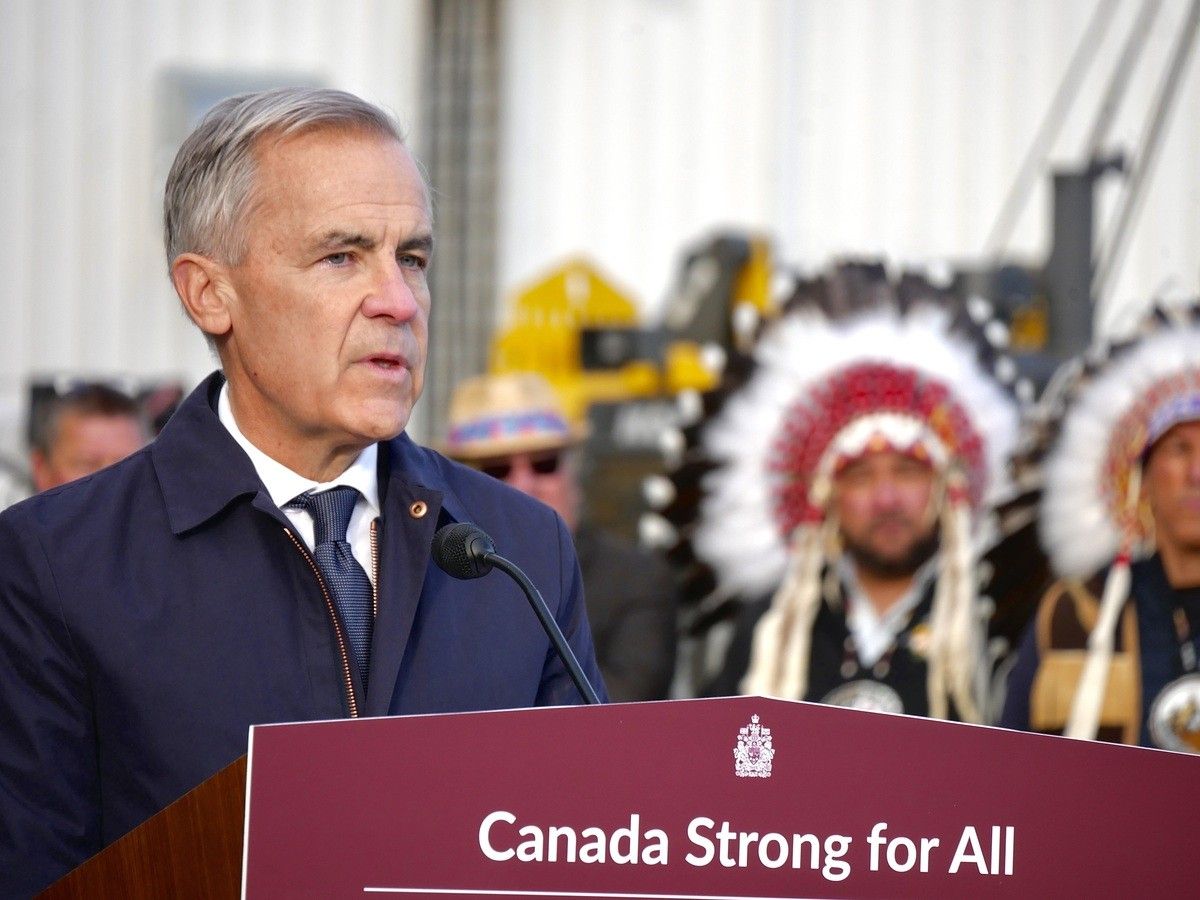
Carney on Thursday announced that a proposed pipeline spanning Alberta to B.C. and carrying one million barrels of oil per day had become the first major project under his government to be deemed in the national interest.
asserted
pipeline → announce → interest
The designation was made under the Liberals’ controversial Building Canada Act — which allows certain laws and regulations to be circumvented — and paves the way for fast-tracking the pipeline’s development, with the aim of allowing construction to begin as early as September 2027.
asserted
construction → make → September
The project has already sparked concern from First Nations over the pace of development and lack of meaningful consultation and consent, with the AFN recommending against a national-interest designation “until meaningful engagement and decision-making protocols have been fully considered.”
asserted
engagement → spark → designation
Carney and government officials, however, have downplayed those concerns, with the prime minister declaring Thursday that “rigorous consultations with more than 130 Indigenous communities” already started this summer, and that more will begin as Ottawa and Alberta — owners of the new pipeline, with the private company Pembina Pipelines taking a minority stake — work out the precise route and other details.
asserted
Ottawa → downplay → route
“We’re developing this pipeline with Indigenous peoples, involved from the start,” said Carney, who added that communities will be offered a minimum 10 per cent ownership stake.
asserted
communities → develop → stake
In an interview with the Star, Natural Resources Minister Tim Hodgson said all of the details about the route and important accommodations will be worked out over the next year as the government puts together a conditions document outlining exactly how the pipeline will be constructed.
asserted
pipeline → say → document
“We’re building the details together with Indigenous people as opposed to coming to them with a fully baked cake,” he said.
asserted
he → build → cake
Alberta’s proposed West Coast pipeline is widely expected to get a national interest designation Thursday to fast-track its construction, but it
Alberta’s proposed West Coast pipeline is widely expected to get a national interest designation Thursday to fast-track its construction, but
asserted
pipeline → propose → construction
it
Hodgson said, while there is work to be done on the conditions, the government believes this project can be built in a way that brings everyone onside and that doing so is ultimately in the national interest.
“We believe, based on what we’ve heard, there is a path to finding the mitigations, the accommodations, and the mutual benefits that we’ll see this project go forward,” he said.
asserted
he → say → that
The prime minister acknowledged earlier Thursday that “a host of issues” have been raised by Indigenous groups thus far, including concerns related to the route itself and harmful environmental impacts.
asserted
host → acknowledge → route
Deliah Bernard, a partner at Roots Strategies who was senior Indigenous affairs adviser to prime minister Justin Trudeau, said Thursday that the process so far “absolutely opens” the way for legal challenges.
asserted
process → say → challenges
For consultations to meet legal requirements, Bernard said Indigenous communities must have proper information about the project at hand, something that the government’s own “explanatory note” on Thursday’s decision shows was lacking in the eyes of a majority of Indigenous groups consulted this summer.
asserted
note → meet → groups
Bernard added that — despite the presence of some First Nations leaders at Carney’s announcement Thursday — no Indigenous community has publicly said they will buy into the project.
asserted
they → add → project
“I think that just goes to show that (the government has) a lot of work to do,” she said.
asserted
she → think → work
 The Aporia


.jpg?trim=0,51,0,51&width=1200&height=800&crop=1200:800)