Story summary
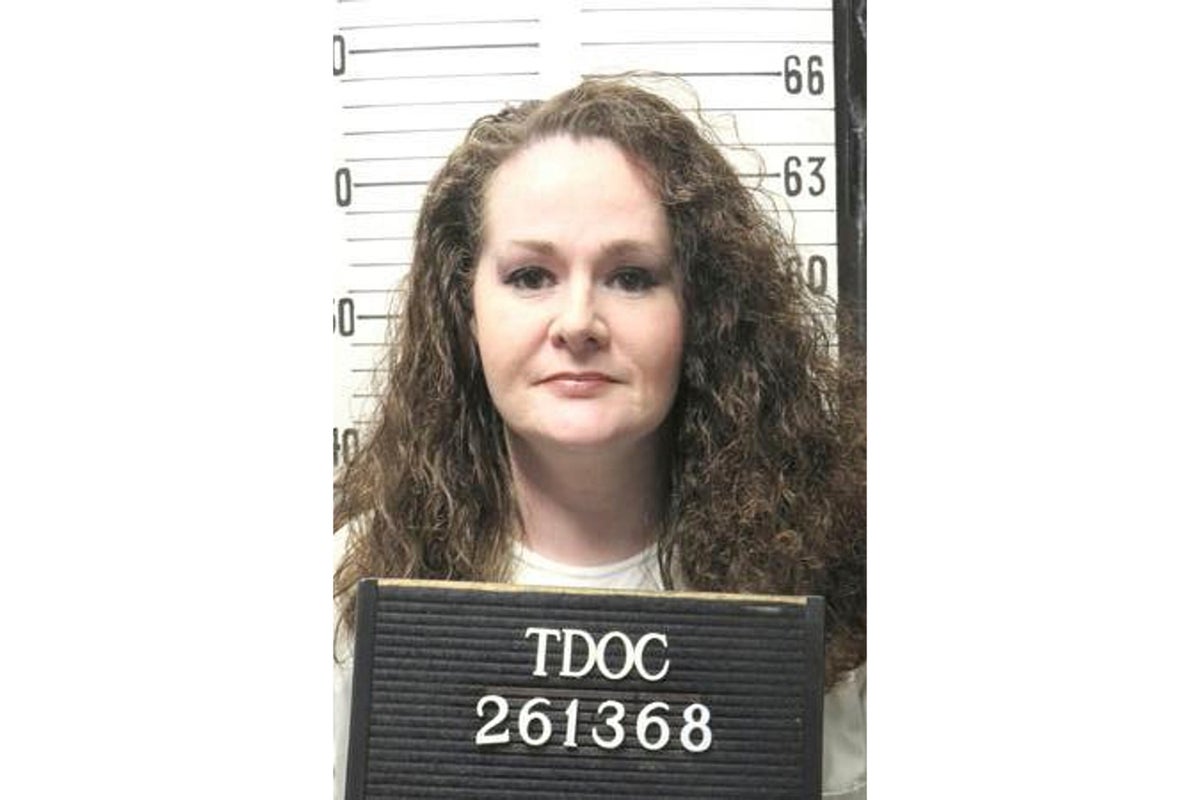
Christa Pike, 50, is set to be executed by lethal injection on Wednesday in Tennessee, marking the first time a woman will be put to death in the state in over 200 years. Pike was convicted of murdering Colleen Slemmer, her 19-year-old classmate at Knoxville Job Corps, in January 1995 when she herself was only 18. Prosecutors claimed Pike feared Slemmer as a romantic rival and tortured and killed her alongside her boyfriend.
Pike’s attorneys argue that the death penalty is inappropriate given Pike's troubled childhood of sexual abuse and neglect, which they claim would influence a modern jury to not sentence her to death. However, Tennessee Governor Bill Lee has denied Pike’s request for clemency, stating he will uphold the state's sentence.
Slemmer's mother supports the execution after waiting decades for justice. The case garnered significant public attention due to its brutality and because of satanic symbols carved into Slemmer's body. As of now, only 18 women have been executed in the U.S. since the 1970s compared to 1,663 men. Pike’s legal team is still seeking a last-minute reprieve from the Supreme Court due to her PTSD and concerns over psychological trauma during execution.
Written for “Tennessee Woman Execution” on 2026-10-04,
grounded in this article and the 133 other(s) covering the same event.
Death row inmate Christa Pike, convicted of murdering a schoolmate three decades ago, is due to be executed by lethal injection in Tennessee on Wednesday (September 30, 2026), becoming the first woman that state has put to death in more than two centuries.
asserted
state → convict → centuries
Pike, whose clemency petition highlighting childhood trauma and sexual abuse was denied by Governor Bill Lee, would also be the only person in the modern era of U.S. capital punishment to be executed in Tennessee for a crime committed as a teenager.
The U.S. Supreme Court on Tuesday (September 29) rejected an 11th-hour bid for a stay of execution, which is set to take place at the Riverbend Maximum Security Institution in Nashville, the state capital.
Pike, now 50, was 18 in January 1995 when she, a 17-year-old boyfriend and a third companion lured 19-year-old Colleen Slemmer, a classmate at their Knoxville Job Corps vocational centre, into a wooded area where they tortured and killed her.
asserted
they → highlight → her
The grisly nature of the slaying, which involved the perpetrators carving the shape of a pentagram in the victim’s chest and taking a chunk of her skull as a souvenir of the carnage, drew intense media coverage at the time.
asserted
perpetrators → involve → time
Trial testimony indicated that Pike viewed Slemmer as a rival for the affections of her boyfriend, Tadaryl Shipp.
asserted
Pike → indicate → boyfriend
Pike and Shipp confessed to the killing, and both were convicted the following year of first-degree murder.
asserted
both → confess → murder
Pike was sentenced to death, while Shipp received a life sentence with the possibility of parole.
asserted
Shipp → sentence → parole
Their co-defendant, Shadolla Peterson, who was 18 at the time of the murder and had acted as a lookout for the other two, appeared as a witness for the prosecution and received probation.
asserted
who → act → probation
Currently the only woman on Tennessee’s death row, Pike was also convicted in August 2001 of attempted first-degree murder in an assault on another inmate, according to the Tennessee Department of Correction.
uncertain
Pike → convict → Correction
In a 226-page petition asking the governor to commute her death penalty to a life sentence without the possibility of parole, her lawyers documented her history as the childhood victim of violence, neglect and sexual abuse, including two rapes at ages 11 and 17.
asserted
lawyers → ask → ages
And they cited the diagnoses she received in prison for bipolar disorder and post-traumatic stress disorder.
asserted
she → cite → disorder
Teen who committed murder ‘no longer exists’
asserted
who → commit → murder
Her lawyers also pointed to evidence that Pike’s mother drank heavily during pregnancy, contributing to faulty brain development that made it difficult for their client to control her impulses as a young person.
asserted
client → point → person
“The 18-year-old girl suffering from severe mental illness and near-debilitating trauma no longer exists,” her lawyers wrote in response to Lee’s denial of clemency.
asserted
lawyers → suffer → clemency
“Christa is a 50-year-old remorseful woman who understands her actions, receives proper treatment for her mental illness, and provides for and guides fellow incarcerated women.”
asserted
who → understand → women
Slemmer’s mother, May Martinez, has spoken out in support of the execution.
uncertain
mother → speak → execution
Executions of female prison inmates are exceedingly rare in the U.S., with women accounting for just 18 of the 1,683 people put to death since the Supreme Court allowed capital punishment to resume in 1976, according to the Death Penalty Information Center.
uncertain
punishment → account → Center
Before Wednesday, Tennessee had executed 17 people.
asserted
Tennessee → execute → people
Pike’s case has drawn international attention, with a group of United Nations human rights experts issuing a recent statement calling for commutation of her death sentence.
asserted
group → draw → sentence
Sexual violence and trauma experts have also spoken out on her behalf, arguing that the procedures surrounding lethal injection would likely cause Pike to experience severe, traumatic flashbacks of child sexual abuse and rape, adding to the cruelty and anguish of her death.
asserted
Pike → speak → death
Tennessee prison officials in May aborted attempts to execute a man convicted of murders after failing to find a suitable vein for a lethal injection.
uncertain
officials → abort → injection
 The Aporia