Photo via The Guardian

Inflation leaps to 4% stoking fears of fifth interest rate hike before Christmas

Read the original at The Guardian ↗
Cite

editor, P. C. E. (2026, September 30). Inflation leaps to 4% stoking fears of fifth interest rate hike before Christmas. The Guardian. https://www.theguardian.com/australia-news/2026/sep/30/australia-inflation-rise-stokes-fears-fifth-interest-rate-hike-before-christmas

Dated when The Aporia collected the article, usually within hours of publication. Check the original for its exact date and byline.

The Guardian · collected 2026-09-30 · by Patrick Commins Economics editor

Quick Summary

Inflation in Australia surged to 4% year-over-year as of August, up from 3.5%, driven primarily by higher global oil prices and fuel costs following a worsening conflict in the Middle East. Treasurer Jim Chalmers defended his government's economic policies, attributing inflation largely to external factors like rising fuel prices rather than domestic spending. However, economists and the Reserve Bank of Australia (RBA) governor Michele Bullock suggested that persistently high inflation may necessitate another interest rate hike before Christmas, with Cherelle Murphy from EY forecasting a likely fifth increase by year-end.
Written by AI on 2026-09-30, from this article's own text only (the story summary below draws on all the coverage).
See how they differ ↓

AI analysis

Story summary

Inflation in Australia surged to 4% in August from 3.5% in July, driven primarily by higher housing and transport costs. The Australian Bureau of Statistics reported that housing prices rose 5.7% year-over-year, while transport costs increased by 5.6%, largely due to a 14.8% spike in automotive fuel prices. These figures come just one day after the Reserve Bank of Australia (RBA) raised interest rates to their highest level since 2008 at 4.6%. The RBA warned it may need to raise rates further before Christmas if inflation continues to rise, despite four rate hikes this year already aimed at curbing price growth. Treasurer Jim Chalmers defended the government’s economic stance by blaming rising global oil prices and the Middle East conflict for increased costs, but critics argue the ongoing inflation surge indicates more rate hikes might be necessary to stabilize the economy.

Written for “Inflation Rise And Rate Hike Fears” on 2026-11-18, grounded in this article and the 2 other(s) covering the same event.

How they differ

3 outlets covered “Inflation Rise And Rate Hike Fears”.

What each outlet says

One AI summary per outlet of its latest article on this story, written from that article alone and checked against it. Open the article for the outlet's own words.

The GuardianThis outlet30 Sep

Inflation in Australia surged to 4% year-over-year as of August, up from 3.5%, driven primarily by higher global oil prices and fuel costs following a worsening conflict in the Middle East. Treasurer Jim Chalmers defended his government's economic policies, attributing inflation largely to external factors like rising fuel prices rather than domestic spending. However, economists and the Reserve Bank of Australia…

Inflation leaps to 4% stoking fears of fifth interest rate hike before Christmas (this article)
Daily Mail30 Sep

Inflation in Australia surged to 4% year-over-year as of August 2026, according to the Australian Bureau of Statistics, marking a significant rise from the previous month's 3.5%. Housing and transport costs were major contributors, with housing inflation at 5.7% and transport up by 5.6%, largely due to increased fuel prices. This comes just after the Reserve Bank raised interest rates to their highest level since…

Mortgage pain could get even worse as inflation surges to 4 per cent and markets brace for another rate hike →
Sydney Morning Herald30 Sep

Australia's consumer price index rose to 4% in August from 3.5% in July, marking a four-month high and driven primarily by higher housing costs and petrol prices. This development occurred immediately after the Reserve Bank of Australia raised official interest rates to a 15-year high of 4.6%, signaling potential further rate hikes if inflation remains elevated. The underlying rate of inflation stayed at 3.6%…

Inflation jumps to four-month high a day after RBA rate rise →

Where they agree and split

Framing

How the first headlines put it

Stated as fact3
The headlines (3)

Mortgage pain could get even worse as inflation surges to 4 per cent and markets brace for another rate hike Daily Mail · stated as fact

Inflation jumps to four-month high a day after RBA rate rise Sydney Morning Herald · stated as fact

Inflation leaps to 4% stoking fears of fifth interest rate hike before Christmas The Guardian · stated as fact

The full story: what happened, how it changed, and all 3 articles →

Compared with similar articles

This article reads unscored and hedges 0% of its claims. Each row says how that neighbour differs.
The Sydney Morning Herald
Leans right Hedges 0 of 18 claims Outlet record 61/100
The Sydney Morning Herald
Leans left Hedges 1 of 19 claims Outlet record 61/100
“The articles cover different economic developments, with Article A focusing on a budget boost announcement and Article B reporting on an increase in inflation figures.”
The Guardian
Hedges 1 of 8 claims Outlet record 64/100
“The articles describe different stages of the economic situation with distinct data points and dates, indicating separate reporting on related but non-identical events.”
Al Jazeera
Hedges 1 of 15 claims Outlet record 60/100
“The articles discuss different aspects of economic conditions in Australia, with Article A reporting on a specific interest rate hike decision and its historical context, while Article B focuses on inflation figures and potential future interest rate hikes.”
Daily Mail
Hedges 0 of 37 claims Outlet record 70/100
“The articles discuss different aspects of economic issues but do not describe the same specific incident.”
The Sydney Morning Herald
Leans right Hedges 0 of 20 claims Outlet record 61/100
“The articles discuss different aspects of economic management and inflation under Jim Chalmers' tenure, but they are not describing the exact same event or incident.”
Daily Mail
Hedges 7 of 30 claims Outlet record 70/100
“While both articles discuss inflation and interest rate hikes, they describe different events and timeframes involving various figures' reactions.”
Daily Mail
Leans left Hedges 0 of 37 claims Outlet record 70/100
“While both articles discuss Jim Chalmers defending Labor's economic management against accusations related to inflation and spending, they describe different moments in time with distinct details.”
The Sydney Morning Herald
Leans right Hedges 1 of 28 claims Outlet record 61/100
“The articles discuss different treasurers blaming each other for inflation and interest rate hikes.”

Story

Inflation Rise And Rate Hike Fears
Economy/Business · 3 article(s) covering the same event. Compare every outlet's account →
How this article was measured signals, leaning charts, publisher record, byline, topics and claims

Signals How these are calculated →

Claims extracted
17
sentences that state something as happening or true
Uncertain
0%
0 of 17 hedged ("reportedly", "may", "according to")
Leaning
withheld
no quote in the article backed the model's score
Publisher signals
64/100
The Guardian's corrections and hedging, across everything collected from it. Not a measure of accuracy.
Outlets on this story
3
Economy/Business
Same framing elsewhere
1
articles that frame the event the way this one does
Analyzed 2026-09-30 · how these are computed

How this is being covered How these are calculated →

Article leaning vs. publisher reliability
Source leaning vs. consistency

Publisher

The Guardian · 3642 article(s) · 8 correction(s) detected
Running correction rate · 8 correction(s)

Who wrote this

Patrick Commins Economics editor
12 article(s) here · 1 carrying a prediction
Jim Chalmers has promised next month’s mid-year budget update “will cut enough, but not too much”, as he flagged “substantial savings” to help in the fight against inflation.
The Albanese government in the May budget announced changes to the tax on capital gains for investors, and banned negative gearing for new landlords buying an existing home.
In its post-meeting statement following the decision, the board repeated that it “will continue to do what it considers necessary to bring inflation sustainably back to target”.
The RBA is widely expected to hit mortgage holders with a fifth rate hike on Tuesday, in a move that will push the cash rate to its highest since 2008 amid rising worries the economy could even be tipped into recession.
Taking the lion’s share of the blame for worsening cost of living pressures may not be completely fair, but it is the price of incumbency – as the latest Essential poll showed.
Jim Chalmers has revealed December’s mid-year budget update will project weaker growth and higher unemployment, as economists warn of a difficult six months ahead for the Australian economy.
The Reserve Bank says households are well placed to weather the twin storm of rising interest rates and plunging property prices, but warned that Australia would not be immune to a sudden collapse of the global AI investment boom.
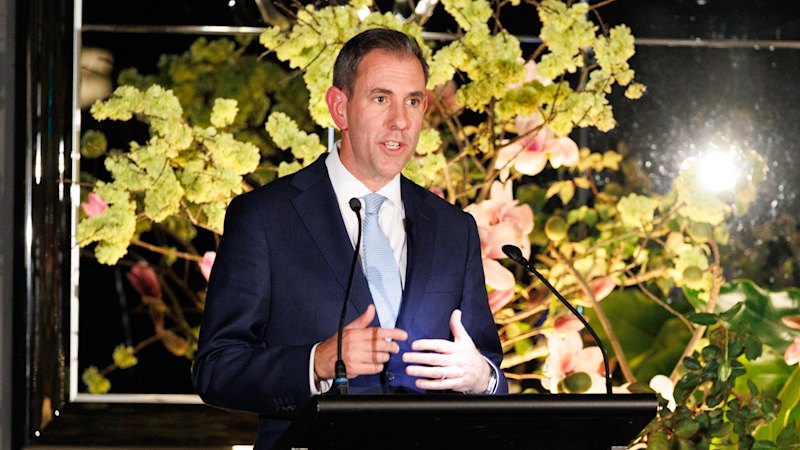
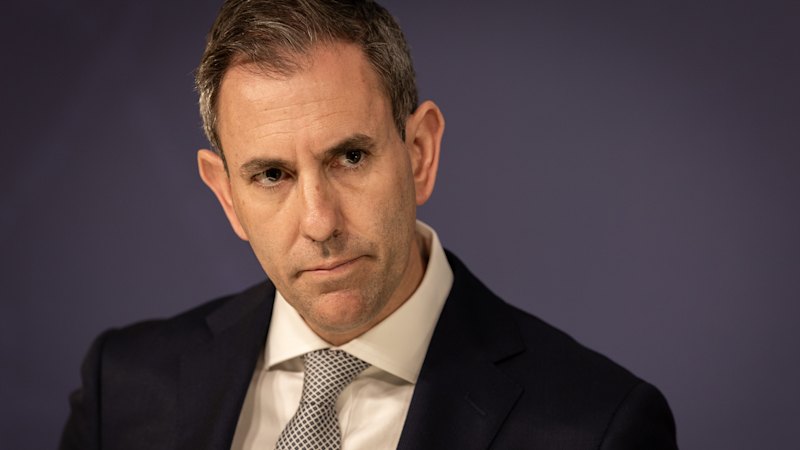
Inflation has jumped to 4% in the year to August, from 3.5%, as Jim Chalmers was again forced to defend Labor’s economic management amid fears the Reserve Bank will need to hike interest rates again before Christmas.
Two or even three more Reserve Bank interest rate hikes would be “devastating” for the property market but still leave housing more unaffordable than ever as higher borrowing costs trump lower prices, experts say.
There will be more Australians dying than being born in 40 years’ time, according to the government’s latest intergenerational report, which lays bare the fundamental challenges of managing an ageing population at a time of rapid change and lower economic growth.
Also by Patrick Commins Economics editor
Nothing else under this byline is closely related to this article, so these are simply their most recent.
All 12 articles by Patrick Commins Economics editor →

Topics

ABS Australians Labor RBA the Reserve Bank

Subjects

RBA ORG · 4× ABS ORG · 2× Chalmers PERSON · 2× Murphy PERSON · 2× Australians NORP · 1× Iran GPE · 1× Israel GPE · 1× Jim Chalmers PERSON · 1× Labor ORG · 1× the Reserve Bank ORG · 1×

Narrative

A day after the RBA lifted its cash rate to 4.6% – the fourth increase in 2026 – Murphy said “they [the RBA] have an ongoing fight on their hands”. “This is not the end of it.” Chalmers on Wednesday afternoon denied that he was at odds with Michele Bullock, the central bank governor, who at her press conference the previous day said “inflation is too high and has been driven by domestic capacity pressures”. But Bullock also pointed to the worsening Middle East conflict and the sudden boom in AI-related spending on datacentres. “These developments suggest that inflationary pressures will persist for longer than previously expected,” she said.
framing: assertive · carried by 1 article(s) · first seen 2026-09-30
Inflation has jumped to 4% in the year to August, from 3.5%, as Jim Chalmers was again forced to defend Labor’s economic management amid fears the Reserve Bank will need to hike interest rates again before Christmas.

Claims (17 extracted, 0 hedged)

Inflation has jumped to 4% in the year to August, from 3.5%, as Jim Chalmers was again forced to defend Labor’s economic management amid fears the Reserve Bank will need to hike interest rates again before Christmas. asserted
Bank → jump → Christmas
The increasingly embattled treasurer was accused of “gaslighting” Australians by insisting that government spending was not responsible for high inflation, blaming instead higher fuel costs associated with the ongoing US-Israel war on Iran. “We can see in today’s inflation figures that the overwhelming reason why annual headline inflation has come up in August compared to July is because of the impact of higher global oil prices flowing through to oil prices in Australia,” Chalmers told reporters in Sydney. asserted
Chalmers → accuse → Sydney
“That’s not an opinion. asserted
That → ’ → ?
It’s a fact.” asserted
It → ’ → ?
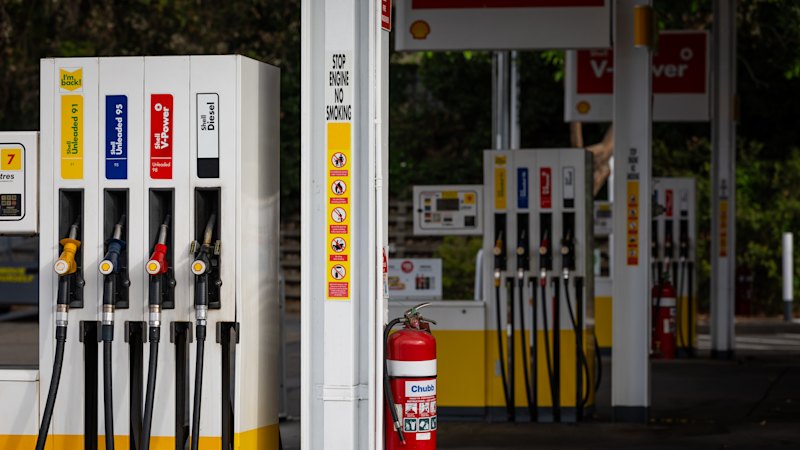
Fuel prices surged by 15% last month, the Australian Bureau of Statistics said, after a worsening Middle East conflict triggered a rebound in global oil prices and the government ended its cut to the fuel excise. asserted
government → surge → excise
Rising transport costs were the prime contributor to price increases in the month, the ABS confirmed. asserted
ABS → rise → month
But a 5.4% increase in home building costs over the 12 months to August was one of the prime drivers of high annual inflation “as builders passed on higher costs for materials and labour”, the ABS said. asserted
ABS → pass → materials
Electricity bills were also higher than this time last year when households were still receiving government rebates. asserted
households → receive → rebates
The rise in headline inflation was slightly less than economists had anticipated, while underlying inflation – which removes the most volatile prices swing – was steady at 3.6% in the year to August. asserted
which → anticipate → August
Cherelle Murphy, EY’s chief economist, said “another rate hike looks likely by the end of the year”. asserted
hike → say → year
A day after the RBA lifted its cash rate to 4.6% – the fourth increase in 2026 – Murphy said “they [the RBA] have an ongoing fight on their hands”. “This is not the end of it.” Chalmers on Wednesday afternoon denied that he was at odds with Michele Bullock, the central bank governor, who at her press conference the previous day said “inflation is too high and has been driven by domestic capacity pressures”. But Bullock also pointed to the worsening Middle East conflict and the sudden boom in AI-related spending on datacentres. “These developments suggest that inflationary pressures will persist for longer than previously expected,” she said. asserted
she → lift → datacentres
Murphy said it was a fact that spending by governments, at the commonwealth and state levels, was high, and that this was adding to demand in the economy. asserted
this → say → economy
She said this meant the government should be extremely careful with any new spending – including additional cost of living relief – for fear of making the RBA’s job harder. asserted
job → say → fear
But she said it was impossible to quantify exactly to what extent government spending was responsible for persistently high inflation in 2026. asserted
spending → say → 2026
“Do I think this is the biggest part of the inflation problem right now? asserted
this → think → problem
No, the biggest part of the problem is that we have these global supply shocks. asserted
we → have → shocks
“What we are witnessing is the accumulation of a number of events happening together, and none of them are good for inflation.” asserted
none → witness → inflation
Give feedback · no sign-in needed

No sign-in needed for now. Your note is sent without a name, so it cannot be answered.

History Support