This article discusses a strategic alliance between Pakistan, Saudi Arabia, and Turkey known as the Makkah Joint Defence Agreement, which aims to stabilize West Asia amid US and Israeli actions against Iran. The agreement leverages existing military and diplomatic ties among the three nations, responding to the need for regional control in light of increasing U.S. retrenchment from the Middle East. However, it warns that Pakistan must navigate potential divisions within the region and avoid deepening involvement in ongoing conflicts like the one involving the Houthis in Yemen to maintain its neutral stance with Iran and Saudi Arabia.
Written locally by qwen2.5:14b on 2026-09-30,
using this article's own text rather than the other coverage of the
same event (that is the story summary below).
THERE is no disputing that the coming together of Pakistan, Saudi Arabia and Turkiye comes at a critical juncture for West Asia, even if several aspects around the Makkah Joint Defence Agreement’s precise operationalisation remain unclear.
uncertain
aspects → be → operationalisation
There are good reasons for Islamabad to view this as a significant strategic opportunity.
asserted
Islamabad → be → opportunity
The arrangement, forged in the shadow of the US and Israeli war on Iran, responds to a growing imperative for regional stakeholders to exercise greater control in stabilising a region fractured by conflict.
asserted
stakeholders → forge → conflict
It also builds on long-standing relationships between three important middle powers whose security is bound up in regional outcomes.
asserted
security → build → outcomes
Pakistan and Saudi Arabia have decades of military and diplomatic cooperation behind them.
asserted
Pakistan → have → them
Turkiye has important extensive defence ties with both.
asserted
Turkiye → have → both
With US retrenchment from the region increasingly appearing inevitable, institutionalising these relationships offers some much-needed strategic coherence to a region beset by complex challenges.
asserted
institutionalising → appear → challenges
But for Pakistan to make the most of this moment — and for it to translate the compact into lasting strategic advantage — several caveats deserve consideration.
asserted
caveats → make → consideration
First, for this ‘non-directional’ arrangement to truly be regionally tenable, it must avoid becoming a source of further division in the Middle East.
asserted
it → avoid → East
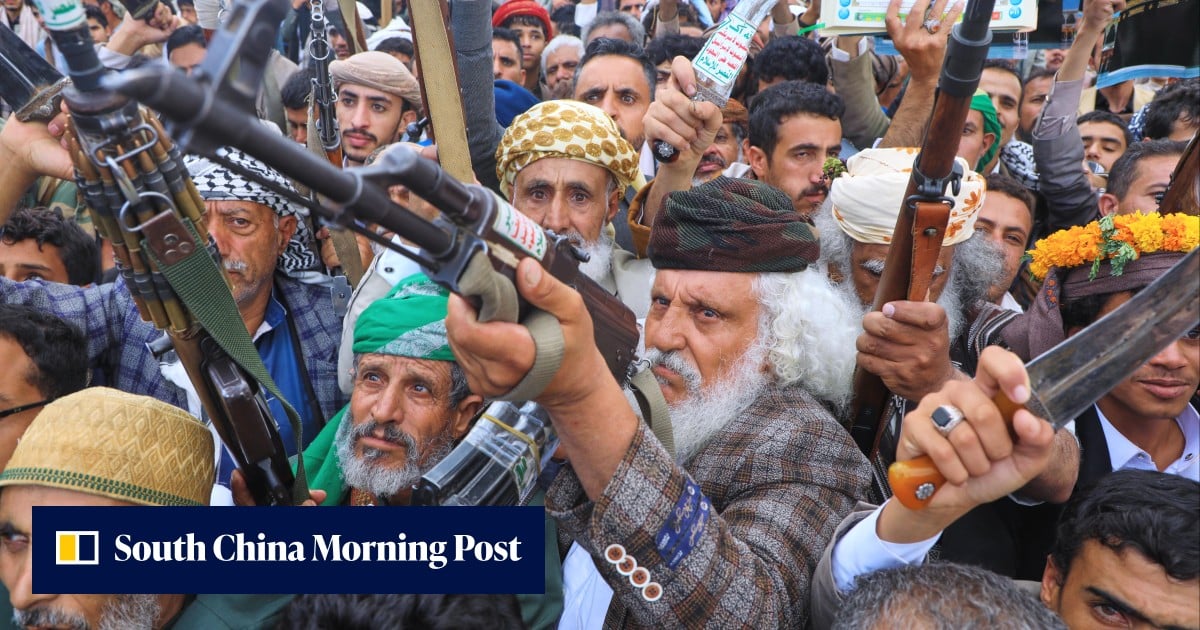
For Pakistan, the present crisis involving Ansarullah (the Houthis) in the Red Sea offers an early test of whether the alliance can resist being drawn into the region’s existing rivalries.
asserted
alliance → involve → rivalries
There is no disputing the fact that the stability of the Kingdom of Saudi Arabia matters enormously to Pakistan: it is an important source of energy and financial support, and home to a large Pakistani diaspora whose remittances contribute significantly to foreign exchange earnings.
asserted
remittances → be → earnings
The strategic opportunity comes with caveats.
asserted
opportunity → come → caveats
The closure of the Strait of Hormuz has also dramatically increased Pakistan’s dependency on the flow of oil through the Red Sea.
asserted
closure → increase → Sea
But direct military involvement against the Houthis does risk drawing the alliance deeper into existing regional rivalries, risking Islamabad’s position with Tehran, and testing Pakistan’s stated policy commitment to avoiding camp politics.
asserted
involvement → risk → politics
Ultimately, Pakistan’s usefulness to the alliance might lie in its ability to exploit the diplomatic space it retains with both Tehran and Riyadh, using those channels to encourage dialogue and de-escalation.
uncertain
it → lie → dialogue
But it is that final commitment, however, that will require the most careful thinking about where Pakistan’s obligations to the other two countries begin and end.
asserted
obligations → require → countries
A decade ago, in 2015, Pakistan’s parliament played an important role in the decision not to commit Pakistani troops to the Saudi-led war in Yemen.
asserted
parliament → play → Yemen
While the intervening decade has arguably seen an erosion of Pakistan’s democratic institutions, the country’s leaders must still remember that major commitments abroad still require political dialogue and consensus at home, not least given the country’s demographic diversity and the ability of external security choices to reverberate internally.
asserted
commitments → intervene → choices
Finally, and relatedly, those shaping Pakistan’s strategic direction would be wise to recognise that Pakistan’s expanding strategic horizons cannot be divorced from the pressures it confronts at home and that while there is no arguing that regional influence can be an asset, it is important to build the domestic capacity to sustain.
asserted
it → shape → capacity
At present, Pakistan confronts a serious trifecta of terrorism, political instability and persistent economic fragility.
asserted
Pakistan → confront → terrorism
Fraught governance challenges in KP and Balochistan add to that insecurity.
asserted
challenges → add → insecurity
For a country already contending with multiple sources of instability at home, expanding commitments abroad without thought to improved governance and/or a corresponding domestic reset at home risks weakening the very foundations on which any newfound regional influence must ultimately rest.
asserted
influence → contend → which
None of these caveats detracts from the rare opportunity Makkah presents.
asserted
Makkah → detract → opportunity
In the shadow of looming threats from India and Afghanistan, and general instability unleashed by America’s war in Iran, the arrangement offers Pakistan the chance to do several things: to extract strategic currency from its military capacity, to expand defence-industrial cooperation with important partners, and to eventually be a consequential voice in shaping whatever security architecture emerges from the ashes of the US war against Iran.
asserted
architecture → loom → Iran
But these things also require more than aspiration.
asserted
things → require → aspiration
For Islamabad, that means navigating existing regional fault lines and developing a better political compact at home.
asserted
that → mean → home
 The Aporia