As the U.S. signals a smaller Middle East footprint, Turkey is ready to step in
ISTANBUL —
asserted
Turkey → signal → footprint
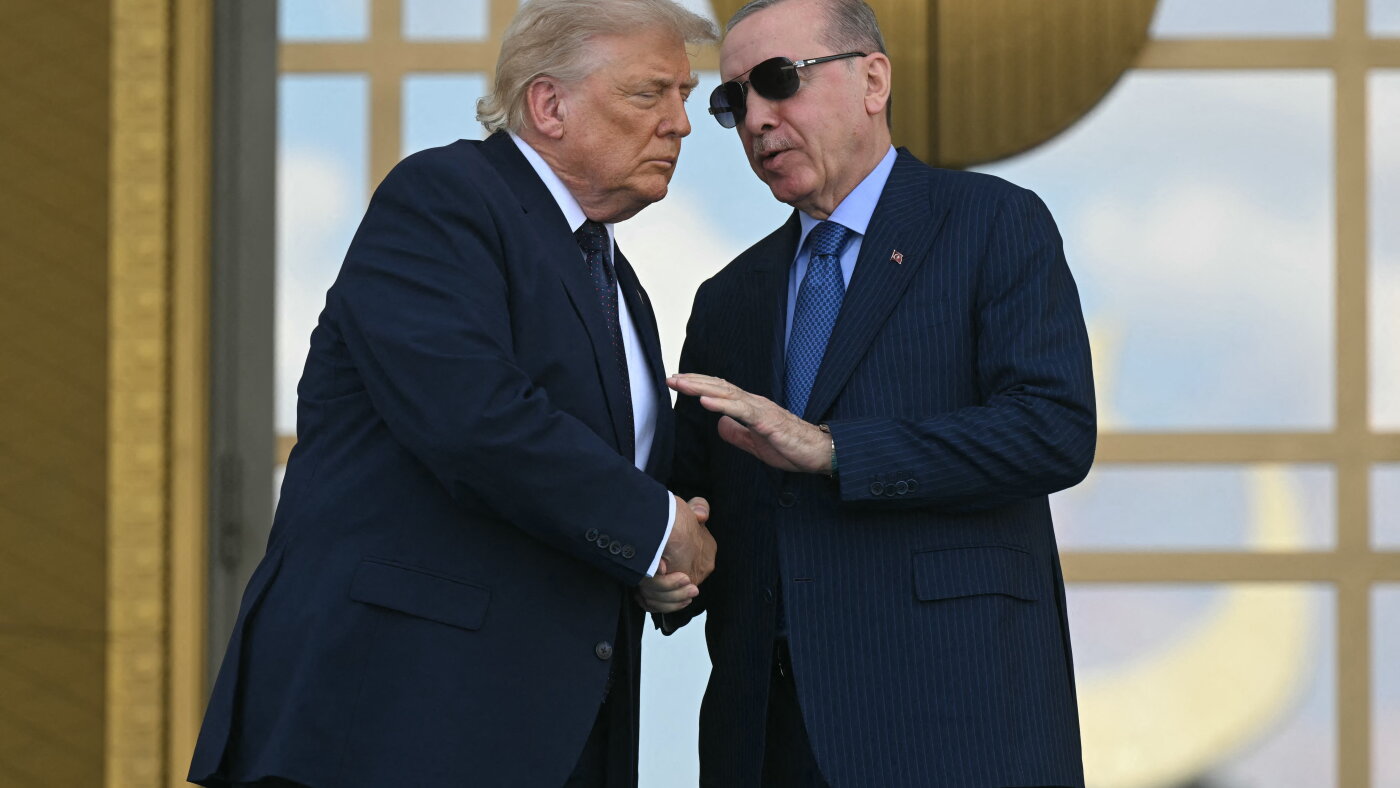
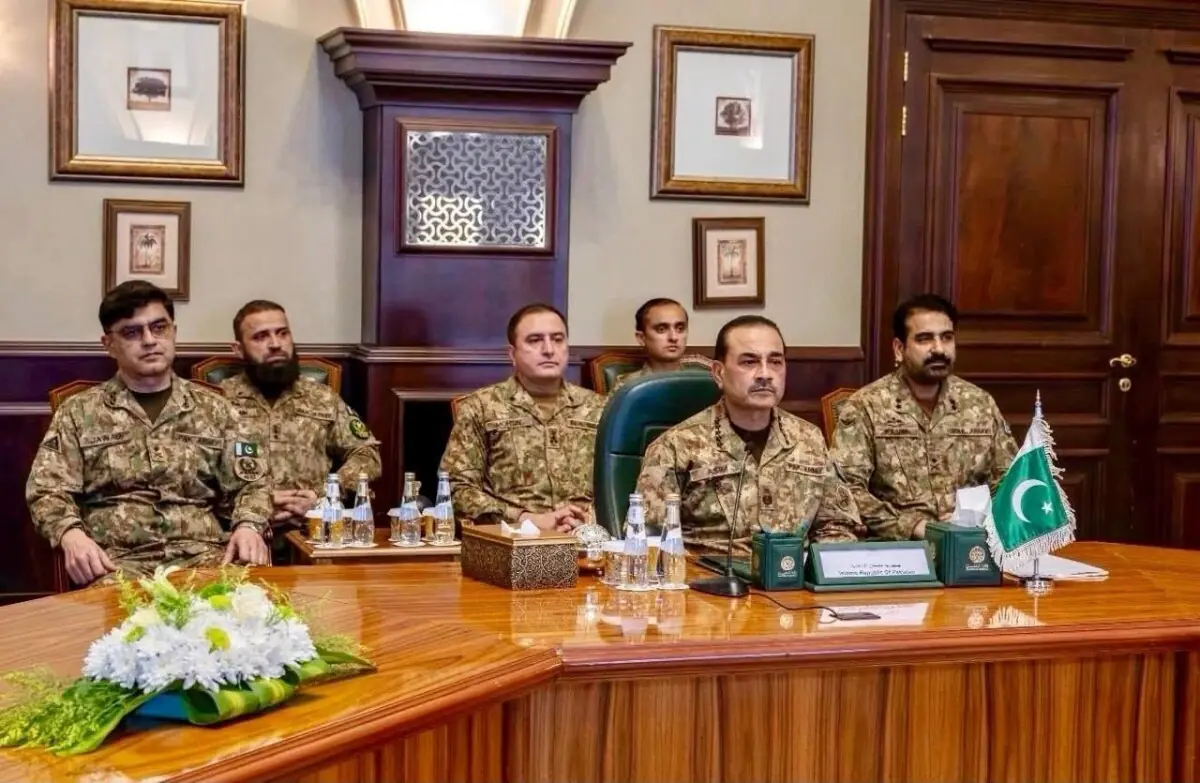
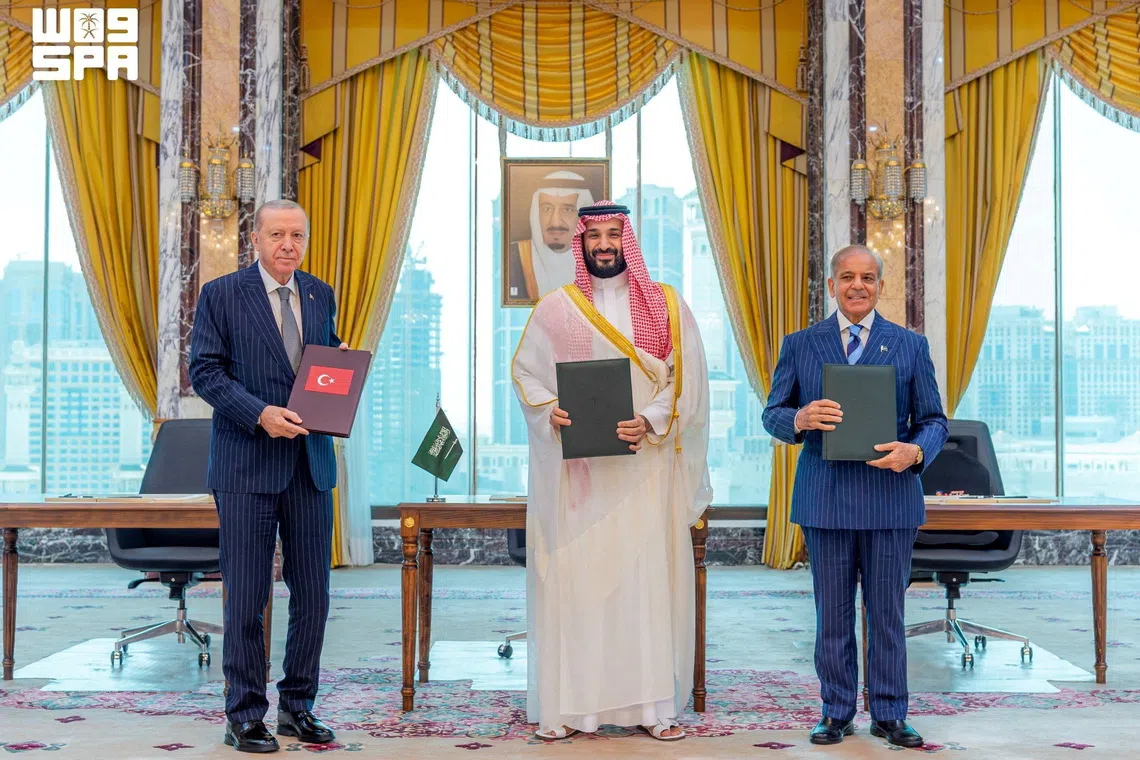
Leaders from Saudi Arabia, Turkey and Pakistan were meeting at a palace overlooking the Grand Mosque in Islam's holy city of Mecca.
asserted
Leaders → meet → Mecca
Sitting side by side that day, on Aug. 7, at hardwood desks set against a backdrop of silk drapery, the three leaders put pen to paper and signed the Mecca Joint Defense Agreement.
asserted
leaders → sit → Agreement
Described by some as the birth of a "Sunni Security Triad," the agreement combines Saudi Arabia's oil wealth, the growing defense might of Turkey, which already fields NATO's second largest military, and Pakistan's nuclear capabilities.
uncertain
which → describe → military
It includes NATO's Article 5-style language, that any armed attack on one of the three Sunni Muslim states is regarded as an attack on all of them, and a commitment between them to exchange intelligence and defense technology.
asserted
attack → include → intelligence
But perhaps more important than the contents of the deal, the agreement symbolizes a cornerstone of an emerging regional security architecture and a hedge against post-U.S. geopolitical uncertainty.
asserted
agreement → symbolize → uncertainty
According to Turkish Foreign Minister Hakan Fidan, Ankara was a main driver of the talks that went on for three years.
uncertain
that → accord → years
And analysts say it was pushed by Ankara's vision that aims to slowly establish Turkey as a central player in the Middle East, a region rocked by years of war that has shaken longstanding power dynamics.
asserted
that → say → dynamics
Turkey's broadening defense-industrial base leaves the country less dependent on the West militarily (though it still craves F-35 jets from Washington).
asserted
it → broaden → Washington
It has also widened its military reach: it has bases in Somalia, Qatar, Libya and is playing an increasingly central role in shaping Syria as it emerges from a decade of civil war.
asserted
it → widen → war
Turkey has also deftly used cultural soft power — its TV shows are watched across the region — and humanitarian causes — building schools across the region — to gain influence.
asserted
shows → use → influence
And Turkey has cast itself as a capable mediator to help bring an end to global conflicts, from Ukraine to Iran.
asserted
Turkey → cast → Iran
Turkey's bid for greater regional influence comes at a time when the region has been hit by profound shocks that started with the Hamas-led Oct. 7, 2023, attack on Israel, and continues with the stalemated, seven-month-old U.S.-Israeli war on Iran.
asserted
that → come → Iran
Those have seen Iran defiant but diminished, with its network of proxies across Syria and Lebanon in ruins.
asserted
Iran → see → ruins
There's growing talk in Washington of the U.S. reducing its Middle East security footprint in the aftermath of the war, amid persistent questions from the region about the value of the U.S.'s security umbrella.
asserted
U.S. → be → umbrella
Turkey's ambitions to fill any void though face some real obstacles.
asserted
ambitions → fill → obstacles
Years of economic mismanagement have led to persistent high inflation, a weak currency and rising energy import costs, straining state resources.
asserted
Years → lead → resources
Its biggest challenge though might come in the form of an increasingly assertive and aggressive Israel.
uncertain
challenge → come → Israel
"Turkey's regional ambitions clearly exceed its current economic means.
asserted
ambitions → exceed → means
That doesn't make Turkey a militarily or strategically weak country," says Asli Aydintasbas, director of The Turkey Project at the Brookings Institution.
asserted
Aydintasbas → make → Institution
"But Ankara understands that it's been unable to translate its growing influence into a Turkish-led order beyond its immediate periphery."
asserted
it → understand → periphery
Turkey as "big brother"
The Ottoman Empire controlled and ran much of the region from Istanbul for nearly half a millenium before it collapsed in the aftermath of World War I. Many in the Turkish government led by President Recep Tayyip Erdogan see its regional role in civilizational terms and believe that the Ottoman Empire essentially offered a better model of governance and cohesion than the nation-states that replaced it.
"
asserted
that → control → it
I think that there is a sense of a manifest destiny among Turkey's current ruling elite that Turkey's destined to be the region's heavyweight," says Aydintasbas.
asserted
Aydintasbas → think → elite
But Turkish foreign policy is far more restrained and realistic, tempered in part by its own economic struggles.
asserted
policy → temper → struggles
Aydintasbas says Ankara is trying to manage regional disorder to protect its vital national interests rather than dominate or build a neo-Ottoman empire.
asserted
Ankara → say → empire
Turkey, says Aydintasbas, understands the region is likely entering a post-U.S. phase after the war with Iran, and it's playing the long game.
asserted
it → say → game
"Without a clear U.S. win, gradually, U.S. influence in the region will decline and Turkey will be there to step in," says Aydintasbas.
asserted
Aydintasbas → decline → region
President Trump has long questioned the value of U.S. bases in the region and has overseen a drawdown of U.S. troops in Syria and Iraq.
asserted
Trump → question → Syria
The U.S. also seems to have blessed the Mecca Joint Defense Agreement.
asserted
U.S. → seem → Agreement
Aydintasbas says the region is now craving stability over values-based democratic transition because there has been too much suffering.
asserted
region → say → transition
Israel on high alert
Syria has emerged as the central laboratory for Turkey's growing influence.
asserted
Syria → emerge → influence
Following the collapse of Bashar al-Assad's regime in 2024, Ankara achieved major core objectives: It secured multibillion-dollar contracts for postwar Syrian reconstruction and became Syria's main partner helping it rebuild its army.
asserted
it → follow → army
This cuts across Israel's own vision of the neighborhood.
asserted
This → cut → neighborhood
Aydintasbas calls Israel's strategy in the region after the Hamas-led attacks on Israel that killed almost 1,200 people, "mowing the lawn" — a phrase borrowed from the Israeli military itself.
asserted
that → call → military
Israel's war in Gaza has killed more than 74,000 people, according to Gaza's Health Ministry.
uncertain
war → kill → Ministry
"Settling on a regional policy that calls for keeping their neighbors militarily suppressed, giving Israel freedom of action, and making sure that no power rises in the region enough to present a challenge to Israel," she says.
asserted
she → settle → Israel
That means a decentralized and fragmented Syria, the southern part of which Israel now controls and shows no signs of ceding.
asserted
Israel → mean → ceding
"In the past, we didn't see Israel and Turkey competing in terms of regional aspirations, or trying to protect or expand their spheres of influence," says Eldad Ben Aharon, a senior researcher at the Peace Research Institute Frankfurt and expert on Israeli-Turkish relations.
asserted
Aharon → see → relations
In early August, Israel launched an airstrike targeting a defunct airbase in Abu al-Duhur, in northern Syria, to pre-empt an anticipated deployment there of Turkish forces.
asserted
Israel → launch → forces
Both Turkey and Syria denied any such troop movements, and U.S. officials criticized the strike as an "unnecessary escalation."
asserted
officials → deny → escalation
…and 19 more, not listed.
 The Aporia