At first, the smell is overwhelming. Then, they open the book of the dead

Read the original at The Sydney Morning Herald ↗
Cite

Hope, Z., & Karki, B. (2026, September 5). At first, the smell is overwhelming. Then, they open the book of the dead. The Sydney Morning Herald. https://www.smh.com.au/world/asia/at-first-the-smell-is-overwhelming-then-they-open-the-book-of-the-dead-20260905-p60unf.html?ref=rss&utm_medium=rss&utm_source=rss_feed

Dated when The Aporia collected the article, usually within hours of publication. Check the original for its exact date and byline.

The Sydney Morning Herald · collected 2026-09-05 · by Zach Hope, Bishal Karki

Quick Summary

The article reports from Kathmandu's Maharajgunj Medical Campus, where relatives are identifying bodies recovered from Nepal's devastating floods in remote districts Rasuwa and Nuwakot. Since last week, 24 bodies have been identified out of a total that remains unclear, with some families searching for loved ones who went missing during the disaster on August 26. The morgue is overwhelmed by the smell of decomposition and disinfectant, and relatives must sift through forensic photos of bodies to find their missing family members. An influx of international aid, including seven Australian Federal Police identification specialists, is arriving in Kathmandu to assist with the recovery efforts.
Written locally by qwen2.5:14b on 2026-09-05, using this article's own text rather than the other coverage of the same event (that is the story summary below).

AI analysis runs on qwen2.5:14b, locally

Story summary

Nepal faced devastating flash floods on August 26, triggered by a glacial collapse in the Himalayas, resulting in over 900 deaths and nearly 5,000 missing people across Nepal and Tibet. Rescue teams from multiple countries, including China, are searching for hundreds of workers believed to be trapped in hydropower tunnels. The disaster has prompted international relief efforts; Australia dispatched a specialized team including 10 personnel from Fire and Rescue NSW as part of an $11 million humanitarian support package. Meanwhile, social media erupted with racist comments towards missing Australians, highlighting tensions within affected communities.

Written for “Nepal Flood Rescue Efforts” on 2026-10-22, grounded in this article and the 62 other(s) covering the same event.

Story

📰 Nepal Flood Rescue Efforts
World · 63 article(s) covering the same event. Compare every outlet's account →

Compared with similar articles

This article reads unscored and hedges 8% of its claims. Each row says how that neighbour differs.
CBS News
⚖️ leaning not scored 🔴 12% hedged 3 of 24 📰 publisher trust 66
“Both articles describe the ongoing aftermath and recovery efforts following the Nepal floods, mentioning the same location (Kathmandu), the same number of missing people (4,200), and the same death toll (at least 903)”
Al Jazeera
⚖️ leaning not scored 🔴 5% hedged 2 of 42 📰 publisher trust 60
“Both articles describe the aftermath of a catastrophic flood in Nepal's Rasuwa and Nuwakot regions, specifically mentioning the identification process of recovered bodies and the rising number of missing people.”
NPR
⚖️ Leans left 🔴 9% hedged 5 of 54 📰 publisher trust 60
“Both articles report on the aftermath of the catastrophic floods in Nepal, including the impact on families and the process of identifying and processing the dead.”
The Hindu
⚖️ leaning not scored 🔴 0% hedged 0 of 3 📰 publisher trust 60
“Article A describes a family member searching for his brother after a flash flood, while Article B mentions relatives identifying their loved ones in a morgue, indicating different stages of the disaster response”
CBC News
⚖️ leaning not scored 🔴 0% hedged 0 of 17 📰 publisher trust 60
“Article A mentions families visiting a morgue to identify their loved ones, while Article B tells the story of one specific family mourning and then finding a relative alive in her collapsed home”
The Hindu
⚖️ leaning not scored 🔴 22% hedged 2 of 9 📰 publisher trust 60
“Article A describes the identification process at a morgue, while Article B reports on the overall death toll and missing people from the floods”
How this article was measured signals, leaning charts, publisher record, byline, topics and claims

Signals How these are calculated →

Claims extracted
38
sentences that state something as happening or true
Uncertain
8%
3 of 38 hedged ("reportedly", "may", "according to")
Leaning
not political
takes no side on a contested political question
Publisher signals
61/100
The Sydney Morning Herald's corrections and hedging, across everything collected from it. Not a measure of accuracy.
Outlets on this story
63
World
Same framing elsewhere
1
articles that frame the event the way this one does
Analyzed 2026-09-05 · how these are computed

How this is being covered How these are calculated →

Article leaning vs. publisher reliability
Source leaning vs. consistency

Publisher

The Sydney Morning Herald · 4698 article(s) · 11 correction(s) detected
Running correction rate · 11 correction(s)

Who wrote this

Zach Hope
5 article(s) here · 1 carrying a prediction
🔮 “The prime minister [Anwar Ibrahim] keeps saying the government will discuss for a safe return, but what is he talking about when the [Myanmar] military is continuing its airstrikes?”
🔮 Occasionally, their mother would bring biscuits and drinks for the people who worked there.
🔮 Relatives with the grim task of identifying their loved ones missing in Nepal’s catastrophic floods go filing through the gates of Kathmandu’s Maharajgunj Medical Campus, uncertain of what they will see, or what they want to find.
Also by Zach Hope
Nothing else under this byline is closely related to this article, so these are simply their most recent.
Bishal Karki
1 article(s) here · 1 carrying a prediction
🔮 Relatives with the grim task of identifying their loved ones missing in Nepal’s catastrophic floods go filing through the gates of Kathmandu’s Maharajgunj Medical Campus, uncertain of what they will see, or what they want to find.
The only article under this byline in the corpus.

Topics

Kathmandu Nepal Nuwakot Rasuwa Timure

Subjects

Kathmandu GPE · 3× Nepal GPE · 3× Laxman PERSON · 2× Pariyar PERSON · 2× Tibet GPE · 2× Bakhat Pariyar PERSON · 1× Nuwakot GPE · 1× Rasuwa GPE · 1× Timure GPE · 1× the United Kingdom GPE · 1×

Narrative

We travelled by chance behind a police bus ferrying bodies on Thursday afternoon, and see it again, parked at the morgue, close to 24 hours later with what an official confirms are some of the same bodies (and two rice sacks full of body parts) only now being unloaded.
framing: assertive · carried by 1 article(s) · first seen 2026-09-05
🔮 Relatives with the grim task of identifying their loved ones missing in Nepal’s catastrophic floods go filing through the gates of Kathmandu’s Maharajgunj Medical Campus, uncertain of what they will see, or what they want to find.
2026-09-05 · The Sydney Morning Herald
At first, the smell is overwhelming. Then, they open the book of the dead · assertive framing

Claims (38 extracted, 3 hedged)

Relatives with the grim task of identifying their loved ones missing in Nepal’s catastrophic floods go filing through the gates of Kathmandu’s Maharajgunj Medical Campus, uncertain of what they will see, or what they want to find. asserted
they → identify → what
The morgue is a stopover for many of the bodies recovered from remote Rasuwa and Nuwakot, the worst hit districts. asserted
morgue → recover → Rasuwa
Forensic teams take DNA samples and attach tags, then send the bodies to temporary mass graves outside the capital, making way for the next batch. asserted
teams → take → batch
For families whose desperate combing of the hospital have come to naught, each load of bodies at the morgue holds closure or promise. “I hope he is still alive and I don’t find him here,” says 24-year-old Bakhat Pariyar, who is checking for his little brother, Laxman. asserted
who → come → brother
“But if he is dead, we need to take him home to perform our rituals.” asserted
we → need → rituals
Laxman last made contact with his family at 7.30am on August 26, the day of the flood, near the wiped-out village of Timure. asserted
Laxman → make → Timure
Pariyar says his brother was almost certain to be granted a study visa for the United Kingdom and had wanted to go trekking in the spectacular mountains one last time. asserted
brother → say → mountains
“We will come back when more bodies come in,” Pariyar says. asserted
Pariyar → come → ?
“I don’t know what I will do if I find him.” asserted
I → know → him
The first thing confronting searching relatives is the smell, an utterly overwhelming mix of decomposition and disinfectant. asserted
thing → confront → decomposition
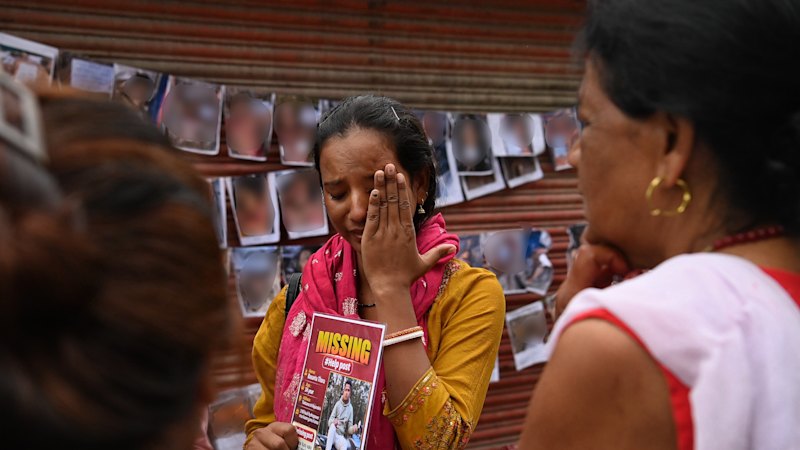
Next, they must pore through A4 sheets of paper, stapled into a booklet, containing the forensic photos of bodies presently being processed. asserted
they → pore → bodies
Such photos are also posted on a wall across the road. asserted
photos → post → road
Most images on both wall and in booklet are of figures so mangled by the flood and bloated from days in the sun and mud that it is difficult to see how any of them may be identified this way. uncertain
any → see → them
An official at the morgue says 24 have been identified since last week, though none yet on Friday. asserted
24 → say → Friday
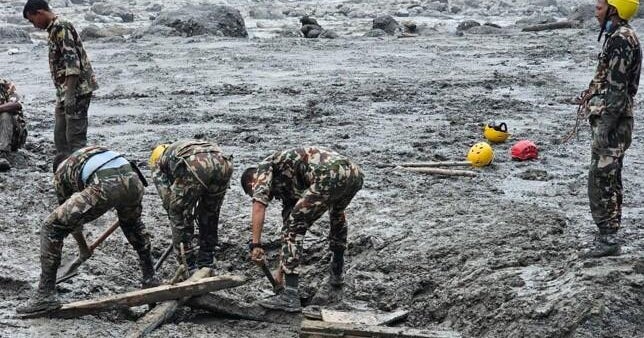
The volume of death is so great for Nepal’s limited resources that bodies lie exposed. asserted
bodies → lie → resources
We travelled by chance behind a police bus ferrying bodies on Thursday afternoon, and see it again, parked at the morgue, close to 24 hours later with what an official confirms are some of the same bodies (and two rice sacks full of body parts) only now being unloaded. asserted
official → travel → parts
Seven Australian Federal Police identification specialists are due to arrive in Kathmandu at the weekend, adding to a 15-member disaster assistance response team that landed on Friday. asserted
that → arrive → Friday
A short walk away, people are giving samples of their DNA in the hope they may be able to retrieve family members from the mass graves, and afford them proper Hindu or Buddhist cremation. uncertain
they → give → cremation
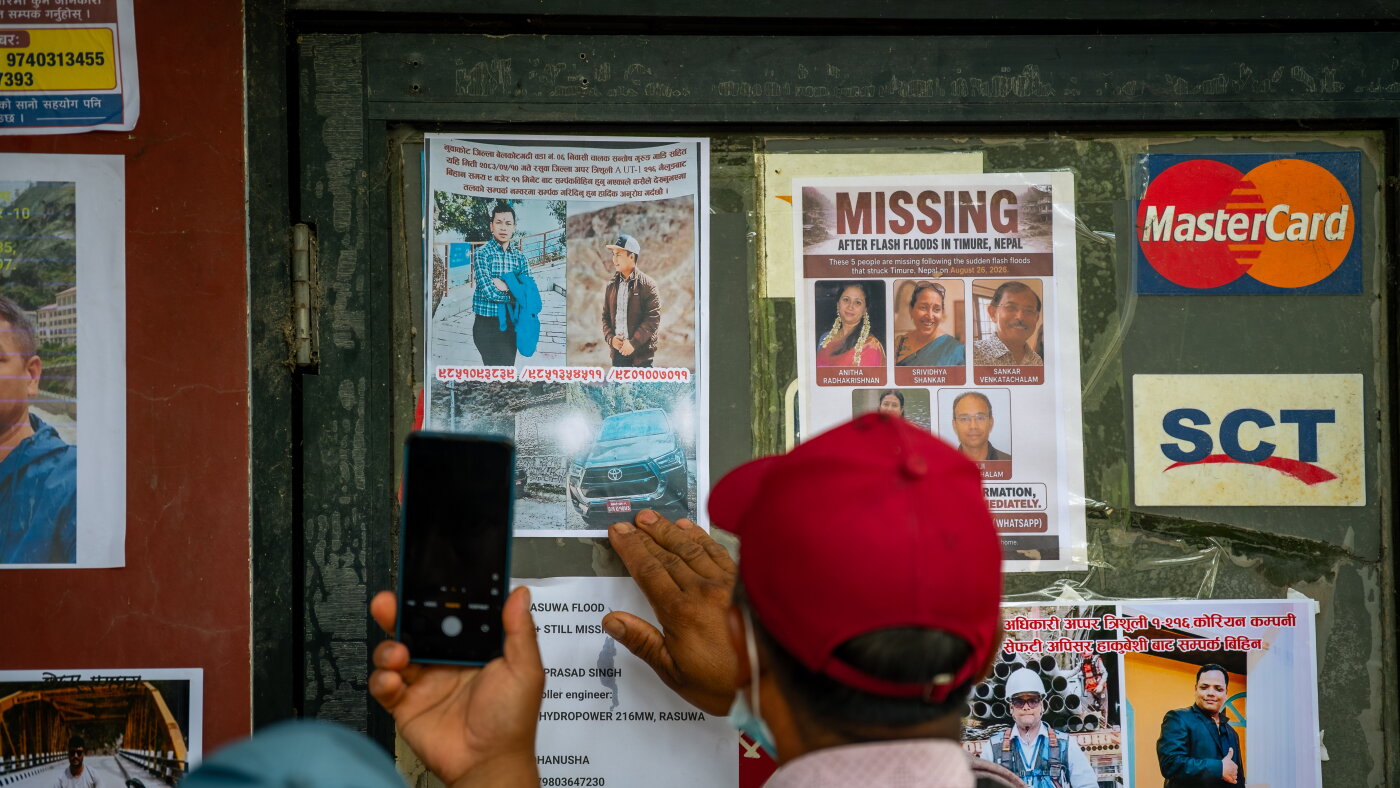
The precinct at Tribhuvan University Teaching Hospital also contains the great wall of grief, on which relatives attach posters of their missing. asserted
relatives → contain → missing
When we visited soon after the disaster, the wall contained a couple of dozen posters. asserted
wall → visit → posters
Now, there are hundreds, with more still being added. asserted
more → be → ?
School boy Bibek Pariyar, on short post-exam break, has taken on the responsibility of helping people stick on their posters and fixing the ones coming undone. asserted
people → take → ones
And with the wall almost completely covered, climbing onto the ledge to reach remaining space can be dangerous. asserted
climbing → cover → space
He doesn’t take payment, and when this masthead gives him a small amount of money for lunch and a drink, he tries to refuse. asserted
he → take → lunch
“I feel good doing this,” he explains. asserted
he → feel → this
Nearby, Champa Kumari Marchana is holding the photo of her husband, who is missing in one of the tunnels of the Trishuli hydropower network. asserted
who → hold → network
She has not provided her DNA. asserted
She → provide → DNA
Doing so invites the unacceptable notion he may be dead. uncertain
he → do → notion
Another woman approaches the wall and strokes the photographs of a young man and a teenage boy. asserted
woman → approach → man
A man asks us if we have any information about his relative, a British citizen missing in Tibet. asserted
we → ask → Tibet
He says the embassy can’t help because China is releasing so few details. asserted
China → say → details
Unfortunately, we can’t help him either. asserted
we → help → him
More than 5500 people are dead or missing in Nepal and Tibet. asserted
people → miss → Nepal
The number includes at least 36 Australians. asserted
number → include → Australians
Read more reporting from Nepal by South-East Asia correspondent Zach Hope and chief photojournalist Kate Geraghty: - ‘I have lost my will to live’: Hope gives way to grief. asserted
Hope → read → grief
Few are counting on miracles - Quicksand and rotting flesh: No words can capture the devastation in Nepal - ‘Wiped out’: This valley was the last known location of a Sydney family. asserted
valley → count → family
Then a wave 100 metres high hit - asserted
wave → hit → ?
‘I saw many dead bodies’: The harrowing escape from a flooded Nepal tunnel Get a note directly from our foreign correspondents on what’s making headlines around the world. asserted
what → see → world

💬Give feedback
🕘History 🎫Support