That is 0 articles you have read today.
The Aporia is free and carries no advertising, so readers are the only
thing paying for it. If you are getting this much out of it, a small
donation is what keeps it independent.
Daily limit reached
You have read 0 articles today.
That is more than the 15 a day The Aporia gives away,
and well past what it can carry on nothing. Your allowance resets at
midnight.
There is no advertising here and nothing about you is sold, so readers
are the only thing paying for it. If the site is worth this much of
your day, it is worth a few dollars.
Everything else stays open: the
maps, the
directory and
search do
not count against this, and neither does re-opening something you have
already read today.
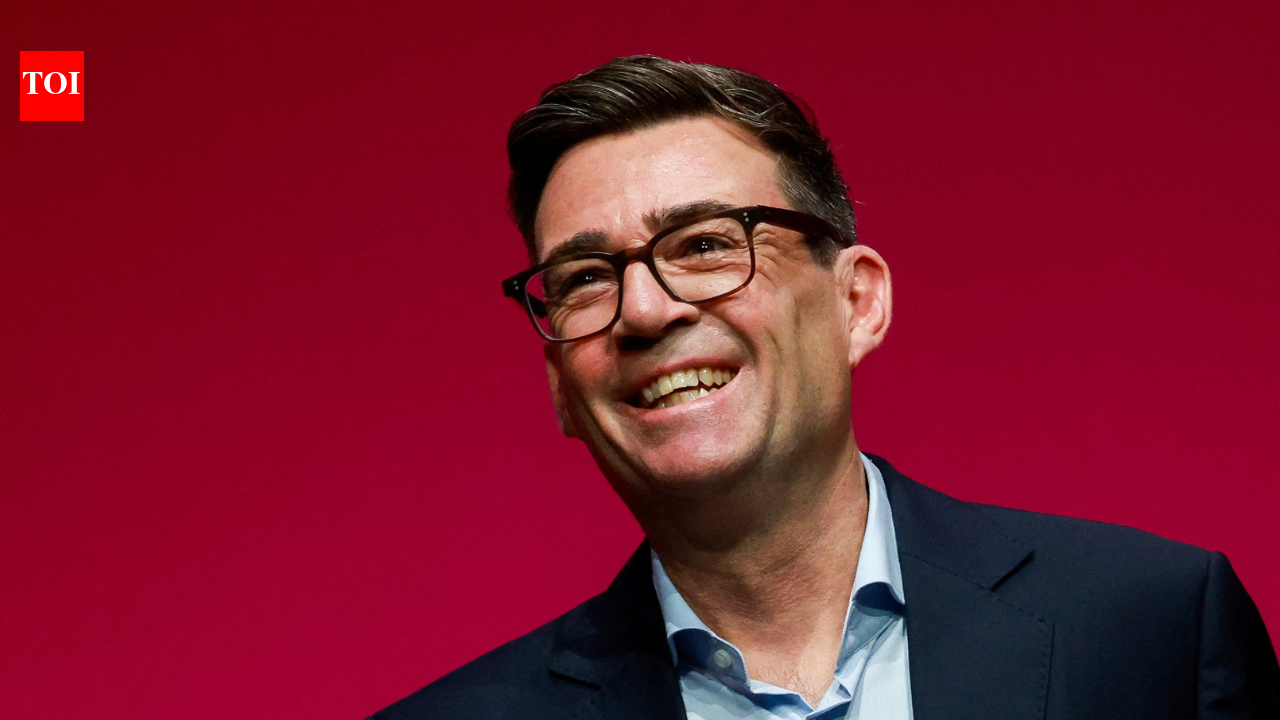
Andy Burnham delivered his first speech as Labour leader at a conference in Liverpool on Tuesday, outlining several key policy initiatives. These include plans for leasehold reform and measures against poor-quality housing, increased public control over utilities by repealing Margaret Thatcher's ban on public water ownership, creation of a new publicly-owned “Great British Grid” to challenge private sector operators, and the establishment of a free-at-the-point-of-use National Care Service funded through reforms to the pensions triple lock.
Written locally by qwen2.5:14b on 2026-09-29,
using this article's own text rather than the other coverage of the
same event (that is the story summary below).
Story summary
Andy Burnham, newly elected leader of the Labour Party, delivered his first speech as leader at the party's conference in Liverpool on Wednesday. The speech was emotional and covered bold policies such as reforming social care and electoral systems, drawing mixed reactions from attendees and media outlets.
Burnham choked up while discussing his father who recently passed away, a moment that resonated deeply with the audience. He admitted to wanting to move faster on cost-of-living measures but stressed fiscal honesty about what Britain can afford. The speech was seen by some as one of the most memorable in recent years, with former BBC political editor Andrew Marr comparing it favorably to Tony Blair's speeches.
Critics like Mail Online’s Quentin Letts were less impressed, describing the emotional tone and policy promises as overly sentimental and sugar-coated. Meanwhile, supporters praised Burnham for his relatability and commitment to addressing working-class concerns, potentially appealing to voters who had drifted away from Labour under Keir Starmer.
The speech also touched on plans for electoral reform, aiming to introduce proportional representation in Westminster elections, a significant change since 1918. This move is seen as part of Burnham's strategy to transform the UK’s political system fundamentally, though some within the party are wary about such dramatic changes given current fiscal constraints and public opinion.
Written for “Andy Burnham Labour Speeches” on 2026-10-05,
grounded in this article and the 24 other(s) covering the same event.
Mr Burnham confirmed plans to open up home ownership “to those not backed by the bank of mum and dad” by reducing the size of the deposit needed.
asserted
Burnham → confirm → deposit
He also pledged to introduce a Bill before Christmas for “long overdue” leasehold reform, telling leaseholders that “the days of you being squeezed for every penny are coming to an end”.
asserted
you → pledge → end
Councils will be given the power to take over poor quality homes if landlords refuse to improve them, he said, adding: “We don’t let people sell food which damages health, so why allow it with homes?
asserted
which → give → homes
– Public control of utilities
Mr Burnham vowed to strengthen public control of the water system with a Bill that will repeal “Margaret Thatcher’s ideological ban on public ownership of water companies”.
He said that will “start a 10-year journey to a very different water system”, giving local leaders new powers to hold water companies to account and closing loopholes used to pay big bonuses.
asserted
that → vow → bonuses
The Labour leader described the water industry as a “symbol of what has gone wrong with Britain” in which “shareholders never lose and the public never win, from which some have syphoned out easy money while the public picked up the bill for the sewage in our seas”.
asserted
public → describe → seas
Mr Burnham announced a new publicly-owned “Great British Grid” that will “challenge the private sector operators” to “increase competition, drive down costs and speed up delivery”.
asserted
that → announce → delivery
The new body being set up under the Great British Energy umbrella should make it easier to get connections to the energy grid in a bid to address one of the issues which has been blamed for slowing the pace of economic growth and pushing up costs.
asserted
which → set → costs
It will be the first publicly-owned player in electricity networks since privatisation under Margaret Thatcher.
asserted
It → own → Thatcher
Read More
– Social care reform
Mr Burnham vowed to build a “National Care Service” which will be “free at the point of use” and impose no charges on the basic state pension, in what he described as a “landmark policy as significant as the creation of the NHS itself”.
asserted
he → read → NHS
He said it will be “a person-centred, high-quality” care service where “everyone contributes and everyone is covered” and care “is about people not profit”, does not erode savings and gives “proper recognition” to care workers.
asserted
people → say → workers
He said the Government will start laying the ground now for the service and introduce it in the next Parliament.
asserted
Government → say → Parliament
The Prime Minister said: “I accept I may pay a political price.
“
uncertain
I → say → price
But someone has to go through the pain barrier and rip the plaster off.”
asserted
someone → have → plaster
He added that it “will be fully funded, and not through borrowing”.
asserted
it → add → borrowing
– Triple lock revamp
Mr Burnham announced his social care overhaul will be paid by changes to the pensions triple lock – which currently guarantees that pensions will rise in line with inflation, 2.5% or average earnings, whichever is the largest increase.
asserted
whichever → announce → inflation
He said he would honour the promise in the 2024 Labour manifesto to keep the triple lock unchanged throughout this Parliament.
asserted
he → say → Parliament
He continued: “In April 2030 we will adjust it.
asserted
we → continue → it
The state pension will continue to rise every year at least by prices or 2.5%.
asserted
pension → continue → prices
“And it will hold its value relative to earnings over time so that pensioners will always share in the rising prosperity of the nation.
“
asserted
pensioners → hold → nation
But this change will generate significant savings which we will use to build up our National Care Service.”
asserted
we → generate → Service
 The Aporia