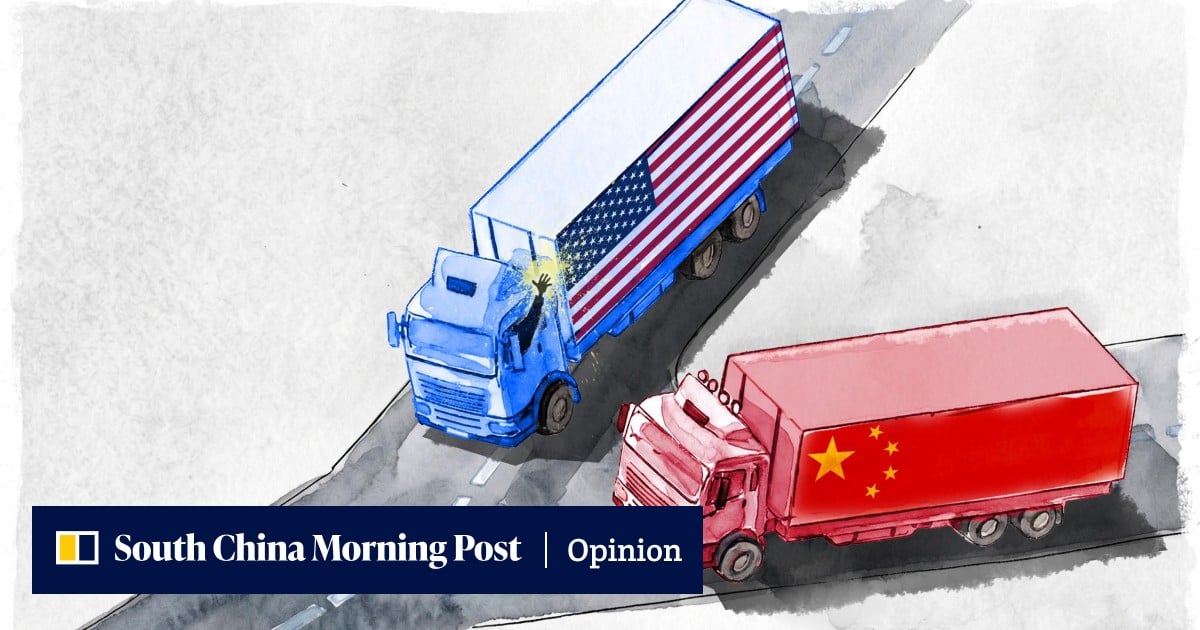
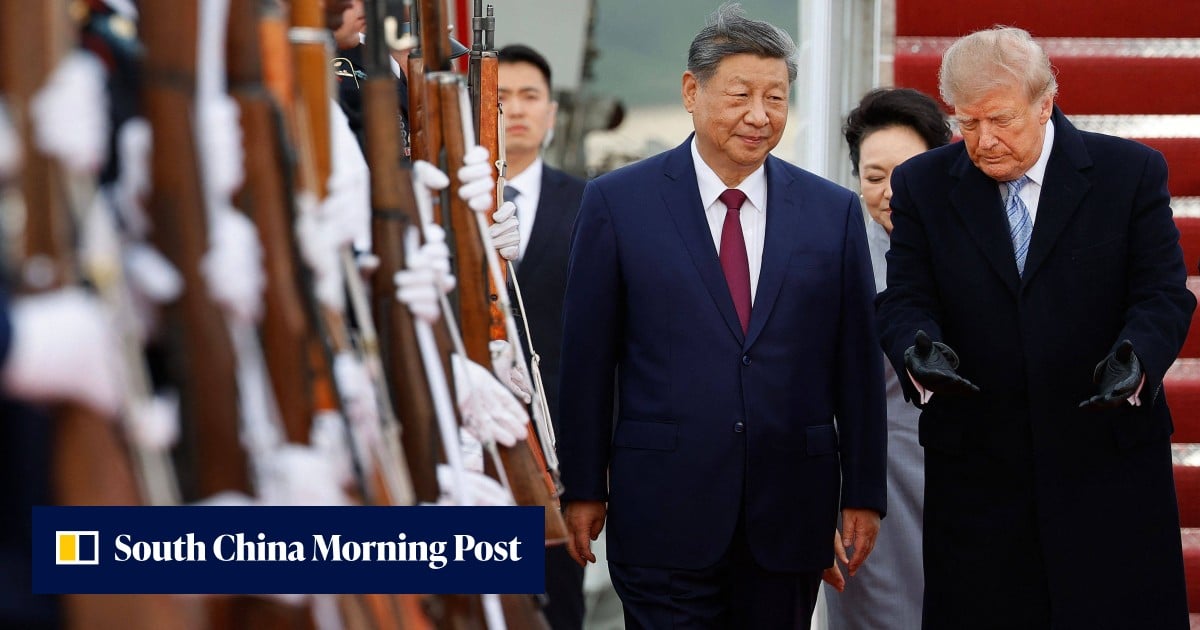
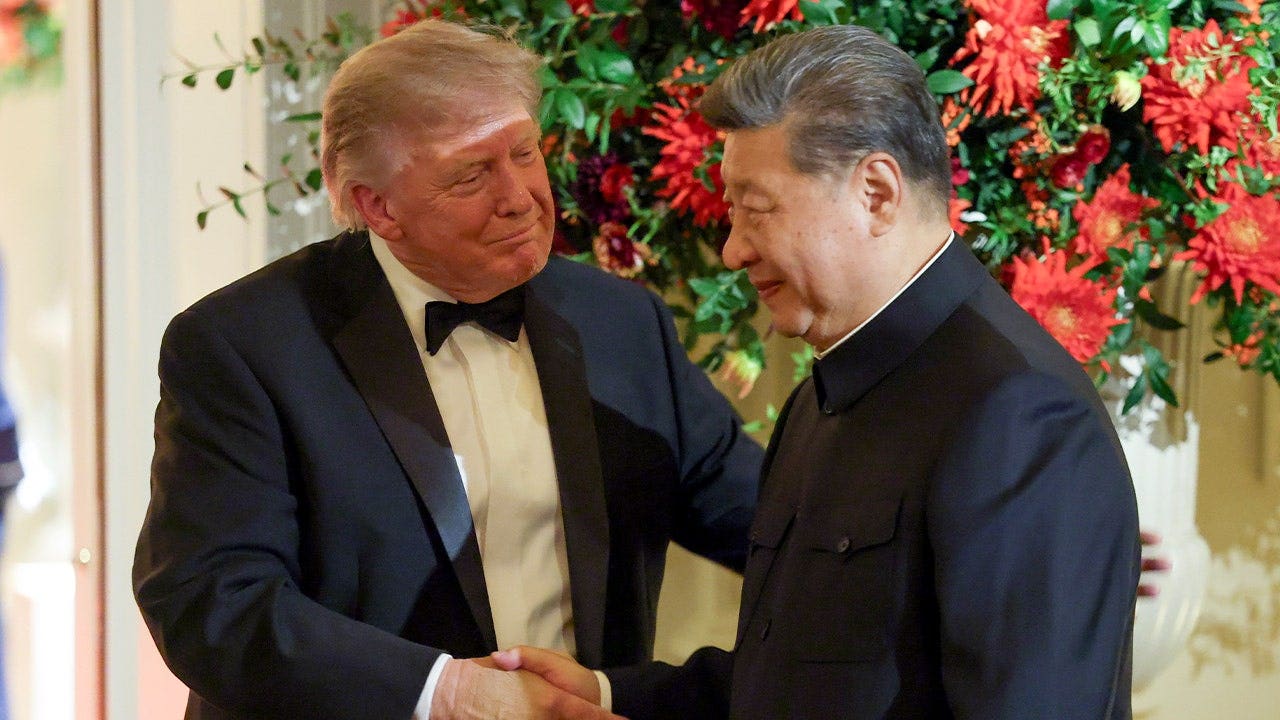
What trap? US-China relations show conflict is far from inevitable

Read the original at South China Morning Post ↗
South China Morning Post · collected 2026-09-29 · by Wang Wen

Quick Summary

The article challenges the notion of a "Thucydides Trap" in US-China relations, arguing that conflict between the two powers is not inevitable. It suggests that both governments are engaging in diplomatic efforts to prevent escalation and maintain stability despite existing frictions. The piece contrasts this pragmatic approach with punditry that often dismisses tensions as unavoidable, instead focusing on concrete actions by policymakers rather than speculative analyses. By comparing their economic power, the article notes that while China's economy is growing, it remains smaller than the US economy at about 63% in market exchange rates for 2025.
Written locally by qwen2.5:14b on 2026-09-29, using this article's own text rather than the other coverage of the same event (that is the story summary below).

AI analysis runs on qwen2.5:14b, locally

Story summary

The concept of a Thucydides Trap, often cited in discussions about US-China relations, suggests an inevitable conflict as one power rises to challenge another. However, recent behavior from both Beijing and Washington indicates they can manage their relationship without descending into war. According to economic data, by market exchange rates, the US economy was valued at approximately $30.6 trillion in 2025 compared to China’s $19.4 trillion, showing that China's economy is around 63% of the size of the US economy. This suggests that while tensions exist, they are being navigated through diplomacy rather than military confrontation.
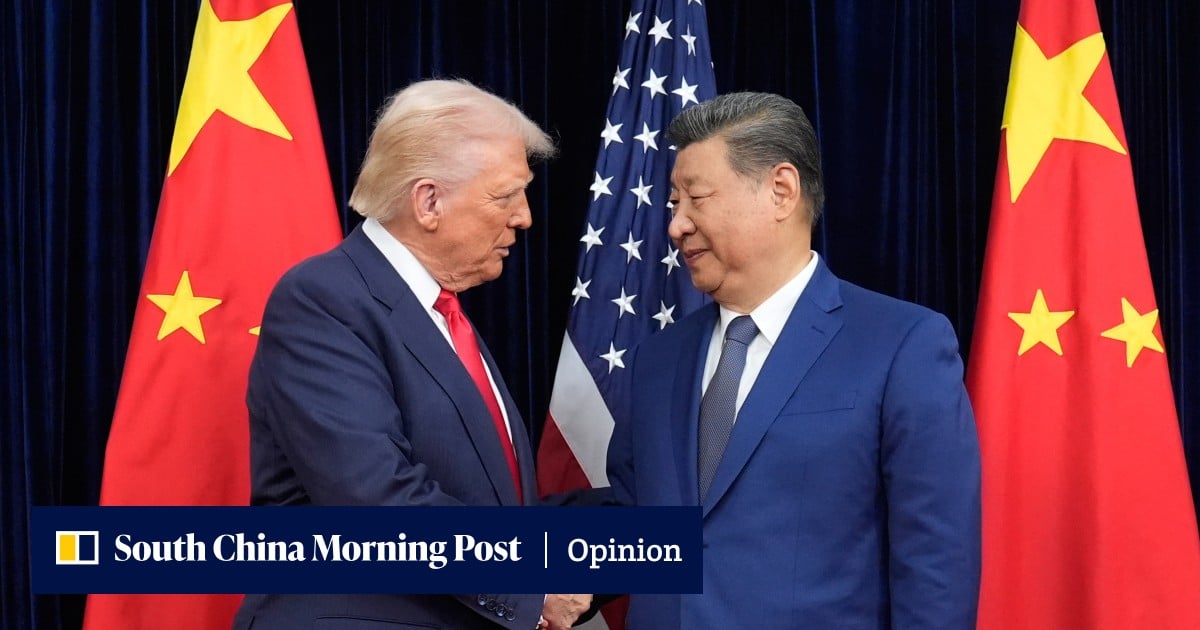
Written for “Us China Relations Trap” on 2026-10-05, grounded in this article and the 0 other(s) covering the same event.

Signals How these are calculated →

Claims extracted
7
claim-shaped sentences
Uncertain
0%
0 of 7 hedged
Leaning
Leans left
of the writing, not the subject · beta estimate
Correction & hedging signals
66.6
corrections and hedging in what we collected; not a measure of accuracy
Outlets on this story
1
Politics
Narrative spread
1
articles carrying this framing
Analyzed 2026-09-29 · how these are computed

Story

📰 Us China Relations Trap
Politics · 1 article(s) covering the same event.

How this is being covered How these are calculated →

Article leaning vs. publisher reliability
Source leaning vs. consistency

Compared with similar articles

This article reads leans left and hedges 0% of its claims. Each row says how that neighbour differs.
South China Morning Post
⚖️ Leans left 🔴 0% hedged 0 of 5 📰 publisher trust 67
“The articles discuss broader themes about US-China relations and cooperation but do not describe a single specific incident or meeting.”
ABC News (AU)
⚖️ Leans left 🔴 20% hedged 7 of 35 📰 publisher trust 61
“The articles discuss US-China relations but describe different aspects and perspectives, not a single specific incident.”
Trump and Xi size each other up different event · 95%
Washington Examiner
⚖️ Leans right further right than this 🔴 8% hedged 3 of 40 📰 publisher trust 72
“The articles discuss broader relations and patterns in US-China interactions rather than a single specific summit meeting.”
South China Morning Post
⚖️ leaning not scored 🔴 0% hedged 0 of 1 📰 publisher trust 67
“The articles discuss different aspects of broader geopolitical relations between the US and China, without focusing on a single identical incident.”
Daily Mail
⚖️ Leans right further right than this 🔴 22% hedged 2 of 9 📰 publisher trust 65
“The articles discuss different aspects of US-China relations and do not describe the same specific incident.”
Fox News
⚖️ leaning not scored 🔴 10% hedged 6 of 59 📰 publisher trust 69
“While both articles discuss US-China relations and mention President Trump's meeting with Xi Jinping, they focus on different aspects and do not describe the same specific incident or occurrence.”
The Hindu
⚖️ leaning not scored 🔴 0% hedged 0 of 8 📰 publisher trust 60
“Article A discusses the general trend in US-China relations and challenges the concept of an inevitable conflict, while Article B reports on a specific summit meeting between Trump and Xi Jinping aimed at easing tensions.”

Publisher

South China Morning Post · 1610 article(s) · 4 correction(s) detected
Running correction rate · 4 correction(s)
2026-10-04
Flight to Okinawa diverts back to Hong Kong after suspected landing gear fault
2026-10-04
Tennessee prisons chief resigning after botched execution of Christa Pike
2026-09-29
Indonesian prison chief suspended over secret VIP compound for inmates
2026-09-28
Trump ‘arms offer’ to China jolts Washington into moves to contain the fallout

Who wrote this

Wang Wen
1 article(s) here · 0 carrying a prediction
The only article under this byline in the corpus.

Topics

Beijing China Washington

Subjects

China GPE · 2× Beijing GPE · 1× Washington GPE · 1×

Narrative

By market exchange rates, the US economy was worth about US$30.6 trillion in 2025 against China’s US$19.4 trillion, putting China’s economy at roughly 63 per cent of the size of the US.
framing: assertive · carried by 1 article(s) · first seen 2026-09-29
2026-09-29 · South China Morning Post
What trap? US-China relations show conflict is far from inevitable · assertive framing

Claims (7 extracted, 0 hedged)

US-China relations show conflict is far from inevitable The Thucydides Trap that has dominated debate for a decade is a poor fit for reality. asserted
that → show → reality
Beijing and Washington are both showing they can share the stage without drifting into war The term is widely used in commentaries on US-China relations. asserted
term → show → relations
Frictions get written off as “inevitable” regardless of what actually happened. asserted
what → write → ?
But a closer look at how the two governments behave, not just how pundits describe them, tells a different story. asserted
pundits → behave → story
Both sides are, for now, choosing the diplomatic equivalent of indicating before they change lanes. asserted
they → choose → lanes
Any analysis about power transition has to start with power itself, so here is where the two superpowers stand at the moment. asserted
superpowers → have → moment
By market exchange rates, the US economy was worth about US$30.6 trillion in 2025 against China’s US$19.4 trillion, putting China’s economy at roughly 63 per cent of the size of the US. asserted
economy → put → US
💬Give feedback
🕘History 🎫Support