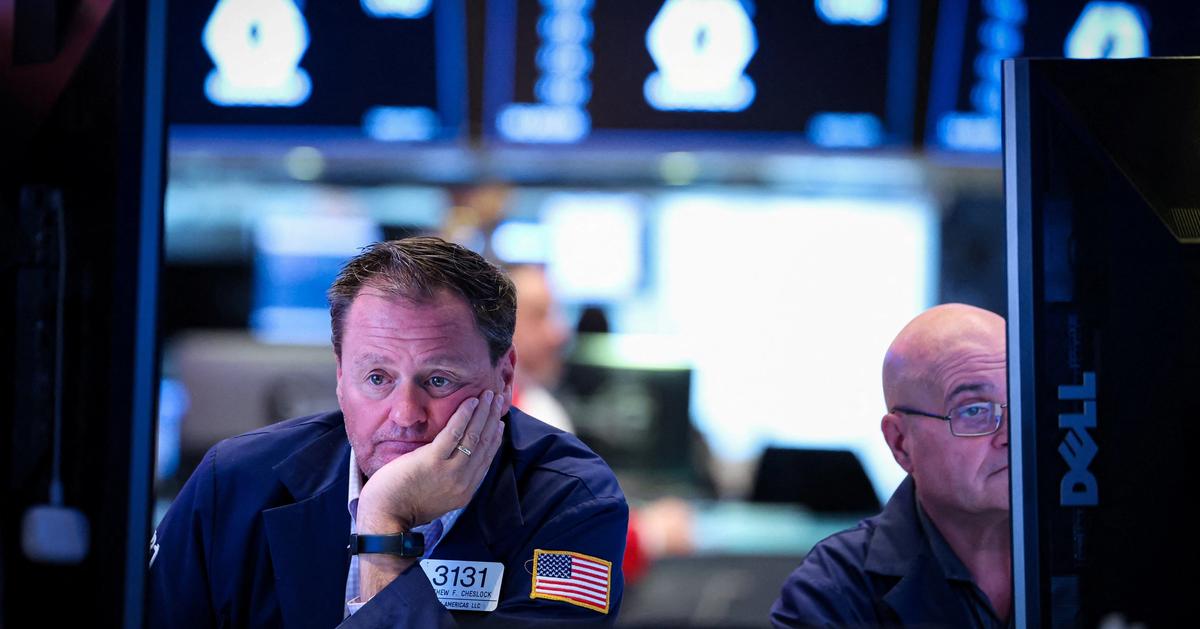
Bond selloff deepens on oil fears

Read the original at Semafor ↗
Semafor · collected 2026-09-28 · by Brendan Ruberry

Quick Summary

On Monday, the US 10-year Treasury yield rose to levels last seen in 2007 due to concerns over oil prices following tensions between the United States and Iran. Brent crude initially surged but later stabilized after news of increased Saudi Aramco pipeline supply. Market experts cited ongoing high inflation, robust economic activity, and significant government borrowing as factors contributing to rising yields, with predictions that bond yields could continue to increase this week based on expected US inflation data and employment figures.
Written locally by qwen2.5:14b on 2026-10-02, using this article's own text rather than the other coverage of the same event (that is the story summary below).

AI analysis runs on qwen2.5:14b, locally

Story summary

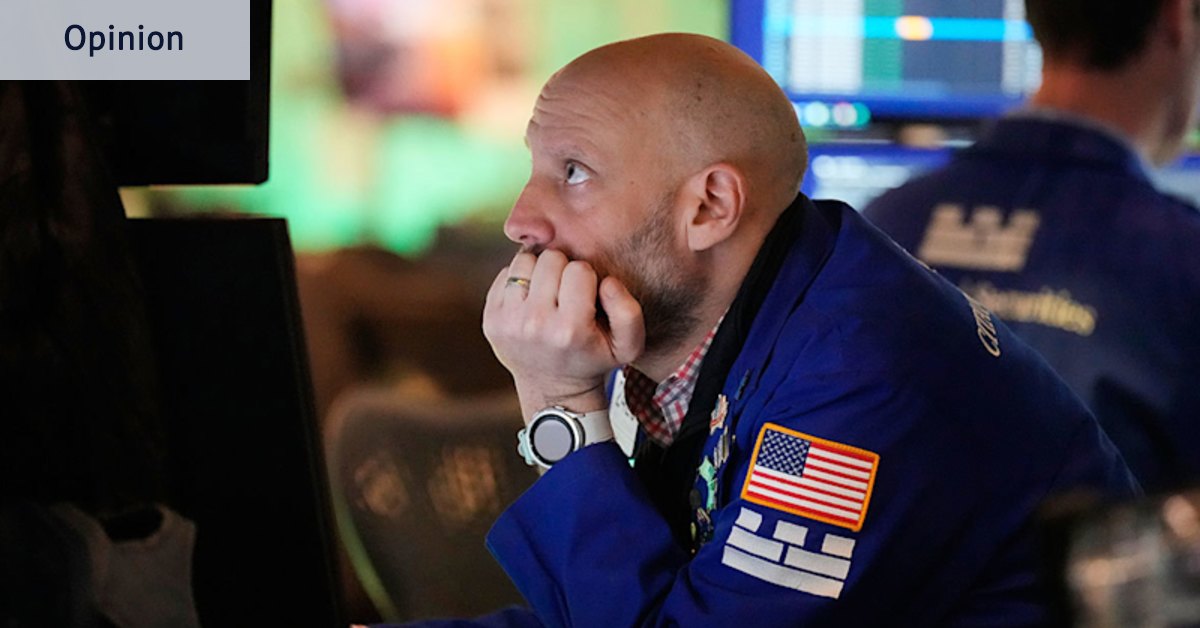
US bond yields surged to near 20-year highs, rising from 4.95% to 5.16% over a week, amid concerns over escalating tensions between Iran and the US, which have driven up oil prices. This increase in bond yields is inversely correlated with stock markets; for instance, the S&P 500 fell by 0.8% while the Nasdaq Composite dropped by 1%, reflecting investor anxiety about higher borrowing costs impacting corporate profits. The spike in bond yields also questions the sustainability of the artificial intelligence investment boom as bonds become more attractive compared to stocks with a lower dividend yield, currently around 1%. Additionally, US President Donald Trump's rejection of Iran’s offer to reopen the Strait of Hormuz has exacerbated fears over sustained high oil prices, contributing further to the instability in financial markets.

Written for “Bond Selloff And Market Volatility” on 2026-10-05, grounded in this article and the 3 other(s) covering the same event.

Signals How these are calculated →

Claims extracted
4
claim-shaped sentences
Uncertain
25%
1 of 4 hedged
Leaning
not political
takes no side on a contested political question
Correction & hedging signals
94.9
corrections and hedging in what we collected; not a measure of accuracy
Outlets on this story
4
Economy/Business
Narrative spread
1
articles carrying this framing
Analyzed 2026-09-29 · how these are computed

Story

📰 Bond Selloff And Market Volatility
Economy/Business · 4 article(s) covering the same event. See how they differ ↓

How this is being covered How these are calculated →

Article leaning vs. publisher reliability
Source leaning vs. consistency

Compared with similar articles

This article reads unscored and hedges 25% of its claims. Each row says how that neighbour differs.
Toronto Star
⚖️ leaning not scored 🔴 9% hedged 4 of 47 📰 publisher trust 63
“The articles discuss different time periods and factors affecting bond yields.”
ABC News (AU)
⚖️ Leans left 🔴 10% hedged 5 of 48 📰 publisher trust 61
“The articles discuss related economic events but describe different occurrences: Article A discusses interest rate increases by the Reserve Bank, while Article B reports on bond selloffs and oil price fears in financial markets.”
The Sydney Morning Herald
⚖️ leaning not scored 🔴 14% hedged 5 of 35 📰 publisher trust 61
“Both articles discuss the rise in US bond yields and its relation to oil price fears on the same date.”
NBC News
⚖️ leaning not scored 🔴 8% hedged 2 of 26 📰 publisher trust 95
“Both articles discuss financial markets reacting to geopolitical tensions and oil price changes on the same date.”
Global News
⚖️ leaning not scored 🔴 3% hedged 1 of 29 📰 publisher trust 64
“Both articles describe the impact of rising oil prices on financial markets on the same day, September 28, 2026.”
ABC News (AU)
⚖️ leaning not scored 🔴 0% hedged 0 of 43 📰 publisher trust 61
“While both articles discuss bond market issues related to economic and geopolitical factors, they cover different time periods and distinct developments: Article A is a general overview of a bond market sell-off, while Article B specifically mentions the impact of US-Iran diplomacy on oil prices and subsequent yield increases.”
Semafor
⚖️ Leans left 🔴 0% hedged 0 of 3 📰 publisher trust 95
“The articles describe similar conditions but refer to different time periods and developments in US-Iran diplomacy.”
Semafor
⚖️ leaning not scored 🔴 20% hedged 1 of 5 📰 publisher trust 95
“The articles describe similar conditions affecting US Treasury yields but refer to different times and specific triggers.”
The Guardian
⚖️ leaning not scored 🔴 5% hedged 1 of 19 📰 publisher trust 60
“The articles describe different times and contexts of bond market reactions, with Article A referring to an earlier period and focusing on US-Iran diplomacy while Article B focuses on UK borrowing costs reaching a high due to fears over persistent oil prices and the US deficit.”
Semafor
⚖️ leaning not scored 🔴 0% hedged 0 of 4 📰 publisher trust 95
“The articles describe different time periods and focus on distinct aspects of bond market activity, suggesting they are reporting on separate occurrences.”

Publisher

Semafor · 742 article(s) · 0 correction(s) detected
No corrections detected for this publisher. That may mean careful reporting, or simply that nothing has been checked.

Who wrote this

Brendan Ruberry
75 article(s) here · 1 carrying a prediction
🔮 A purely offensive approach means both sides could end up “one mass-casualty event away from a different world,” he wrote, suggesting that Europe should instead boost domestic security and negotiate guardrails with the Kremlin.
🔮 They are preparing to respond with “one voice,” a source told the outlet, hoping to defuse a situation that could spike fuel costs throughout the EU, which receives more than half its diesel exports from the US.
🔮 Diesel prices could remain elevated for a year, according to a new survey of oil and gas executives.
🔮 The EU and Canada will consummate their expansive new partnership at a Montreal summit next month, Politico reported, furthering Canadian Prime Minister Mark Carney’s efforts to shore up cooperation between the world’s “middle powers.”
2026-09-30 · assertive framing · Canada, EU to finalize partnership next month
🔮 The Federal Trade Commission will probe AI firms including OpenAI and Anthropic to gauge risks to consumers, in the first major US regulatory action following reports of rogue AI incidents and warnings about the technology’s existential risks.
🔮 The US could offer Russia sanctions relief in exchange for the release of political prisoners, The Atlantic reported, potentially clearing a path for expanded economic ties between Washington and Moscow.
🔮 A US Federal Reserve governor warned Monday that AI-related demand would add inflationary pressures in the months ahead.
🔮 An Irish factory supplying alumina to Russia could face EU penalties in the bloc’s upcoming sanctions package, underscoring Europe’s enduring dilemma in balancing industrial health with security priorities.
🔮 “Our sense is that [bond] yields could grind higher,” an S&P Global Ratings analyst said: “We see the energy price shock continuing through 2027.”
2026-09-28 · mixed framing · Bond selloff deepens on oil fears
🔮 Swiss voters on Sunday decisively rejected stricter neutrality rules that would have prevented the country from sanctioning Russia and curbed its cooperation with NATO, delivering a boost to the alliance’s efforts to counter Moscow.
2026-09-27 · mixed framing · Swiss vote down neutrality measures
Also by Brendan Ruberry
Nothing else under this byline is closely related to this article, so these are simply their most recent.
All 75 articles by Brendan Ruberry →

Topics

S&P Global Ratings Saudi Aramco Tehran The Wall Street Journal Treasury

Subjects

Donald Trump PERSON · 1× S&P Global Ratings ORG · 1× Saudi Aramco ORG · 1× Tehran GPE · 1× The Wall Street Journal ORG · 1× Treasury ORG · 1×

Narrative

Yields are currently tethered to oil prices, which along with “sticky inflation expectations, resilient activity and heavy sovereign financing needs are combining to push global discount rates higher,” a market strategist told The Wall Street Journal, with elevated US inflation and solid labor figures expected this week.
framing: mixed · carried by 1 article(s) · first seen 2026-09-29
🔮 “Our sense is that [bond] yields could grind higher,” an S&P Global Ratings analyst said: “We see the energy price shock continuing through 2027.”
2026-09-29 · Semafor
Bond selloff deepens on oil fears · mixed framing

Claims (4 extracted, 1 hedged)

The US 10-year Treasury yield returned to highs not seen since 2007 on Monday as faltering US-Iran diplomacy rekindled fears of higher-for-longer oil prices. asserted
diplomacy → return → prices
Brent crude spiked after US President Donald Trump dismissed negotiations with Tehran, but retreated on reports that Saudi Aramco had restored supply through its East-West pipeline. asserted
Aramco → spike → pipeline
Yields are currently tethered to oil prices, which along with “sticky inflation expectations, resilient activity and heavy sovereign financing needs are combining to push global discount rates higher,” a market strategist told The Wall Street Journal, with elevated US inflation and solid labor figures expected this week. asserted
inflation → tether → Journal
“Our sense is that [bond] yields could grind higher,” an S&P Global Ratings analyst said: “We see the energy price shock continuing through 2027.” uncertain
shock → grind → 2027
💬Give feedback
🕘History 🎫Support