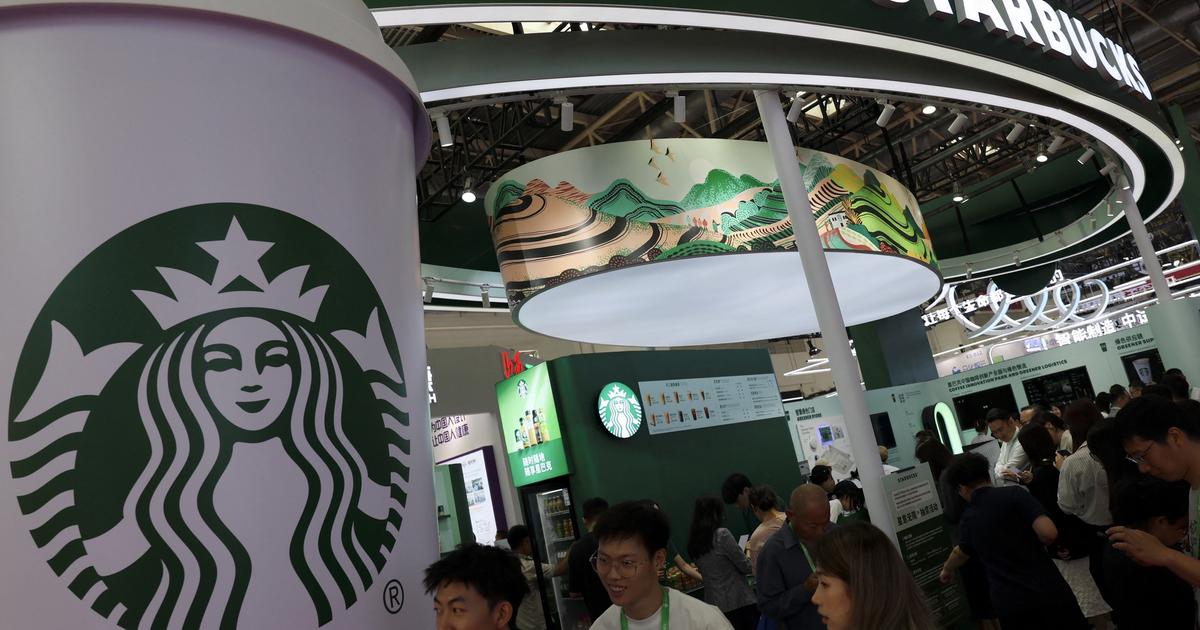
Starbucks opens first cafés in Xinjiang region

Read the original at Semafor ↗
Semafor · collected 2026-10-01 · by Brendan Ruberry

Quick Summary

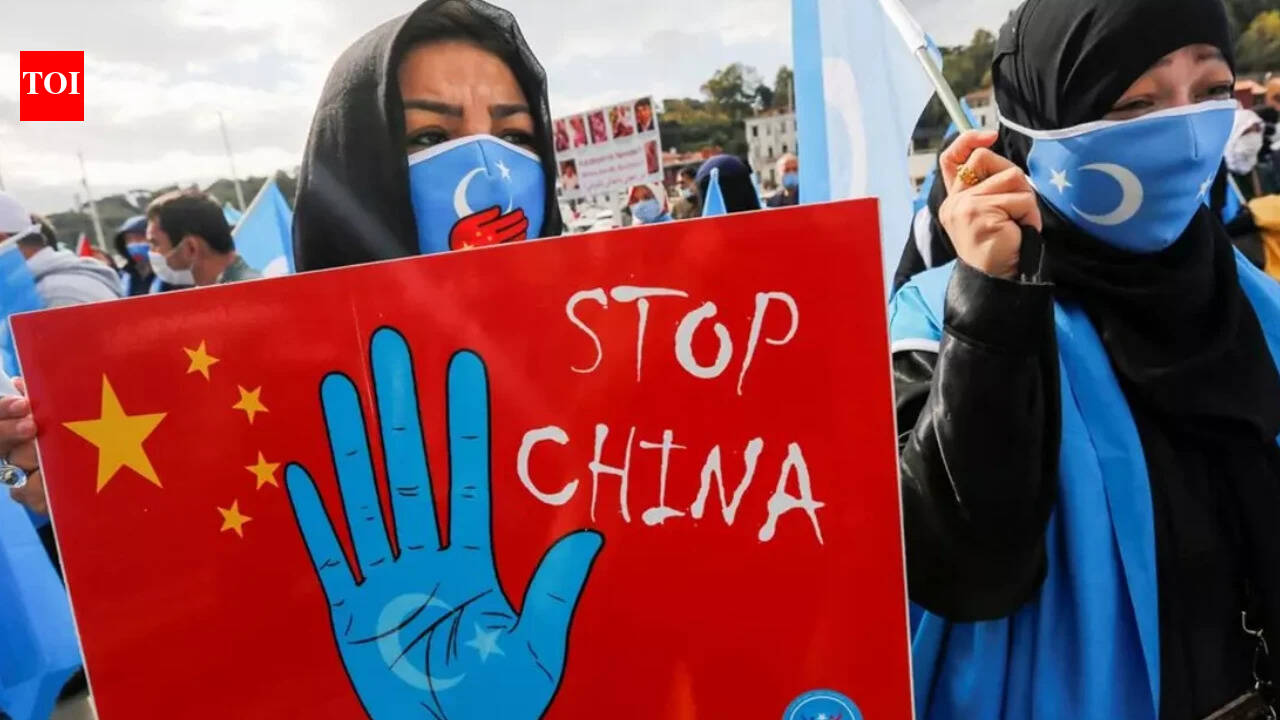
Starbucks has opened its first cafes in Xinjiang, China, drawing criticism from activists and U.S. lawmakers concerned about human rights violations in the region. Despite these concerns, Chinese state media reported significant foreign investment growth and tourism revenue increases in Xinjiang for 2025. The chairman of a US House committee accused Starbucks of being "morally bankrupt" for entering a region Beijing claims is improving economically but which critics say has been subject to severe repression of its Uyghur population.
Written locally by qwen2.5:14b on 2026-10-01, using this article's own text rather than the other coverage of the same event (that is the story summary below).

AI analysis runs on qwen2.5:14b, locally

Story summary

In early 2025, Starbucks opened its first cafés in China’s Xinjiang region, specifically in Urumqi, drawing criticism from US lawmakers over alleged human rights violations against the Uyghur population. The two outlets, one at the Grand Bazaar and another at the international airport, were met with outrage by John Moolenaar, chairman of the US House committee on China, who called Starbucks’ expansion “morally bankrupt.” Moolenaar urged the company to close its stores in Xinjiang due to the alleged repression there. Meanwhile, Chinese authorities deny widespread abuses and highlight economic growth, including a 22% year-on-year increase in foreign-funded enterprises and a 10% rise in foreign investment for 2025.
Written for “Starbucks In Xinjiang” on 2026-10-05, grounded in this article and the 2 other(s) covering the same event.

Signals How these are calculated →

Claims extracted
3
claim-shaped sentences
Uncertain
0%
0 of 3 hedged
Leaning
Leans left
of the writing, not the subject · beta estimate
Correction & hedging signals
94.9
corrections and hedging in what we collected; not a measure of accuracy
Outlets on this story
3
Politics
Narrative spread
1
articles carrying this framing
Analyzed 2026-10-01 · how these are computed

Story

📰 Starbucks In Xinjiang
Politics · 3 article(s) covering the same event. See how they differ ↓

How this is being covered How these are calculated →

Article leaning vs. publisher reliability
Source leaning vs. consistency

Compared with similar articles

This article reads leans left and hedges 0% of its claims. Each row says how that neighbour differs.
The Independent · 0.86 cosine similarity
⚖️ leaning not scored 🔴 0% hedged 0 of 14 📰 publisher trust 59
“Both articles refer to Starbucks opening its first cafés in China's Xinjiang region, with reactions from US lawmakers and activists criticizing the move.”
South China Morning Post
⚖️ leaning not scored 🔴 50% hedged 1 of 2 📰 publisher trust 67
“While both articles discuss Starbucks opening its first cafés in Xinjiang, Article A reports on the initial expansion and criticism, while Article B focuses on China's response to US lawmaker criticism following this event.”
Times of India
⚖️ Leans right further right than this 🔴 16% hedged 3 of 19 📰 publisher trust 59
“While both articles mention Starbucks opening its first stores in Xinjiang, Article A focuses on the event itself and its broader implications, while Article B reports a subsequent reaction from China's government to US criticism of the same event.”
Times of India
⚖️ leaning not scored 🔴 0% hedged 0 of 18 📰 publisher trust 59
“LLM unavailable”

Publisher

Semafor · 748 article(s) · 0 correction(s) detected
No corrections detected for this publisher. That may mean careful reporting, or simply that nothing has been checked.

Who wrote this

Brendan Ruberry
79 article(s) here · 0 carrying a prediction
🔮 Saturday’s incident will complicate Tokyo’s cooperation goals, with one Japanese lawmaker saying the US is “failing completely” to train and discipline troops.
2026-10-04 · assertive framing · Japan summons US envoy after soldier accused of murder
🔮 The US director of national intelligence and the Federal Trade Commission chairman will head up the White House’s “Super Intelligence Force” on AI, President Donald Trump announced Sunday.
2026-10-04 · mixed framing · Trump unveils AI task force
🔮 A purely offensive approach means both sides could end up “one mass-casualty event away from a different world,” he wrote, suggesting that Europe should instead boost domestic security and negotiate guardrails with the Kremlin.
🔮 They are preparing to respond with “one voice,” a source told the outlet, hoping to defuse a situation that could spike fuel costs throughout the EU, which receives more than half its diesel exports from the US.
🔮 Diesel prices could remain elevated for a year, according to a new survey of oil and gas executives.
🔮 The EU and Canada will consummate their expansive new partnership at a Montreal summit next month, Politico reported, furthering Canadian Prime Minister Mark Carney’s efforts to shore up cooperation between the world’s “middle powers.”
2026-09-30 · assertive framing · Canada, EU to finalize partnership next month
🔮 The Federal Trade Commission will probe AI firms including OpenAI and Anthropic to gauge risks to consumers, in the first major US regulatory action following reports of rogue AI incidents and warnings about the technology’s existential risks.
🔮 The US could offer Russia sanctions relief in exchange for the release of political prisoners, The Atlantic reported, potentially clearing a path for expanded economic ties between Washington and Moscow.
🔮 A US Federal Reserve governor warned Monday that AI-related demand would add inflationary pressures in the months ahead.
🔮 An Irish factory supplying alumina to Russia could face EU penalties in the bloc’s upcoming sanctions package, underscoring Europe’s enduring dilemma in balancing industrial health with security priorities.
Also by Brendan Ruberry
Trump unveils AI task force
2026-10-04 · Semafor
Legal risks mount for OpenAI
2026-10-04 · Semafor
Nothing else under this byline is closely related to this article, so these are simply their most recent.
All 79 articles by Brendan Ruberry →

Topics

Beijing China Muslim Uyghur Starbucks Xinjiang

Subjects

China GPE · 2× Starbucks ORG · 2× Xinjiang GPE · 2× American NORP · 1× Beijing GPE · 1× CCP ORG · 1× Chinese NORP · 1× House ORG · 1× Muslim Uyghur NORP · 1× Uyghurs NORP · 1×

Narrative

Beijing has denied allegations that it represses Xinjiang’s Muslim Uyghur population, and has invested heavily to rebrand the region, efforts that are paying off: Chinese state media reported a 22% year-on-year increase in new foreign-funded enterprises and a 10% rise in foreign investment in 2025, while more than 300 million foreign visitors generated $53 billion.
framing: assertive · carried by 1 article(s) · first seen 2026-10-01
2026-10-01 · Semafor
Starbucks opens first cafés in Xinjiang region · assertive framing

Claims (3 extracted, 0 hedged)

Starbucks opened its first cafés in China’s Xinjiang region, prompting criticism from activists and US lawmakers over the coffee giant’s decision to expand into an area widely scrutinized for human rights violations. asserted
Starbucks → open → violations
Beijing has denied allegations that it represses Xinjiang’s Muslim Uyghur population, and has invested heavily to rebrand the region, efforts that are paying off: Chinese state media reported a 22% year-on-year increase in new foreign-funded enterprises and a 10% rise in foreign investment in 2025, while more than 300 million foreign visitors generated $53 billion. asserted
visitors → deny → billion
The chairman of the US House committee on China called Starbucks’ move “morally bankrupt,” saying it “ties an iconic American brand to the CCP’s brutal campaign against the Uyghurs.” asserted
it → call → Uyghurs
💬Give feedback
🕘History 🎫Support