Photo via Semafor

Global bond selloff pushes borrowing rates higher

Read the original at Semafor ↗
Cite

Gonzalez, J. (2026, September 25). Global bond selloff pushes borrowing rates higher. Semafor. https://www.semafor.com/article/09/25/2026/global-bond-selloff-pushes-borrowing-rates-higher

Dated when The Aporia collected the article, usually within hours of publication. Check the original for its exact date and byline.

Semafor · collected 2026-09-25 · by Jeronimo Gonzalez

Quick Summary

No summary of this article yet; the story summary below covers the event.
See how they differ ↓

AI analysis

Story summary

On Wednesday, U.S. Treasury bond yields surged to levels not seen since 2007; the 10-year yield rose to as high as 5.08%, while the 30-year yield hit 5.38%. This increase was partly driven by rising oil prices, with European Brent crude reaching over $101 per barrel and U.S. crude jumping to nearly $92 per barrel. The spike in yields also reflects broader economic uncertainties, including worsening tensions between the United States and Iran and growing inflation pressures. Despite initial optimism from President Trump about talks with Iranian representatives at the UN General Assembly aimed at easing geopolitical tensions, a readout by U.S. special envoy Steve Witkoff indicated that significant progress had not been made. As a result of these factors, mortgage rates in the U.S. climbed above 7%, impacting consumer borrowing costs and government finances.

Written for “Treasury Yields Surge” on 2026-11-18, grounded in this article and the 3 other(s) covering the same event.

How they differ

3 outlets covered “Treasury Yields Surge”.

What each outlet says

One AI summary per outlet of its latest article on this story, written from that article alone and checked against it. Open the article for the outlet's own words.

SemaforThis outlet24 Sep

US Treasury yields reached their highest level since 2007, surpassing 5% for the 10-year yield and pushing home mortgage rates above 7%. This surge is attributed to factors including government deficits, US-Iran tensions, high oil prices, Fed hawkishness, and rising inflation. IMF chief Kristalina Georgieva warned that higher interest rates could exacerbate economic hardship, potentially leading to social unrest…

US Treasury yields hit highest level since 2007 →2 articles from Semafor on this story

NBC News23 Sep

U.S. Treasury bond yields reached near 20-year highs on Wednesday, with the 10-year yield hitting 5.08% and the 30-year reaching 5.38%. This surge coincided with a rise in oil prices; Brent crude surpassed $101 per barrel while U.S. crude neared $92. The article attributes these financial market fluctuations to ongoing tensions related to Iran’s war involving critical energy supply routes like the Strait of Hormuz…

Treasury yields surge to nearly 20-year high as oil jumps back above $100 →
Global News24 Sep

U.S. bond yields have risen sharply, with the 10-year Treasury yield reaching 5.12%—its highest level since 2007—and the 30-year yield surpassing 5.45%, its peak since 2002. These increases reflect economic uncertainties such as inflation, geopolitical conflicts involving Iran, and government spending, which have raised borrowing costs for both governments and consumers. Experts warn that these rising yields signal…

A U.S. bond yield hit 5.1% for 1st time in 19 years. Here’s what it signals →

Where they agree and split

The full story: what happened, how it changed, and all 4 articles →

Compared with similar articles

This article reads leans left and hedges 0% of its claims. Each row says how that neighbour differs.
Semafor
Hedges 1 of 5 claims Outlet record 65/100
Daily Mail
Leans strongly left further left than this Hedges 6 of 41 claims Outlet record 70/100
“The articles describe different occurrences related to global financial conditions but refer to distinct events: a bond selloff and rising borrowing rates versus a Reserve Bank rate hike decision.”
The Bulwark
Hedges 0 of 4 claims
“While both articles discuss similar economic conditions like higher mortgage rates and Treasury yields due to inflation concerns, they describe different aspects of the situation rather than the same specific incident.”
Semafor
Hedges 1 of 4 claims Outlet record 65/100
“The articles describe similar conditions but refer to different time periods and developments in US-Iran diplomacy.”
Global News
Hedges 5 of 38 claims Outlet record 63/100
“Both articles discuss rising bond yields but refer to different times, places, and details.”
CBS News
Hedges 10 of 45 claims Outlet record 67/100
“The articles describe bond market trends over different days with slightly differing details and global context.”
The Sydney Morning Herald
Hedges 5 of 35 claims Outlet record 61/100
“The articles discuss rising US Treasury yields but refer to different time frames and contexts.”
NBC News
Hedges 4 of 26 claims Outlet record 78/100
“The articles describe different time periods for Treasury yields surging, with Article A referring to Wednesday and Article B to Friday.”
Daily Mail
Hedges 1 of 53 claims Outlet record 70/100
“Article A describes a global financial situation with rising bond yields and borrowing rates, while Article B focuses on political commentary regarding interest rate hikes in Australia.”

Story

Treasury Yields Surge
Economy/Business · 4 article(s) covering the same event. Compare every outlet's account →
How this article was measured signals, leaning charts, publisher record, byline, topics and claims

Signals How these are calculated →

Claims extracted
3
sentences that state something as happening or true
Uncertain
0%
0 of 3 hedged ("reportedly", "may", "according to")
Leaning
Leans left
of the writing, not the subject · beta estimate
Publisher signals
65/100
Semafor's corrections and hedging, across everything collected from it. Not a measure of accuracy.
Outlets on this story
4
Economy/Business
Same framing elsewhere
1
articles that frame the event the way this one does
Analyzed 2026-09-25 · how these are computed

How this is being covered How these are calculated →

Article leaning vs. publisher reliability
Source leaning vs. consistency

Publisher

Semafor · 1856 article(s) · 6 correction(s) detected
Running correction rate · 6 correction(s)

Who wrote this

Jeronimo Gonzalez
87 article(s) here · 1 carrying a prediction
Trump, for his part, appears eager to avoid another trade war with Beijing, vowing to stop short of moves that could “insult China,” though hawks hope his words “are merely diplomatic niceties.”
Retail sales and industrial output missed forecasts, feeding fears that the country could slip into deflation.
2026-11-16 · assertive framing · China's economic activity slows more than expected
The Democratic Party’s recent electoral victories have lifted hopes of a warmer US welcome among would-be migrants.
2026-11-13 · assertive framing · US President Donald Trump threatens new Mexico tariffs
Europe’s two biggest economies are expected to beat growth forecasts despite economic headwinds, lifting hopes in a continent that has become the poster child for stagnation.
2026-11-12 · mixed framing · UK and Germany expected to beat growth forecasts
Spain’s socialist leader hopes the demonstrations will galvanize support for his party ahead of elections this month.
2026-11-11 · assertive framing · Housing woes fuel a general strike in Spain
ExxonMobil signalled it would resume operations in Venezuela almost two decades after leaving the country, a boost for Washington’s campaign to increase oil and gas output in its de facto protectorate.
Beijing, meanwhile, is unlikely to accede to US and European calls to bolster its domestic demand, with one asset manager telling the South China Morning Post he did not think the country’s “macro policy stance will change significantly.”
2026-11-10 · assertive framing · China’s trade surplus soars past $1T
Though experts have warned that the world will be exceptionally hot in the coming months, the COP31 summit is expected to be light on substance as governments prioritize energy security in the face of soaring fuel prices driven by the Iran war and the AI buildout.
2026-11-09 · assertive framing · Hopes low as COP31 summit opens in Türkiye
The gathering comes the day before Russian and Ukrainian officials are set to take part in US-mediated talks in Abu Dhabi, which European powers fear could heap pressure on Kyiv to accept a bad deal.
2026-11-09 · mixed framing · The EU wants greater say in Ukraine talks
Markets fear curbs to AI development, reportedly leading some investors to question whether frontier lab Anthropic will achieve its $1.5 trillion IPO valuation target or have to delay its debut.
2026-11-06 · assertive framing · Stock selloff goes global in worst rout in years
Also by Jeronimo Gonzalez
Nothing else under this byline is closely related to this article, so these are simply their most recent.
All 87 articles by Jeronimo Gonzalez →

Topics

American CNBC JP Morgan’s Japan US Treasury

Subjects

American NORP · 1× CNBC ORG · 1× JP Morgan’s ORG · 1× Japan GPE · 1× US Treasury ORG · 1×

Narrative

Yields on Japan’s 10-year bonds rose to their highest level in three decades, while US Treasury yields hovered above 5%, a level not seen since the 2007 financial crisis, helping push American mortgage rates to more than 7%. JP Morgan’s chief economist predicted the surge in energy prices sparked by the US-Iran war would persist, with supply bottlenecks and rising commodity prices stoking inflation too.
framing: assertive · carried by 1 article(s) · first seen 2026-09-25
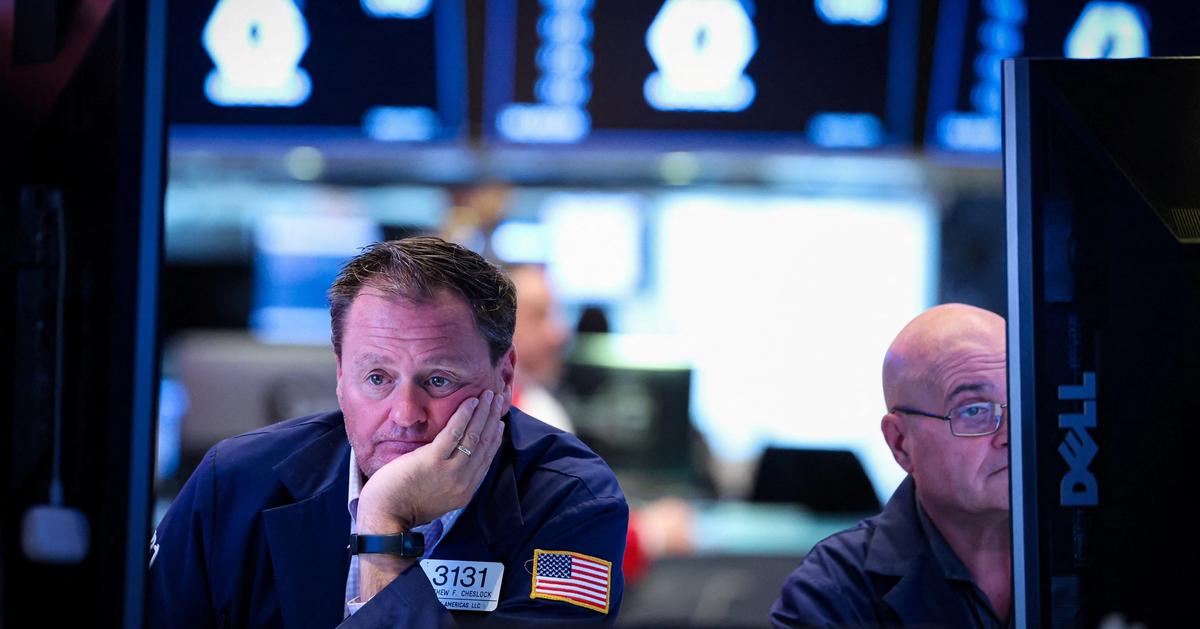
A global bond selloff sent long-term borrowing rates still higher on Friday as traders bet that inflation will remain elevated.
2026-09-25 · Semafor
Global bond selloff pushes borrowing rates higher · assertive framing

Claims (3 extracted, 0 hedged)

A global bond selloff sent long-term borrowing rates still higher on Friday as traders bet that inflation will remain elevated. asserted
inflation → send → Friday
Yields on Japan’s 10-year bonds rose to their highest level in three decades, while US Treasury yields hovered above 5%, a level not seen since the 2007 financial crisis, helping push American mortgage rates to more than 7%. JP Morgan’s chief economist predicted the surge in energy prices sparked by the US-Iran war would persist, with supply bottlenecks and rising commodity prices stoking inflation too. asserted
bottlenecks → rise → inflation
The higher borrowing costs are squeezing public finances: Global debt topped $365 trillion — equivalent to roughly three times GDP — prompting experts to warn governments were caught in a “vicious cycle” of short-term fixes and long-term vulnerability, CNBC reported. asserted
CNBC → squeeze → fixes
Give feedback · no sign-in needed

No sign-in needed for now. Your note is sent without a name, so it cannot be answered.

History Support