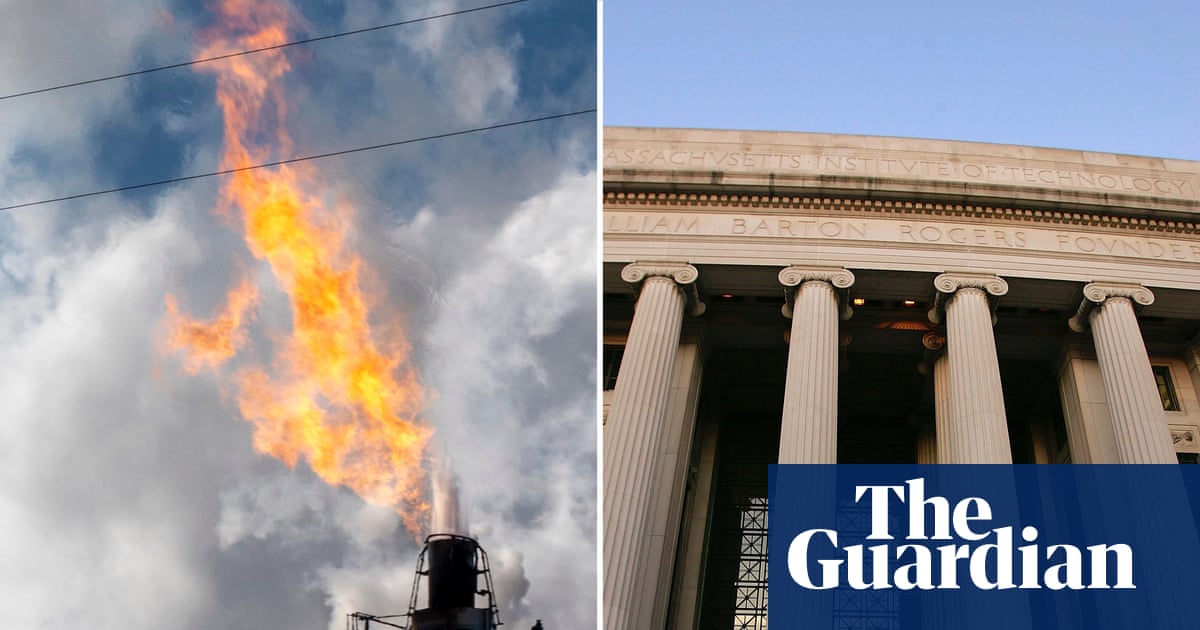
Recent attacks on US universities by the Trump administration have built on decades of efforts by libertarian donor networks, fossil fuel companies and conservative thinktanks to reshape university governance and increase outside influence, according to a new study.
uncertain
attacks → build → study
The authors of the new perspective study argue that the erosion of university autonomy has left colleges more vulnerable to corporate interests, especially within climate and energy research.
asserted
erosion → argue → research
In 2025, the Trump administration froze billions of dollars in research funding, launched investigations into 75 institutions and pushed colleges to sign agreements supporting administration policies in exchange for federal funding.
asserted
administration → freeze → funding
The federal government canceled $4m in climate research grants at Princeton University alone and accused scientists of fueling “climate anxiety”.
asserted
government → cancel → anxiety
If you’re a young researcher watching that, you might think twice about asking a question that could cost you your funding, said Noel Healy, of Salem State University, the lead author of the study published in the journal Energy Research & Social Science.
“Climate policy is only as good as the evidence behind it.
uncertain
policy → ’re → it
When the industry being regulated gets to shape the questions researchers ask, it ends up shaping the policy too,” he said.
asserted
he → regulate → policy
The Academic Freedom Index, which measures how freely scholars and universities can teach, research and express ideas without interference, found that US institutional autonomy fell from 3.3 in 2019 to 1.7 in 2025, on a scale of 0 to 4.
asserted
autonomy → measure → 4
“Since 2025, scientists have been deleting words like ‘climate change’ from their grant applications because those words can get an application rejected,” Healy said.
asserted
Healy → delete → applications
“Some universities have shut down programs before the government even asked them to, hoping to avoid becoming a target.
asserted
government → shut → them
You don’t have to ban speech if people fear that speaking up will cost them their funding.
asserted
speaking → have → funding
People start deciding it’s safer to stay quiet.
asserted
it → decide → ?
In the 1920s, electric utilities worked with academics to defend their monopoly positions and oppose regulations.
asserted
utilities → work → regulations
Fossil fuel companies followed suit in the 1950s, funding research to sow doubt about the public health impacts of their products.
asserted
companies → follow → products
Internal industry documents have shown that companies viewed academic research as a way to build credibility and influence public debate.
asserted
companies → show → debate
Corporate-funded research was only one way powerful interests influenced universities.
asserted
interests → fund → universities
Libertarian donor networks also influenced program content, faculty hiring and gained appointments to university governing bodies.
asserted
networks → influence → bodies
For example, David Koch, the billionaire industrialist whose wealth came from Koch Industries, gave more than $185m to his alma mater, the Massachusetts Institute of Technology (MIT), and served as a lifetime member to the elite research university’s highest governing body.
asserted
wealth → come → body
Between 2010 and 2020, six fossil fuel companies alone gave more than $700m to US universities, helping to legitimize industry solutions to the climate crisis and undermine regulatory approaches.
asserted
companies → give → approaches
Some of this funding came with donor agreements that gave outside actors control over decisions traditionally made by faculty, such as in hiring and curricula.
asserted
that → come → hiring
At the same time, donor-influence models were written into state law.
asserted
models → write → law
For example, in 2016, the Arizona state legislature created the first publicly funded libertarian academic center.
asserted
legislature → create → center
Other states have followed suit.
asserted
states → follow → suit
These centers bypass faculty control, instead answering to legislators.
asserted
centers → bypass → legislators
These centers are expected to receive $50m in US taxpayer dollars during the 2025-2026 school year, according to reporting by the Hechinger Report.
uncertain
centers → expect → Report
State legislatures have also tried to limit faculty power through legislation that could abolish tenure, block faculty participation in lawsuits and police educational programming.
uncertain
that → try → programming
From 2021 to 2023, more than 150 state bills were introduced targeting tenure, faculty governance, and diversity, equity and inclusion, according to the Energy Research & Social Science perspective.
uncertain
bills → introduce → perspective
Soaring tuition and student debt, which are also products of the corporate model, have contributed to mistrust in higher education.
asserted
which → soar → education
The authors of the study argue that to regain public trust, administrators must confront how corporate donors have reshaped their priorities, disclose donor contributions and influence, and give faculty committees the ability to reject funding that undermines the university’s public mission and create conflicts of interest.
asserted
that → argue → interest
Union contracts can protect faculty and empower them to confront corporate capture.
asserted
contracts → protect → capture
“Transparency lets you see the deal, but it doesn’t let you stop it.
asserted
you → let → it
Faculty need the power to review major gifts before they’re accepted and to refuse the ones that threaten academic freedom,” Healy said.
asserted
Healy → need → freedom
Universities don’t have to start from scratch.
asserted
Universities → have → scratch
For example, the national UnKoch My Campus campaign published a model gift-acceptance policy that gives faculty a say before gifts with conditions are accepted, makes donor agreements public and sets clear grounds for rejecting gifts that give donors influence over hiring or teaching.
asserted
that → publish → hiring
Universities can draw on examples like this to write their own rules, Healy said.
asserted
Healy → draw → rules
“In other countries, attacks on university legitimacy paved the way for faculty purges, campus closures and centralized political control,” he said.
asserted
he → pave → purges
“Universities came under attack before those governments had full control, not after.”
asserted
governments → come → control
MIT has previously said it would not divest its endowment from fossil-fuel companies, arguing that working with industry could help develop climate solutions.
uncertain
working → say → solutions
The MIT Energy Initiative has also said that funders have no control over the content or findings of its research reports.
asserted
funders → say → reports
 The Aporia