Empty seats, tired stars: The US Open’s post-2 a.m. finishes spark a pushback

www.thestar.com - RSS Results of type article · collected 2026-09-06 · by Brian Mahoney And Stephen Whyno The Associated Press
Read the original at www.thestar.com - RSS Results of type article ↗

Summary

The US Open has been pushing back match finishes well past midnight, with three post-2 a.m. finishes and two more after 1 a.m. in the first six days of the tournament. This has sparked concerns from players like Jessica Pegula, who questions whether finishing matches at such late hours is fair to athletes. The tournament currently sets a record for late finishes, with four of the latest 17 finishes in U.S. Open history occurring this year. Players like Alexander Zverev and Ben Shelton have expressed their exhaustion after playing back-to-back five-set matches or experiencing late night finishes for the first time.
Written by the local model on 2026-09-07, using this article's own text rather than the other coverage of the same event (that is the story summary below).

Signals How these are calculated →

Claims extracted
28
claim-shaped sentences
Uncertain
4%
1 of 28 hedged
Leaning
Leans left
of the writing, not the subject
Publisher trust
61.7
red-flag proxy, not a credibility rating
Outlets on this story
19
Sports
Narrative spread
1
articles carrying this framing
Analyzed 2026-09-07 · how these are computed

AI analysis (generated at analysis time, not now)

Story summary

Here's a summary of the news stories about the US Open tennis tournament:

Overall, the tournament has been marked by upsets and close matches, with many top players advancing to the last 16.

Written for “US Open Tennis Tournament” on 2026-09-07, grounded in this article and the 18 other(s) covering the same event.
Why this leaning score
The article's own words the score was based on. Each is quoted verbatim and was checked against the article text before being stored, so you can find it in the original.
Score -0.55 Confidence high
Leaning score -0.55 for article 6246 (high confidence, 4 verified quotes) · logged 2026-09-07

Story

📰 US Open Tennis Tournament
Sports · 19 article(s) covering the same event.

How this is being covered How these are calculated →

Article leaning vs. publisher reliability
Source leaning vs. consistency

Compared with similar articles

This article reads leans left and hedges 4% of its claims. Each row says how that neighbour differs.
US news | The Guardian
⚖️ leaning not scored 🔴 2% hedged 4 of 165 📰 publisher trust 96
“Article A reports on tennis players advancing or losing in the last 16 at the US Open, while Article B discusses the unusual scheduling and player fatigue due to late-night finishes at the tournament.”
Sydney Morning Herald - Latest News
⚖️ leaning not scored 🔴 2% hedged 1 of 57 📰 publisher trust 97
“Article A discusses the late-night schedule of the US Open causing player fatigue, while Article B focuses on a multi-year deal between the US Tennis Association and prediction market company Kalshi”
Sydney Morning Herald - Latest News
⚖️ leaning not scored 🔴 8% hedged 3 of 38 📰 publisher trust 97
“Article A describes a match between the Williams sisters and another doubles team, while Article B mentions Alexander Zverev's early morning finish and empty seats at Arthur Ashe Stadium”
Al Jazeera – Breaking News, World News and Video from Al Jazeera
⚖️ leaning not scored 🔴 0% hedged 0 of 30 📰 publisher trust 96
“Both articles mention Alexander Zverev's US Open first-round match and its early morning finish”
ABC News: Top Stories
⚖️ leaning not scored 🔴 0% hedged 0 of 2 📰 publisher trust 95
“Article A discusses a general report on top tennis stars at the US Open, while Article B focuses on a specific player's (Alexander Zverev) first-round match and the crowd size/lack of energy”
Home - CBSNews.com
⚖️ leaning not scored 🔴 14% hedged 4 of 28 📰 publisher trust 60
“Article A mentions a specific match between Coco Gauff and Zeynep Sönmez on Tuesday night, while Article B refers to a generic first-round match involving Alexander Zverev in the early morning hours”
Home - CBSNews.com
⚖️ leaning not scored 🔴 0% hedged 0 of 2 📰 publisher trust 60
“Article A mentions artificial intelligence being used in the tournament, while Article B focuses on the late finishes and empty seats at a U.S. Open match”
New York Post
⚖️ leaning not scored 🔴 8% hedged 1 of 13 📰 publisher trust 58
“Article A describes the removal of hecklers during Jakub Mensik's match, while Article B discusses the general trend of post-2 a.m. finishes and tired players at the US Open”
US news | The Guardian
⚖️ leaning not scored 🔴 0% hedged 0 of 69 📰 publisher trust 96
“Article A describes a match won by Tiafoe on day eight, while Article B mentions a first-round match won by Zverev in early morning hours, indicating different events and stages of the tournament”

Publisher

www.thestar.com - RSS Results of type article · 316 article(s) · 1 correction(s) detected
SignalValueWeight
Correction rate 0.003 0.4
Uncertainty density 0.048 0.25
Assertive mismatch rate 1.000 0.35
Running correction rate · 1 correction(s)
2026-09-04
Orca Corrects Q3 Quarterly Dividend Announcement

Who wrote this

Brian Mahoney And Stephen Whyno The Associated Press
1 article(s) here · 1 carrying a prediction
🔮 The U.S. Open is famous for going late, though this time maybe to an extreme.
Wire or desk byline, not an individual reporter.
Nothing else under this byline in the corpus.

Topics

American Grand Slam NEW YORK U.S. Open the U.S. Open

Subjects

Shelton PERSON · 2× Williams PERSON · 2× Alexander Zverev PERSON · 1× American NORP · 1× Jessica Pegula PERSON · 1× NEW YORK GPE · 1× Novak Djokovic PERSON · 1× Sofia Kenin PERSON · 1× Venus Williams PERSON · 1× Zverev PERSON · 1×

Narrative

But with the tournament this year already setting a record with three post-2 a.m. finishes over the first six days, plus two more going past 1 a.m., concerns are bubbling up about how much after midnight is too much on such a big stage.
framing: assertive · carried by 1 article(s) · first seen 2026-09-07
🔮 The U.S. Open is famous for going late, though this time maybe to an extreme.
2026-09-07 · www.thestar.com - RSS Results of type article
Empty seats, tired stars: The US Open’s post-2 a.m. finishes spark a pushback · assertive framing

Claims (28 extracted, 1 hedged)

With empty seats everywhere after he finished his U.S. Open first-round match in the early morning hours, he took two questions from reporters on the court and quickly wrapped it up. “I think everybody’s tired,” he said. asserted
he → finish → it
“Everybody wants to go to sleep.” asserted
Everybody → want → sleep
The city that never sleeps is going a little overboard this year. asserted
that → sleep → ?
Players have long loved the electricity of night matches at the U.S. Open, where tennis under the lights at Arthur Ashe Stadium is a hallmark of the American Grand Slam tournament, with fans staying late and bringing plenty of energy. asserted
fans → love → energy
But with the tournament this year already setting a record with three post-2 a.m. finishes over the first six days, plus two more going past 1 a.m., concerns are bubbling up about how much after midnight is too much on such a big stage. asserted
much → set → stage
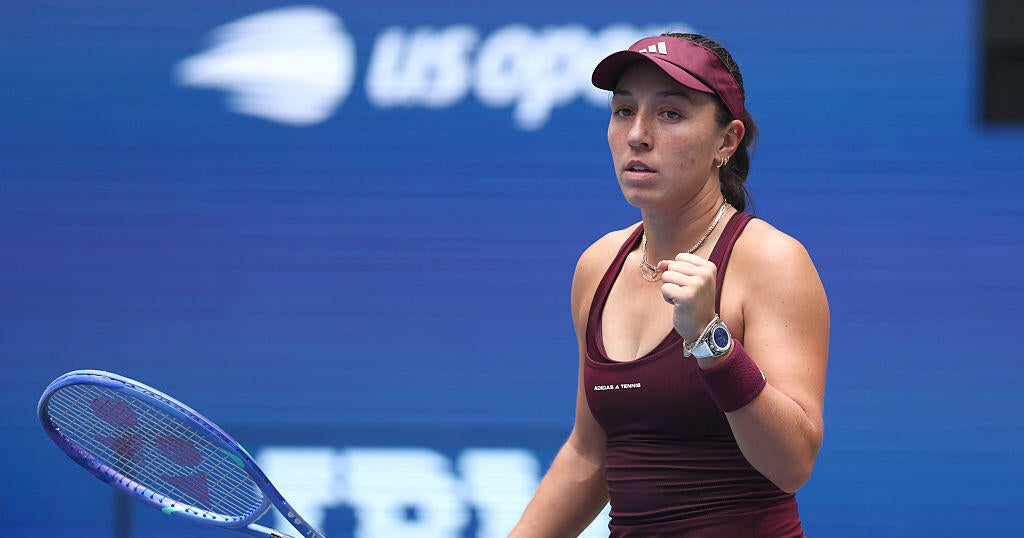
“I know they’re dealing with a lot of different aspects as far as broadcast and TV and making sure certain matches get done and are starting at a certain time for those reasons,” third-ranked women’s player Jessica Pegula said. asserted
Pegula → know → reasons
”But you have to wonder if it’s really the right thing for players to be finishing at 2 a.m., especially when it’s not — like, I’m not watching on TV. asserted
I → have → TV
I’m sleeping. asserted
I → sleep → ?
Some people stay, but there is a lot of people that need to go home.” asserted
that → stay → people
Wimbledon instituted an 11 p.m. curfew. asserted
Wimbledon → institute → curfew
The French Open schedules just one match a night. asserted
Open → schedule → match
The U.S. Open is famous for going late, though this time maybe to an extreme. asserted
Open → go → extreme
On opening night, Venus Williams was subjected to the latest start in U.S. Open history at 12:13 a.m., after it took 4 hours, 36 minutes for Novak Djokovic to get knocked out in the first round. asserted
Djokovic → subject → round
Much of the crowd stuck around to see what could wind up being the 46-year-old’s final Grand Slam singles match, a loss to Sofia Kenin, but the timing itself was a challenge. uncertain
timing → stick → Kenin
“It’s not ideal,” Williams said. asserted
Williams → ’ → ?
“I would have preferred something else, definitely. asserted
I → prefer → something
It wasn’t great for either of us, so I think we both tried our best. asserted
we → think → best
I just don’t know any other sport where you have to start that late. asserted
you → know → sport
I definitely think there’s room for improvement there.” asserted
I → think → improvement
Zverev’s first two matches ended at 1:55 and 2:15 a.m., making him the first top-seeded man to play back-to-back five-set matches to start a major in the Open era, which dates to 1968. asserted
which → end → 1968
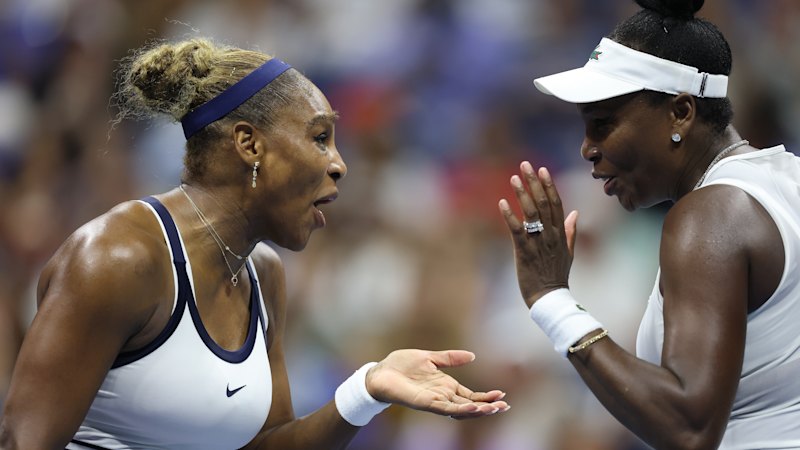
Ben Shelton’s second-rounder that started Friday night went until 2:07 a.m. Saturday thanks to the Williams sisters’ doubles match lasting more than three hours. asserted
that → start → hours
Four of the latest 17 finishes in tournament history have occurred this year. asserted
Four → occur → history
The record is still 2:50 a.m. from when Carlos Alcaraz beat Jannik Sinner in the quarterfinals in 2022 on the way to his first U.S. Open title. asserted
Alcaraz → beat → title
“Not easy,” Shelton said after defeating Denis Shapovalov in 3 hours, 22 minutes. asserted
Shelton → say → hours
Shelton figured the earliest he’d get to sleep was 5 a.m. Top-ranked Aryna Sabalenka, who two years ago played what is now the fourth-latest women’s match, is not a fan of playing after midnight and the potentially lingering effects. asserted
what → figure → midnight
“When you finish late, the next day shifts a lot,” Sabalenka said. asserted
Sabalenka → finish → ?
“Like, you still need to get your hours of sleep, so you start later. asserted
you → need → sleep
You just can really mess up your schedule.” asserted
You → mess → schedule

💬 Give feedback
🕘 History 🎫 Support