On the streets of the US capital, signs of China’s growing consumer clout can be surprisingly hard to find.
asserted
signs → grow → clout
There are no BYD electric cars cruising down Pennsylvania Avenue; instead, Japanese auto brands Honda, Toyota and Subaru are a far more common sight.
asserted
Honda → be → Avenue
Huawei or Xiaomi phones, two major Chinese tech brands, are not spotted in people’s hands.
asserted
phones → spot → hands
And Chinese chains such as Luckin Coffee and Haidilao hotpot that have opened in other US cities have no presence in Washington.
asserted
that → open → Washington
What is easily recognisable in Washington, however, is Pop Mart, the Beijing-founded toy company behind the popular Labubu figurines.
asserted
is → found → figurines
But even its nearest store is across the Potomac River in Arlington, Virginia, where it opened in 2025, although another store is slated to open in the District in Georgetown.
asserted
store → open → Georgetown
Meanwhile, boba fans will have to venture even farther afield to Rockville, Maryland, a suburb with a sizeable Asian-American population northwest of Washington, for a sip of China’s new-style teas from Molly Tea and Heytea.
asserted
fans → have → Tea
The relative absence is striking at a time when Chinese consumer brands from electric cars and smartphones to collectible toys and fashion brands are expanding rapidly in markets elsewhere around the world.
asserted
brands → strike → world
And on Sept 24, that absence extended all the way to the White House.
asserted
absence → extend → House
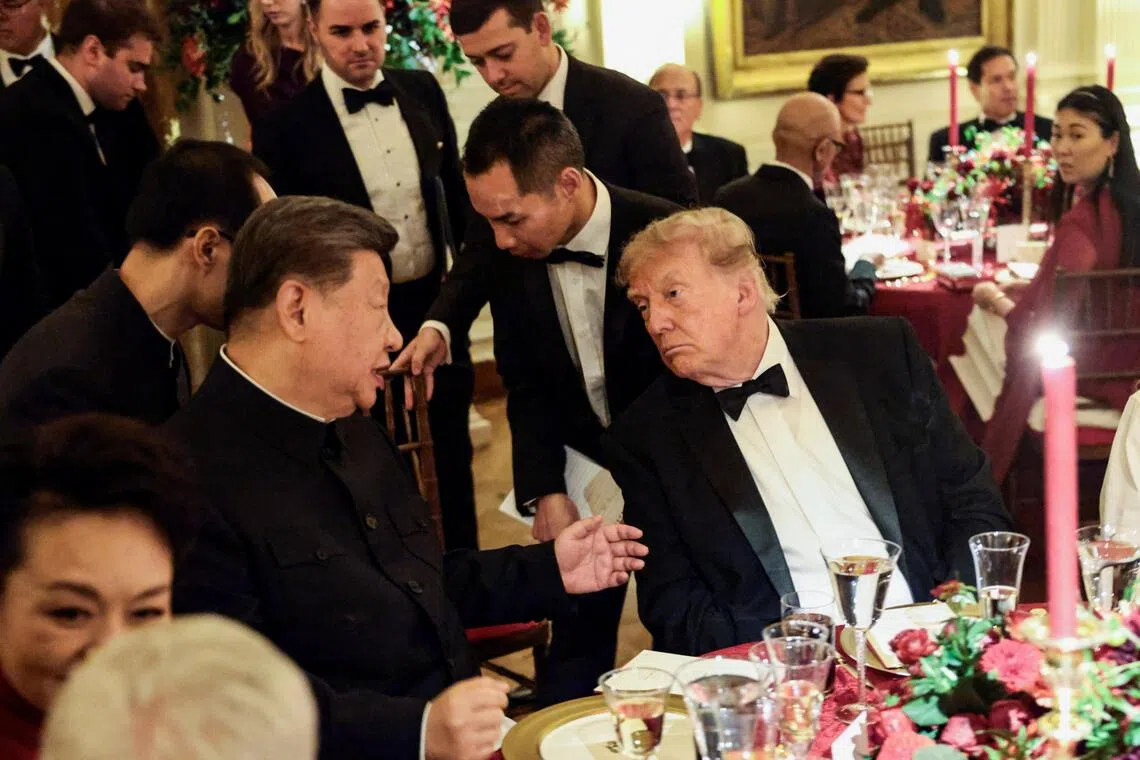
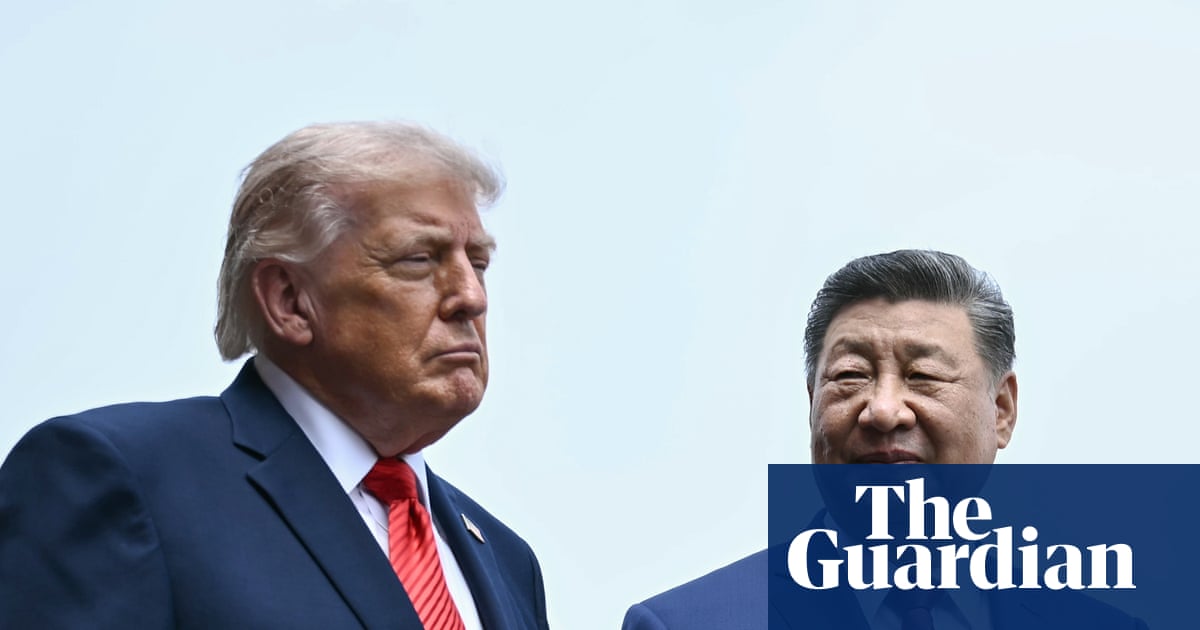
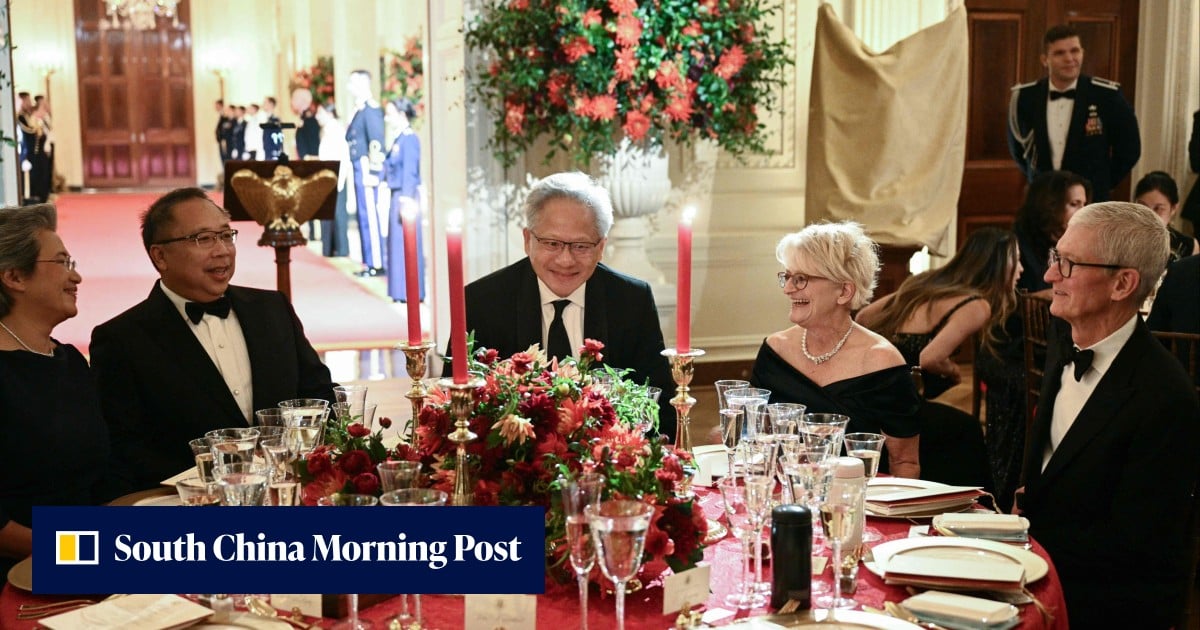
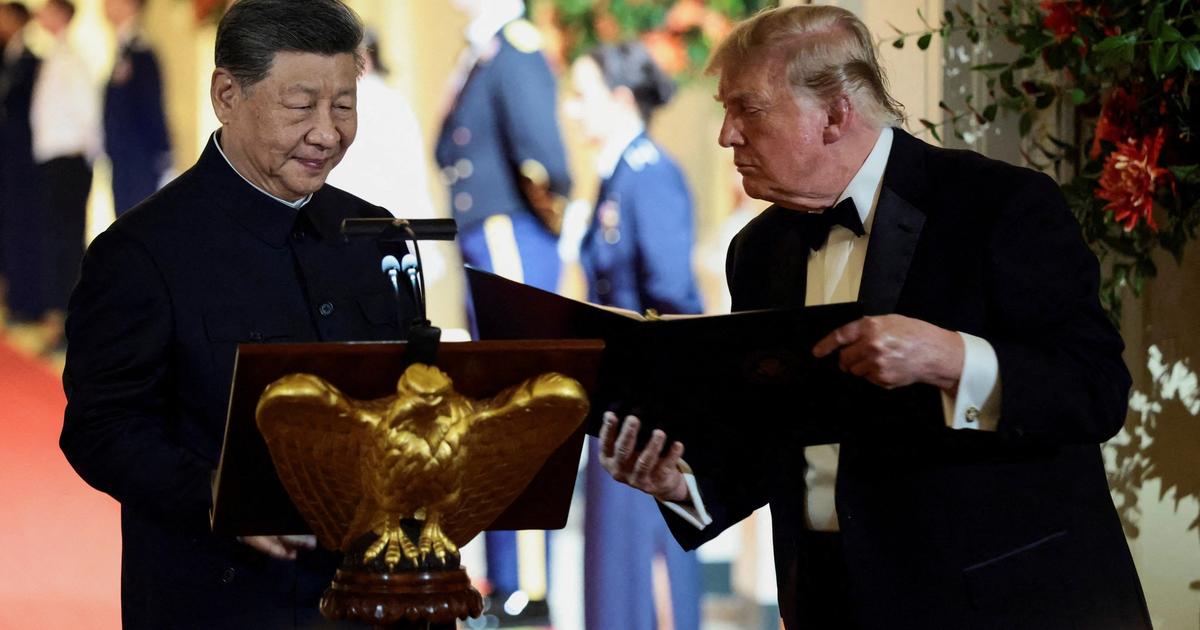
At a state dinner held by US President Donald Trump in honour of Chinese President Xi Jinping, the guest list featured a who’s who of corporate America.
asserted
list → hold → America
Nvidia’s Jensen Huang, Advanced Micro Devices’ Lisa Su, Apple’s Tim Cook and Tesla’s Elon Musk sat at the same table with Trump, Xi and their spouses.
asserted
Huang → sit → Trump
According to the official White House dinner guest list, only 19 of the 134 are from the Chinese side, which includes Xi and other top officials such as Xi’s chief of staff Cai Qi, Foreign Minister Wang Yi, Commerce Minister Wang Wentao, Vice-Premier He Lifeng and China’s ambassador to the US Xie Feng.
uncertain
which → accord → US
Xi had arrived in Washington on Sept 23 without a business delegation, despite rumours of plans being drawn up as recently as a week before his visit for Chinese executives from some of China’s biggest companies to accompany him.
asserted
executives → arrive → him
Reuters had previously reported that representatives from electric car giant BYD, smartphone company Xiaomi, battery makers CATL and Gotion, consumer electronics manufacturer Hisense, automotive parts company Wanxiang, state-owned Bank of China, and agricultural conglomerate COFCO Group were among those under consideration.
asserted
representatives → report → consideration
In contrast, when Trump visited Beijing in May, more than a dozen US business leaders including Musk, Cook, Huang, Citigroup’s Jane Fraser, Goldman Sachs’ David Solomon and Boeing’s Kelly Ortberg came along.
uncertain
leaders → visit → Musk
Several went on to meet with senior Chinese officials and regulators on their own after the presidential summit.
asserted
Several → go → summit
Who’s not there: Does it matter?
asserted
it → ’ → ?
The absence of Chinese business titans on Xi’s trip to Washington should not be overinterpreted, said Zhang Yun, an international relations professor at Nanjing University.
asserted
Yun → overinterprete → University
He said that Xi’s unusually tight three-day itinerary, confined to Washington, meant that the visit was primarily focused on political and strategic issues, while business engagement could potentially be left for another occasion.
uncertain
engagement → say → occasion
He pointed to Xi’s first state visit in 2015, where 15 Chinese business honchos including Alibaba’s Jack Ma, Tencent’s Pony Ma, Baidu’s Robin Li and Lenovo’s Yang Yuanqing attended a US-China business roundtable in Seattle.
asserted
honchos → point → Seattle
The business leaders did not follow Xi on the Washington leg of his visit to meet then-President Barack Obama.
asserted
leaders → follow → Obama
One opportunity for China and the US to talk business could come as soon as the APEC summit in Shenzhen in November, where Xi and Trump could meet again, said Zhang.
uncertain
Zhang → talk → November
“After all, Shenzhen is a window into China’s reform and opening up and its new and high-technology industries”, he added.
asserted
he → add → reform
George Chen, a partner and co-chair of digital practice at The Asia Group, similarly cautioned against interpreting the lopsided corporate turnout as a barometer of the summit’s success, as their absence carries little bearing.
asserted
absence → caution → bearing
For Trump, assembling some of America’s biggest technology executives serves to showcase US competitiveness and innovation, particularly in artificial intelligence (AI).
asserted
assembling → assemble → intelligence
But for Xi, having a matching contingent of Chinese executives was “nice to have, but not necessary”, he added.
asserted
he → have → executives
“For the Chinese political system, it’s always about the party, about the ruler, rather than about how much influence the business community can have,” Chen said, pointing also to Beijing’s previous crackdown on its technology sector and what he described as the government’s “mixed relationship” with the industry.
asserted
he → ’ → industry
Nanjing University’s Zhang said the more consequential issue was not whether Chinese executives were seated at the White House dinner but the difficult environment for investment between the world’s two largest economies.
asserted
executives → say → economies
“This is particularly the case with Chinese investment in the US, which faces all kinds of US restrictions, including those imposed on national security grounds and security reviews, which have created many difficulties and obstacles for Chinese investment,” Zhang said.
asserted
Zhang → face → investment
Huawei has, for years, faced sweeping US restrictions on its telecommunications equipment and access to American technology, while Chinese battery giants CATL and Gotion have come under scrutiny in Washington over national security and alleged military links.
asserted
faced → face → security
Meanwhile, Chinese automaker BYD has effectively been shut out of the US passenger EV market by steep tariffs and other restrictions on Chinese-made vehicles and technology.
asserted
BYD → shut → vehicles
While Trump has said that he welcomes Chinese investment, Zhang said: “Rhetoric is not the same as institutionalised arrangements.”
asserted
Rhetoric → say → arrangements
“That is why interaction between the Chinese and US presidents is important in providing a more predictable environment and greater certainty for businesses on both sides to invest in each other’s countries.”
asserted
businesses → provide → countries
Beyond government policies, uncertainty over economic ties with China can also be felt at the consumer level.
asserted
uncertainty → feel → level
Near the White House, a 24-year-old US federal worker, who declined to give her name as she works for the government, described her relationship with Chinese technology as one of “keeping a safe distance”.
asserted
she → decline → distance
“There’s that inherent worry of data leakage and privacy infringement, especially on platforms where you have to input your financial details,” she said, explaining why she deliberately stays away from platforms such as Temu and Shein, both popular online shopping sites.
asserted
she → ’ → Temu
However, TikTok, her social media of choice, proved harder to give up.
asserted
TikTok → prove → choice
When the app briefly went offline in the US in January 2025, she switched to Instagram Reels and initially stayed away even after TikTok returned.
asserted
TikTok → go → Reels
But she eventually went back.
asserted
she → go → ?
“Regardless of whether Americans want to or not, so many of the products we use without realising it are of Chinese origin,” she said.
“So I think it’s more just a matter of practicality than it is a matter of principle.”
asserted
it → want → principle
 The Aporia