Photo via Toronto Star

Removing settlers from the West Bank won't guarantee peace, but it would be a good start

Read the original at Toronto Star ↗
Cite

Cohn, M. R. (2026, September 22). Removing settlers from the West Bank won't guarantee peace, but it would be a good start. Toronto Star. https://www.thestar.com/politics/political-opinion/removing-settlers-from-the-west-bank-won-t-guarantee-peace-but-it-would-be-a-good-start/article_7857e068-91ae-4d74-9b06-a3a5e6e7d96c.html

Dated when The Aporia collected the article, usually within hours of publication. Check the original for its exact date and byline.

Toronto Star · collected 2026-09-22 · by Martin Regg Cohn

Quick Summary

The article discusses how Jewish settlements in the West Bank continue to be a major obstacle to achieving a peaceful two-state solution between Israelis and Palestinians. It highlights Canada's decision to join other European nations in planning a ban on commercial ties supporting these settlements, which are considered illegal under international law. The piece argues that while removing settlers won't guarantee peace, it would be an important step towards addressing the ongoing conflict and preventing further violence.
Written by AI on 2026-09-23, from this article's own text only (the story summary below draws on all the coverage).
See how they differ ↓

AI analysis

Story summary

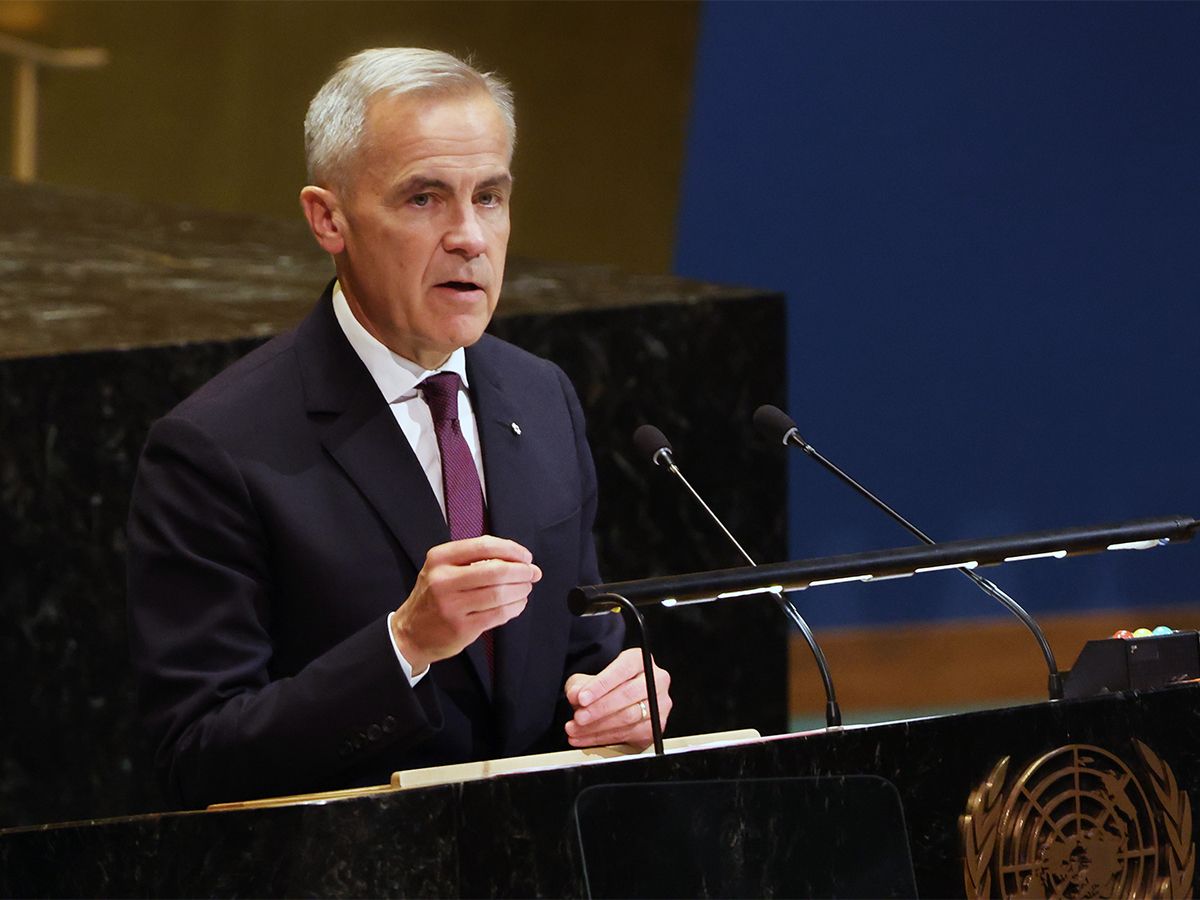
Prime Minister Mark Carney pledged $100 million in aid for Palestinians in Gaza and the West Bank during a United Nations General Assembly meeting. The funding includes $80 million in humanitarian aid and development funding aimed at security initiatives, including police training in the occupied West Bank. Carney acknowledged that Palestinians face "immense human suffering" while Israelis confront threats from Hamas and Iran.

In August 2023, Canada also joined Britain and France to restrict imports of goods from Israeli settlements in the West Bank, a move criticized by some as undermining diplomatic relations with Israel. Meanwhile, B’nai Brith Canada reported numerous instances of antisemitic content in Palestinian educational materials that year.

Written for “Canada Aid Palestine Debate” on 2026-11-18, grounded in this article and the 10 other(s) covering the same event.

How they differ

9 outlets covered “Canada Aid Palestine Debate”.

What each outlet says

One AI summary per outlet of its latest article on this story, written from that article alone and checked against it. Open the article for the outlet's own words.

Toronto StarThis outlet22 Sep

The article discusses how Jewish settlements in the West Bank continue to be a major obstacle to achieving a peaceful two-state solution between Israelis and Palestinians. It highlights Canada's decision to join other European nations in planning a ban on commercial ties supporting these settlements, which are considered illegal under international law. The piece argues that while removing settlers won't guarantee…

Removing settlers from the West Bank won't guarantee peace, but it would be a good start (this article)2 articles from Toronto Star on this story
National Post25 Sep

Prime Minister Carney recently pledged an additional $100 million towards Palestinian assistance at the United Nations General Assembly, adding to the $600 million already given since 2023. The article criticizes this funding, suggesting it would be better used to support Canadian police and address domestic issues such as poverty and homelessness. It highlights that 4.5 million Canadians live under the poverty line…

Avi Benlolo: Carney doles out cash to Palestinians. Canadians ask ‘what about us’? →2 articles from National Post on this story
The Globe and Mail22 Sep

Prime Minister Mark Carney announced that Canada will provide $100 million in new aid for Palestinians, including $80 million in humanitarian assistance and development funding for security initiatives. The pledge was made during the United Nations General Assembly to support efforts towards a two-state solution amid ongoing conflict between Israelis and Palestinians. This new commitment follows over $600 million in…

Carney pledges $100-million in new aid for Palestinians →
Global News22 Sep

Prime Minister Mark Carney announced that Canada will provide $100 million in new aid for Palestinians, with $80 million designated for humanitarian assistance and the remainder for security initiatives like police training. This pledge was made during the United Nations General Assembly, where Carney emphasized the aim to support a two-state solution while acknowledging the challenges faced by both Palestinians and…

Carney pledges $100 million in new aid for Palestinians →
CBC22 Sep

Prime Minister Mark Carney announced at the United Nations General Assembly that Canada will provide $100 million in aid to Palestine, including $80 million for humanitarian assistance and funds for security initiatives such as police training in the West Bank. The pledge aims to support a two-state solution amid ongoing conflicts between Israelis and Palestinians. Additionally, Canada recently banned imports from…

Canada pledges $100M for Palestine at United Nations General Assembly →
Al Jazeera23 Sep

Canadian Prime Minister Mark Carney announced at the United Nations General Assembly that Canada would provide 100 million Canadian dollars ($71m) in aid for Palestinians, aimed primarily at humanitarian relief and supporting peace efforts like training Palestinian police forces. Carney criticized Israel’s E1 settlement project as illegal and hinted at future trade restrictions on goods from such settlements…

Canada pledges aid for Palestine as UK and France demand action at UNGA →
Show 3 more outlets
Dawn23 Sep

Pakistan's Deputy Prime Minister Ishaq Dar called for an end to Israel’s occupation of Palestinian territories at a high-level meeting convened by France, the UK, and Canada. The meeting focused on advancing the two-state solution in Palestine, with participants including heads of state from various countries and Palestinian President Mahmoud Abbas via video link. Dar highlighted Pakistan's endorsement of previous…

Pakistan calls for end to Israel's occupation of Palestine at meeting convened by France, UK, Canada →
The Hindu26 Sep

On September 8, 2026, eleven countries including the U.K., France, and Canada announced plans to restrict trade with Israeli settlements in the West Bank, which they consider illegal under international law. This move comes amid increased settler violence and settlement expansion, including Israel’s E1 project that aims to build 1,234 homes, isolating Palestinian communities. However, the article suggests these…

Trade curbs on Israeli settlements in West Bank unlikely to have much bite →
The Free Press29 Sep

This Week in Canada discusses Prime Minister Mark Carney's recent UN announcement of $100 million in aid for Palestinians, including $20 million for peace initiatives, bringing Canada’s total contribution to over $600 million since October 2023. The article highlights Canadian sanctions imposed on two Israeli cabinet ministers and seven organizations, including Regavim—an NGO accused by Canada of supporting settler…

This Week in Canada: This Is What We Get for Recognizing Palestine →

Where they agree and split

Agreed

AI · cited, from two or more outlets

  • Canada pledged $100 million in aid for Palestinians, including humanitarian assistance and development funding for security initiatives.23

Disputed

Picked by our model, which is sometimes wrong

  • The National Post criticizes Carney's actions towards Israel, while other outlets report on the aid pledge without negative commentary.12
  • Some outlets emphasize Canada’s decision to restrict imports from Israeli settlements, while others focus solely on the aid pledge.12

Framing

How the first headlines put it

  • The National Post frames Carney's actions as a failure towards Israel, whereas The Globe and Mail presents it as an aid commitment for Palestinians.12
  • CBC highlights the pledge in its headline, while Al Jazeera emphasizes both the aid and the restrictions on Israeli settlements.36
Stated as fact6
The headlines (6)

Marty York: Carney has only doubled down on Trudeau’s Israel failures National Post · stated as fact

Carney pledges $100-million in new aid for Palestinians The Globe and Mail · stated as fact

Carney pledges $100 million in new aid for Palestinians Global News · stated as fact

Canada pledges $100M for Palestine at United Nations General Assembly CBC · stated as fact

Carney promises $100 million for Palestinians in humanitarian aid, police training Toronto Star · stated as fact

Canada pledges aid for Palestine as UK and France demand action at UNGA Al Jazeera · stated as fact

The full story: what happened, how it changed, and all 11 articles →

Compared with similar articles

This article reads leans left and hedges 3% of its claims. Each row says how that neighbour differs.
CBC News
Hedges 0 of 8 claims Outlet record 60/100
“Article A reports on Canada's pledge of $100M aid for Palestine at the UN General Assembly, while Article B discusses broader issues regarding Israeli settlements and calls for a ban, not the same specific event.”
Zeteo
Leans strongly left further left than this Hedges 1 of 5 claims
“The articles describe different events and contexts related to Israel's actions in Gaza and the West Bank, rather than the same specific incident.”
National Post
Leans strongly right further right than this Hedges 1 of 31 claims Outlet record 60/100
Dawn
Hedges 3 of 41 claims Outlet record 67/100
“While both articles mention a meeting about the two-state solution and reference Prime Minister Mark Carney's involvement, they describe different aspects of the event — one focuses on Canada planning commercial ties bans with European nations, while the other reports Pakistan’s call for an end to Israel’s occupation at a high-level international meeting.”
Washington Examiner
Hedges 6 of 42 claims Outlet record 67/100
“Article A discusses UK's announcement of sanctions and boycotts against Israel while Article B focuses on Canada joining other nations in planning a ban on commercial ties supporting Jewish settlements, covering different aspects and specific actions by different countries.”
The Hindu
Leans left Hedges 1 of 27 claims Outlet record 60/100
“The articles discuss different aspects of the same topic (trade curbs on Israeli settlements) but refer to separate statements or plans from different dates and sets of countries.”
National Post
Hedges 3 of 31 claims Outlet record 60/100
“The articles discuss related topics but describe different specifics: one focuses on the ban of commercial ties supporting Israeli settlements, while the other reports on Canada's pledge of additional financial assistance to Palestinians at the UN.”
Al Jazeera
Leans strongly left further left than this Hedges 1 of 18 claims Outlet record 60/100
“Article A discusses the ban on commercial ties supporting Jewish settlements, while Article B focuses on Canada's pledge of aid for Palestinians at UNGA. Though both are related to Israel-Palestine and involve Prime Minister Mark Carney, they describe different aspects and initiatives.”

Story

Canada Aid Palestine Debate
Politics · 11 article(s) covering the same event. Compare every outlet's account →
How this article was measured signals, leaning charts, publisher record, byline, topics and claims

Signals How these are calculated →

Claims extracted
35
sentences that state something as happening or true
Uncertain
3%
1 of 35 hedged ("reportedly", "may", "according to")
Leaning
Leans left
of the writing, not the subject · beta estimate
Publisher signals
64/100
Toronto Star's corrections and hedging, across everything collected from it. Not a measure of accuracy.
Outlets on this story
11
Politics
Same framing elsewhere
1
articles that frame the event the way this one does
Analyzed 2026-09-23 · how these are computed

How this is being covered How these are calculated →

Article leaning vs. publisher reliability
Source leaning vs. consistency

Publisher

Toronto Star · 15734 article(s) · 31 correction(s) detected
Running correction rate · 31 correction(s)
2026-11-17
Correction
2026-10-26
Correction
2026-10-24
Correction
2026-10-07
Correction
2026-09-24
Correction

Who wrote this

Martin Regg Cohn
12 article(s) here · 1 carrying a prediction
On Thursday, the government announced it will bring in belated legislation to address the scandal over the Ontario Student Assistance Program.
Practically speaking, it will be overshadowed by the full-fledged federal budget coming Nov. 5.
They lamented a campaign that failed to tell her story and sell her successes as mayor, remember?
“You could say Yes or No,” I offer helpfully.
Recognition and democratization must go together, or statehood would go nowhere.
To wit: If only Godfrey could place the premier’s words in the pages of the Post, well, there would be more government business for his son Rob’s embattled company — now embroiled in a multimillion-dollar contract dispute with Ford’s government.
Nor, it might be added, does he have a grasp of their culture, history and politics.
If you’re still puzzled by Doug Ford’s on-again off-again, endorsement non-endorsement of Olivia Chow for mayor, get used to it.
The leading contenders to be mayor of Toronto sparred for an hour Tuesday night over their visions for the future of the city.
Removing them would not magically bring peace in our time.
Also by Martin Regg Cohn
Nothing else under this byline is closely related to this article, so these are simply their most recent.
All 12 articles by Martin Regg Cohn →

Topics

Gaza Israel Israeli Jewish the West Bank

Subjects

Jewish NORP · 5× Hebron GPE · 3× Israel GPE · 3× Israeli NORP · 3× the West Bank GPE · 3× Gaza GPE · 2× Canada GPE · 1× European NORP · 1× Mark Carney PERSON · 1× the United Nations ORG · 1×

Narrative

The State of Israel — legally recognized by most of the world — came into being in 1948 when its declaration of independence was recognized by a vote of the UN, following a proposal for partition of the former mandate territory held by Britain (at the behest of the League of Nations, after the collapse of the colonial Ottoman Empire in Istanbul).
framing: assertive · carried by 1 article(s) · first seen 2026-09-23
Removing them would not magically bring peace in our time.

Claims (35 extracted, 1 hedged)

The Middle East is a prisoner of its past, held hostage by history and territory. asserted
East → hold → history
This week, Prime Minister Mark Carney spoke of a future two-state solution on his visit to the United Nations. asserted
Carney → speak → Nations
But to reach that destination, it’s worth revisiting the recent history of Jewish settlements that remain a roadblock on the path to peace. asserted
that → reach → peace
This month, Canada joined several European nations in planning a ban on commercial ties that support those settlements in the occupied West Bank. asserted
that → join → Bank
I’ve argued that the ban is long overdue — those settlements contravene international law, contradict Canadian foreign policy, and run counter to a peace process that culminates in two states for two peoples. asserted
that → argue → peoples
Removing them would not magically bring peace in our time. asserted
Removing → remove → time
For history shows that it was tried before when Israeli security authorities forcibly removed settlers from Gaza in 2005. asserted
authorities → show → 2005
Rather than repurpose the abandoned fruit orchards, Hamas dug tunnels that laid the groundwork for a terrorist massacre in late 2023, triggering the Israeli overkill that followed. asserted
that → repurpose → overkill
All the while, settlement expansion and excesses continue unabated in the West Bank — perpetuating occupation, confrontation and violence. asserted
expansion → continue → occupation
Stopping the expansion and removing the provocation is far from a full prescription for peace, but it is the prerequisite for peace. asserted
it → stop → peace
If not, settlements will sabotage the process, now and in future. asserted
settlements → sabotage → future
The lesson of Jewish settlements is that they only prolong occupation and provoke conflict, rather than providing the security that many Israelis once imagined. asserted
Israelis → prolong → that
Settlements were not the original sin, but rather a symptom of the earliest conflict — an accident of history bound up in grievances and grudges. asserted
Settlements → bind → grievances
They turned out to be a grievous error, as some predicted decades ago. asserted
some → turn → ?
The State of Israel — legally recognized by most of the world — came into being in 1948 when its declaration of independence was recognized by a vote of the UN, following a proposal for partition of the former mandate territory held by Britain (at the behest of the League of Nations, after the collapse of the colonial Ottoman Empire in Istanbul). asserted
declaration → recognize → Istanbul
In the aftermath, Jordan occupied the West Bank until the Six Day War of 1967, when Israel repelled a Jordanian attack and took it over along with East Jerusalem. asserted
Israel → occupy → Jerusalem
Egyptian-held Gaza also fell to Israel. asserted
Gaza → hold → Israel
A few days after the war, then-prime minister Levi Eshkol agreed to a new settlement on the ruins of Kibbutz Kfar Etzion, 20 kilometres south of Jerusalem, which had been abandoned and destroyed during the 1948 war. asserted
which → agree → war
Eshkol led Israel’s Labour party, a putatively progressive, left-wing, social democratic movement that gave settlements their start and support for years to come. asserted
that → lead → years
The idea at first was to use them as bargaining chips in any future settlement with the Palestinians — so-called “land for peace.” asserted
idea → use → peace
But the settlers had a different strategy, premised on “facts on the ground.” asserted
settlers → have → ground
Only 15 settlers arrived to reclaim the old kibbutz in 1967. asserted
settlers → arrive → 1967
Today, more than 500,000 settlers and their settlements are on the front lines of the Israeli-Palestinian conflict, living outside the boundaries of the internationally recognized state whose population is 10 million people. asserted
population → live → state
Jewish settlers wield disproportionate political influence in the country, nowhere more than in the battleground of Hebron, in the heart of the West Bank, the reputed burial site of biblical patriarch Abraham revered by all three Abrahamic faiths. asserted
settlers → wield → faiths
In 1968, 32 religious Jewish families slipped into Hebron, defying army orders ostensibly to celebrate Passover — then refused to leave. asserted
families → slip → Passover
The Labor government of the day moved them into a military compound. asserted
government → move → compound
But after a two-year standoff, the authorities let them build the settlement of Kiryat Arba, which would later become a centre of the movement’s messianic tendencies next door to Hebron. asserted
which → let → Hebron
The defence minister of the day, Moshe Dayan, later said it was a mistake. asserted
it → say → day
“I was opposed to such wild settling,” he told a biographer, but he went along with it publicly at the time. asserted
he → oppose → time
At a 1973 Labor congress, then-prime minister Golda Meir pushed for more settlements in the West Bank. asserted
Meir → push → Bank
Her foreign minister at the time, the late Abba Eban, abstained from the vote out of cabinet solidarity. asserted
minister → abstain → solidarity
But as he told me in an interview before his death, it was a historical blunder. asserted
it → tell → death
“The Labour party made a fool of itself … because there was no real basis for settlement expansion,” Eban said in the late 1990s. asserted
Eban → make → 1990s
Perhaps Israel’s best-known diplomat, Eban is remembered today for his famous put-down that “the Palestinians never miss an opportunity to miss an opportunity.” asserted
Palestinians → know → opportunity
But by his historical reasoning, this too might be said: Israel’s settlement movement always seizes an opportunity to block an opportunity. uncertain
movement → say → opportunity
Give feedback · no sign-in needed

No sign-in needed for now. Your note is sent without a name, so it cannot be answered.

History Support