A near-total lunar eclipse will be visible across the U.S. Thursday night

NBC News Top Stories · collected 2026-08-27 · by Denise Chow
Read the original at NBC News Top Stories ↗

Summary

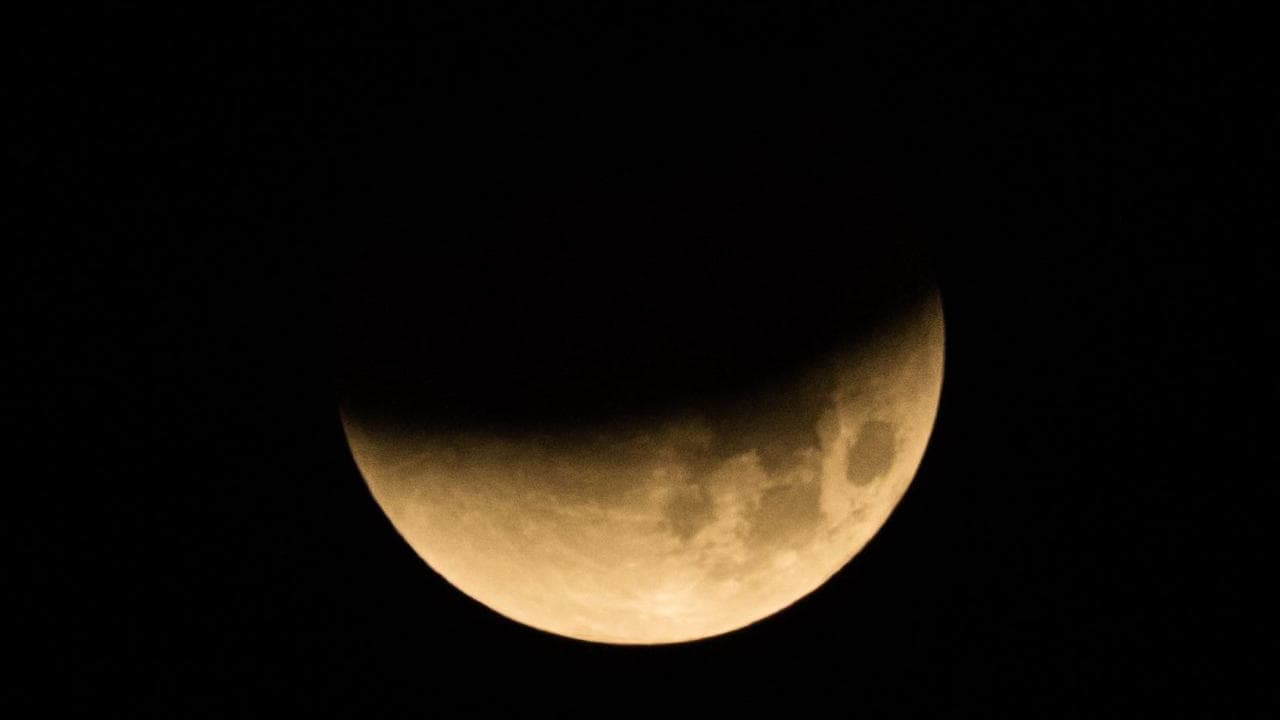
A near-total lunar eclipse is set to be visible across the U.S. on Thursday night, with nearly the entire moon (96.2% at its peak) being shrouded in Earth's shadow. The eclipse will begin at 9:23 p.m. ET and will reach its peak at 12:12 a.m. ET. Skywatchers can view the eclipse safely with their naked eye or use binoculars and telescopes to capture more dramatic views. This is a rare opportunity for people in North and South America, as well as parts of Europe and Africa, to witness the "blood moon" phenomenon.
Written by the local model on 2026-08-27, using this article's own text rather than the other coverage of the same event (that is the story summary below).

Signals How these are calculated →

Claims extracted
21
claim-shaped sentences
Uncertain
5%
1 of 21 hedged
Leaning
not political
takes no side on a contested political question
Publisher trust
95.5
red-flag proxy, not a credibility rating
Outlets on this story
4
Science
Narrative spread
1
articles carrying this framing
Analyzed 2026-08-27 · how these are computed

AI analysis (generated at analysis time, not now)

Story summary

A partial lunar eclipse will be visible across Canada on August 27-28. It comes two weeks after a total solar eclipse was seen in parts of Europe, including Iceland, Spain, and a small portion of Portugal. This lunar eclipse is notable because it's relatively deep, with 93% coverage at its maximum. The entire duration of the eclipse will be visible from most of Canada, while Western Canada will see the partial eclipse as the moon rises. Unlike solar eclipses, there's no need for protective eyewear to watch this event, and it will last several hours rather than minutes. This lunar eclipse is part of an "eclipse season" that occurs twice a year, when the moon passes through Earth's shadow due to the alignment of the sun, earth, and moon. The eclipse can be seen across North and South America, as well as parts of Europe and Africa.

Written for “Lunar Eclipse News” on 2026-08-31, grounded in this article and the 3 other(s) covering the same event.
Why this leaning score
This article does not take a side on a contested political question, so it has no leaning score. That is an answer rather than a gap: a match report or a rescue can be warmly or critically written without being left or right, and scoring it anyway is how approval of a subject gets recorded as a political position.
No political leaning scored for article 2780 · logged 2026-08-27

Story

📰 Lunar Eclipse News
Science · 4 article(s) covering the same event.

How this is being covered How these are calculated →

Article leaning vs. publisher reliability
Source leaning vs. consistency

Compared with similar articles

This article reads unscored and hedges 5% of its claims. Each row says how that neighbour differs.
The Globe and Mail
⚖️ leaning not scored 🔴 6% hedged 1 of 18 📰 publisher trust 21
“Both articles describe a near-total lunar eclipse visible on Thursday night (August 27), with Article A mentioning North and South America and Article B specifically mentioning Canada, but referencing an identical time.”
CBC | Top Stories News
⚖️ leaning not scored 🔴 0% hedged 0 of 19 📰 publisher trust 95
“Different locations (Canada vs US) and slightly different timing”
TIME
⚖️ leaning not scored 🔴 9% hedged 3 of 33 📰 publisher trust 95
“Both articles describe a near-total lunar eclipse occurring on August 27, 2026, with similar details about its visibility and percentage of the moon's shadow”

Publisher

NBC News Top Stories · 92 article(s) · 0 correction(s) detected
SignalValueWeight
Correction rate 0.000 0.4
Uncertainty density 0.089 0.25
Assertive mismatch rate 0.000 0.35
No corrections detected for this publisher. That may mean careful reporting, or simply that nothing has been checked.

Who wrote this

Denise Chow
1 article(s) here · 1 carrying a prediction
🔮 Two weeks after a total solar eclipse wowed skywatchers in southern Europe, a near-total lunar eclipse is set to put on a show Thursday night for people across North and South America.
The only article under this byline in the corpus.

Topics

Alaska Canada Portugal Spain U.S.

Subjects

Alaska GPE · 1× Australia GPE · 1× Canada GPE · 1× Greenland GPE · 1× Iceland GPE · 1× NASA ORG · 1× Portugal GPE · 1× Russia GPE · 1× Spain GPE · 1× U.S. GPE · 1×

Narrative

The lunar eclipse follows a total solar eclipse — when the sun, the moon and Earth align, with the moon passing in front of the sun and blocking its light — that darkened skies in Spain, a small part of Portugal, Greenland, Iceland and northern Russia.
framing: assertive · carried by 1 article(s) · first seen 2026-08-27
🔮 Two weeks after a total solar eclipse wowed skywatchers in southern Europe, a near-total lunar eclipse is set to put on a show Thursday night for people across North and South America.
2026-08-27 · NBC News Top Stories
A near-total lunar eclipse will be visible across the U.S. Thursday night · assertive framing

Claims (21 extracted, 1 hedged)

Two weeks after a total solar eclipse wowed skywatchers in southern Europe, a near-total lunar eclipse is set to put on a show Thursday night for people across North and South America. asserted
eclipse → wow → America
Lunar eclipses occur when Earth slips between the sun and the moon and casts a shadow on the lunar surface. asserted
Earth → occur → surface
During this week’s event, nearly the entire moon — 96.2% at the eclipse’s peak — will be shrouded in Earth’s shadow. asserted
moon → shroud → shadow
Weather permitting, skywatchers in the continental U.S. will have some of the best views. asserted
skywatchers → permit → views
During the eclipse, Earth’s shadow will appear reddish orange on the lunar surface because of the way Earth’s atmosphere scatters light from the sun. asserted
atmosphere → appear → sun
That’s why a total lunar eclipse is also known as a “blood moon.” asserted
eclipse → ’ → moon
Thursday’s eclipse will begin at 9:23 p.m. ET, when the moon first enters the outer part of Earth’s shadow. asserted
moon → begin → shadow
The real action gets underway, however, at 10:33 p.m. ET, when Earth’s shadow starts to envelop the lunar surface, appearing to take a “bite” out of the lunar disk. asserted
shadow → get → disk
The eclipse will peak at 12:12 a.m. ET, when more than 96% of the lunar surface will be shrouded. asserted
% → peak → surface
The event will end at 3:01 a.m. ET when the moon exits the outer edge of Earth’s shadow. asserted
moon → end → shadow
Most viewers in North and South America, except those in Alaska and the northernmost reaches of Canada, will have a chance to see every stage of the lunar eclipse. asserted
viewers → have → eclipse
For those in Europe and Africa, however, the eclipse will begin early Friday, and the moon will set as the event is progressing. asserted
event → begin → Europe
Unlike solar eclipses, lunar eclipses can be viewed safely with the naked eye, and skywatchers can use binoculars and telescopes to catch more dramatic views. asserted
skywatchers → view → views
The lunar eclipse follows a total solar eclipse — when the sun, the moon and Earth align, with the moon passing in front of the sun and blocking its light — that darkened skies in Spain, a small part of Portugal, Greenland, Iceland and northern Russia. asserted
that → follow → Portugal
Solar and lunar eclipses usually come in pairs because of the fortuitous way the moon, Earth and sun interact. asserted
moon → come → way
The three celestial bodies happen to align from our perspective on Earth because the sun is 400 times farther from Earth than the moon, while also being 400 times bigger. asserted
sun → happen → moon
That makes them appear the same size in the sky. asserted
them → make → sky
Solar eclipses occur during the new moon phase. asserted
eclipses → occur → phase
Typically around two weeks later, when the moon is on the other side of Earth from the sun, lunar eclipses occur during the full moon phase. asserted
eclipses → occur → phase
The next lunar eclipse will occur overnight from Feb. 20 to 21. asserted
eclipse → occur → 21
It should be visible in North and South America, Europe, Africa, Asia, Australia and Antarctica, according to NASA. uncertain
It → accord → NASA

💬 Give feedback
🕘 History 🎫 Support