The art of inflicting pain: How to select targets for Canada's counter-tariffs

CBC | Top Stories News · collected 2026-08-27 · by Evan Dyer
Read the original at CBC | Top Stories News ↗

Summary

The article discusses how Canada selects targets for its counter-tariffs in response to US tariffs. According to economist Trevor Tombe, Canada must maximize every advantage if its tariff measures are to have an impact, given the significant size disparity between the two countries' economies. Key numbers mentioned include the fact that the US economy is about 12 times larger than Canada's and that Canadians make up a small part of the overall export market for some US producers. The article quotes Brian Clow as saying that Canada's tariffs need to be "politically targeted, reciprocal and proportionate" in order to achieve their objectives.
Written by the local model on 2026-08-27, using this article's own text rather than the other coverage of the same event (that is the story summary below).

Signals How these are calculated →

Claims extracted
49
claim-shaped sentences
Uncertain
8%
4 of 49 hedged
Leaning
Leans right
of the writing, not the subject
Publisher trust
95.4
red-flag proxy, not a credibility rating
Outlets on this story
193
Politics
Narrative spread
1
articles carrying this framing
Analyzed 2026-08-27 · how these are computed

AI analysis (generated at analysis time, not now)

Story summary

Here are the articles grouped by topic:

Iran War

Trade Tariffs

Other

Note that some of the article summaries are quite similar, and it may be worth combining or rephrasing them to reduce duplication.

Written for “US-Iran Trade Dispute Escalation” on 2026-08-31, grounded in this article and the 192 other(s) covering the same event.
Why this leaning score
The article's own words the score was based on. Each is quoted verbatim and was checked against the article text before being stored, so you can find it in the original.
Score +0.35 Confidence medium 1 quote(s) discarded as not found in the article
Leaning score +0.35 for article 2695 (medium confidence, 2 verified quotes) · logged 2026-08-27

Story

📰 US-Iran Trade Dispute Escalation
Politics · 193 article(s) covering the same event.

How this is being covered How these are calculated →

Article leaning vs. publisher reliability
Source leaning vs. consistency

Compared with similar articles

This article reads leans right and hedges 8% of its claims. Each row says how that neighbour differs.
Reason.com
⚖️ Leans strongly left further left than this 🔴 0% hedged 0 of 19 📰 publisher trust 94
“Both articles report on a single set of tariffs imposed by Trump, specifically referencing Section 338 and Canadian imports”
The Bulwark
⚖️ Leans left further left than this 🔴 17% hedged 1 of 6
“Both articles report on Canada's retaliation against US tariffs, which implies they are covering the same trade dispute between the two countries.”
Morning news brief different event · 100%
NPR Topics: News
⚖️ Centre further left than this 🔴 0% hedged 0 of 2 📰 publisher trust 93
“Article A discusses a threat of economic pressure from the US, while Article B describes Canada's counter-tariffs in response to those threats, but does not mention the specifics of the original threat”
The Globe and Mail
⚖️ Leans strongly right further right than this 🔴 0% hedged 0 of 23 📰 publisher trust 21
“Article A discusses a letter from Poilievre to Carney requesting details about rejected trade deal, while Article B explains how Canada's counter-tariffs are selected, indicating they cover different aspects of the same topic but not the same specific event.”
World news | The Guardian
⚖️ Leans strongly right further right than this 🔴 11% hedged 3 of 28 📰 publisher trust 95
“Both articles describe the ongoing trade war between US and Canada, with Article A referencing the breakdown of negotiations and tariffs imposed by the US, and Article B describing Canada's retaliation against these tariffs”
CBC | Top Stories News
⚖️ Leans left further left than this 🔴 8% hedged 2 of 25 📰 publisher trust 95
“Article A discusses Trump's tariffs affecting Canada's electronics exports, while Article B describes Canada's retaliation with counter-tariffs, indicating different events in a trade war.”
Semafor
⚖️ Leans right 🔴 0% hedged 0 of 5 📰 publisher trust 96
“Both articles describe the ongoing trade tensions between the US and Canada, specifically the retaliation and counter-tariffs imposed by both countries”
CBC | Top Stories News
⚖️ Leans left further left than this 🔴 19% hedged 7 of 36 📰 publisher trust 95
“Both articles discuss the announcement of retaliatory Canadian tariffs on $27.6 billion worth of U.S. goods, which is clearly the same specific event.”
The Globe and Mail
⚖️ leaning not scored 🔴 7% hedged 3 of 43 📰 publisher trust 21
“Both articles report on Canada's retaliatory tariffs against the US, with Article A providing a general update and Article B delving into the strategy behind the counter-tariffs.”
CBC | World News
⚖️ Leans right 🔴 14% hedged 8 of 56 📰 publisher trust 95
“Both articles report on the ongoing trade war between the US and Canada, specifically mentioning a collapse of talks over tariffs and Canada's retaliation against U.S. tariffs, indicating they are describing the same specific incident.”

Publisher

CBC | Top Stories News · 194 article(s) · 0 correction(s) detected
SignalValueWeight
Correction rate 0.000 0.4
Uncertainty density 0.092 0.25
Assertive mismatch rate 0.000 0.35
No corrections detected for this publisher. That may mean careful reporting, or simply that nothing has been checked.

Who wrote this

Evan Dyer
5 article(s) here · 1 carrying a prediction
🔮 Not only is the U.S. much bigger than Canada, it's also much less dependent on international trade, because its internal market consumes so much of what it produces. And so with its counter-tariffs set to take effect after Labour Day, Canada must maximize every conceivable advantage if its tariff jiu-jitsu is going to throw its heavier opponent off balance. But it's not as simple as just looking for maximum pain points in the U.S. "
🔮 But I respectfully declined because I would rather take India's bullet than stop campaigning for the Khalistan referendum," he said.
🔮 Hoekstra's missteps in Canada are mild compared to some of Trump's ambassadors U.S. administration leaves posts empty, fills others with amateurs and friends The U.S. ambassador to Canada's behaviour has clearly rubbed many Canadians the wrong way. Over 100,000 of them signed a House of Commons petition to declare Pete Hoekstra persona non grata — the rarely used diplomatic lever to kick an ambassador out of the country. Jeremy Kinsman, who held important posts including ambassador to Moscow, London and the EU during his career as a Canadian diplomat, says Hoekstra's actions don't rise to the level that would normally lead to such a step. "PNG is for egregious behaviour" such as malfeasance and direct interference in Canadian affairs, he said.
🔮 Lurkers in the deep: How Canada's new submarines will be used in peace and potential war
🔮 Prime Minister Mark Carney has previously said that he would arrest Netanyahu if he came to Canada.
Also by Evan Dyer
Nothing else under this byline is closely related to this article, so these are simply their most recent.

Topics

Canada Canadians Kentucky U.S. the United States

Subjects

Canada GPE · 16× U.S. GPE · 12× Clow PERSON · 4× Michigan GPE · 3× Tombe PERSON · 3× Canadians NORP · 2× Kentucky GPE · 2× Maine GPE · 2× the United States GPE · 2× Carney PERSON · 1×

Narrative

Not only is the U.S. much bigger than Canada, it's also much less dependent on international trade, because its internal market consumes so much of what it produces. And so with its counter-tariffs set to take effect after Labour Day, Canada must maximize every conceivable advantage if its tariff jiu-jitsu is going to throw its heavier opponent off balance. But it's not as simple as just looking for maximum pain points in the U.S. "
framing: assertive · carried by 1 article(s) · first seen 2026-08-27
🔮 Not only is the U.S. much bigger than Canada, it's also much less dependent on international trade, because its internal market consumes so much of what it produces. And so with its counter-tariffs set to take effect after Labour Day, Canada must maximize every conceivable advantage if its tariff jiu-jitsu is going to throw its heavier opponent off balance. But it's not as simple as just looking for maximum pain points in the U.S. "
2026-08-27 · CBC | Top Stories News
The art of inflicting pain: How to select targets for Canada's counter-tariffs · assertive framing

Claims (49 extracted, 4 hedged)

Carney government must weigh many factors when selecting which goods to go after Like a fox trying to bring down a moose, Canada's retaliation against the latest U.S. tariffs is a classic case of asymmetrical warfare. asserted
retaliation → weigh → warfare
That's because the U.S. economy is about 12 times larger than Canada's, says economist Trevor Tombe. asserted
Tombe → say → Canada
"It's incredibly hard for a small country to move the needle in aggregate in the United States. asserted
country → move → States
That's why it's important to zoom in on specific states where possible. asserted
it → zoom → states
But even in these heavily affected states, the effects are small," he said. asserted
he → affect → states
Not only is the U.S. much bigger than Canada, it's also much less dependent on international trade, because its internal market consumes so much of what it produces. And so with its counter-tariffs set to take effect after Labour Day, Canada must maximize every conceivable advantage if its tariff jiu-jitsu is going to throw its heavier opponent off balance. But it's not as simple as just looking for maximum pain points in the U.S. " asserted
it → consume → U.S.
You have to be very conscious of limiting self harm against our own importers and exporters," said Brian Clow, who was chief of staff to International Trade Minister Chrystia Freeland during Canada's last tariff war with the U.S. and chief adviser to Prime Minister Justin Trudeau on Canada-U.S. relations. asserted
who → have → relations
"There were a whole bunch of categories that it looks like the Canadian government didn't touch precisely for that reason." asserted
government → be → reason
Canada's tariffs need to be politically targeted, reciprocal and proportionate, said Clow. asserted
Clow → need → ?
Change behaviour or go home There are three main objectives when selecting a target, says Tombe. asserted
Tombe → change → target
The first, what he says is most important, "is changing the behaviour on the part of the target country." asserted
says → say → country
Second, he says, it has to come at a cost to the U.S. — something "difficult for a smaller country to do." asserted
country → say → U.S.
It makes little sense to tariff products where Canadians make up only a small part of the overall export market for U.S. producers, Tombe says. asserted
Tombe → make → producers
Third, he said the target must be a product where Canadians have options at home or beyond the U.S. "You want to go after areas of the country that will cause the business community in the United States to speak up, and therefore cause politicians in those areas to speak up, and try to influence the president and his team," Clow says. asserted
Clow → say → president
He pointed to how Canada went hard on Kentucky in 2018, the home state of U.S. Sen. Mitch McConnell, who was the majority leader at the time. asserted
who → point → time
"Kentucky was a big target, but we definitely targeted Pennsylvania, Michigan, Ohio, Wisconsin, some of those key swing states that elected Donald Trump as president," Clow said. asserted
Clow → target → president
States at play in midterms big exporters to Canada The federal government hasn't explicitly said the counter-tariffs are designed to make an impact on the U.S. midterms. asserted
tariffs → say → midterms
Finance Minister François-Philippe Champagne said on Tuesday that Canada's response is "proportionate, targeted and strategic." asserted
response → say → Tuesday
If swing states seem to be even more of a target today, that's probably just because the 2026 midterm battlegrounds happen to fall in some of the northern states that trade most with Canada. asserted
that → seem → Canada
Two in particular, Michigan and Maine, send about 40 per cent of their exports to Canada, and both have tight election campaigns underway that are critical to the Republicans' continued control of the U.S. Senate. asserted
that → send → Senate
Tombe estimates Canada's planned retaliatory tariffs on Michigan exports amount to about 0.3 per cent of the state's economy, similar in percentage terms to the latest U.S. tariffs' impact on Canada's GDP — and far greater than the overall hit to the U.S. economy. asserted
tariffs → estimate → economy
Clow says the goal of influencing swing states is why some food products are on Canada's retaliatory list — even though those tariffs will likely lead to higher prices at the grocery store. asserted
tariffs → say → store
"It looks like they decided to go after all sorts of seafood products in order to impact political discussions in Maine," he said. asserted
he → look → Maine
"You could make the same argument about Alaska, where there's also a competitive Senate race coming up. uncertain
You → make → Alaska
They also export a lot of fish products into Canada. asserted
They → export → Canada
" Tit-for-tat on some sectors Reciprocity is clearly a motivation behind many of the tariff choices — increasing targeted industries' share of the Canadian domestic market to offset export losses. asserted
Reciprocity → increase → losses
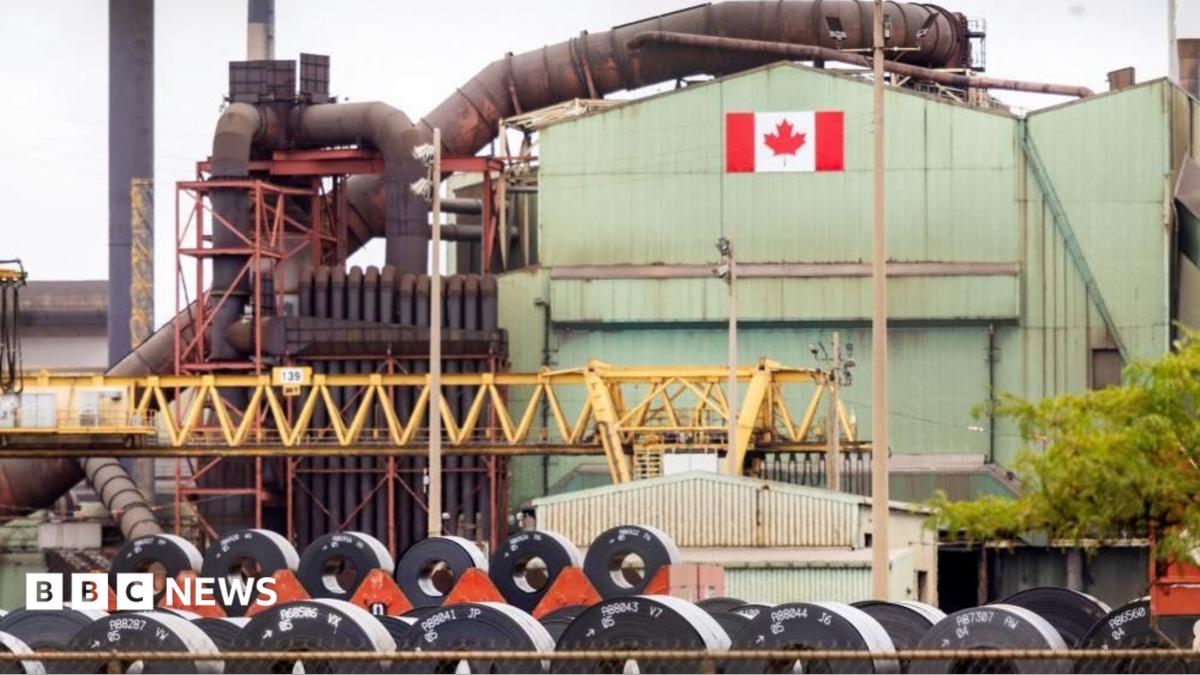
That explains why nearly half of the volume of the Canadian counter-tariffs targets American metals and metal products. asserted
half → explain → metals
Those are typically products where Canada both imports and exports, and a Canadian substitute is generally available. asserted
substitute → import → ?
If tariffs are applied to harder to replace items, "a particular type of circuit board, say, or piece of machinery," then putting a tariff on it merely complicates life and increases costs for the Canadian importer, said Tombe. asserted
Tombe → apply → importer
This is particularly important because the need to offset U.S. tariffs means that a high proportion of Canada's tariffs are aimed at intermediate inputs and capital goods (such as metalworking tools, railway switches and industrial robots), even though Canada usually prefers to tariff consumer-facing goods (such as bread ovens, heat pumps and kitchen utensils) in order to minimize disruption to Canadian manufacturers. asserted
Canada → offset → manufacturers
But Tombe says it's not really possible to create a domestic market equivalent to the one lost in the U.S. "What's much more important, in terms of the protection that these tariffs provide for businesses and workers, is not changing Canadian buyer decisions, but financing the large support package that the government has also announced." asserted
government → say → that
He estimates the counter-tariffs could bring in about $1 billion a month. uncertain
tariffs → estimate → billion
"So there's a mechanism to pay for the supports that we'll be providing to affected workers and businesses," he said. asserted
he → be → workers
"That's going to matter a lot more than any indirect protection our tariffs might provide." uncertain
tariffs → go → protection
He said strong support for the individuals and companies most affected by the trade war is key to maintaining unity. asserted
support → say → unity
He says he also sees signs that the counter-tariff package was structured in such a way as to minimize sticker shock for Canadian shoppers. asserted
package → say → shoppers
"A list of retaliatory items that Canada would target to minimize the broader economic costs in Canada would have been a lot more consumer goods and food," Tombe said. asserted
Tombe → target → Canada
Canada's goal should be to maintain cohesion within the country, while encouraging division and recriminations in the U.S., he said. asserted
he → maintain → U.S.
The communications strategy that goes with tariffs is important, says Tombe, in steering American anger away from Canada and back toward the White House. asserted
Tombe → go → House
"Love him or hate him, when [Ontario Premier] Doug Ford is on U.S. news networks, that's part of trying to influence the nature of the political response there to retaliation," Tombe said. asserted
Tombe → love → retaliation
…and 9 more, not listed.

💬 Give feedback
🕘 History 🎫 Support