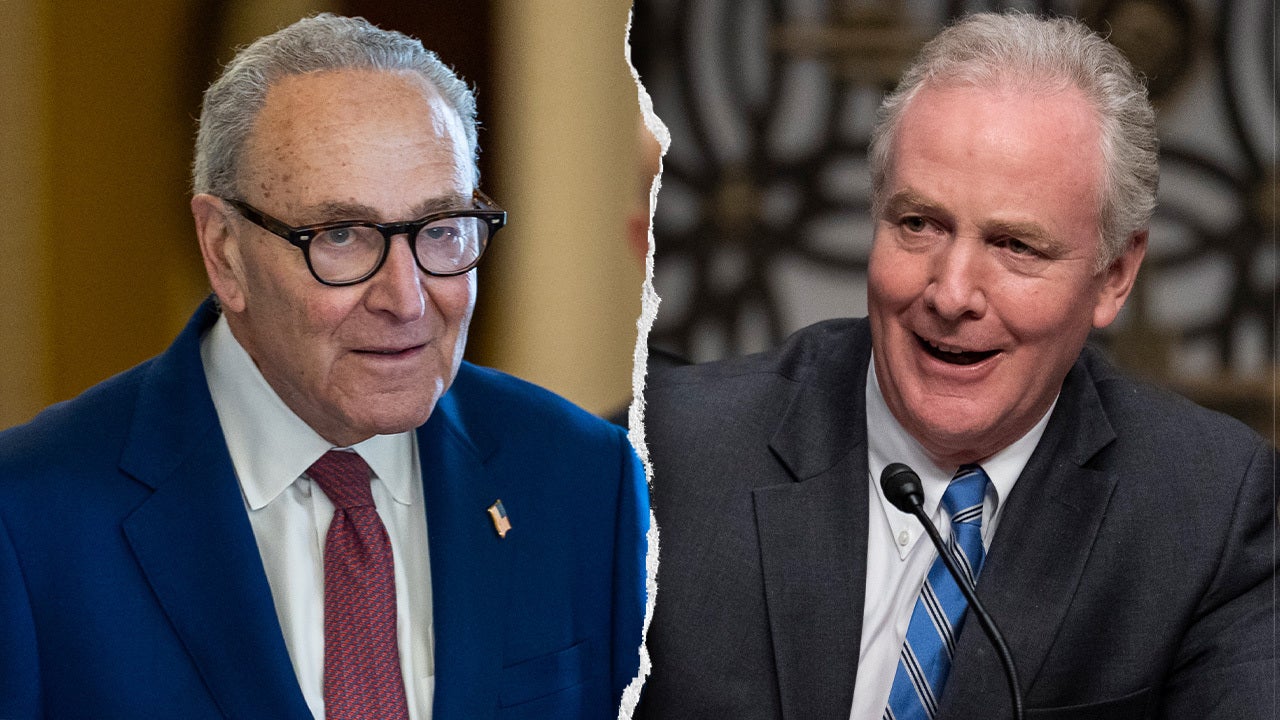
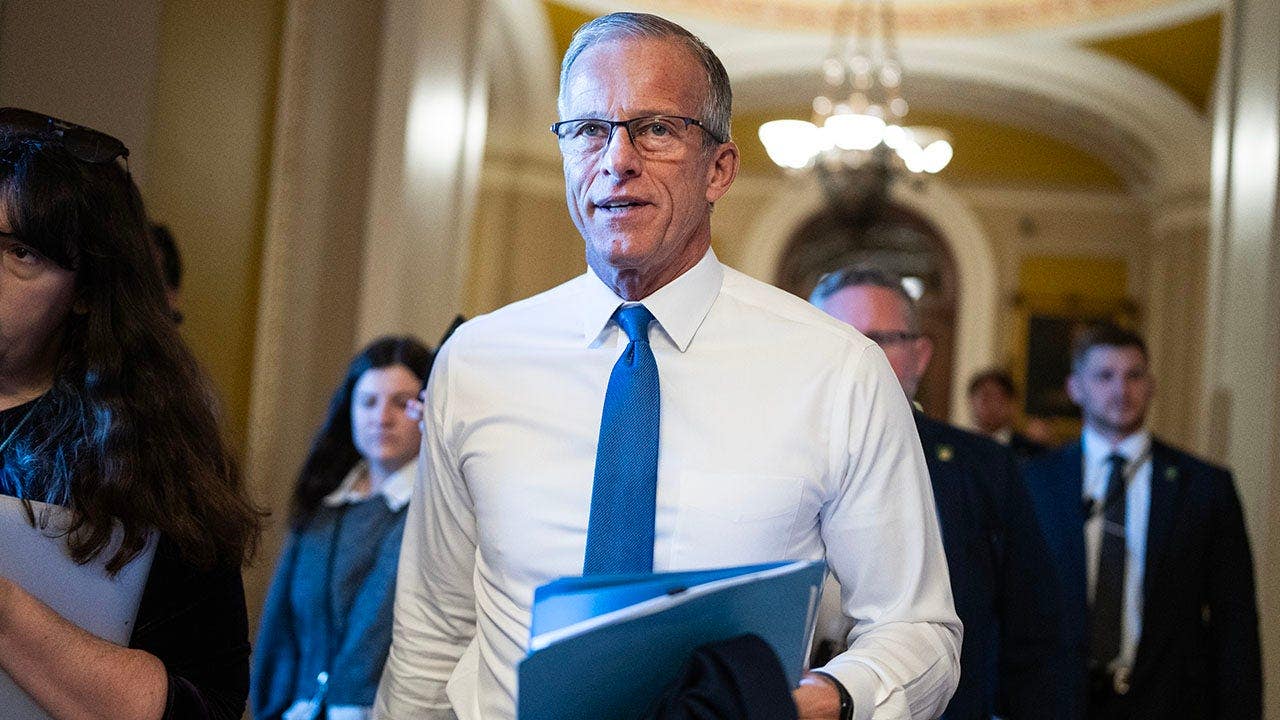
Photo via Fox News

Anxiety grows over emerging election issue, but GOP says Washington isn't the answer

Read the original at Fox News ↗
Cite

Miller, A. (2026, September 22). Anxiety grows over emerging election issue, but GOP says Washington isn't the answer. Fox News. https://www.foxnews.com/politics/anxiety-grows-over-emerging-election-issue-gop-says-washington-isnt-answer

Dated when The Aporia collected the article, usually within hours of publication. Check the original for its exact date and byline.

Fox News · collected 2026-09-22 · by Alex Miller

Quick Summary

Voters across the political spectrum are increasingly concerned about data centers ahead of the midterm elections, with 70% opposing new AI-related data center construction in their communities due to potential impacts on utilities and property taxes. Republican candidates like Sen. Jon Husted and former Rep. Mike Rogers acknowledge these concerns but advocate for local rather than federal control over decisions regarding data center development. They propose measures such as preventing tech companies from imposing infrastructure costs on taxpayers and returning property tax revenues directly to residents, while calling for more transparency and a moratorium until key questions are addressed.
Written by AI on 2026-09-22, from this article's own text only (the story summary below draws on all the coverage).

AI analysis

Story summary

Voters across the US are increasingly anxious about the construction of large data centers, particularly those related to artificial intelligence, ahead of crucial midterm elections. Recent polling indicates that 70% of Americans oppose new data center constructions in their communities. Republicans running for Senate seats recognize this concern and are advocating for a local decision-making process regarding these facilities rather than federal intervention. Sen. Jon Husted, R-Ohio, emphasized during the GOP’s midterm convention in Dallas that data center development should be decided by local authorities, not dictated by Washington. The Republican stance is to call for a moratorium on such developments until more information can address voters' concerns and questions about AI's impact on communities.

Written for “Election Issue Controversy” on 2026-11-18, grounded in this article and the 0 other(s) covering the same event.

Compared with similar articles

This article reads unscored and hedges 12% of its claims. Each row says how that neighbour differs.
The Straits Times
Leans left Hedges 2 of 24 claims Outlet record 64/100
“Article A reports on local resistance to AI data centers in Silicon Valley, while Article B discusses broader public and political concerns about data centers as an election issue.”
Fox News
Hedges 2 of 34 claims Outlet record 67/100
“Article A discusses Republican lawmakers' debate on AI regulation, while Article B focuses on public perception and election concerns regarding data centers.”
Reason
Hedges 2 of 38 claims Outlet record 67/100
“Both articles discuss public sentiment towards data centers, but describe different aspects and contexts: one focuses on proposed tax penalties and regulations, while the other discusses political implications for elections.”
CBS News
Leans left Hedges 9 of 63 claims Outlet record 67/100
“Article A discusses a local commissioner's concerns about data center developers in Hood County, Texas, while Article B covers broader political views and voter sentiment towards data centers for an upcoming election.”
Washington Examiner
Leans strongly left Hedges 0 of 36 claims Outlet record 67/100
“While both articles discuss public sentiment and debates around data centers, they describe different aspects of a broader issue rather than a single specific incident.”
CBS News
Hedges 0 of 3 claims Outlet record 67/100
“While both articles discuss opposition to data centers, ARTICLE A focuses on the issue uniting Americans across political divides, whereas ARTICLE B specifically addresses how this issue impacts upcoming elections and Republican strategies.”
CBS News
Hedges 1 of 4 claims Outlet record 67/100
“While both articles discuss voter concerns about data centers and their impact on voting behavior, they describe different aspects or angles of this broader topic rather than a single specific incident.”
TIME
Hedges 10 of 58 claims Outlet record 60/100
“The articles discuss different aspects of the data center issue and do not describe the same specific occurrence.”
ABC News (AU)
Leans strongly left Hedges 1 of 28 claims Outlet record 67/100
“The articles discuss different aspects of issues surrounding data centers but do not describe the same specific incident or happening.”

Story

Election Issue Controversy
Politics · 1 article(s) covering the same event.
How this article was measured signals, leaning charts, publisher record, byline, topics and claims

Signals How these are calculated →

Claims extracted
26
sentences that state something as happening or true
Uncertain
12%
3 of 26 hedged ("reportedly", "may", "according to")
Leaning
withheld
no quote in the article backed the model's score
Publisher signals
67/100
Fox News's corrections and hedging, across everything collected from it. Not a measure of accuracy.
Outlets on this story
1
Politics
Same framing elsewhere
1
articles that frame the event the way this one does
Analyzed 2026-09-22 · how these are computed

How this is being covered How these are calculated →

Article leaning vs. publisher reliability
Source leaning vs. consistency

Publisher

Fox News · 8110 article(s) · 15 correction(s) detected
Running correction rate · 15 correction(s)

Who wrote this

Alex Miller
61 article(s) here · 1 carrying a prediction
Kennedy, who is a member of the Transportation, Housing and Urban Development Appropriations Subcommittee, which controls the purse strings over the DOT, said that he was more than "willing to appropriate money to fix this," but needed to understand the problem first. "I mean, we had an outage today, some problems with a number of our banks," Kennedy said.
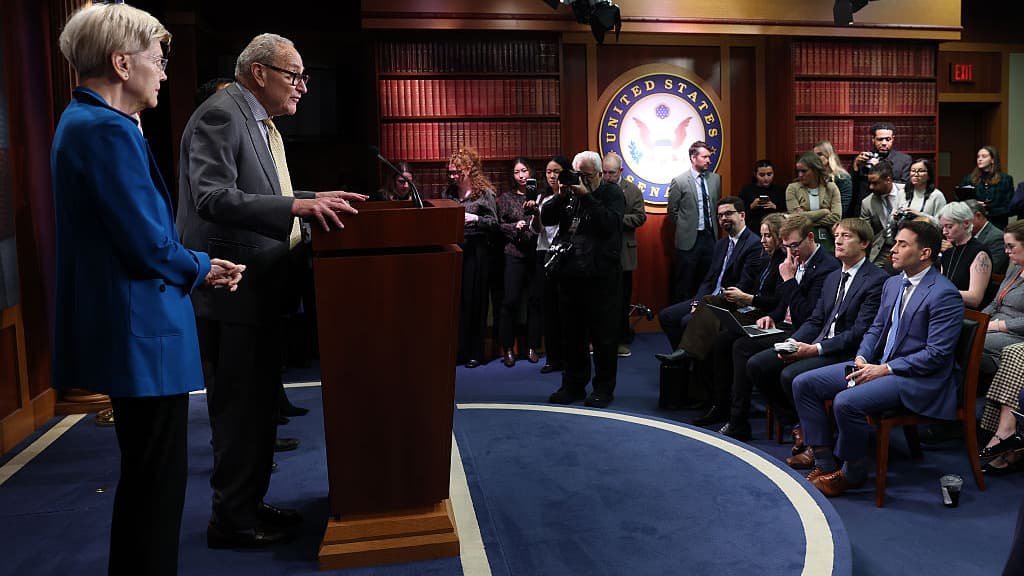
The longtime Democratic leader has remained confident, but quiet, about his chances of retaining his job, posting shortly after Van Hollen’s announcement last week that he welcomed "discussion about the future of our caucus and the important work ahead," but asserted, "I have the votes to continue serving as Democratic leader." Schumer’s allies, like Democratic Senatorial Campaign Committee Chair Kirsten Gillibrand, D-N.Y., argue that he has led Senate Democrats to a 55-seat majority, which could expand by another seat if Alaska flips.
Like other Democrats and progressives, Moor wants to abolish Immigration and Customs Enforcement (ICE), but he would "like to see immigration law enforced."
In part, it was meant to develop a plan that would carry them through the final weeks of this year — that was agreed upon during the meeting, but not without its own drama after the fact on who could lay claim to the GOP’s 54-day blitz.
And he is willing to go further than Schumer ever has on one issue: terminating the filibuster.
Senate Democrats are getting an opportunity they haven’t had in decades: a different option for who their leader could be.
That will require bold leadership.
His caucus is fracturing over whether to support him, with longtime allies such as Sen. Bernie Sanders, I-Vt., and newer members such as Sen. Elissa Slotkin, D-Mich., having declared this week that they would not back him for leader.
Republicans, after sweeping midterm losses, are willing to open up the immigration policy debate after voters made clear that they didn't support the administration’s approach: a Fox News poll published in September found that 53% of voters believed that Trump's immigration policy had gone too far.
The aftershocks of last week's midterm elections are still being felt by Senate Republicans, but another political reality is beginning to set in: The GOP may not regain control of the chamber for years to come.
Also by Alex Miller
Nothing else under this byline is closely related to this article, so these are simply their most recent.
All 61 articles by Alex Miller →

Topics

Fox News Digital GOP Ohio Republicans Senate

Subjects

Rogers ORG · 4× Senate ORG · 4× Fox News Digital ORG · 3× Republicans NORP · 3× Husted PERSON · 2× Thune PERSON · 2× Dallas GPE · 1× GOP ORG · 1× Jon Husted PERSON · 1× Ohio GPE · 1×

Narrative

Former Rep. Mike Rogers, who is running in one of the most competitive races this cycle in Michigan, told Fox News Digital that he hears "lots and lots of concern about data centers, not just the physical beings, but what happens on the other side of AI." "What we've said is there should be a moratorium until we get all of voters' decisions and questions answered," Rogers said.
framing: assertive · carried by 1 article(s) · first seen 2026-09-22
Some people will say yes, some people will no."

Claims (26 extracted, 3 hedged)

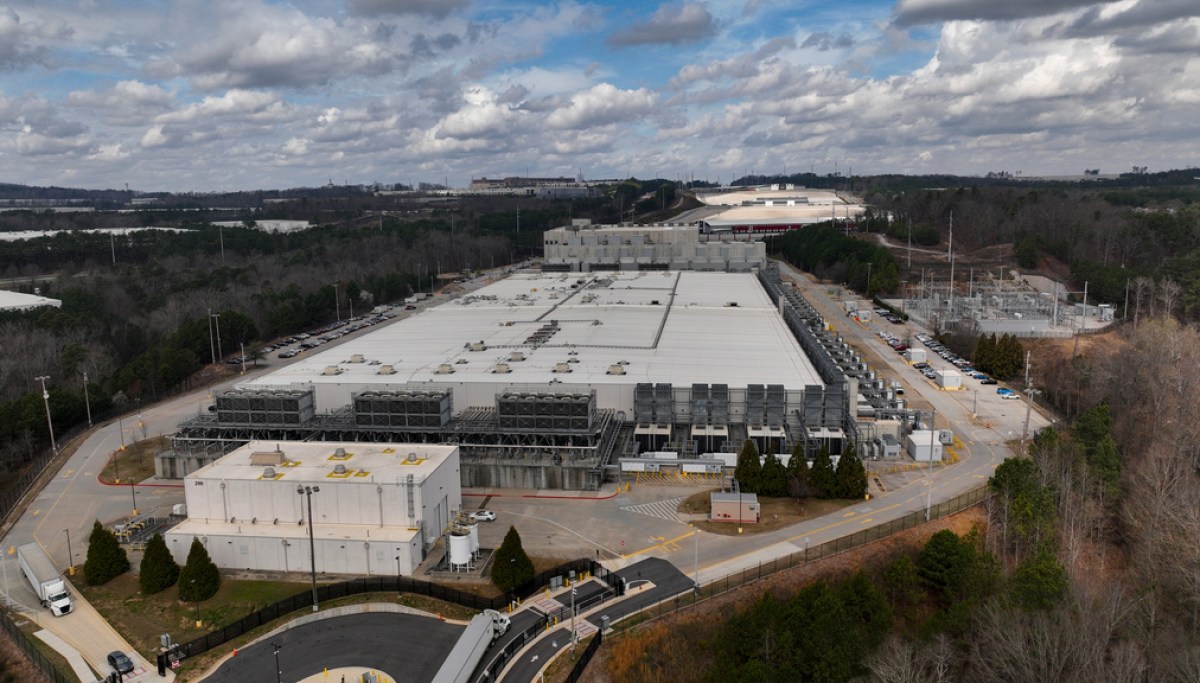
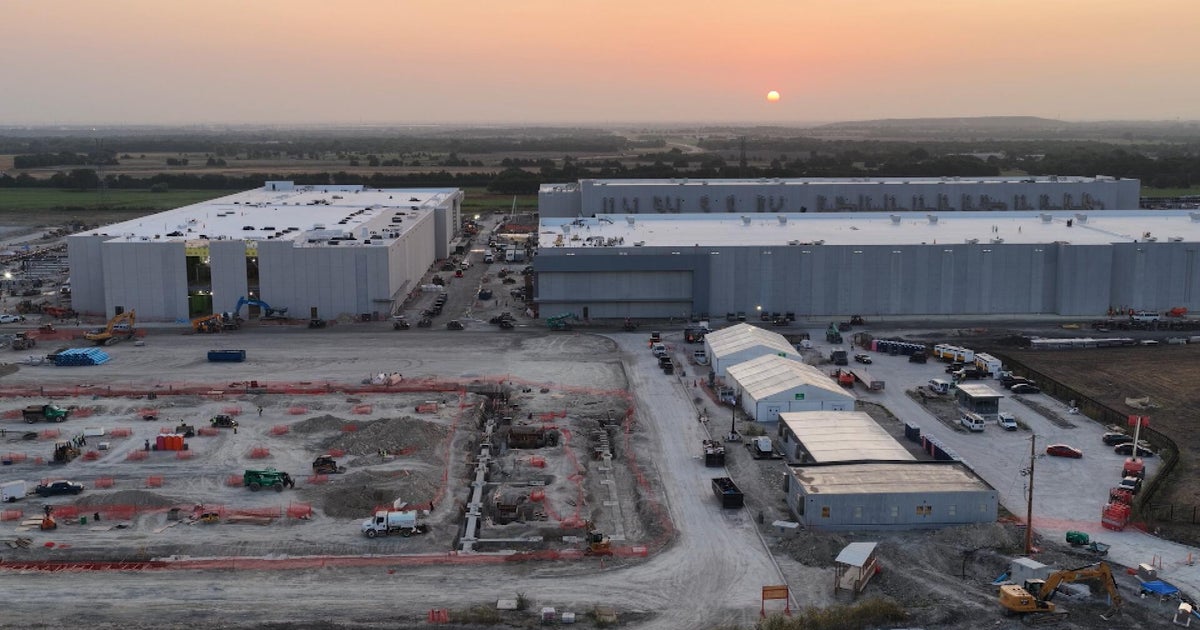
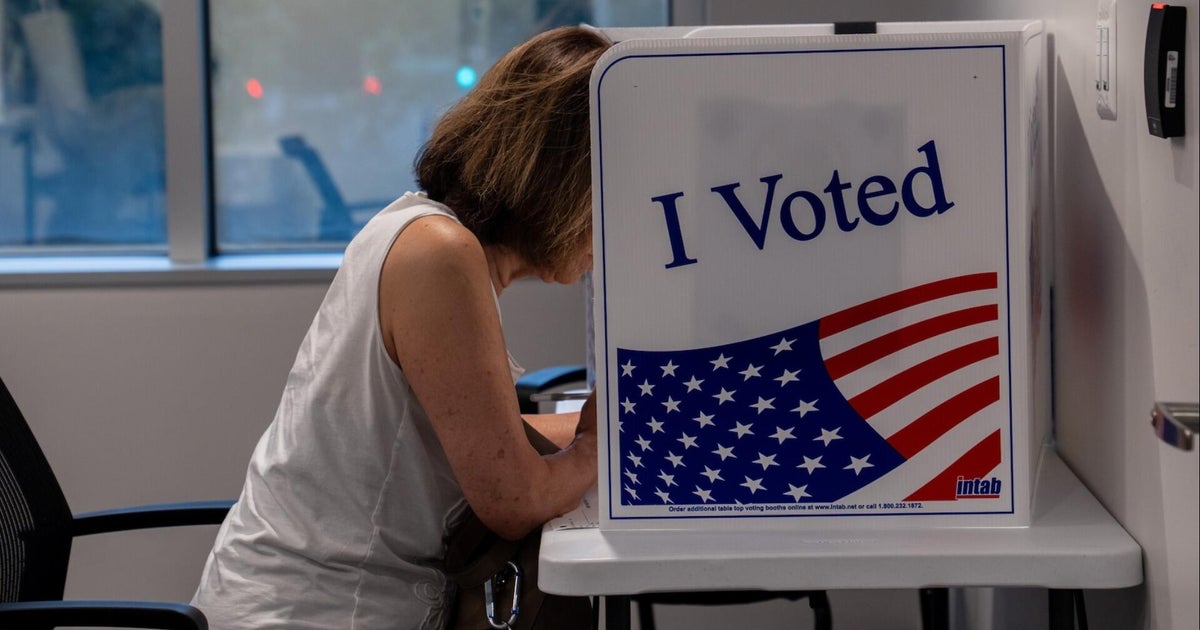
Public perception is everything heading into a crucial midterm election fight, and voters across the political spectrum have laid down the gauntlet over their view of data centers this cycle. asserted
voters → head → centers
Republicans running for power in the Senate are keenly aware that their voters aren’t happy about data centers, according to recent polling. uncertain
voters → run → polling
While they believe that the construction of the windowless, hulking behemoths should be slowed or halted, they don’t want the federal government to play an outsized role. asserted
government → believe → role
"The data center companies haven't done a very good job of explaining why they should be allowed to develop in communities," Sen. Jon Husted, R-Ohio, told Fox News Digital at the GOP’s midterm convention in Dallas. asserted
Husted → do → Dallas
"But the bottom line is, that should be a local decision, not a federal decision," he continued. asserted
he → continue → ?
"I don't want the federal government telling you that you must have a data center or that you can't have a data center. asserted
you → want → center
Some people will say yes, some people will no." asserted
people → say → ?
A Gallup Poll published in May found that 70% of Americans don’t want new data centers for artificial intelligence (AI) constructed in their towns and cities. uncertain
% → publish → towns
Many of their concerns are about the impact that a new data center could have on their bills, be it through spikes in water or electricity costs. uncertain
it → have → costs
Husted is one of a handful of vulnerable Republicans running in this cycle, and he, like others, is hearing about data centers and their impact routinely on the campaign trail. asserted
he → run → trail
He attempted to pass a bill quickly on the Senate floor last week that would have tried to tackle the latter issue of booming electricity costs by preventing AI and tech companies from placing the burden of power grid infrastructure upgrades on taxpayers, but was blocked by Sen. Martin Heinrich, D-N.M., despite the bill having passed the House 417 to 3. asserted
bill → attempt → 3
"Rather than voluntary pledges, or suggestions to states, Congress needs to pass real legislation with real teeth," Heinrich said. asserted
Heinrich → need → teeth
Former Rep. Mike Rogers, who is running in one of the most competitive races this cycle in Michigan, told Fox News Digital that he hears "lots and lots of concern about data centers, not just the physical beings, but what happens on the other side of AI." "What we've said is there should be a moratorium until we get all of voters' decisions and questions answered," Rogers said. asserted
Rogers → run → decisions
I don't think there should be a federal ban because if the federal government can ban it, it can also tell you have to have one." asserted
you → think → one
Rogers wants data centers to operate with closed water systems, not to add to voters' electric bills, and for the boom in property taxes that they provide to be returned to taxpayers. asserted
they → want → taxpayers
"You don't give it to the government to give out. asserted
You → give → government
You don't do any of that," Rogers said. asserted
Rogers → do → that
"It goes right back to the very people who have one of these in their neighborhoods. asserted
who → go → neighborhoods
But we've got a lot of those questions to get answered. asserted
lot → get → questions
Take a moratorium, take a pause, get the questions answered. asserted
questions → take → pause
Republicans who aren’t vying to keep or grasp a seat of power want to take action, too, but like Husted and Rogers, want to keep the federal government’s involvement at arm’s length. asserted
who → vie → length
Senate Majority Leader John Thune, R-S.D., told Fox News Digital that he’d prefer less power in Washington, D.C., on the issue and that the "best way to get the soundest decisions with the most input from the American people, [is] the government that's closest to them." asserted
that → tell → them
Thune is also taking the same route to regulate AI and has a bill with Sen. Amy Klobuchar, D-Minn., designed to take a "light-touch approach" that’s been percolating in the Senate since 2023. asserted
that → take → 2023
"I mean, that's the thing, people don't like this hide the ball, operate in this opaque way — It's out there in public," Thune said. asserted
Thune → mean → public
"There's got to be some way of ensuring that there are rules of the road around that, and you know, disclosure about it and in some sort of reporting," he continued. asserted
he → be → reporting
"I'm, again, I'm not talking about a heavy-handed regulatory regime because that's not my way of doing things." asserted
that → talk → things

Give feedback · no sign-in needed

No sign-in needed for now. Your note is sent without a name, so it cannot be answered.

History Support