Andy Burnham, in his first major international speech at the UN, addressed Russian disinformation efforts targeting the UK, stating that Russia spends £1.3 billion annually on manipulating information and spreading false narratives. He also revealed plans to establish a National Centre for Information Defence to combat these threats. Additionally, Burnham emphasized the importance of leading global AI regulations to ensure transparency and safety, announcing a new AI defense partnership with the US to protect critical national infrastructure.
Written locally by qwen2.5:14b on 2026-09-23,
using this article's own text rather than the other coverage of the
same event (that is the story summary below).
Story summary
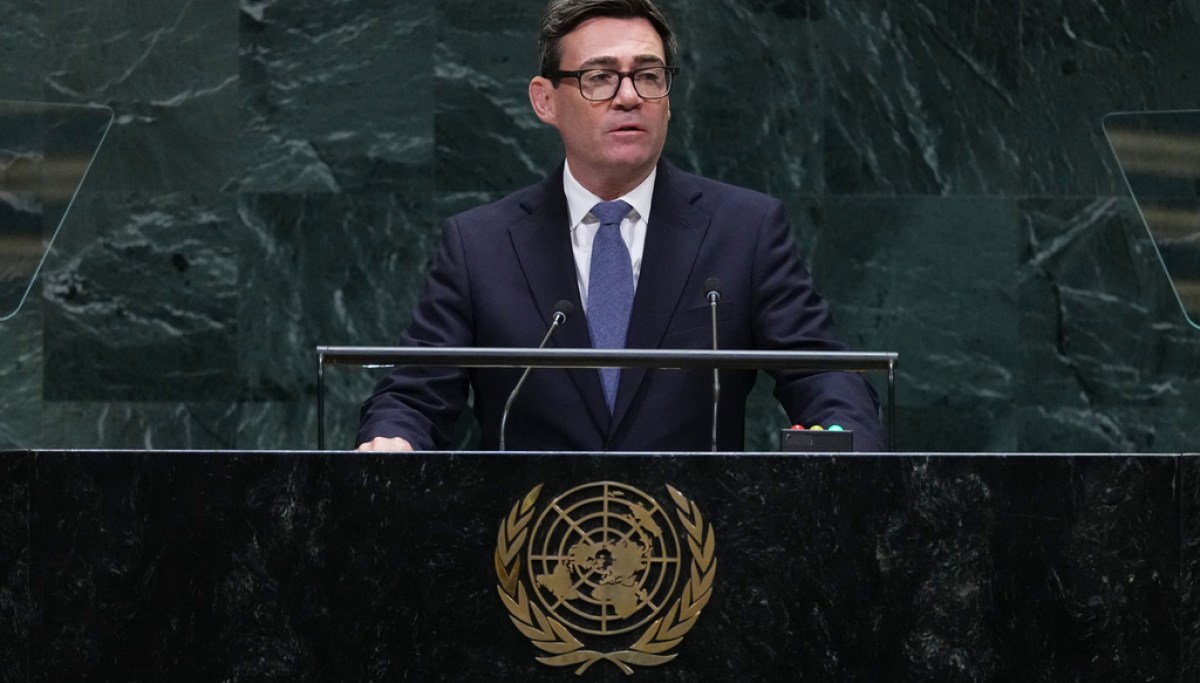
Andy Burnham, the newly appointed British Prime Minister, addressed the United Nations General Assembly in New York City, where he emphasized that Britain is not "on the slide." Despite acknowledging long-term issues affecting living standards and the current cost-of-living crisis as major challenges, Burnham presented an optimistic outlook for the country's future. He highlighted Britain’s rapid economic growth, making it one of the fastest-growing economies in the G7.
Burnham also discussed his plans to establish a national center dedicated to countering disinformation campaigns, particularly those from Russia, which he accused of spending around £1.3 billion annually on manipulating information and spreading lies through various means including bots and fake websites. He proposed that Britain take up a leading role in setting global safety standards for artificial intelligence (AI), arguing that it is critical to prevent rogue AI development.
At the U.N., Burnham also announced plans to cooperate with the United States on an AI defense partnership, integrating British military’s Rapid AI Delivery Taskforce and the U.S. Department of War’s Chief Digital and Artificial Intelligence Office. This initiative aims to protect infrastructure, detect threats, and enhance governance through advanced technology, positioning Britain as a key player in global tech regulation efforts.
Written for “Andy Burnham UN Speeches” on 2026-10-05,
grounded in this article and the 16 other(s) covering the same event.
Russian disinformation
Andy Burnham launched an attack on Russian interference within the UK in his speech, saying it spends £1.3 billion annually on “manipulating information.”
asserted
it → launch → information
He added: “Russian agencies have used every means at their disposal to spread lies and disinformation and prey on people’s fear.
“
asserted
agencies → add → fear
They’ve used bots and fake websites.
asserted
They → use → bots
They’ve amplified far-right narratives.
asserted
They → amplify → narratives
"We're talking about an insidious campaign that reaches into people's homes and twists what they feel about their own country and community – creating a narrative of decline, stoking division and sowing despair.”
asserted
they → talk → despair
He said: “If you’re struggling with the cost of living and your life is not improving – or if you’re a young person not in employment, education or training – then you are going to be much more vulnerable to this kind of influence.”
asserted
you → say → influence
Mr Burnham also claimed to have evidence that Russia tried to interfere with the 2019 General Election.
asserted
Russia → claim → Election
He used the speech to announce a new National Centre for Information Defence to fight Russian disinformation.
asserted
He → use → disinformation
The new centre will work alongside intelligence agencies, government departments, the police and social media companies.
asserted
centre → work → agencies
In his speech, Mr Burnham said he wants the UK to lead the world in developing a set of rules to prevent the spread of rogue artificial intelligence.
asserted
UK → say → intelligence
He described the most advanced "Frontier AI" as "one of the most significant challenges and opportunities of our age", but told leaders that AI would be "key to economic growth".
asserted
AI → describe → growth
The Prime Minister added: "We've all heard the warnings - which we must heed.
asserted
we → add → which
I know how worried people are.
asserted
people → know → ?
So we have to rise to this moment."
asserted
we → have → moment
He acknowledged that AI had huge potential in healthcare, economic growth, transforming education and in defence - but that it would also be a source of disruption to jobs, and that warnings from industry insiders about AI’s potential to pose a risk to humanity must be heeded.
asserted
warnings → acknowledge → humanity
He highlighted the UK's "world-leading" AI Security Institute, established under Conservative Prime Minister Rishi Sunak, and pledged to put AI at the heart of the UK's G20 Presidency next year in Manchester.
asserted
He → highlight → Manchester
Mr Burnham said the UK would work towards agreeing a set of global principles and standards to ensure transparency, access to AI models, and that development happens safely.
asserted
development → say → models
Burnham announced a new national security deal with the US while discussing fears regarding AI.
asserted
Burnham → announce → AI
He said: “I am announcing today that we are developing a new AI defence partnership with the United States to protect our critical national infrastructure.”
asserted
we → say → infrastructure
It came just hours after first meeting US President Donald Trump for the first time since becoming PM.
asserted
It → come → time
The Prime Minister said the meeting was “excellent”, while Mr Trump said that Mr Burnham was a “man he could do business with”.
uncertain
he → say → business
‘Decade-long plan’
Mr Burnham confirmed that his government will unveil a new decade-long plan for the country later this year.
asserted
government → confirm → country
The plan will focus on getting more people into work, especially young people, as well as easing the cost-of-living crisis for most people,
asserted
plan → focus → people
The Prime Minister did not announce any specific measures during the speech.
asserted
Minister → announce → speech
Mr Burnham renewed calls for a two-state solution in Gaza during his speech at the United Nations.
asserted
Burnham → renew → Nations
He said: “Far too many people have died, including so many children.
asserted
people → say → children
Far too little aid is getting in, and it has gone on for far too long.”
asserted
it → get → ?
He said the two-state solution must “stay alive”, adding: “We want to see the suffering and death finally come to an end.
asserted
suffering → say → end
“We want to see Israeli and Palestinian people living side by side in peace and security.
asserted
people → want → peace
And we will do all we can to keep the hope of that possibility alive.”
asserted
we → do → possibility
Mr Burnham concluded his speech by saying: “You can count on us to stand up for those long standing British values of fairness and justice.
asserted
You → conclude → fairness
“Count on us to fight racism, discrimination and the abuse of power wherever we see it.
asserted
we → count → it
 The Aporia







.jpg?width=1200&auto=webp&quality=75)

