Pakistan, Iran explore reopening Strait of Hormuz, easing West Asia tensions

World News Today: International News Headlines - The Hindu | The Hindu · collected 2026-08-25 · by PTI
Read the original at World News Today: International News Headlines - The Hindu | The Hindu ↗

Summary

Pakistan Army Chief Field Marshal Asim Munir visited Tehran and held "comprehensive discussions" with Iranian leaders, focusing on preventing further escalation of the West Asia conflict and reopening the Strait of Hormuz. The visit was part of Pakistan's diplomatic efforts to end the stalemate in the ongoing U.S.-Iran conflict, which began in February 2026 when the US and Israel launched strikes against Iran. Pakistani leadership met with several high-ranking Iranian officials, who appreciated Pakistan's "constructive role" in facilitating dialogue and de-escalation. The visit comes as Washington ramps up pressure on Iran with an expanded round of sanctions.
Written by the local model on 2026-08-25, using this article's own text rather than the other coverage of the same event (that is the story summary below).

Signals How these are calculated →

Claims extracted
19
claim-shaped sentences
Uncertain
5%
1 of 19 hedged
Leaning
Leans right
of the writing, not the subject
Publisher trust
94.3
red-flag proxy, not a credibility rating
Outlets on this story
5
Politics
Narrative spread
1
articles carrying this framing
Analyzed 2026-08-25 · how these are computed

AI analysis (generated at analysis time, not now)

Story summary

Field Marshal Asim Munir, Chief of Defence Forces (CDF) and Mohsin Naqvi, Interior Minister, traveled to Tehran, Iran on August 24 as part of Pakistan's diplomatic efforts to end the stalemate in the ongoing US-Iran conflict. During their visit, they met with Iranian President Masoud Pezeshkian, Speaker of the Parliament of Iran Mohammad Bagher Ghalibaf, and other senior Iranian officials. The Pakistani delegation focused on regional de-escalation, breaking the military stalemate, and exploring a negotiated settlement to restore peace and stability in the region. The United States and Israel are said to have triggered the Middle East war with a massive wave of strikes against Iran. However, Iranian President Pezeshkian has stated that it's time to end the war as Iran holds the advantage. The Pakistani delegation also discussed measures to prevent further escalation and reopen the Strait of Hormuz, a vital energy transportation route in the Middle East. The United States must change its tone and approach in its dealings with Iran, because relying on coercion and bullying will only complicate the implementation process, according to Pezeshkian. The Foreign Office (FO) has denied claims that the Pakistani delegation visited Iran as an envoy of the US, stating that the visit was undertaken purely in the context of Pakistan's role as a mediator.

Written for “Pakistan-Iran Diplomatic Efforts” on 2026-08-31, grounded in this article and the 4 other(s) covering the same event.
Why this leaning score
The article's own words the score was based on. Each is quoted verbatim and was checked against the article text before being stored, so you can find it in the original.
Score +0.35 Confidence high
Leaning score +0.35 for article 2295 (high confidence, 1 verified quote) · logged 2026-08-27

Story

📰 Pakistan-Iran Diplomatic Efforts
Politics · 5 article(s) covering the same event.

How this is being covered How these are calculated →

Article leaning vs. publisher reliability
Source leaning vs. consistency

Compared with similar articles

This article reads leans right and hedges 5% of its claims. Each row says how that neighbour differs.
Al Jazeera – Breaking News, World News and Video from Al Jazeera
⚖️ leaning not scored 🔴 11% hedged 7 of 65 📰 publisher trust 96
“Article A mentions Trump's claims about the Strait of Hormuz on an unspecified date, while Article B reports on a specific meeting between Pakistan and Iran leaders on August 25, 2026, indicating two separate incidents.”
Dawn - Home
⚖️ Leans left further left than this 🔴 0% hedged 0 of 14 📰 publisher trust 95
“Both articles describe the same visit to Iran by CDF Munir and Interior Minister Naqvi, with similar details about their discussions and goals.”
Al Jazeera – Breaking News, World News and Video from Al Jazeera
⚖️ Leans left further left than this 🔴 13% hedged 6 of 47 📰 publisher trust 96
“Both articles describe Field Marshal Asim Munir's visit to Iran on August 25, 2026, with similar details and focus”
The Straits Times World News
⚖️ Leans left further left than this 🔴 19% hedged 7 of 37 📰 publisher trust 95
“Article A describes diplomatic efforts by Pakistan's Army Chief with Iranian leadership, while Article B discusses a prolonged conflict and potential endgame, indicating two separate incidents”
The Straits Times World News
⚖️ leaning not scored 🔴 10% hedged 3 of 29 📰 publisher trust 95
“Article A refers to ongoing war and stalemate between US/Israel and Iran, while Article B mentions Pakistan's efforts to reopen Strait of Hormuz as part of diplomatic efforts to address the conflict”
The Independent World
⚖️ leaning not scored 🔴 20% hedged 7 of 35 📰 publisher trust 95
“Article A reports on casualties and conflicts between Iran and US, while Article B discusses diplomatic efforts to ease tensions and reopen a strait, indicating two distinct events”
Top News - UPI.com
⚖️ leaning not scored 🔴 9% hedged 1 of 11 📰 publisher trust 54
“Both articles describe the same meeting between Pakistani and Iranian officials, including the same individuals and location, on August 25, 2026.”
Dawn - Home
⚖️ Leans right 🔴 21% hedged 7 of 33 📰 publisher trust 95
“Both articles describe Field Marshal Asim Munir's visit to Iran and meetings with Iranian leadership, citing the same purpose and outcomes”
The Independent World
⚖️ Leans left further left than this 🔴 8% hedged 4 of 48 📰 publisher trust 95
“Article A reports on a visit by Pakistan's Army Chief to Iran, while Article B mentions another tanker attack in the Strait of Hormuz, suggesting two separate incidents”
World News Today: International News Headlines - The Hindu | The Hindu
⚖️ Leans strongly left further left than this 🔴 0% hedged 0 of 8 📰 publisher trust 94
“Article A describes a visit to Iran by Pakistan's Army Chief on August 25, while Article B mentions a conflict between the US and Iran six months prior, without specifying any particular event or date matching Article A”

Publisher

World News Today: International News Headlines - The Hindu | The Hindu · 35 article(s) · 0 correction(s) detected
SignalValueWeight
Correction rate 0.000 0.4
Uncertainty density 0.113 0.25
Assertive mismatch rate 0.000 0.35
No corrections detected for this publisher. That may mean careful reporting, or simply that nothing has been checked.

Who wrote this

No reporter is named on this article, beyond the feed's “PTI”.

Topics

Iran Iranian Pakistan U.S. U.S.-Iran

Subjects

Iran GPE · 10× Pakistan GPE · 7× Iranian NORP · 4× U.S.-Iran GPE · 4× Tehran GPE · 3× U.S. GPE · 2× Washington GPE · 2× Asim Munir PERSON · 1× Interior ORG · 1× Pakistan Army ORG · 1×

Narrative

The Army Chief called on Iranian President Masoud Pezeshkian, Mohsen Rezaei, Representative of the Supreme Leader on the Supreme National Security Council, Mohammad Bagher Ghalibaf, Speaker of the Parliament of Iran, Seyed Abbas Araghchi, Foreign Minister of Iran, and Eskandar Momeni, Minister of Interior of Iran.
framing: assertive · carried by 1 article(s) · first seen 2026-08-25
2026-08-25 · World News Today: International News Headlines - The Hindu | The Hindu
Pakistan, Iran explore reopening Strait of Hormuz, easing West Asia tensions · assertive framing

Claims (19 extracted, 1 hedged)

Pakistan Army Chief Field Marshal Asim Munir has held "comprehensive discussions" with the Iranian leadership in Tehran, focusing on measures to prevent further escalation of the West Asia conflict and the reopening of the Strait of Hormuz, the army's media wing said on Tuesday (August 25, 2026). asserted
wing → hold → Tuesday
The Army Chief, who was accompanied by Interior Minister Mohsin Naqvi, concluded a day-long visit to Iran as part of Islamabad’s diplomatic efforts to break the deadlock in the ongoing U.S.-Iran conflict, the Inter-Services Public Relations (ISPR) said in a statement. asserted
Relations → accompany → statement
It added that the visit was "part of Pakistan’s diplomatic efforts to end the stalemate in the ongoing U.S.-Iran conflict and explore ways for achieving enduring peace and a permanent end to instability in the region”. asserted
visit → add → region
The Army Chief called on Iranian President Masoud Pezeshkian, Mohsen Rezaei, Representative of the Supreme Leader on the Supreme National Security Council, Mohammad Bagher Ghalibaf, Speaker of the Parliament of Iran, Seyed Abbas Araghchi, Foreign Minister of Iran, and Eskandar Momeni, Minister of Interior of Iran. asserted
Chief → call → Iran
"Comprehensive discussions focused on measures to prevent further escalation, reopening of the Strait of Hormuz and expedited termination of the conflict,” the statement said. asserted
statement → focus → conflict
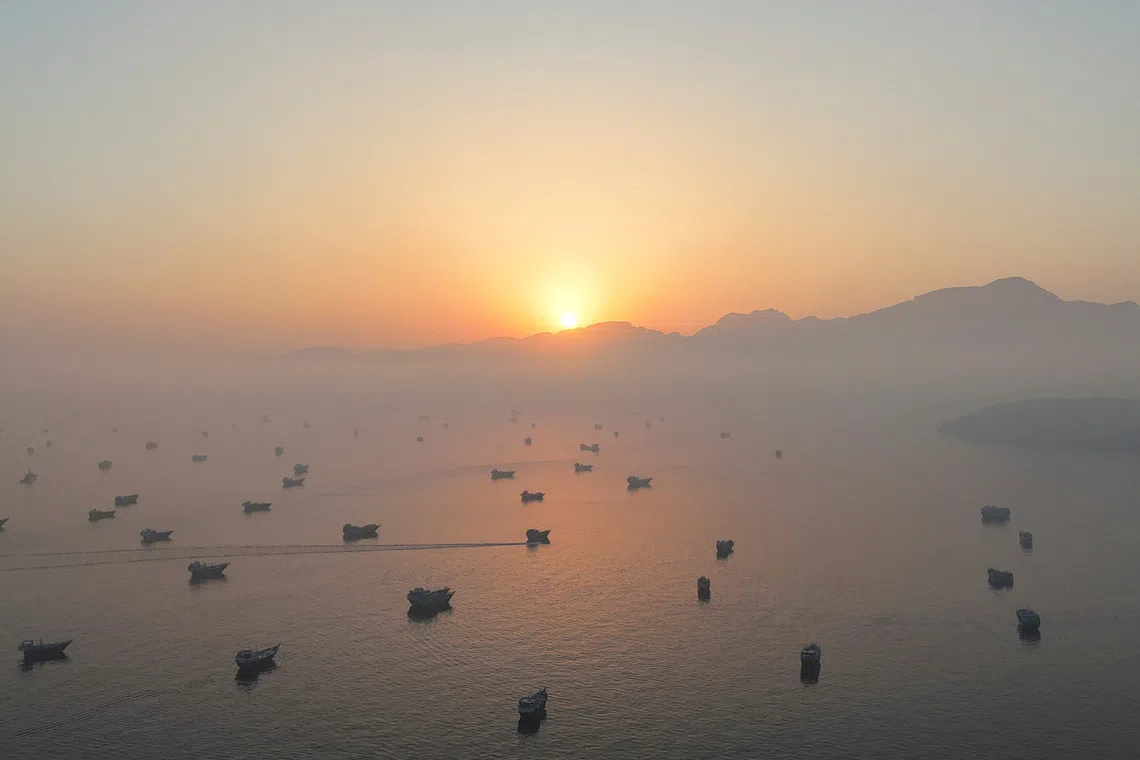
The Strait of Hormuz is a 55-km-wide narrow waterway between Iran and Oman, separating the Persian Gulf from the Arabian Sea. asserted
Strait → separate → Sea
It is one of the busiest and most strategically significant shipping routes in the world, as a fifth of global oil passed through it before the conflict began on February 28. asserted
conflict → pass → February
The discussions between leaders from Pakistan and Iran also covered regional peace and possible ways to reach a negotiated settlement to the disputes, the statement said. asserted
statement → cover → disputes
The Iranian leadership appreciated Pakistan's "constructive role” in facilitating dialogue, de-escalation and a peaceful resolution of the conflict, according to the statement. uncertain
leadership → appreciate → statement
Pakistan has been leading the push for peace and reviving its mediation efforts in the stalled U.S.-Iran peace negotiations. asserted
Pakistan → lead → negotiations
In April, a ceasefire was announced with an agreement to end the U.S.-Iran conflict. asserted
ceasefire → announce → conflict
However, the peace process faltered later on and has not been put back on track. asserted
process → falter → track
The conflict began when the United States and Israel launched strikes against Iran on February 28, triggering Iranian retaliation and choking the vital Strait of Hormuz and entailing a petroleum price hike. asserted
States → begin → hike
An interim peace agreement, which Pakistan signed as a guarantor, derailed last month as tensions escalated in West Asia with the U.S. and Iran resuming military strikes. asserted
U.S. → sign → strikes
Pakistan's efforts to revive the talks have so far failed to yield results. asserted
efforts → revive → results
The visit by Pakistan's leadership was part of the country's broader diplomatic efforts to help break the deadlock in the conflict and explore ways to achieve lasting peace and an end to regional instability. asserted
visit → break → instability
The visit comes as Washington ramps up pressure on Iran with an expanded round of sanctions, which U.S. officials say are designed to cut off Tehran's economic lifeline and put the world on notice to cease doing business with the country. asserted
officials → come → country
President Donald Trump has also warned of economic consequences for countries providing what he called "any type of lifeline" to Iran, as Washington seeks to intensify pressure on Iran. asserted
Washington → warn → Iran
Oil shipments through the Strait of Hormuz have been severely disrupted, while Tehran has threatened to target unauthorised tankers attempting to transit the waterway. Published - August 25, 2026 12:34 pm IST asserted
Tehran → disrupt → waterway
💬 Give feedback
🕘 History 🎫 Support