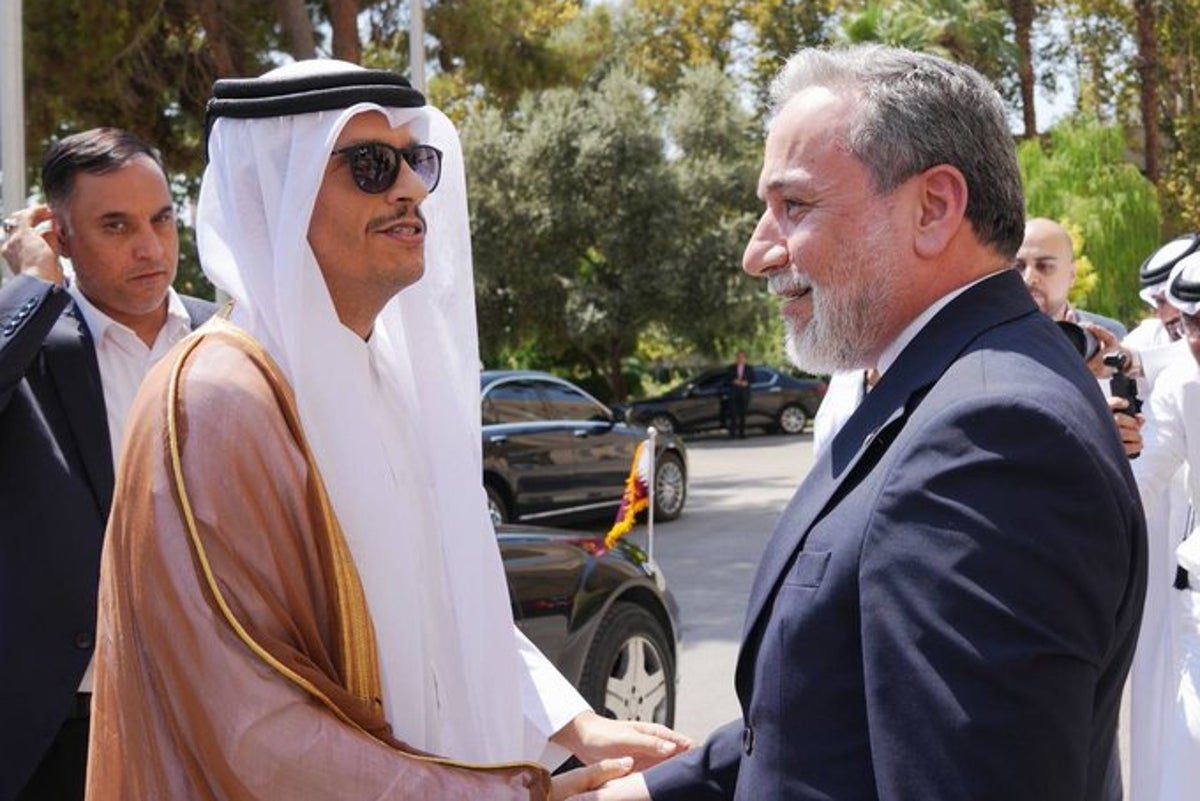
Pakistani Field Marshal Asim Munir spent Monday moving through the power corridors of Tehran: the presidency, parliament, the Supreme National Security Council, and the foreign and interior ministries.
asserted
Munir → spend → Tehran
He met Iranian President Masoud Pezeshkian, as well as Parliament Speaker Mohammad Bagher Ghalibaf, who is Tehran’s chief negotiator in talks with the United States to end their now six-month-long war.
asserted
who → meet → war
Recommended Stories
list of 4 items- list 1 of 4Pakistan’s army chief back in Iran: Can he break peace talks deadlock?
asserted
he → break → deadlock
- list 2 of 4US launches ‘Operation Economic Outcast’ to cut Iran’s economic lifeline
- list 3 of 4Yemen’s Houthis report attack on Saudi ship
- list 4 of 4How
asserted
Houthis → launch → ship
US sanctions on Iran ripple through global markets and consumers
asserted
sanctions → ripple → markets
But amid a deadlock in those peace negotiations, many analysts say that Munir’s true test as mediator will lie in his ability to use his position as one of the region’s most powerful military leaders to convince his Iranian counterparts in olive uniforms to agree to a return to talks with Washington.
asserted
test → say → Washington
Days before Munir’s visit, Iranian President Masoud Pezeshkian told a gathering of doctors in Tehran that it was time to end the war while Iran held the advantage, a message aimed as much at Tehran’s own security establishment as at Washington.
“It is better that we bring the war to an end now as we are in a position of power and dignity,” he said, adding that “the whole world acknowledges our victory”.
asserted
world → tell → victory
Hours later, on August 21, the chief of the general staff of Iran’s armed forces, Major-General Ali Abdollahi, promised “revolutionary, crushing, regret-inducing and devastating” responses to any American miscalculation.
asserted
chief → promise → miscalculation
It was a sharp illustration of the gap between Iran’s president and the men now running its military — one that Munir will need to also navigate, analysts say.
asserted
analysts → run → that
And that’s why Munir’s most significant meeting on Monday might have been with General Mohsen Rezaei, a representative of Iran’s Supreme Leader Mojtaba Khamenei and the newly appointed secretary of the Supreme National Security Council.
uncertain
meeting → ’ → Council
State of the war
Munir’s visit to Tehran came on a day when the region and the world were bracing for US President Donald Trump’s threatened “economic D-Day” sanctions against Iran, accompanied by a threatened punishment for all countries that continue to trade with Tehran.
asserted
that → come → Tehran
Later in the day, US Treasury Secretary Scott Bessent unveiled “Operation Economic Outcast“, a sweeping sanctions campaign targeting Iran’s digital assets, gold, aviation, technology and shipping networks.
asserted
Bessent → unveil → assets
But while warning other countries to sever trade ties with Iran, he held back from actually announcing any penalties for those nations, acknowledging that such a step would “blow up the global financial system”.
Meanwhile, Defense Secretary Pete Hegseth, speaking the same day, kept the option of renewed strikes open.
asserted
Hegseth → warn → strikes
“If we need to use kinetic strikes, we’ll use them.
asserted
we → need → them
If Iran is foolish enough to overplay their hand or mess with the American military, we’ll do what we need to do,” he said.
asserted
he → overplay → what
It’s unclear whether Munir’s visit helped stave off broader US action against Iran and its trading partners.
uncertain
visit → ’ → Iran
But the timing was significant, analysts point out.
asserted
analysts → point → ?
Munir travelled to Tehran days after taking a phone call from United States President Donald Trump, who reportedly asked Islamabad to use its influence to bring Iran back to the table.
uncertain
who → travel → table
Pakistan’s Inter-Services Public Relations (ISPR) said the one-day visit had produced “comprehensive discussions” on reopening the Strait of Hormuz and ending the war.
asserted
visit → say → war
Iranian officials, the ISPR added, “appreciated Pakistan’s constructive role and sincere efforts”.
asserted
ISPR → add → role
Pakistan’s Interior Minister Mohsin Naqvi, who travelled with Munir, went further, calling the talks “very positive and productive” and saying “significant progress was made”.
asserted
progress → travel → talks
This was his fourth visit to Tehran this year, but his first since Iran’s military hierarchy changed earlier this month.
asserted
hierarchy → change → Tehran
On August 10, Supreme Leader Mojtaba Khamenei installed Abdollahi as chief of the general staff and moved Rezaei into the Supreme National Security Council.
asserted
Khamenei → instal → Council
Ahmad Vahidi, commander of the Islamic Revolutionary Guard Corps (IRGC), has held his post since March, when his predecessor was killed in the war’s opening strikes.
asserted
predecessor → hold → strikes
It is these military men that analysts say are now shaping Iran’s war moves, potentially giving a fellow man in uniform an edge over traditional diplomats in convincing Tehran to get back to talks.
asserted
analysts → say → talks
“It is increasingly the IRGC and the wider security establishment driving decisions on war and peace during this crisis,” Ahmed Saeed, a former vice admiral in Pakistan’s navy and a defence analyst, told Al Jazeera.
asserted
Saeed → drive → Jazeera
Naqvi, the interior minister, has travelled to Tehran eight times since April without those visits producing a substantial breakthrough.
asserted
visits → travel → breakthrough
He’s a general who appears to enjoy the trust of both the Iranian leadership and, crucially, Trump — who has described the Pakistani army chief as his “favourite field marshal”.
asserted
who → ’ → marshal
“The call [to Munir a few days ago] was initiated by Trump himself, requesting Pakistani leadership use its influence to bring Iran back to the table,” Saeed said.
asserted
Saeed → initiate → table
Warm words, no movement
What Iranian officials actually told Munir, in accounts carried by Iranian state media, differed little from what they have been telling their own broadcasters all week.
asserted
they → tell → broadcasters
“We distrust America, and it must change its behaviour,” Rezaei told Munir, according to IRNA.
uncertain
Rezaei → distrust → IRNA
“We are pursuing the implementation of the terms of the Memorandum of Understanding, and it is America that must adhere to its commitments based on the Memorandum of Understanding,” he told Munir, according to IRNA.
uncertain
he → pursue → IRNA
Pezeshkian, meanwhile, pressed Munir to tell Washington to “correct its tone and approach”, warning that “relying on force and bullying will only complicate the process”, according to Tasnim, another Iranian outlet.
uncertain
relying → press → Tasnim
Two tracks, one strait
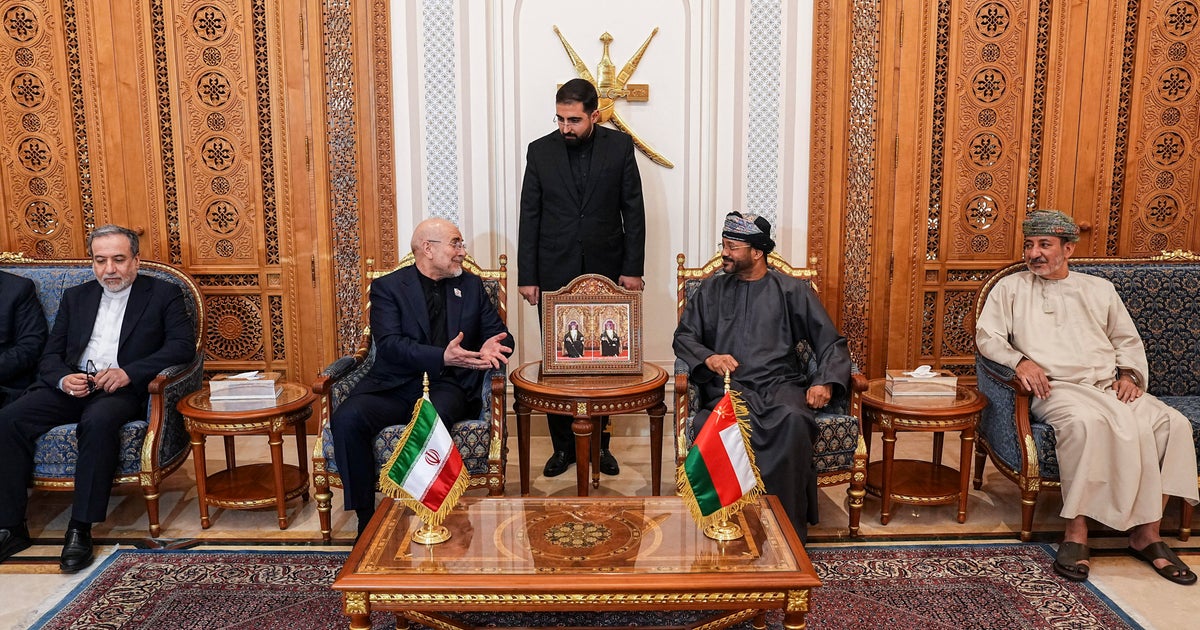
Oman’s Foreign Minister Badr bin Hamad Albusaidi is also expected in Tehran today for a separate round of talks focused specifically on the Strait of Hormuz, a track that has run alongside Pakistan’s mediation for months.
asserted
that → expect → months
Albusaidi has held recurring talks with Tehran on the strait’s navigation rules.
asserted
Albusaidi → hold → rules
Ejaz Haider, a Lahore-based defence analyst, said the Omani and Pakistani diplomatic tracks complement each other.
asserted
tracks → base → other
“Oman and Islamabad channels complement, because clause 5 of the Islamabad MoU stresses a bilateral understanding on the strait [between Oman and Iran],” he told Al Jazeera.
asserted
he → complement → Jazeera
The Strait of Hormuz passes through the territorial waters of Iran and Oman.
asserted
Strait → pass → Iran
“This [a deal between Iran and Oman to jointly manage the strait] is not in the interest of the US, which is why Trump has threatened to bomb Oman,” Haider said, referring to remarks Trump made on August 17, when he told Fox News he would bomb Oman if it “gets in the way” of reopening the strait, the second time he had threatened the US ally over Hormuz.
asserted
he → manage → Hormuz
Where Islamabad’s advantage as a mediator lay was in its “direct access to Vahidi, Abdollahi and Rezaei, the actual architects of Iran’s decision-making”, Saeed, the former naval official, said.
asserted
Saeed → lay → making
…and 7 more, not listed.
 The Aporia