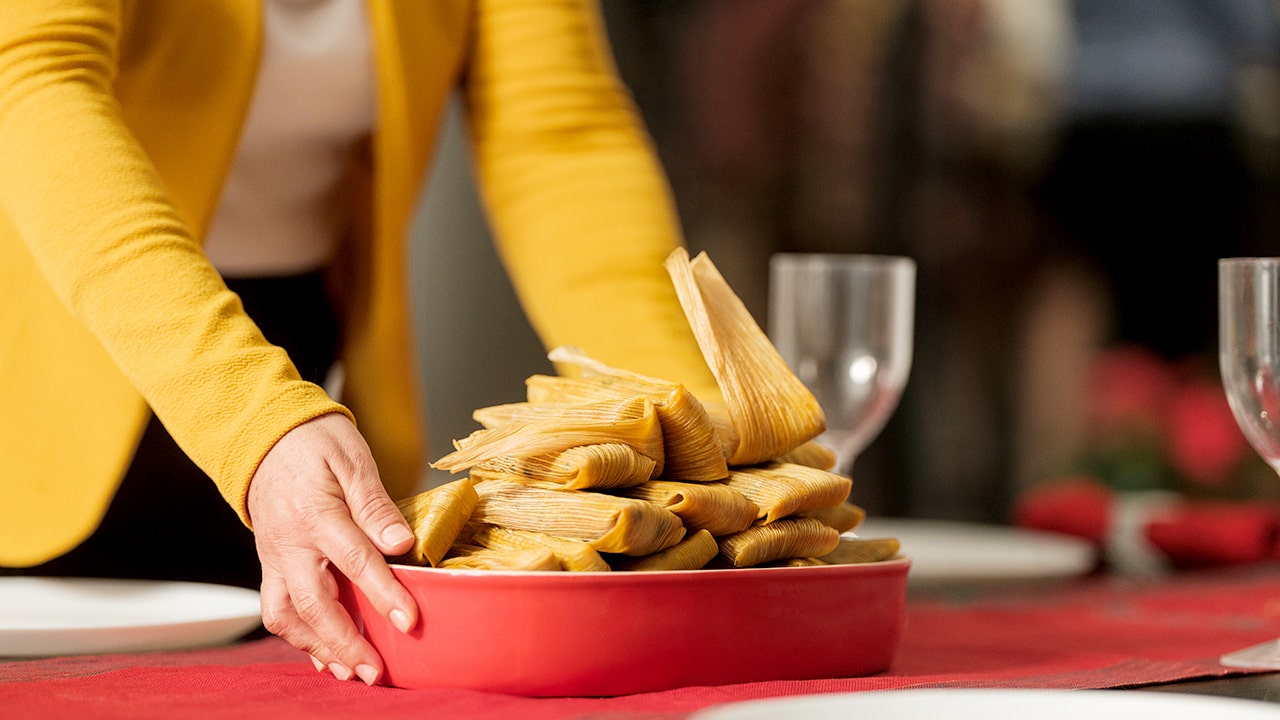
Tamale entrées have decreased by 7.8% on Mexican restaurant menus in the United States over the past five years, according to Technomic's Ignite Menu data comparing 2021 and 2026. The decline is attributed to the labor-intensive nature of preparing tamales, which involves a complex process including overnight corn preparation and meticulous assembly, making them less economically viable for restaurants compared to other menu items like tacos. Despite this trend, chefs like Elio Gomez of Taquería Picoso in Alexandria, Virginia, continue to offer tamales due to their cultural significance and the unique dining experience they provide.
Written locally by qwen2.5:14b on 2026-09-20,
using this article's own text rather than the other coverage of the
same event (that is the story summary below).
Story summary
The tamale, once a common item on Mexican restaurant menus in the United States alongside tacos and burritos, has seen its presence decline significantly over recent years. According to Technomic's Ignite Menu data comparing the second quarters of 2021 and 2026, tamale entrées have dropped by 7.8% from menus across America.
One key reason for this trend is the significant labor required to prepare tamales despite their expected low price point by diners. Robert Mahon, director of operations at Mahon Hospitality Group in New York City, acknowledges that while ingredients might not be expensive, the extensive labor involved makes offering tamales economically challenging. For instance, at Taquería Picoso in Alexandria, Virginia, executive chef Elio Gomez maintains tamales on his menu but notes that preparing them requires a three-day process including sourcing corn from Mexico and an overnight nixtamalization cooking step.
Written for “Mexican Food Disappearing” on 2026-10-05,
grounded in this article and the 1 other(s) covering the same event.
The tamale was once a familiar presence on Mexican restaurant menus in the United States, sharing space with tacos, burritos and enchiladas.
asserted
tamale → share → tacos
Increasingly, though, diners looking for one may have to search.
uncertain
diners → look → one
Tamale entrées have dropped 7.8% from menus over the past five years, according to Technomic's Ignite Menu data comparing the second quarters of 2021 and 2026.
uncertain
entrées → drop → 2021
One reason may be a basic restaurant calculation: Tamales require considerable labor for something diners expect to be relatively inexpensive.
uncertain
diners → require → something
Robert Mahon, director of operations for Mahon Hospitality Group, runs Amor Loco and Toro Loco in New York City, neither of which serves tamales.
asserted
neither → run → tamales
Mahon enjoys tamales himself and said his restaurants have discussed offering them, but the economics can be difficult.
asserted
economics → enjoy → them
"Even though the ingredients might not be so costly, it's more the labor," Mahon told Fox News Digital.
uncertain
Mahon → tell → Digital
That labor becomes apparent at Taquería Picoso in Alexandria, Virginia, where executive chef Elio Gomez keeps tamales on the menu.
asserted
Gomez → become → menu
Gomez said his process takes about three days.
asserted
process → say → days
His restaurant sources corn from Mexico, then cooks it through an overnight nixtamalization process.
asserted
restaurant → source → process
The corn is ground into masa, while fillings and banana leaves are prepared separately.
asserted
fillings → grind → masa
The masa must then be mixed with fat, broth and salt and aerated to achieve the right consistency before the tamales can be assembled, carefully wrapped and cooked.
asserted
tamales → mix → consistency
Training someone to do all that takes time, too.
asserted
that → train → time
Gomez said he spent months working alongside the employee who now makes his tamales.
asserted
who → say → tamales
Even with a recipe, Gomez said, a cook must learn how the masa should feel and how to wrap each tamale properly, so it doesn't dry out during cooking.
asserted
it → say → cooking
All that work goes into an item that still doesn't generate taco-level demand.
asserted
that → go → demand
"No, definitely it's not the same demand as a taco, for example," Gomez said.
asserted
Gomez → say → example
Mahon said his customers aren't clamoring for tamales either.
asserted
customers → say → tamales
"They're not walking out of our restaurants if they don't have a tamale," Mahon said.
asserted
Mahon → walk → tamale
"It's not expected as a staple anymore."
asserted
It → expect → staple
Price presents another complication.
asserted
Price → present → complication
Gomez charges $6 for a tamale, a price he considers inexpensive given the work involved.
asserted
he → charge → work
But some customers remember much cheaper versions.
asserted
customers → remember → versions
Yet the tamale's declining presence on restaurant menus doesn't necessarily mean the food itself is disappearing.
asserted
food → decline → menus
Gomez, who grew up in Mexico City, remembers tamales as an everyday breakfast food sold by street vendors in the morning.
asserted
who → grow → morning
In the United States, he sees them being treated more as a special food associated with holidays and family gatherings.
asserted
them → see → holidays
Asked what he would tell someone eating a tamale for the first time, Gomez described the masa as fluffy, the dish as rich and its appeal as deeply comforting.
asserted
dish → ask → masa
"You feel like you're getting a hug when you're eating a tamal," he said.
asserted
he → feel → tamal
 The Aporia