French President Emmanuel Macron warned of increased Russian cyber and drone attacks targeting European nations to discourage support for Ukraine. Following meetings with French political figures, he instructed his government to enhance protections for critical infrastructure, citing Moscow's efforts to intimidate Europe through hybrid threats. Macron’s announcement comes as the U.S. also warns about vulnerabilities to foreign cyber warfare and hacking from China.
Written locally by qwen2.5:14b on 2026-09-19,
using this article's own text rather than the other coverage of the
same event (that is the story summary below).
Story summary
Emmanuel Macron, the French president, warned that Russia's hybrid threats against Europe and France have intensified in recent weeks. During a news conference at the Elysee Palace, he noted specific incidents such as a drone attack on Leipzig airport in Germany last month and remarks by Polish Prime Minister Donald Tusk suggesting Russia was planning attacks on Poland and other NATO countries. Macron instructed the French government to prepare plans for protecting critical infrastructure and defense industry sites from these threats. Interior Minister Laurent Nunez announced that all relevant services would be mobilized to respond to new security challenges, emphasizing the need to be ready for any attack from Moscow without hesitation or response being left unaddressed. The meeting included more than a dozen presidential hopefuls and senior politicians discussing confidential intelligence assessments of current security issues.
Written for “Russian Hybrid Threats Europe” on 2026-10-04,
grounded in this article and the 3 other(s) covering the same event.
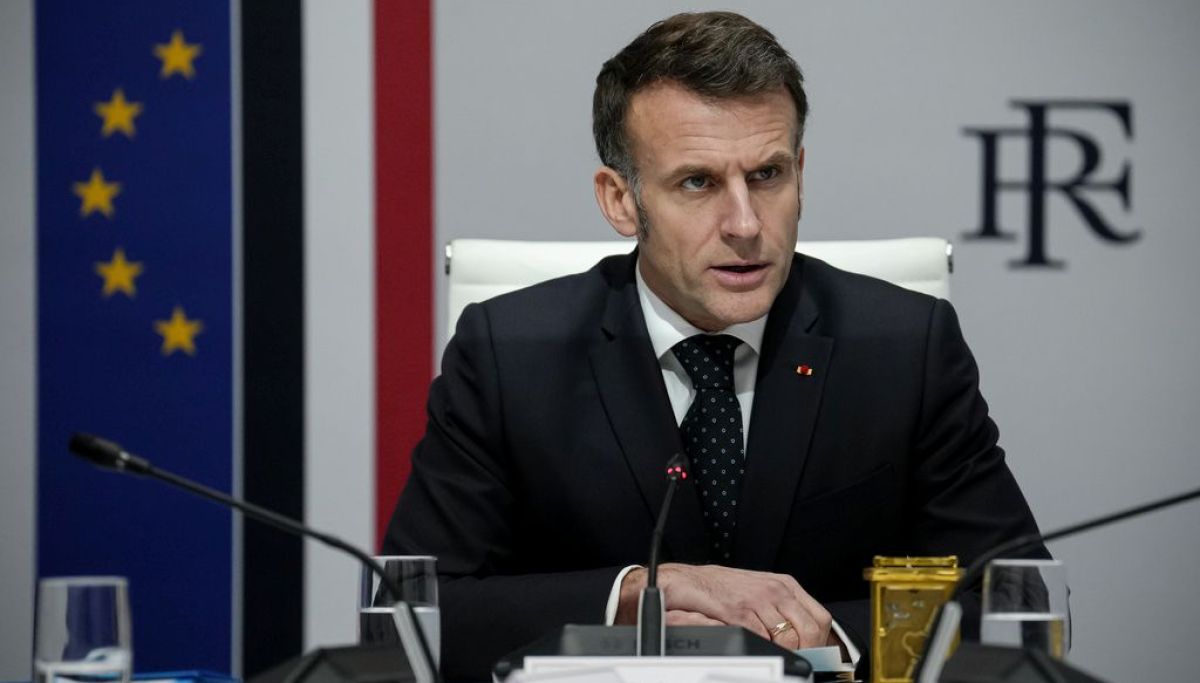
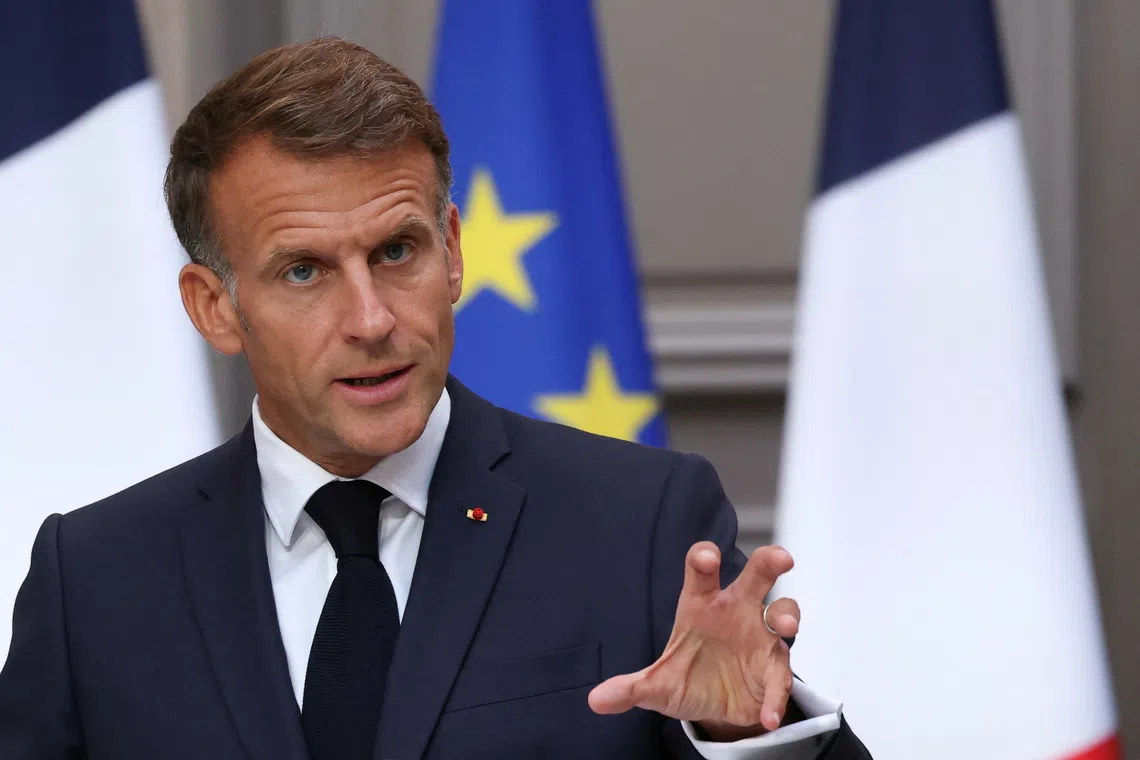
French President Emmanuel Macron on Friday announced his government is working to craft a plan to protect the country from Russian hybrid threats.
asserted
government → announce → threats
After meeting with leading political figures in France, Macron warned in comments at the Élysée Palace that Moscow is expanding cyber and drone attacks across Europe in an effort, he said, is aimed at discouraging the continent from supporting Ukraine in its war against Russia, which the United States has made a renewed attempt in recent weeks to end.
asserted
States → meet → weeks
Macron revealed he asked his government to consider how to protect critical infrastructure, including sensitive defense industry and technology sites, from Russia, citing Moscow’s drone and cyberattacks.
asserted
he → reveal → drone
“In recent weeks, the threat — particularly the Russian hybrid threat — facing Europeans and France has intensified,” Macron told reporters, revealing that France’s interior minister has also gathered with regional prefects to increase “vigilance in response to Russian hybrid attacks.”
asserted
minister → face → attacks
“The intent is to intimidate us and break our effort to support Ukraine,” he said.
asserted
he → intimidate → Ukraine
We are not intimidated because we know that our security today and tomorrow is at stake in Ukraine.”
asserted
today → intimidate → Ukraine
The development comes as Washington has similarly warned that the U.S. is vulnerable to foreign cyberwarfare and other forms of attacks.
asserted
U.S. → come → attacks
The Department of Justice earlier this month announced charges against five Russian agents still at large for allegedly contracting for surveillance and murder-for-hire plots around the world, including in Washington, D.C., over the summer.
uncertain
Department → announce → summer
The DOJ revealed last month that China has been hacking into federal systems, including the Senate, the Federal Reserve, NASA, and the Departments of Energy and Health and Human Services, since 2018.
asserted
China → reveal → 2018
President Donald Trump in July said that U.S. elections are vulnerable to Russian interference, citing a National Intelligence Council Memorandum from October 2024 that stated, “We assess that some U.S. adversaries—at a minimum China, Iran, and Russia … have the technical capability to access some U.S. election-related networks and systems.”
asserted
adversaries → say → networks
In July, France’s Cyber Crisis Coordination Centre blamed Russia for a series of cyberespionage operations conducted for years against sensitive French infrastructure, including government ministries.
asserted
Centre → blame → ministries
Officials said Russia’s top intelligence agency, the Federal Security Service or FSB, had conducted cyberattacks on France in incidents that “affect many of our European partners.”
asserted
that → say → partners
That month, French Foreign Minister Jean-Noël Barrot promised to summon the Russian ambassador to France over the allegations.
asserted
Barrot → promise → allegations
“We will publicly condemn a widespread cyber campaign conducted by Russia that aimed to carry out sabotage and spying conducted against a dozen countries,” Barrot told BFM TV.
asserted
Barrot → condemn → TV
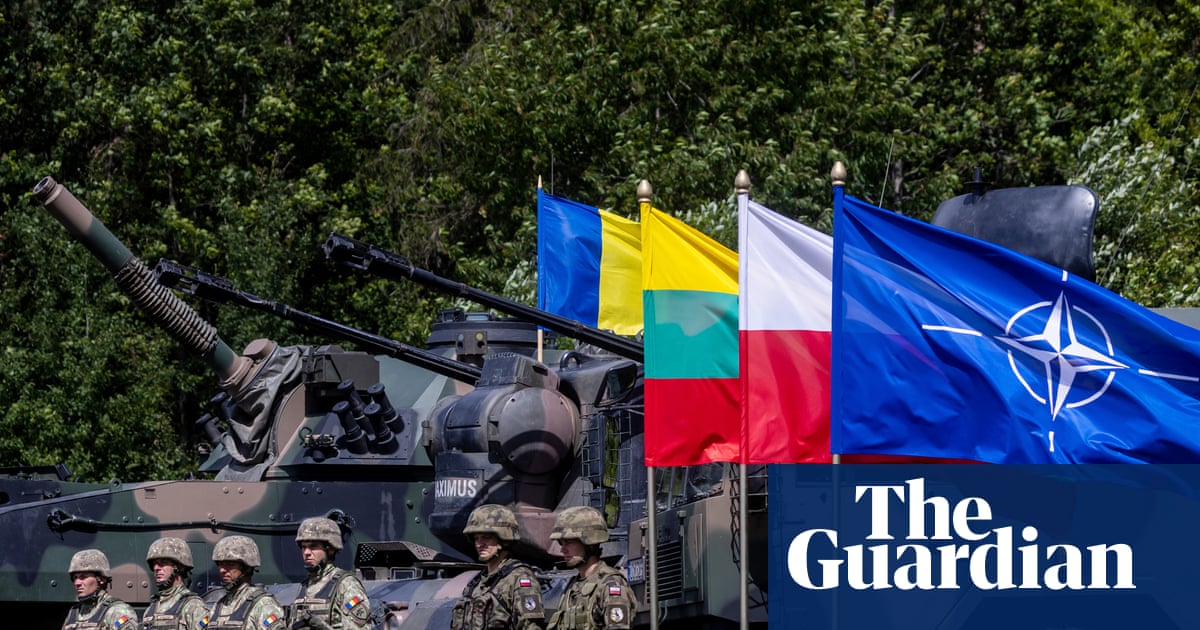
In another incident that gave Europe a headache, officials suggested Russia was behind a drone that breached Lithuania’s airspace earlier this month.
uncertain
that → give → airspace
The episode was concerning, as Lithuania is a NATO country, meaning such an incident could activate the alliance, which the U.S. belongs to, threatening to spill the Ukraine war into a broader conflict.
uncertain
U.S. → concern → conflict
 The Aporia