The Yellowstone to Yukon Conservation Initiative (Y2Y) is the first Canadian finalist for the Earthshot Prize in the Protect & Restore Nature category. This initiative aims to create a 3,400-kilometer wildlife corridor from Yellowstone National Park to Canada’s Yukon, connecting 25 million hectares of protected land and benefiting species like wolves, grizzly bears, wolverines, and mountain caribou. The project was inspired by data from a wolf named Pluie in the early '90s, highlighting the importance of large-scale conservation efforts across borders to support wildlife migration and adapt to climate change impacts.
Written locally by qwen2.5:14b on 2026-09-18,
using this article's own text rather than the other coverage of the
same event (that is the story summary below).
Huge wildlife corridor project is 1st Canadian finalist for Earthshot Prize
Winners of 5 prizes worth £1 million each will be announced in Mumbai in November
What if wolves, elk and other wildlife could roam through protected lands from Yellowstone National Park in the U.S. to Canada's Yukon?
uncertain
wolves → announce → Yukon
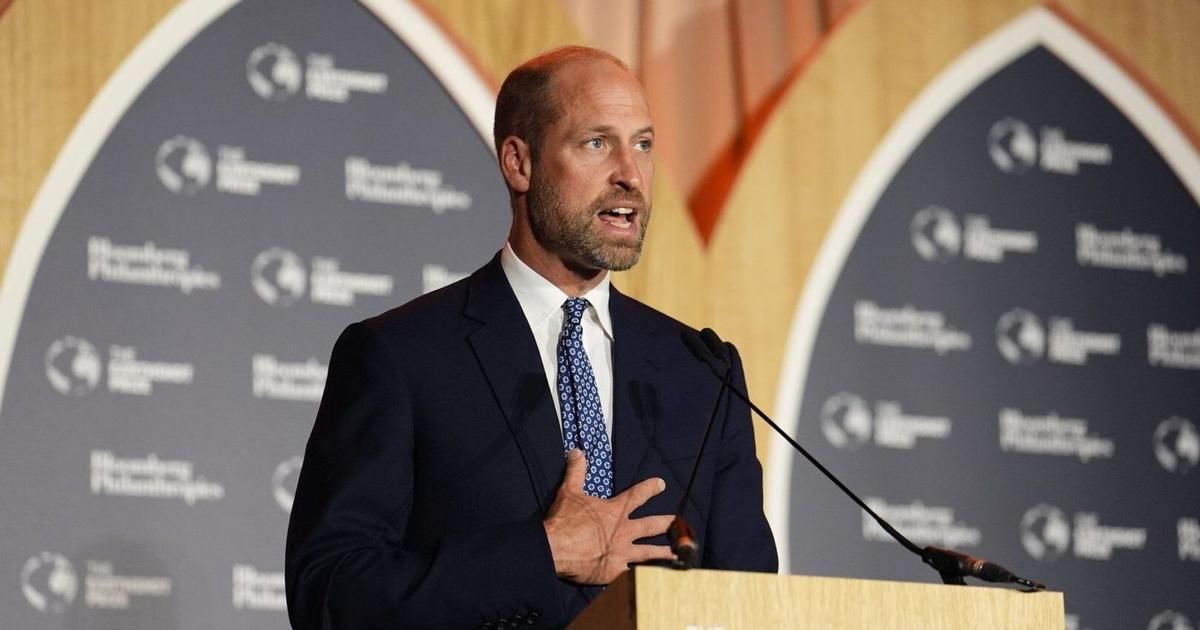
A project to create such a massive 3,400-kilometre habitat corridor has become the first-ever Canadian finalist for Prince William's annual environmental prizes.
asserted
project → create → prizes
The Yellowstone to Yukon Conservation Initiative (Y2Y) was one of three finalists announced today in the Protect & Restore Nature category of the 2026 Earthshot Prizes.
asserted
Initiative → announce → Prizes
In all, 15 finalists were announced across five categories, and each category winner will get £1 million ($1.9 million Cdn), which will be awarded in a ceremony in Mumbai in November.
asserted
which → announce → November
The Earthshot Prize highlighted Y2Y as "one of the largest conservation collaborations in history, reconnecting a vast mountain landscape across Canada and the U.S. so wildlife can once again move freely as it did for millennia.
asserted
it → highlight → millennia
It already includes 25 million hectares of protected land, an area slightly larger than the United Kingdom.
asserted
It → include → Kingdom
Y2Y was started as a joint U.S.-Canada initiative in 1993 by a U.S. non-profit and a Canadian charity.
asserted
Y2Y → start → -
(The Canadian group was named as the Earth Prize finalist.)
asserted
group → name → finalist
Inspired by a wolf named Pluie
The project was inspired by data from a wolf named Pluie, who was fitted with a satellite tracking collar near Banff National Park in 1991.
asserted
who → inspire → 1991
Over two years, she travelled through more than 100,00 square kilometres in three U.S. states, two Canadian provinces and three national parks.
asserted
she → travel → states
Jodi Hilty, president and chief scientist for the initiative, said conservationists started to realize that while protected areas were important, "they're not sufficient, and really if we want to sustain animals like Pluie the wolf, we actually have to think at the scale that nature needs.
asserted
nature → say → that
Conservationists at the time were also aware that with climate change and warming temperatures, animals (and plants) would have to migrate north and to higher elevations — and would if they could.
uncertain
they → warm → elevations
Hilty added, "Our work seeks to solve that problem."
In the past three decades, Y2Y has made progress by increasing protected areas from nine per cent to nearly 18 per cent of the corridor, working with 800 partners, including governments, Indigenous nations, private landowners and scientists.
asserted
Y2Y → add → governments
It has also helped build more than 200 wildlife road crossings and worked with Indigenous partners in B.C. to bring back the Klinse-Za caribou herd from near-extinction.
asserted
It → help → extinction
Hilty said there have been benefits for people, too, such as more parkland to enjoy and reduced vehicle collisions due to the wildlife crossings.
asserted
Hilty → say → crossings
She added that protected land has been shown to absorb a huge amount of carbon and preserve and restore clean water in the region.
asserted
land → add → region
The initiative has many more protected areas and crossings under development.
asserted
initiative → have → development
What could the money do?
uncertain
money → do → What
Hilty acknowledged that even if the initiative beats fellow finalists in Australia and Bhutan to claim the $1.9-million Earthshot Prize, the money won't go very far — a single wildlife overpass or underpass can cost up to $20 million.
uncertain
overpass → acknowledge → million
But she said that being recognized by the Earthshot team can help get the initiative's story out, encourage other people to join the effort and connect them with other resources and groups around the world tackling similar challenges, including past winners from places like the Amazon rainforest.
asserted
recognized → say → rainforest
"We have so much in common," Hilty said.
asserted
Hilty → have → much
"The baseline issues are the same: habitat loss, habitat fragmentation, challenges with coexisting with hard-to-live-with animals and so forth."
asserted
issues → coexist → animals
The Earthshot Prize has been awarded annually since 2021 in five categories: Protect & Restore Nature; Clean Our Air; Revive Our Oceans; Build a Waste-free World; and Fix Our Climate.
asserted
Prize → award → Climate
Its goal is to foster innovation to fight climate change and solve environmental challenges.
asserted
goal → foster → challenges
The award is expected to continue until 2030.
asserted
award → expect → 2030
 The Aporia