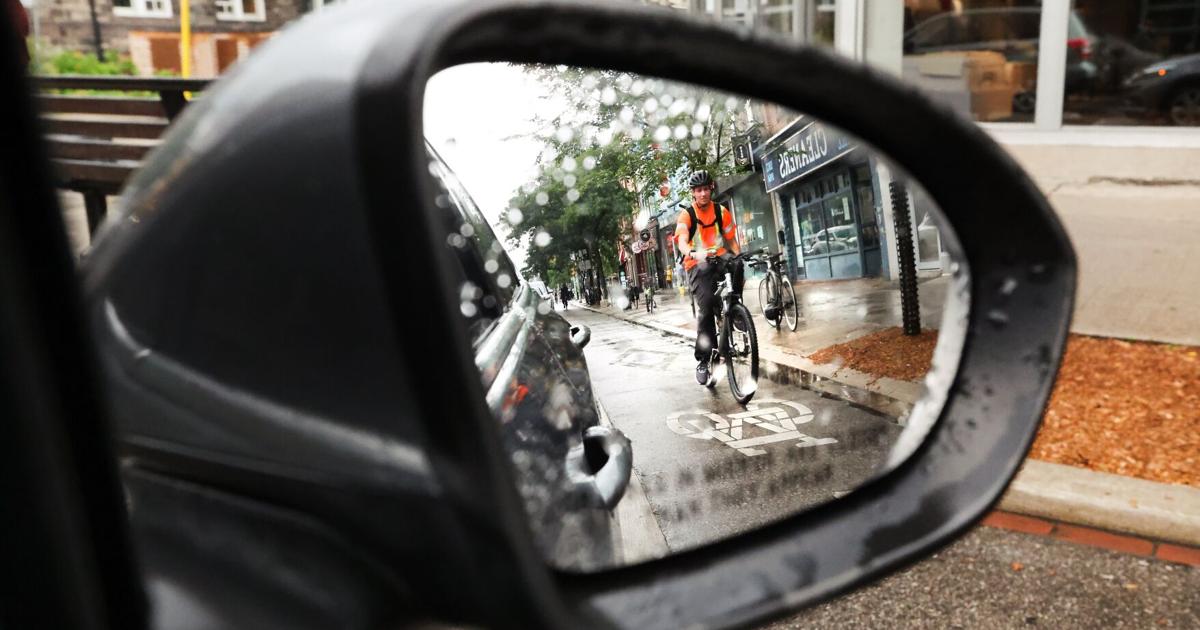
I was sorry to read Rosie DiManno’s position against bike lanes.
asserted
I → read → lanes
To remove them is like going back to the ‘50s when cars seemed like the only mode of transportation.
asserted
cars → remove → transportation
Now the city has more subways, more buses, the Eglinton crosstown and the Up Express as well as GO Transit.
asserted
city → have → subways
It has also invested in thousands of bicycles, in keeping with many cities to avoid reliance on cars and opt for cleaner methods of transportation.
asserted
It → invest → transportation
Cyclists also need restrictions.
asserted
Cyclists → need → restrictions
But to go back to gas guzzlers filling our streets increases pollution and congestion.
asserted
guzzlers → go → pollution
Catherine Brown, Toronto
Cities and towns need to do their part when it comes to renewable energy
Everyone seems to think the federal government is the only one responsible for renewable energy and climate change.
asserted
government → need → energy
AI data centres would require more energy than renewables could offer.
uncertain
renewables → require → energy
Not only do they consume huge amounts of electricity, they also require huge amounts of water — far more than cities and towns currently supply.
asserted
cities → consume → water
They also pollute our air.
asserted
They → pollute → air
Why is it up to the federal government to do all the work?
asserted
it → do → work
Why can’t towns, cities and provinces take a stronger approach to the problem?
asserted
towns → take → problem
Every plaza parking lot should be covered with solar panels, providing electricity to the stores and have EV charging cables in underground parking lots that drop down from above.
asserted
that → cover → lots
This won’t destroy one acre of farmland
Brian Mellor, Midland, ON
What happened to becoming less reliant on the U. S.?
asserted
What → destroy → S.
So, Quebec and Newfoundland/Labrador do a deal on hydro — great.
asserted
Quebec → do → hydro
But the power will mostly be sold to the U. S.?
asserted
power → sell → S.
Meanwhile, Ontario is spending a fortune on new nuclear reactors, using U.S. technology, rather than buying power from another province.
asserted
Ontario → spend → province
Something is wrong with this picture at a time when Prime Minister Mark Carney is telling Canadians we can become less reliant on trade with the U.S.
Brian Graff, Toronto
Dairy farmers routinely overproduce to meet their milk quota obligations
We see lots of headlines about Canadian milk production, CUSMA, and trade negotiations, etc.
asserted
We → tell → production
What none of them mention is that our dairy farmers routinely overproduce in order to meet their milk quota obligations.
asserted
farmers → mention → obligations
This “extra” milk is dumped because they are not allowed to sell it elsewhere.
asserted
they → dump → it
Estimates suggest that between 600 million and a billion litres of perfectly good milk are dumped each year — milk that could just as easily be used to make other food products.
uncertain
that → suggest → products
We have people struggling to feed themselves and we dump perfectly good milk down the drain to artificially inflate the end users’ price.
asserted
we → struggle → price
Where I live, a litre of milk costs just under $3 .
asserted
litre → live → 3
In the U.S., the same amount of milk is just below one dollar, with the difference of our dollars taken into consideration.
asserted
difference → take → consideration
If dumped milk was used instead of wasted, prices for cheeses, yogurts, butter, etc. would fall.
asserted
prices → dump → cheeses
Farmers would earn a return on every litre they produce the same as, or more than quotas currently provide — while manufactures would pay less and sell more.
asserted
manufactures → earn → more
Lower input costs would spur domestic investment, meaning more businesses and employment, which in turn circles back to the farmer increasing demand .
asserted
which → spur → demand
The consumer would pay less for food.
asserted
consumer → pay → food
Everyone wins — except the milk board cartels.
asserted
Everyone → win → cartels
The revelations that Flock databases have been improperly accessed by U.S. police officers to monitor movements of current and former romantic partners are disturbing enough on their own.
asserted
databases → access → own
But given what we know about Toronto Police Service officers’ well documented impropriety when it comes to using their own database, we should be debating this at every level of government.
asserted
we → give → government
What reassurances has Canadian law enforcement given the public that it can be trusted with this increasingly invasive surveillance tech, while officers are actively being investigated for grossly misusing the tech they already have at their disposal?
asserted
they → give → disposal
How differently would Project South be playing out if the accused officers had access to a network of Flock cameras?
asserted
officers → play → cameras
Kristofer Hykel, Toronto
Slepcsik is the kind of immigrant Canada needs
Making this hard working man, and a good father leave Canada is wrong, wrong, wrong (not to mention inhumane) on so many levels.
asserted
man → need → levels
Roman Slepcsik is the kind of immigrant that Canada needs.
asserted
Canada → need → that
Surely someone in immigration has the power to let this man stay.
asserted
man → have → power
Paula Brine-hogan, Scarborough, ON
My brother died at 38 — a casualty of too much patient autonomy and too little attention to mental capacity
My name is Simon Murray.
asserted
name → die → capacity
On June 5, 2026, my older brother Hugh died suddenly at 38 from hypertensive heart disease.
asserted
brother → die → disease
Hugh had paranoid schizophrenia alongside obesity, hypertension, diabetes, smoking and obstructive sleep apnea.
asserted
Hugh → have → obesity
He received ongoing medical care, yet his illness made understanding complicated treatment decisions extremely difficult.
asserted
understanding → receive → decisions
…and 13 more, not listed.
 The Aporia