That is 0 articles you have read today.
The Aporia is free and carries no advertising, so readers are the only
thing paying for it. If you are getting this much out of it, a small
donation is what keeps it independent.
Daily limit reached
You have read 0 articles today.
That is more than the 15 a day The Aporia gives away,
and well past what it can carry on nothing. Your allowance resets at
midnight.
There is no advertising here and nothing about you is sold, so readers
are the only thing paying for it. If the site is worth this much of
your day, it is worth a few dollars.
Everything else stays open: the
maps, the
directory and
search do
not count against this, and neither does re-opening something you have
already read today.
Scientists have found that half of the DNA from individuals buried in Xinjiang's oldest tombs at the Tianshanbeilu cemetery dates back to Yellow River farmers, challenging previous assumptions about a purely Eurasian steppe origin. Located in the Hami oasis, approximately 500 kilometers east of Urumqi, the site contains over 700 Bronze Age tombs that were originally thought to belong to nomadic populations from west of China. The study published in Science shows that these individuals had genetic ties to both Yellow River farmers and Eurasian steppe groups, dating back around 3,600 years during the Shang dynasty.
Written locally by qwen2.5:14b on 2026-09-18,
using this article's own text rather than the other coverage of the
same event (that is the story summary below).
Story summary
Scientists have discovered that half of the DNA from the oldest tombs in Xinjiang's Tianshanbeilu cemetery, located about 500km east of Urumqi, traces back to Yellow River farmers rather than Eurasian nomads as previously thought. The study, published in the journal Science, analyzed more than 700 Bronze Age tombs, revealing a genetically mixed population with roots in both Yellow River agriculturalists and Eurasian steppe groups that existed during China’s Shang dynasty (1600-1050BC). This finding challenges earlier assumptions about the origins of Xinjiang's earliest inhabitants, suggesting a more complex migratory history than previously understood.
Written for “Ancient DNA Origins China” on 2026-09-18,
grounded in this article and the 0 other(s) covering the same event.
Scientists trace half the DNA in Xinjiang’s oldest tombs to Yellow River farmers
Study of Bronze Age remains uncovers a population with roots in both Yellow River farmers and Eurasian steppe groups
2-MIN READ2-MIN
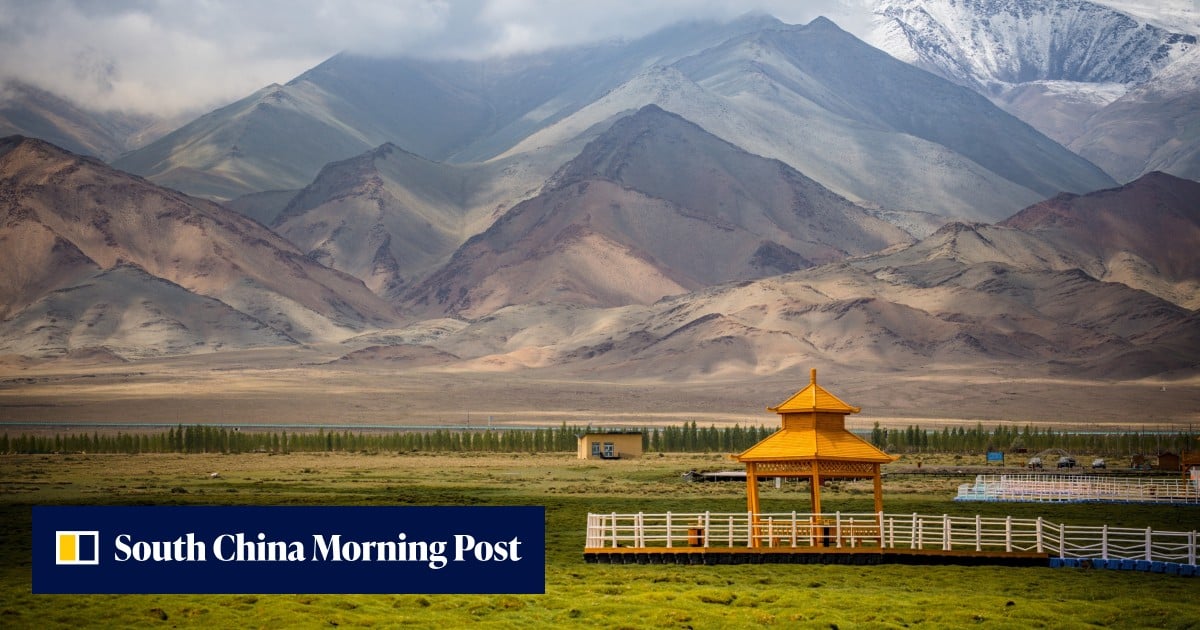
Nestled between the Tianshan Mountains and the Gobi Desert, the Hami oasis in Xinjiang Uygur autonomous region is a land of little rain, battered by wind and sand year-round.
asserted
oasis → trace → wind
It is also home to the region’s oldest known burial site, the Tianshanbeilu cemetery, located around 500km (310 miles) east of Urumqi, the regional capital.
asserted
It → know → Urumqi
More than 700 Bronze Age tombs have been unearthed here, long assumed to belong to Eurasian nomads who migrated eastward from the steppes.
asserted
who → unearth → steppes
But a study published on Friday in the journal Science upends that view, revealing a previously unknown, genetically mixed population that lived in the eastern Tianshan region 3,600 years ago, during China’s Shang dynasty (1600-1050BC).
Select Voice
Select Speed
1x
AI-generated voice
asserted
that → publish → voice
 The Aporia