Landmark China trial gets 84% efficacy in treating cancer with clue from waste water tech

Read the original at South China Morning Post ↗
Cite

Huang, S. (2026, October 17). Landmark China trial gets 84% efficacy in treating cancer with clue from waste water tech. South China Morning Post. https://www.scmp.com/news/china/science/article/3370996/landmark-china-trial-gets-84-efficacy-treating-cancer-clue-waste-water-tech?utm_source=rss_feed

Dated from the outlet's own feed. Check the original for its byline.

South China Morning Post · collected 2026-10-17 · by Shi Huang

Quick Summary

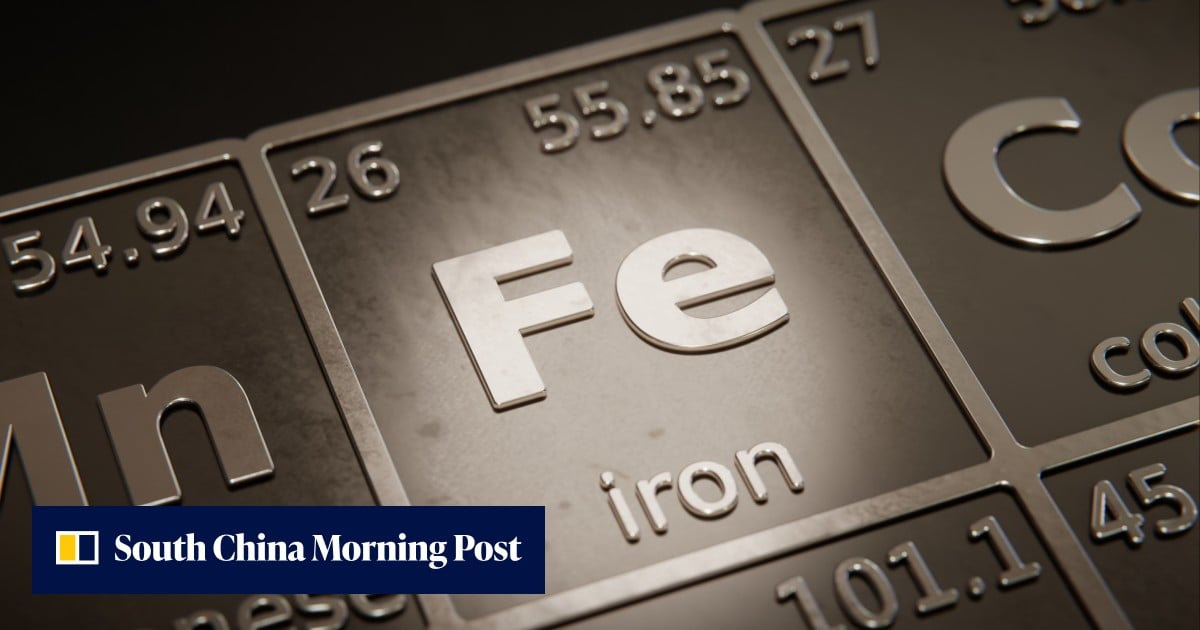
A Chinese trial using nano-carbon iron injections reported an 84% efficacy rate in treating advanced metastatic cancer that has not responded to other systemic therapies. The treatment halted tumor growth in 16 patients and caused tumors to shrink in two others, leading to a Phase II trial involving 52 additional participants. This approach was inspired by industrial waste water treatment technology where iron reacts with hydrogen peroxide to produce hydroxyl radicals that break down toxic molecules.
Written locally by qwen2.5:14b on 2026-10-17, using this article's own text rather than the other coverage of the same event (that is the story summary below).

AI analysis runs on qwen2.5:14b, locally

Story summary

A landmark trial in China reported an 84% efficacy rate in treating advanced cancer using a novel treatment inspired by wastewater technology. The method involves injecting nano-carbon iron into patients, which halts tumor growth in 16 cases and induces shrinkage in 2 others when combined with hydrogen peroxide to generate hydroxyl radicals that degrade harmful molecules. This technique originated from industrial wastewater treatment processes where iron reacts with hydrogen peroxide to break down pollutants.

The Phase II trial is now underway, involving 52 more patients who have exhausted other systemic therapies and are suffering from metastatic cancer. The results offer new hope for patients with limited options in advanced stages of the disease.

Written for “China Cancer Trial Efficacy Clue Waste Water Tech” on 2026-10-17, grounded in this article and the 0 other(s) covering the same event.
Why this leaning score
This article does not take a side on a contested political question, so it has no leaning score. That is an answer rather than a gap: a match report or a rescue can be warmly or critically written without being left or right, and scoring it anyway is how approval of a subject gets recorded as a political position.
No political leaning scored for article 86681 · logged 2026-10-17

Story

📰 China Cancer Trial Efficacy Clue Waste Water Tech
Health · 1 article(s) covering the same event.

Compared with similar articles

Nothing to compare against. No article is close enough to this one for the pipeline to have linked or judged the pair.
How this article was measured signals, leaning charts, publisher record, byline, topics and claims

Signals How these are calculated →

Claims extracted
2
sentences that state something as happening or true
Uncertain
0%
0 of 2 hedged ("reportedly", "may", "according to")
Leaning
not political
takes no side on a contested political question
Publisher signals
64/100
South China Morning Post's corrections and hedging, across everything collected from it. Not a measure of accuracy.
Outlets on this story
1
Health
Same framing elsewhere
1
articles that frame the event the way this one does
Analyzed 2026-10-17 · how these are computed

How this is being covered How these are calculated →

Article leaning vs. publisher reliability
Source leaning vs. consistency

Publisher

South China Morning Post · 2475 article(s) · 6 correction(s) detected
Running correction rate · 6 correction(s)

Who wrote this

Shi Huang
8 article(s) here · 0 carrying a prediction
🔮 Pioneering heart stem cell expert Li Renke dies at 65 during a Chinese conference A memorial service will be held for the Chinese cardiovascular scientist who used engineering principles to treat heart conditions His death on October 10 was announced by The Chinese University of Hong Kong, Shenzhen (CUHK-Shenzhen), where he was presidential chair professor and associate dean of research and translation at the school of medicine, which he joined in March last year.
🔮 Lu is a fellow of the Singapore National Academy of Science and president of the Singapore National Institute of Chemistry, in addition to his position as NUS Provost’s Chair Professor. “According to the plan, I will join EIT in Ningbo full time in January 2027,” he said, adding that he remained fully committed to his present duties at NUS for the coming months.
🔮 I’ll write romance novels if AI solves all maths problems, Chinese Fields winner jokes As AI models prove they can push the boundaries, mathematicians are grappling with the threat that they could become obsolete On Tuesday, he wrote on social media that “if AI can solve all maths problems, I’ll go home and write my yuri novel”.
Also by Shi Huang
Nothing else under this byline is closely related to this article, so these are simply their most recent.
All 8 articles by Shi Huang →

Topics

China

Subjects

China GPE · 1×

Narrative

Landmark China trial gets 84% efficacy in treating cancer with clue from waste water tech Nano-carbon iron injection halts tumour growth in 16 patients, induces shrinkage in two, with Phase II trial now under way with 52 others For patients with advanced, metastatic cancer that has progressed despite systemic therapy – options remain critically limited.
framing: assertive · carried by 1 article(s) · first seen 2026-10-17
2026-10-17 · South China Morning Post
Landmark China trial gets 84% efficacy in treating cancer with clue from waste water tech · assertive framing

Claims (2 extracted, 0 hedged)

Landmark China trial gets 84% efficacy in treating cancer with clue from waste water tech Nano-carbon iron injection halts tumour growth in 16 patients, induces shrinkage in two, with Phase II trial now under way with 52 others For patients with advanced, metastatic cancer that has progressed despite systemic therapy – options remain critically limited. asserted
options → get → therapy
This idea originated in industrial waste water treatment: iron can react with hydrogen peroxide to generate hydroxyl radicals, which degrade various organic and toxic molecules in waste water. asserted
which → originate → water
💬Give feedback
🕘History 🎫Support