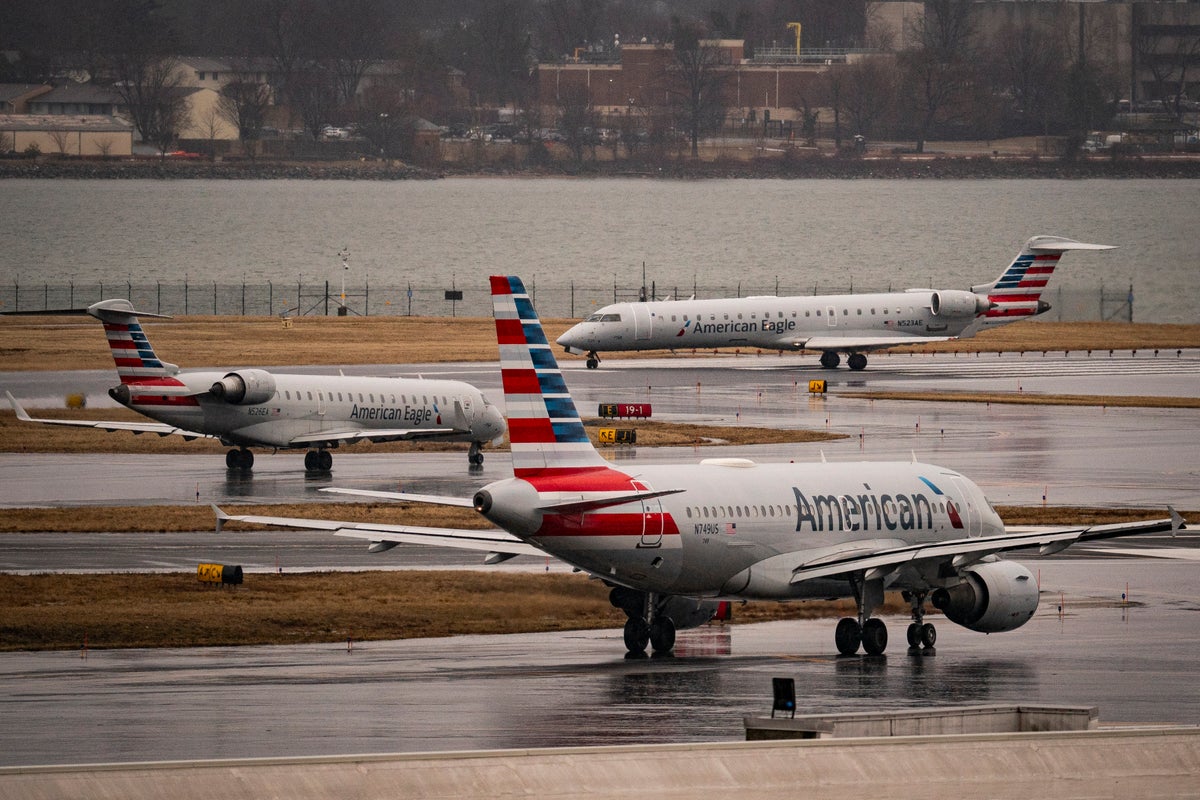
Federal officials plan to introduce an AI-powered air traffic management system called Smart in the Washington, D.C., area starting Monday. Developed under a $875 million contract with Air Space Intelligence, Smart analyzes various data points to predict traffic flows and identify potential bottlenecks, aiming to reduce delays and cancellations during operational disruptions. The FAA sees this as part of broader efforts to modernize aging aviation infrastructure, though industry representatives have voiced concerns about coordination challenges in implementing the new system.
Written locally by qwen2.5:14b on 2026-09-18,
using this article's own text rather than the other coverage of the
same event (that is the story summary below).
Story summary
The Federal Aviation Administration plans to introduce an AI-powered system called Smart in the Washington, D.C., area starting Monday. Developed by Air Space Intelligence under an $875 million, 12-year contract, Smart analyzes flight schedules, weather forecasts, airport runway capacity, and operational limits to predict traffic flows and identify potential bottlenecks before they occur. The system aims to reduce delays and cancellations by providing a central intelligence center for managing the nation’s airspace once fully operational. Initially, it will function as a decision-support tool during disruptions, with plans for broader implementation in the future.
Written for “AI Air Traffic Control” on 2026-09-18,
grounded in this article and the 0 other(s) covering the same event.
Why this leaning score
This article does not take a side on a contested political
question, so it has no leaning score. That is an
answer rather than a gap: a match report or a rescue can be warmly
or critically written without being left or right, and scoring it
anyway is how approval of a subject gets recorded as a political
position.
No political leaning scored for article 17527 · logged 2026-09-18
Federal officials plan to launch an artificial intelligence-powered system in the Washington, D.C., area as early as Monday, the first step in a broader push to modernize U.S. air traffic management.
asserted
officials → plan → management
The software — known as Smart, or Strategic Management of Airspace, Routes and Trajectories — is designed to analyze flight schedules, weather forecasts, airport runway capacity and operational limits to predict traffic flows and spot potential bottlenecks ahead of time.
asserted
software → know → time
Developed by Air Space Intelligence under an $875 million, 12-year government contract awarded earlier this year, the tool is intended to function as a central intelligence center for the nation’s airspace once fully operational, as reported by The Wall Street Journal.
asserted
tool → develop → Journal
The primary goal is to help the Federal Aviation Administration and major carriers navigate schedule disruptions, cutting down on delays and cancellations.
asserted
Administration → help → delays
Though industry insiders previously anticipated a broader initial release after months of planning, government officials told the publication that the rollout was always meant to begin on a limited scale.
asserted
rollout → anticipate → scale
In its current phase, Smart will serve as a decision-support tool during operational disruptions.
asserted
Smart → serve → disruptions
Future iterations are expected to handle complex tasks, such as managing flight arrival intervals and mapping out routes days in advance.
asserted
iterations → expect → advance
As part of the launch, federal authorities plan to open a centralized office for the program at the Transportation Department’s headquarters on Monday.
asserted
authorities → plan → Monday
The initiative comes amid a broader push by the Trump administration to modernize the country’s aging aviation infrastructure through multi-billion-dollar technology investments and expanded controller hiring to address persistent staffing shortages.
asserted
initiative → come → shortages
However, the transition presents coordination challenges.
asserted
transition → present → challenges
The FAA has been holding talks with commercial carriers regarding schedule alignment, though industry representatives have raised concerns over how the automated system will operate amid intense market competition for peak flight slots.
asserted
system → hold → slots
During Senate testimony earlier this year, FAA Administrator Bryan Bedford addressed the need for structural change in airspace management.
asserted
Bedford → address → management
“The way we manage traffic today is chaotic, and we can do better,” Bedford said.
asserted
Bedford → manage → traffic
“We need to manage that at the FAA, rather than rely on commercial airlines to simply schedule however they want.”
asserted
they → need → airlines
Despite operational questions, industry advocates have welcomed the technology.
asserted
advocates → welcome → technology
Airlines for America, a trade association representing major domestic carriers, told The Wall Street Journal that the software offered significant potential to boost safety, expand airspace capacity and enhance overall efficiency.
asserted
software → represent → efficiency
The organization described the project as “one of the most exciting and bold initiatives taken on by the FAA in decades.”
asserted
organization → describe → decades
 The Aporia