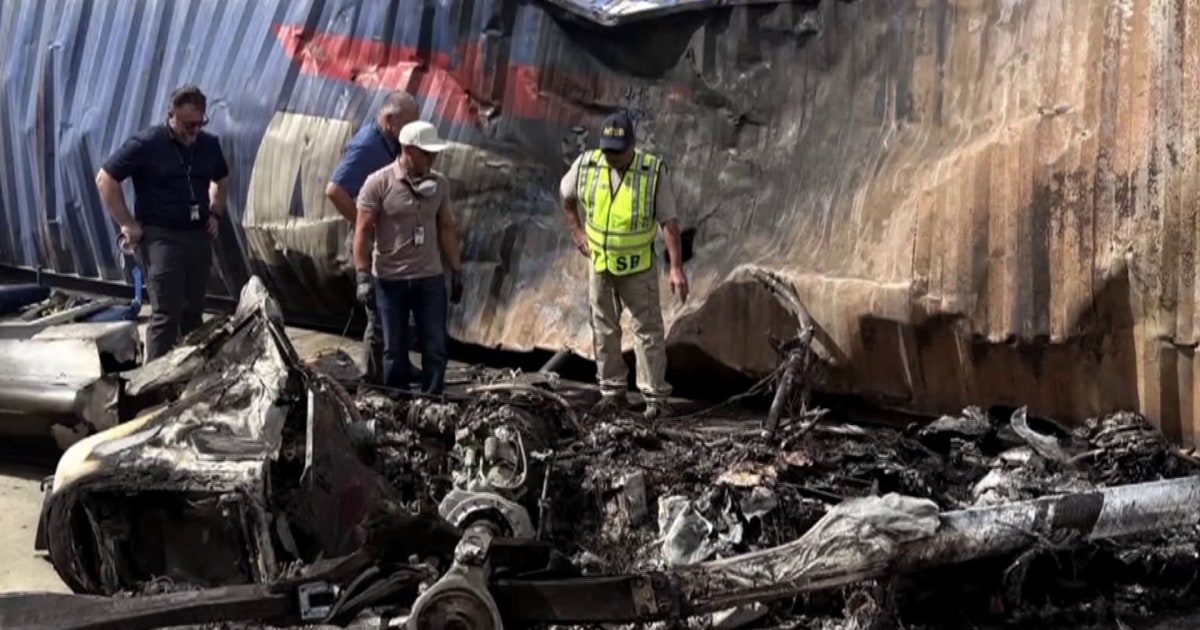
Experts suggest that the NBC helicopter crash over Los Angeles might have been caused by a "dead man's curve," where the aircraft had insufficient altitude and airspeed to perform an emergency autorotation maneuver after what appears to be an engine failure. The video of the crash shows alarms sounding and a mechanical whirring, followed by the reporter’s distressing final words before impact, which killed all on board and one pedestrian. Investigators are analyzing the wreckage and reviewing maintenance logs, weather conditions, and pilot training records for more information.
Written locally by qwen2.5:14b on 2026-09-17,
using this article's own text rather than the other coverage of the
same event (that is the story summary below).
Story summary
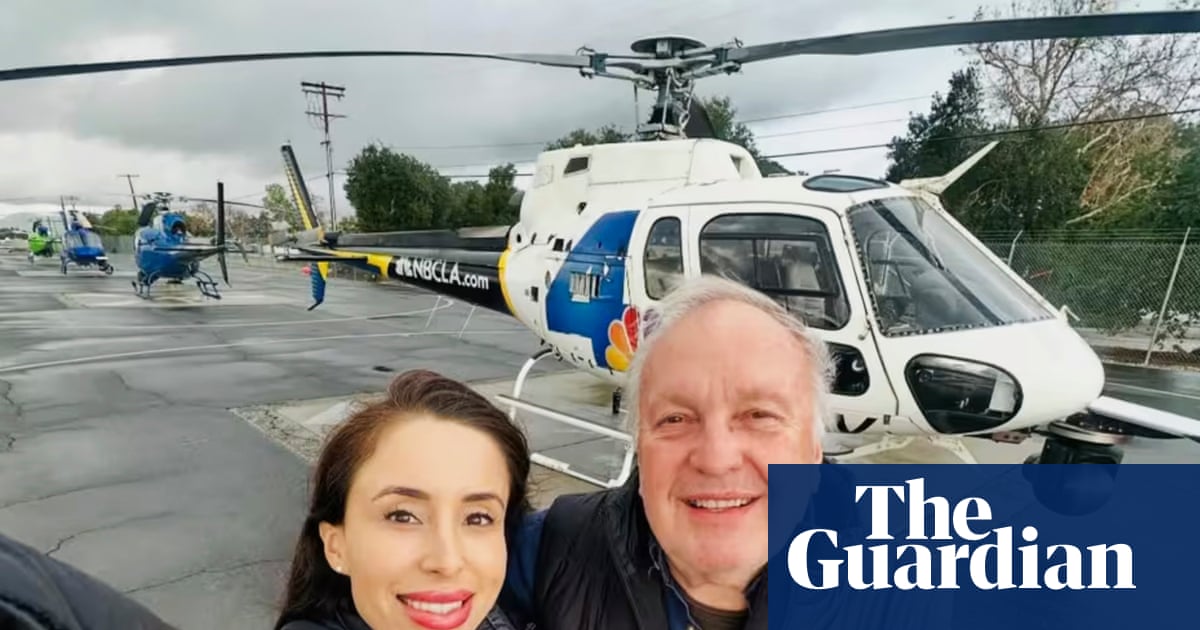
On Tuesday evening, a news helicopter operated by NBC4 and Telemundo 52 crashed in the Chatsworth area of Los Angeles while covering a bus collision that occurred earlier that day at around 5pm. The crash killed two people on board—the pilot, George Marciniw, and reporter Eliana Moreno—as well as a pedestrian identified as Edy Gutierrez Mejia. Moreno was 38 years old and had been working with Marciniw since 2023, flying "hundreds of hours" together.
The helicopter model involved in the crash is a Eurocopter AS 350 B2 Ecureuil, which has a concerning history, including six fatal accidents this year. The NTSB began investigating the incident on Wednesday to determine the cause of the crash.
Written for “LA News Helicopter Crash” on 2026-09-18,
grounded in this article and the 16 other(s) covering the same event.
The doomed NBC helicopter that crashed in LA may have been caught in a terrible predicament because of the flight conditions the aircraft encountered while covering a bus crash, experts have warned.
uncertain
experts → doom → crash
Those in the industry say the helicopter could have been snagged in a “dead man’s curve,” a theoretical area where a chopper has little altitude or airspeed, making it highly difficult to salvage a landing with an emergency autorotation maneuver.
uncertain
it → say → maneuver
“That’s the worst place to be if you have a problem,” Jeff Guzzetti, a former National Transportation Safety Board and Federal Aviation Administration investigator, told the LA Times.
asserted
Guzzetti → ’ → Times
The exact airspeed and altitude of the NBC helicopter, a Eurocopter AS 350 B2 Ecureuil, at the time of what has been considered an engine failure is unknown.
asserted
what → consider → time
But the news helicopter appeared to be stationary and floating just a few hundred feet above the ground while it covered a Metro bus collision.
asserted
it → appear → collision
Standard procedure for an engine failure in helicopters is to perform an autorotation maneuver.
asserted
procedure → perform → maneuver
Autorotation is done by intentionally lowering the helicopter to generate rotor speed by forcing air upward.
asserted
Autorotation → do → air
But a helicopter with little airspeed or height can struggle to generate the necessary rotation, Jack Cress, a former helicopter pilot for the U.S. Marine Corps and a helicopter accident investigation instructor at USC’s Aviation Safety and Security Program, said.
asserted
Cress → struggle → Program
“He’s in the worst part of the height-velocity curve,” Cress said.
asserted
Cress → ’ → curve
A video of the crash offers some clues as to what reporter Eliana Moreno and pilot George Marciniw experienced as the helicopter went down.
asserted
helicopter → offer → what
An alarm is heard beeping along with a whirring sound, which appeared to be akin to an engine slowing.
asserted
which → hear → slowing
“You can hear something mechanical that is winding down in the background,” Guzzetti noted about the video.
asserted
Guzzetti → hear → video
“It does seem like something mechanical suddenly happened to the helicopter while it was in stable flight.”
Moreno is then heard saying, “Uh-oh.”
asserted
Moreno → seem → flight
The helicopter then rapidly descends and shudders.
asserted
helicopter → descend → ?
The news reporter asks if Marciniw can pull up.
asserted
Marciniw → ask → ?
“Can you… you can’t pull up?” she said.
asserted
she → pull → ?
The video ends with the chopper heading closer and closer to the ground until the video feed cuts out.
asserted
feed → end → ground
The crash killed Moreno, Marciniw, and a pedestrian on the ground, Edy Gutierrez Mejia.
asserted
crash → kill → ground
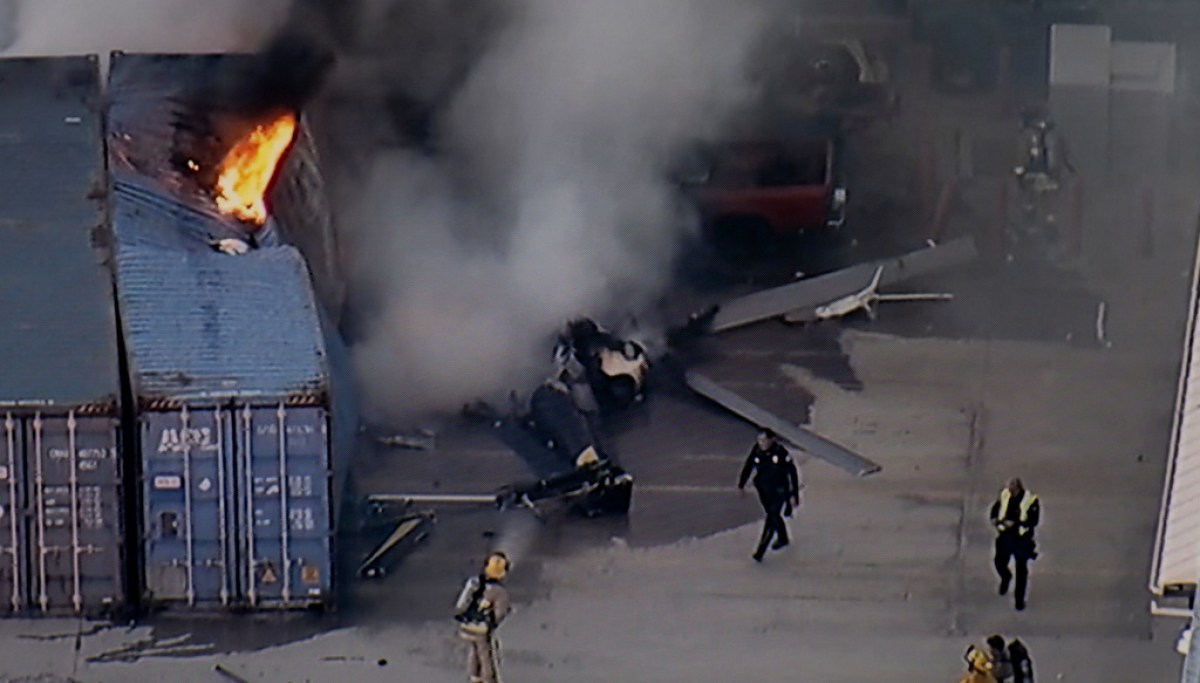
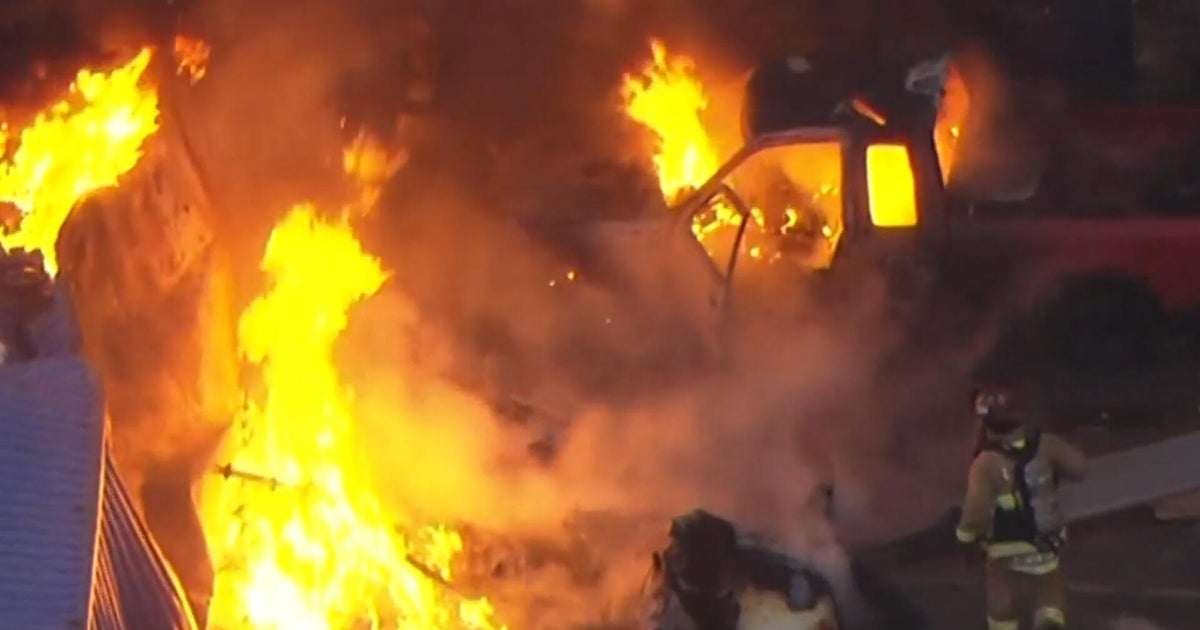
A fire erupted from the crash site, prompting firefighters to fight and put out the blaze.
asserted
fire → erupt → blaze
NTSB investigator-in-charge Fabian Salazar called the video the “most important piece of evidence we have recovered so far.”
asserted
we → call → evidence
He also noted that the NTSB can hear “sounds that are consistent with the engine changing its speed, and we’re also hearing tones that are being generated that are likely advisories to the pilot,” in the video.
asserted
that → note → video
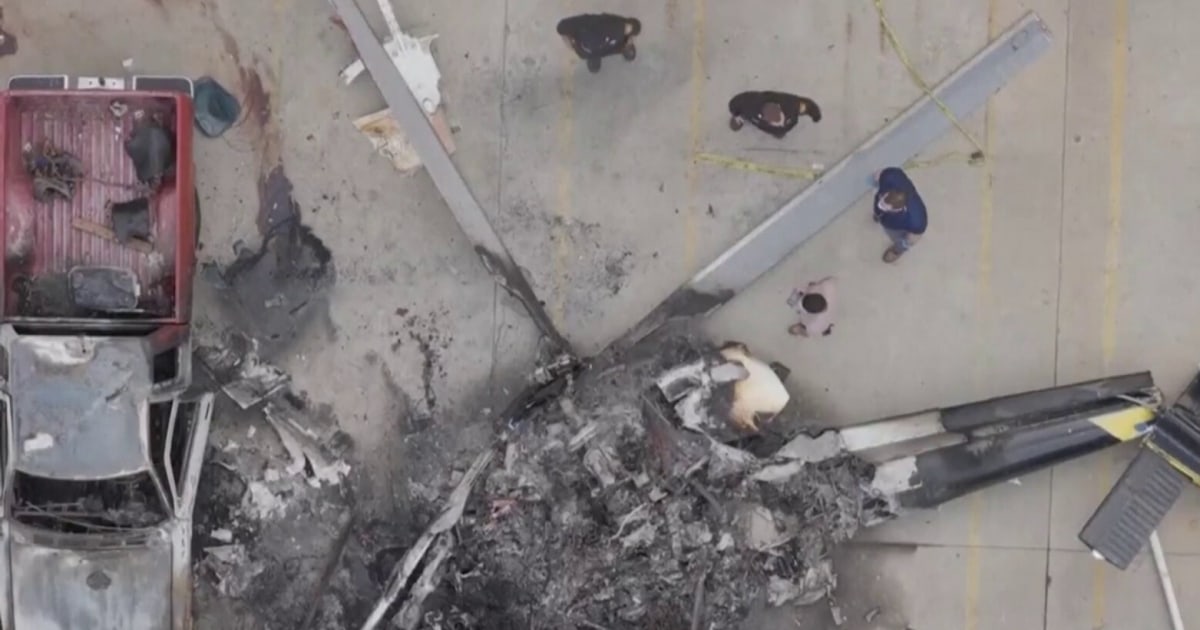
The NTSB and FAA are examining the wreckage and interviewing witnesses.
asserted
NTSB → examine → witnesses
Investigators will also seek surveillance footage from nearby buildings and review the helicopter’s maintenance logbooks, weather conditions, and the pilot’s training.
asserted
Investigators → seek → logbooks
The wreckage will later be moved to a secure facility for further examination.
asserted
wreckage → move → examination
Salazar said a preliminary report is expected in about 30 days, while a final report identifying probable cause could take up to 18 months.
uncertain
report → say → months
 The Aporia