That is 0 articles you have read today.
The Aporia is free and carries no advertising, so readers are the only
thing paying for it. If you are getting this much out of it, a small
donation is what keeps it independent.
Daily limit reached
You have read 0 articles today.
That is more than the 15 a day The Aporia gives away,
and well past what it can carry on nothing. Your allowance resets at
midnight.
There is no advertising here and nothing about you is sold, so readers
are the only thing paying for it. If the site is worth this much of
your day, it is worth a few dollars.
Everything else stays open: the
maps, the
directory and
search do
not count against this, and neither does re-opening something you have
already read today.
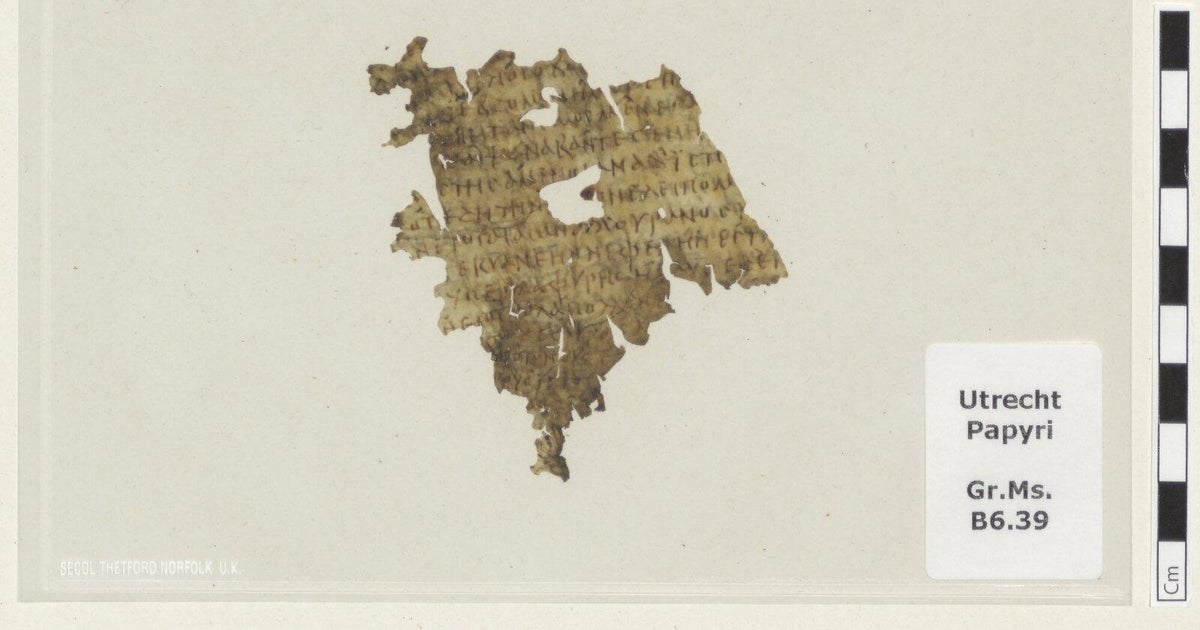
Mark de Kreij, a Greek literature expert and professor, found a 1,700-year-old fragment from "The Odyssey" inside a book at Utrecht University. The parchment measures just 2.6 by 3 inches and describes the moment Helios discovers Odysseus and his men feasting on his sacred cows, leading to their destruction by Zeus. De Kreij believes this rare fragment was part of an ancient pocketbook edition from Egypt around 300 A.D., highlighting the enduring popularity of Homer’s epic. This discovery is one of only about 30 known fragments of "The Odyssey" worldwide.
Written locally by qwen2.5:14b on 2026-09-17,
using this article's own text rather than the other coverage of the
same event (that is the story summary below).
Story summary
Dr. Mark de Kreij, a Greek literature expert from Radboud University in the Netherlands, discovered a 1,700-year-old fragment of Homer's "Odyssey" while examining ancient manuscripts at Utrecht University. The tiny piece of paper, measuring just 2.6 by 3 inches, was found inside a library book and is believed to have come from an early Christian manuscript collection purchased in the mid-20th century. Researchers initially thought it dated back to the 7th century but later identified it as part of Homer's epic poem dating to around 300 AD. Only about 30 such fragments exist worldwide, making this discovery highly significant for scholars studying ancient Greek literature and its historical context in early Christian Egypt.
Written for “Ancient Odyssey Fragment Found” on 2026-09-18,
grounded in this article and the 1 other(s) covering the same event.
A Dutch scientist’s library research took a dramatic turn after he discovered a 1,700-year-old fragment from “The Odyssey” hidden inside a book from Utrecht University.
asserted
he → take → University
Mark de Kreij, a Greek literature expert and professor, was researching ancient Egyptian and Greek texts in the Dutch city.
asserted
Kreij → research → city
As he skimmed a collection of early Christian manuscripts, he happened upon a peculiar scrap of parchment.
asserted
he → skim → parchment
It measured just 2.6 by 3 inches — the size of a playing card — and with its water stains, discoloration and tiny, neat letters, the piece looked unremarkable at first.
asserted
piece → measure → stains
But Professor de Kreij recognized it as a key plot point in the classic saga.
asserted
Kreij → recognize → saga
“This happens to be a really fun passage,” he told RTV Utrecht.
asserted
he → happen → Utrecht
This pivotal passage describes the unfortunate moment that the Sun god, Helios, discovers that Odysseus and his men have feasted on his herd of sacred golden cows.
asserted
Odysseus → describe → cows
Earlier in the epic, the Greek hero was warned by the sorceress Circe to watch out for Helios; ultimately, he ignored her advice and let his sailors run rampant on the enchanted land.
asserted
sailors → warn → land
His mariners decided to barbecue the divine bovines, causing Helios to plot bloody revenge on the ship’s crew.
asserted
Helios → decide → crew
At the end of the chapter, ever sailor except Odysseus has been killed by Zeus and his lightning bolts.
asserted
sailor → kill → Zeus
Researchers suspect that the parchment belonged to a pocketbook edition of the sword-and-sandals epic that was produced in the Fayum Oasis in Egypt around 300 A.D., proving that the tale was a fixture long before Christopher Nolan’s 2026 blockbuster.
asserted
tale → suspect → blockbuster
Professor de Kreij dubbed the parchment an anomaly, claiming that most unearthed passages are quite “boring,” per a release from the university.
asserted
passages → dub → university
He said the Egyptian excerpt likely only survived because it was protected by the other pages.
asserted
it → say → pages
Even more remarkably, the Odyssey fragment is one of just 30 that have been discovered — including one that’s currently at the Metropolitan Museum of Art.
asserted
that → discover → Art
“I have the best job in the world,” said de Kreij.
asserted
Kreij → have → world
Every day you find something nice.
asserted
you → find → something
 The Aporia