That is 0 articles you have read today.
The Aporia is free and carries no advertising, so readers are the only
thing paying for it. If you are getting this much out of it, a small
donation is what keeps it independent.
Daily limit reached
You have read 0 articles today.
That is more than the 15 a day The Aporia gives away,
and well past what it can carry on nothing. Your allowance resets at
midnight.
There is no advertising here and nothing about you is sold, so readers
are the only thing paying for it. If the site is worth this much of
your day, it is worth a few dollars.
Everything else stays open: the
maps, the
directory and
search do
not count against this, and neither does re-opening something you have
already read today.
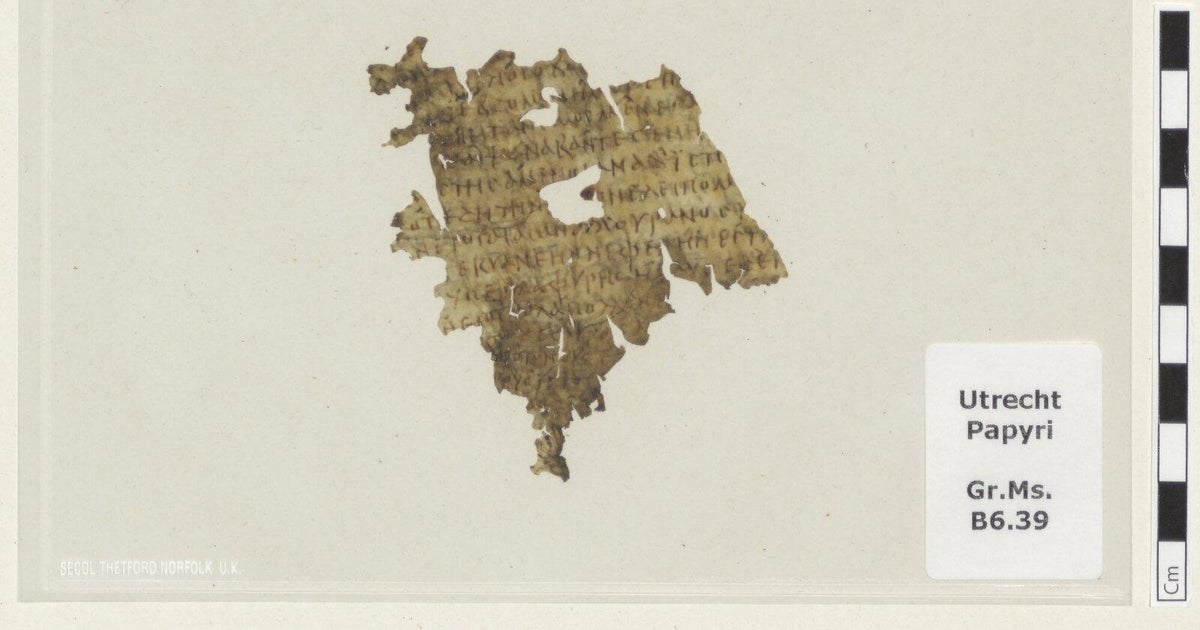
Dr. Mark de Kreij of Radboud University discovered a 1,700-year-old fragment of Homer's "Odyssey" inside a library book at Utrecht University. Initially mistaken for a 7th-century piece, the Greek language expert recognized it as part of the ancient poem. The tiny fragment is one of only about 30 such pieces globally and dates back to around 300 AD, coming from Egypt's Faiyum oasis. It contains text from the Odyssey’s 12th book where Odysseus recounts his sailors eating sacred cattle.
Written locally by qwen2.5:14b on 2026-09-17,
using this article's own text rather than the other coverage of the
same event (that is the story summary below).
Story summary
Dr. Mark de Kreij, a researcher from Radboud University in the Netherlands, discovered an extremely rare 1,700-year-old fragment of Homer's "Odyssey" inside a library book at Utrecht University. De Kreij made this find approximately two years ago while participating in a project to study and publish ancient manuscripts held by Utrecht University. The fragment was initially misidentified as dating from the 7th century along with other similar papers found within the collection, but de Kreij recognized it as Greek due to his expertise.
Dating techniques confirmed that the parchment is from around 300 AD. This discovery is significant because only about 30 such fragments of "Odyssey" exist globally, making this find a remarkable addition to ancient literary history. De Kreij noted that every student learning Greek studies Homer's work, emphasizing its cultural and academic importance.
Written for “Ancient Odyssey Fragment Found” on 2026-09-17,
grounded in this article and the 0 other(s) covering the same event.
A researcher in the Netherlands found an incredibly rare fragment of
that is over 1,700 years old sandwiched between the pages of a library book.
asserted
that → find → book
The find was made by Dr. Mark de Kreij, of Radboud University in the Netherlands, while he participated in a project to study and publish ancient manuscripts held by Utrecht University.
asserted
he → make → University
He made the find about two years ago, local media reported, but the university only announced the discovery this week.
asserted
university → make → discovery
De Kreij identified the tiny slip of paper while looking at a collection of early Christian manuscripts purchased by the university in the mid-20th century, according to a news release from the institution.
uncertain
Kreij → identify → institution
At first, researchers thought it was a piece of paper from the 7th century.
asserted
it → think → century
Several similar fragments, in Egyptian, had already been found in the collection.
asserted
fragments → find → collection
But De Kreij, a Greek teacher, recognized some of the the language on the paper and identified it as a part of Homer's "Odyssey.
asserted
Kreij → recognize → Odyssey
"
"Everyone who learns Greek learns Homer," De Kreij told Dutch media outlet RTV Utrecht.
asserted
Kreij → learn → Homer
Researchers were able to date the fragment back to about 300 AD, the university said, and only about 30 such fragments exist worldwide.
asserted
fragments → date → AD
"I have the best job in the world," De Kreij told RTV Utrecht.
asserted
Kreij → have → Utrecht
Every day you find something nice.
asserted
you → find → something
The piece of paper would have come from a pocket edition of the complete poem, the university said, owned by someone living in Egypt's Faiyum oasis.
asserted
university → come → oasis
RTV Utrecht described the fragment as about the size of a playing card.
asserted
Utrecht → describe → card
The fragment is discolored and has moisture stains, according to the outlet.
uncertain
fragment → discolor → outlet
Both sides have writing on them.
asserted
sides → have → them
The fragment is from the 12th book of the "Odyssey," where Odysseus tells the tale of his starving sailors devouring cattle that are sacred to the Sun God, Apollo.
asserted
that → tell → God
This moment comes about halfway through the poem.
asserted
moment → come → poem
De Kreij told RTV Utrecht that because books wear from the outside in, it makes sense that the fragment would be from that portion.
asserted
fragment → tell → portion
"There are so many boring parts in the "Odyssey," De Kreij said.
asserted
Kreij → be → Odyssey
"This happens to be a really fun passage."
asserted
This → happen → ?
 The Aporia