Treasure hunters from Mel Fisher's Shipwreck Expeditions found a 55-pound copper ingot worth between $18,000 and $25,000 at the site of the 1622 wreck of the Nuestra Señora de Atocha off the coast of Florida. Captain Drake Nicholas discovered the ingot using a metal detector while searching about 35 miles west of Key West. He believes this find could indicate more valuable artifacts nearby, given its significant weight and historical importance as copper was crucial for manufacturing bronze cannons in the 1600s.
Written locally by qwen2.5:14b on 2026-09-17,
using this article's own text rather than the other coverage of the
same event (that is the story summary below).
Story summary
A treasure-hunting crew from Mel Fisher's Shipwreck Expeditions recently discovered a 55-pound copper ingot off the Florida Keys at the site of the Nuestra Señora de Atocha, a Spanish galleon that sank in 1622 during a hurricane while carrying vast amounts of silver, gold, and emeralds. Mel Fisher began searching for this shipwreck in 1969 and won legal rights to its treasure in 1982 after years of recovery efforts and court battles. The newly found ingot, heavily encrusted with marine growth, is estimated to be worth between $18,000 and $25,000. Captain Drake Nicholas believes this discovery could lead to more significant finds at the Atocha site, which continues to yield new treasures decades after its initial discovery in 1985.
Written for “Sunken Treasure Found” on 2026-09-17,
grounded in this article and the 0 other(s) covering the same event.
A treasure-hunting crew searching a legendary 17th-century underwater shipwreck off the Florida Keys has recovered a massive 55-pound copper ingot — the latest find along a trail that its captain believes could lead to more treasure.
uncertain
captain → hunt → treasure
The ingot was found by divers with Mel Fisher's Shipwreck Expeditions at the wreck site of the Nuestra Señora de Atocha, about 35 miles west of Key West.
asserted
ingot → find → West
The Spanish treasure galleon was on its return voyage to Spain when it sank in a hurricane off the Florida Keys in 1622 — carrying silver, gold and emeralds.
asserted
it → sink → silver
Mel Fisher began searching for the Atocha in 1969.
asserted
Fisher → begin → 1969
He spent years recovering artifacts from the wreck before his company prevailed in a lengthy legal battle over rights to its treasure in 1982.
asserted
company → spend → 1982
Fisher's team discovered the Atocha's famed "Mother Lode," or main cargo deposit, in 1985 — and the site still yields new finds decades later.
asserted
site → discover → finds
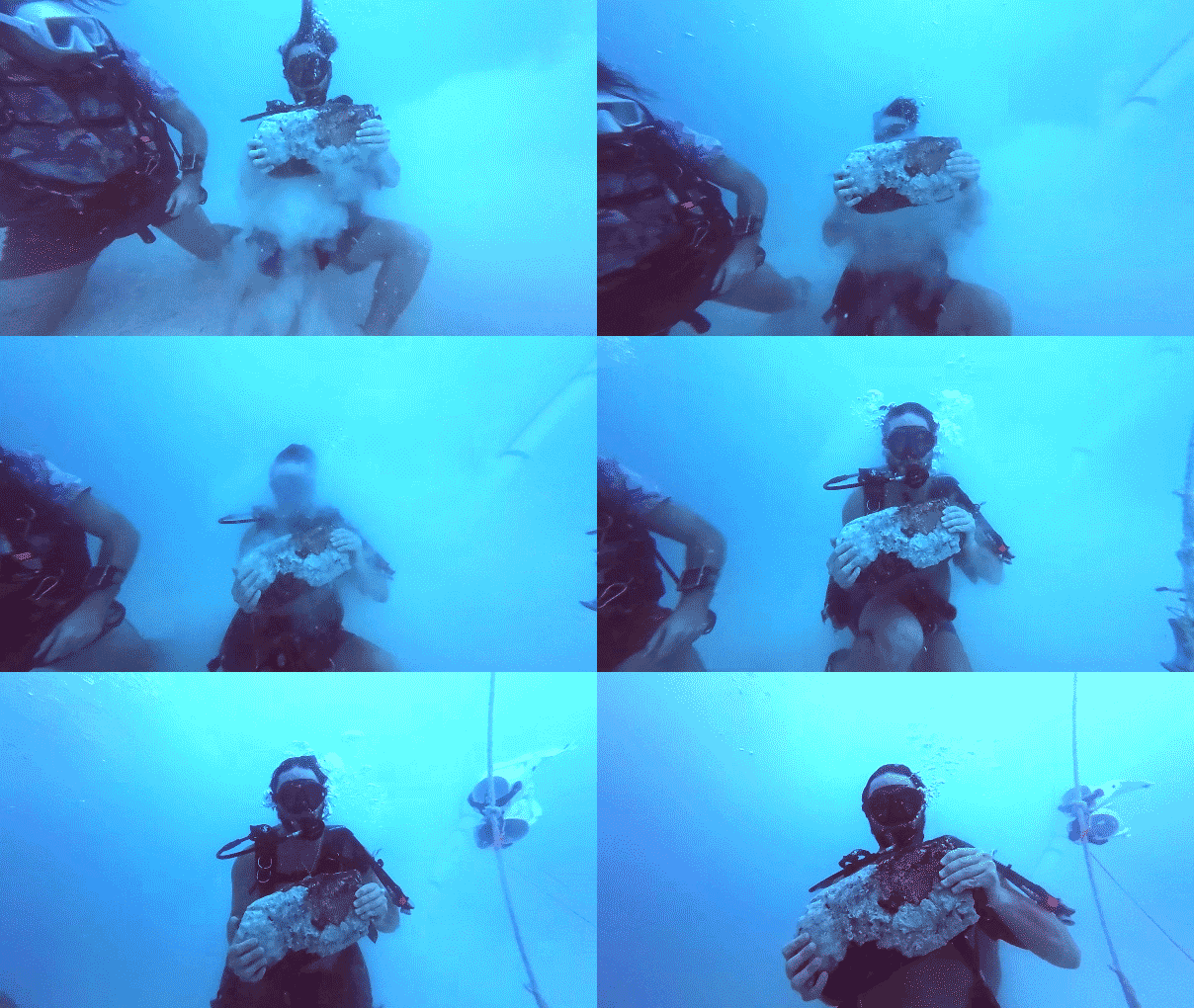
Photos show the 55-pound copper ingot — or copper bar — heavily coated in marine encrustation after spending over four centuries underwater.
asserted
ingot → show → centuries
In an August press release, Mel Fisher's Shipwreck Expeditions said the ingot has an estimated value of about $18,000 to $25,000.
asserted
ingot → say → 25,000
Captain Drake Nicholas was retracing an area from the salvage vessel DARE when his metal detector picked up a faint signal, he told Fox News Digital.
asserted
he → retrace → Digital
The captain said he was following a "tight trail of coins" at the time.
asserted
he → say → time
"Faint hits are always the most exciting because they lead to, you know, stuff very deep in the mud," said Nicholas.
asserted
Nicholas → lead → mud
"And I got that very faint hit.
asserted
I → get → hit
I dug down like I always do ... and it got louder, and that's, you know, when the excitement really kicks in."
asserted
excitement → dig → ?
Nicholas said he initially mistook the ingot for a cannon due to its rounded shape, large size and bronze-copper coloring.
asserted
he → say → shape
"I was so excited," he said.
asserted
he → say → ?
"I thought it was a cannon, but it ended up being a copper ingot, which was also very exciting."
asserted
which → think → ?
"I thought it was a cannon, but it ended up being a copper ingot, which was also very exciting."
asserted
which → think → ?
Though the ingot may appear ordinary to the untrained eye, Nicholas said copper was a "very precious" resource in the 1600s — especially for making the bronze cannons that the Spanish Empire relied on.
uncertain
Empire → appear → that
"I believe that only certain people could actually own copper because it was making such strong cannons," he said.
uncertain
he → believe → cannons
"It wasn't something [that] an everyday guy could have a stockpile of — it was more for the king and queen to make cannons."
To make the ingots, metalworkers "would basically dig a hole in the sand and just pour copper into it," he said.
uncertain
he → have → it
"It would make this copper ingot or a copper bar," added Nicholas.
asserted
Nicholas → make → ingot
"They were very crude, not many markings on them, a lot of impurities in them, but it was copper being sent over to Spain for bronze cannons.
asserted
it → send → cannons
The recent discoveries have given Nicholas reason to believe the crew may be closing in on a larger concentration of treasure.
"
uncertain
crew → give → treasure
The size of what we've been finding lately is … leading us to what I believe is the rest of the treasure," Nicholas said.
asserted
Nicholas → find → treasure
Part of that confidence comes from new technology that Nicholas said allows the crew to detect targets deeper beneath the dense mud covering the site.
asserted
crew → come → site
"We've never really [gotten] to penetrate that mud with a metal detector to get down and find, you know, the rest of the silver bars, copper ingots and coins," he said.
asserted
he → get → bars
"Right now I have 19 targets that are very interesting, very high-value targets that I'm going out after next," added Nicholas.
asserted
Nicholas → have → that
"And it's a lot of digging through that mud and getting down to that level.
asserted
it → dig → level
But once I'm there, I'm very, very confident and excited — we're just very excited to see where this is leading."
The latest discovery follows another recent find from the Atocha shipwreck.
asserted
discovery → see → shipwreck
Earlier this summer, Nicholas and his team found a 22.5-pound silver bar at the site, which remained remarkably intact despite heavy marine growth.
asserted
which → find → growth
 The Aporia