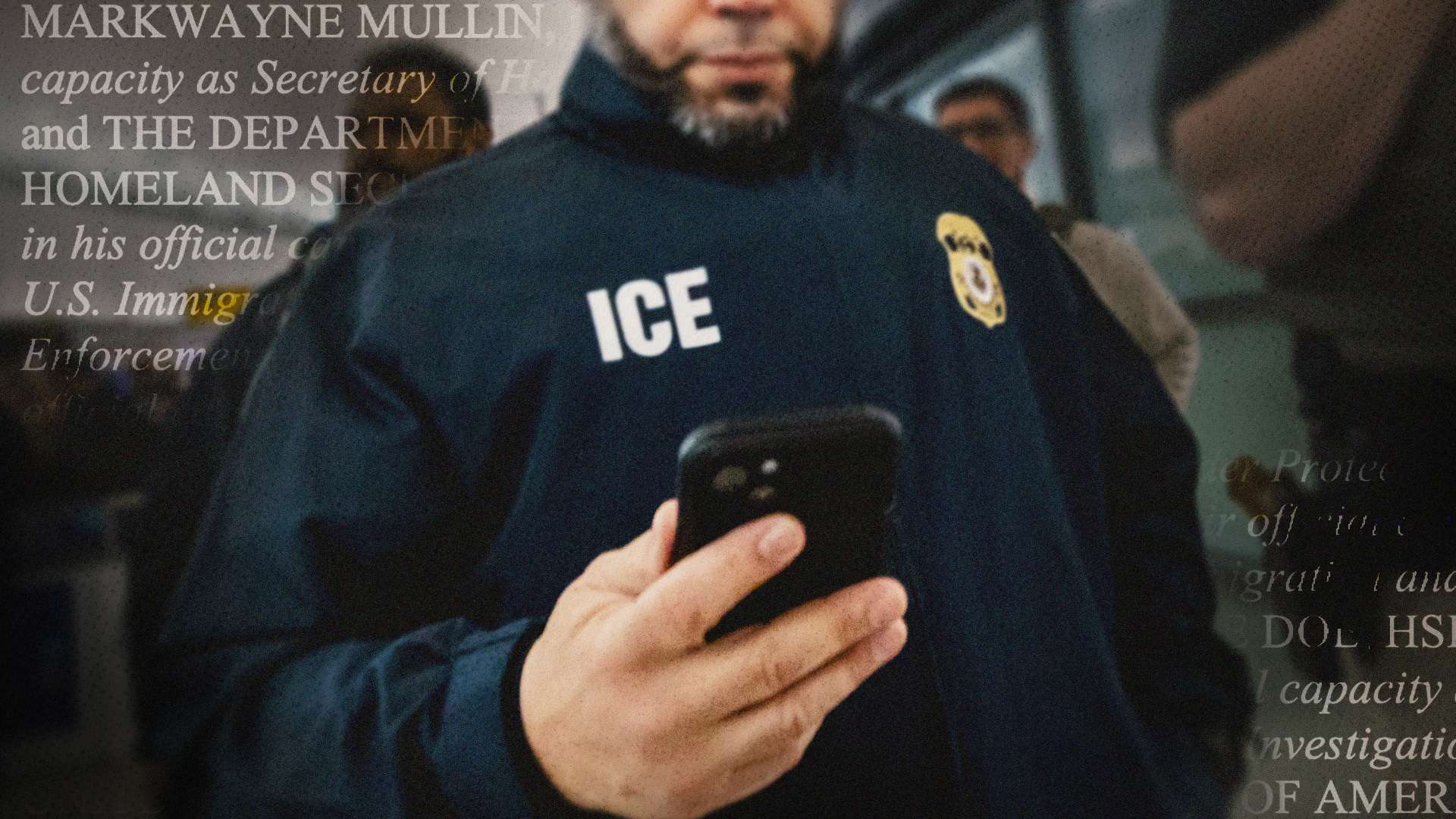
Immigration lawyer Andrew Lattarulo doesn't just work behind the scenes.
asserted
Lattarulo → work → scenes
On his Instagram account—which has more than 57,000 followers—he posts videos explaining to immigrants their rights and warning them about Immigration and Customs Enforcement (ICE) operations and tactics.
asserted
he → have → operations
And that, Lattarulo has argued in a federal lawsuit, is why federal agents seized his phone and copied its contents.
asserted
agents → argue → contents
Sounds about right, a federal judge held last week.
asserted
judge → sound → ?
You are reading Sex & Tech, from Elizabeth Nolan Brown.
asserted
You → read → Brown
Granting Lattatrulo's request for a preliminary injunction to stop the Department of Homeland Security from looking though Lattarulo's stored phone data, Judge Allison D. Burroughs of the U.S. District Court for the District of Massachusetts wrote that he "is likely to succeed on the merits of this First Amendment retaliation claim."
uncertain
he → grant → claim
The case starts with Homeland Security Investigations (HSI) and its probe of the Georges Cote law firm, where Lattarulo is a partial owner and represents clients in immigration proceedings.
asserted
Lattarulo → start → proceedings
HSI alleged that the law firm has employed people who aren't legally allowed to work in the U.S.
asserted
who → allege → U.S.
In September 2025, Lattarulo and colleague Audai Cote took a weekend trip to Aruba.
asserted
Lattarulo → take → Aruba
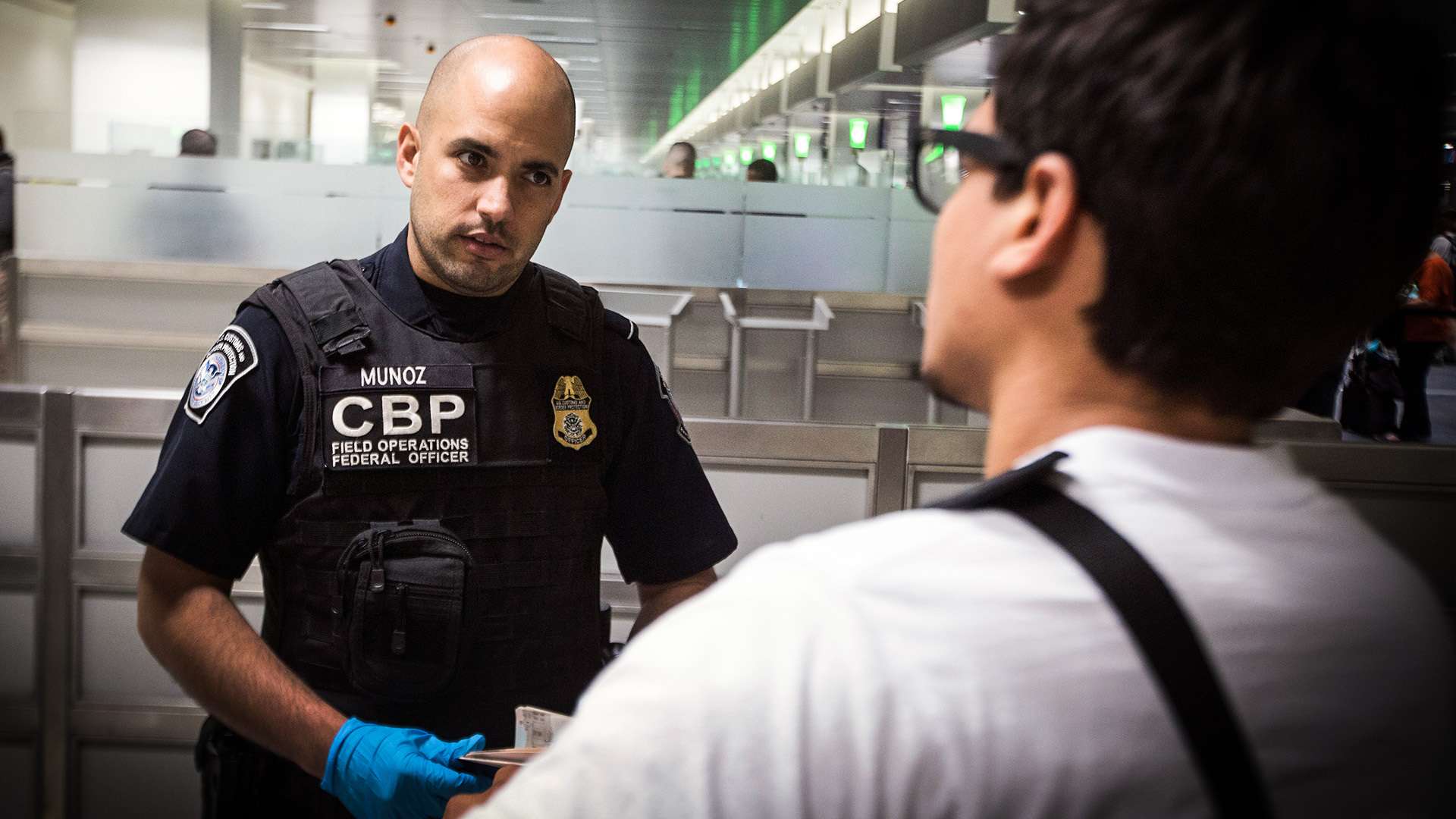
Upon returning to Boston, Lattarulo was stopped by Customs and Border Protection (CBP) agents and an HSI officer as he deplaned.
asserted
he → return → agents
"The agents seized his cell phone without a warrant and then downloaded a complete copy of the data stored on the phone," noted Burroughs in her November 13 memorandum and order.
asserted
Burroughs → seize → memorandum
Warrantless cellphone searches are de rigueur for immigration agents, who claim they aren't required to adhere to the same Fourth Amendment rules as everyone else in the government.
uncertain
they → claim → government
CBP policy says agents can conduct warrantless searches of electronic devices at or around the border or its functional equivalents, such as international airports, with or without suspicion.
asserted
agents → say → suspicion
In some cases, they can also retain data from people's phones, laptops, and more.
asserted
they → retain → phones
"Seven federal appeals courts now hold that a warrant is never required to search a phone at the border, while the 4th and 9th Circuits require one in at least some cases," the Pacific Legal Foundation's Amy Peikoff noted at Reason in October.
asserted
Peikoff → hold → October
"That means one of your constitutional rights currently depends on which airport you fly into."
asserted
you → mean → airport
After seizing Lattarulo's phone at Logan Airport, officials held onto it for eight days before returning it.
asserted
officials → seize → it
They also held onto his phone data—which including privileged attorney-client information, albeit in an unreadable format.
asserted
which → hold → format
"The government intends to convert the data to an accessible format and search it if the Court permits," Burroughs explained.
asserted
Burroughs → intend → it
Lattarulo sued, saying the search and seizure violated both his First and Fourth Amendment rights.
asserted
search → sue → rights
Lattarulo's suit alleged that he was targeted by immigration officials both because of his public political speech (such as the Instagram videos) and because of his work as an immigration attorney.
asserted
he → allege → attorney
The government claimed that he was targeted because of HSI's investigation into the Georges Cote law firm.
But the government "provided no evidence that searches of cell phones are frequently conducted during the kind of employment investigation at issue here, and Lattarulo has directed the Court to sources which suggest otherwise," noted Burroughs.
asserted
Burroughs → claim → sources
"The fact that the government, after Lattarulo spoke out publicly against it, elected to adopt a highly unusual investigative method that appears designed to inflict a maximal burden on Lattarulo lends substantial support to an inference that its actions were pretextual."
asserted
actions → speak → inference
Burroughs pointed out that Audai Cote, who flew back to Boston a day before Lattarulo did and "had the same or greater access to the firm's employment records but did not speak publicly about immigrant rights," was not searched.
asserted
Lattarulo → point → rights
Furthermore, the search happened just three days after the law firm received notice from HSI, even though the agency says employers who receive such notice have 10 business days to respond.
asserted
who → happen → days
Escalating matters after just three days by seizing an employee's phone "suggests the seizure did not arise from an ordinary investigative motive," Burroughs wrote.
uncertain
Burroughs → escalate → motive
Given all of this, "Lattarulo is likely to establish that he would not have been searched except for his protected speech," the judge concluded.
asserted
judge → give → speech
By granting Lattarulo's request for a preliminary injunction, she blocked the government from looking at his seized data as the case plays out, but stopped short of ordering them to destroy the data entirely.
asserted
case → grant → data
Because the First Amendment issue was sufficient to warrant a preliminary injunction, the judge did not address the merits of Lattarulo's Fourth Amendment claim.
uncertain
judge → warrant → claim
But she did have thoughts about what happened: "It appears that the government seized on a fortuitous border crossing following a weekend vacation as an opportunity to search for evidence of a domestic crime it was already investigating."
asserted
it → have → crime
Surely, this can't fall within the scope of the border search exception to the Fourth Amendment—can it?
asserted
it → fall → Amendment
While refraining "from reaching a firm conclusion on the issue," Burroughs seems skeptical, at least, writing that "the Court is not convinced" that the exception was intended to "to apply to investigations into activity that occurred nowhere near the border and that has no relationship to the border crossing during which the search occurred.
asserted
search → refrain → which
Nor is the Court convinced that application of the border search exception to this type of investigation would further the principles underlying the exception.
asserted
application → convince → exception
Network gear at a Federal Aviation Administration (FAA) radio site in El Dorado, Arkansas, is what "overloaded the communications system that thousands of air-traffic controllers use to guide pilots through the nation's airspace," The Wall Street Journal reports:
asserted
Journal → overload → airspace
"We saw two places that were actually pinging our network at a very high rate, a thousand connections over every four to five seconds," Rebecca Guy, the FAA's technology chief, said at a Saturday press conference.
asserted
Guy → see → conference
These pings traversed a tangle of copper wires and fiber-optic cables that feed into the FAA Telecommunications Infrastructure, or FTI.
asserted
that → traverse → Infrastructure
The decades-old system is outdated and undergoing a multibillion-dollar upgrade to move into the fiber-optic age.
asserted
system → undergo → age
The FAA is still investigating what went wrong.
asserted
what → investigate → ?
But "when the FAA cut off the routers in Arkansas and Texas from the broader network, the communication problems stopped," per the Journal's reporting.
asserted
problems → cut → reporting
Transportation Secretary Sean Duffy said more disruptions could be in order until it finishes replacing the old copper wires more than two years from now.
uncertain
it → say → wires
…and 17 more, not listed.
 The Aporia