Nor were automated license plate reader (ALPR) systems like Flock or the idea of letting transgender girls play on girls' sports teams in schools.
asserted
girls → automate → schools
Let's take a closer look at how state and local ballot initiatives related to sex, tech, and gender fared among voters in 2026.
asserted
initiatives → let → 2026
Pro-Choice Wins In 3 Out of 4 States With Abortion-Related Ballot Initiatives
Measures related to abortion and broader reproductive freedoms were on the ballot in four states yesterday: Idaho, Missouri, Nevada, and Virginia.
asserted
Measures → relate → states
Only in Idaho did those opposed to these things prevail.
asserted
those → oppose → things
Idaho Proposition 1 would have created "a right to reproductive freedom and privacy including a right to abortion up to the point of the fetus's ability to survive outside the womb."
asserted
Proposition → create → womb
It would also have barred the government from interfering in decisions about "contraсерtion, fertility treatment, and prenatal and postpartum care."
asserted
It → bar → contraсерtion
With 95 percent of the votes in, Proposition 1 failed by a fairly large margin, with 56 percent voting no and just 44 percent voting yes.
asserted
percent → fail → no
Things went quite differently in Nevada, where voters seem to have overwhelmingly approved of Question 6, creating a constitutional right to abortion until fetal viability in the state.
asserted
voters → go → state
With 85 percent of votes in, 63 percent of voters said yes.
asserted
percent → say → voters
Virginia voters approved a similar measure.
asserted
voters → approve → measure
Virginia Question 1—which passed 62 percent to 38 percent—amends the Virginia constitution to "protect the freedom to make personal decisions about prenatal care, childbirth, postpartum care, birth control, abortion, miscarriage management, and fertility care," per the official ballot title.
asserted
which → pass → title
It does so while "allow[ing] for restrictions on access to abortion during the third trimester of pregnancy except when the patient's health is at risk or the pregnancy cannot survive.
asserted
pregnancy → do → risk
And in Missouri, where voters already approved a reproductive freedom amendment to the constitution in 2024, they now rejected a proposal to repeal that amendment while also adding a constitutional amendment to prohibit gender transition surgeries for minors.
asserted
they → approve → minors
The latter are already illegal under Missouri law, but Missouri Amendment 3 seemingly sought to confuse the issue by claiming that a no vote would "not prohibit gender transition procedures for minors," when really it just keeps the status quo.
asserted
it → seek → quo
The amendment failed by nearly 10 full percentage points, with 54.8 percent voting not to repeal and 45.2 percent voting to do so.
asserted
percent → fail → points
Data Centers Denied in Most Places Where They Appeared on the Ballot
Ballot initiatives related to data centers were numerous last night, at least at the local level.
asserted
initiatives → deny → level
There were no statewide ballot initiatives related to data centers, but some portion of voters in 10 states weighed in on data centers yesterday.
asserted
portion → be → centers
Twenty-one of these local measures appeared on ballots in Ohio, seven in Illinois, four in Maine, three in Kansas, and one each in Wisconsin, Nevada, New Jersey, North Dakota, Florida, and California.
asserted
one → appear → Wisconsin
Almost nowhere did a pro–data center initiative pass or an anti-data center initiative fail, according to preliminary results.
uncertain
initiative → fail → results
Exceptions include two Ohio cities and Harwood, North Dakota.
asserted
Exceptions → include → cities
In Harwood, "the secretary of state's office said 75% of the 430 people that voted rejected an amendment to the city charter that would have required an independent review and public hearing before adopting large industrial projects, including data centers," according to Route Fifty.
uncertain
that → say → Route
In the Ohio city of Wilmington, voters supported the rezoning of rural residential land to allow for the construction of a data center.
asserted
voters → support → center
And in Granville, Ohio, they opposed amending the city charter to prohibit data centers.
asserted
they → oppose → centers
Meanwhile, residents of Alhambra, California, overwhelmingly voted to ban data centers in the city.
asserted
residents → vote → city
Voters in Edgewater, Florida, said no new data centers could be built there.
uncertain
centers → say → Edgewater
Voters in the Illinois city of Bloomington advised city leaders to impose a moratorium on large-scale data centers, while voters in Morgan County also advised their leaders to impose restrictions.
asserted
voters → advise → restrictions
In five other Illinois locales—Chouteau Township, Granite City Township, Joliet Township, Nameoki Township, and Venice Township—voters said no to advising city officials to let data centers exist locally.
asserted
centers → say → officials
Similar results can be seen in El Dorado, Emporia, and Ottawa, Kansas; in North Berwick, Peru, Wells, and Wiscasset, Maine; in Downe Township, New Jersey; in Boulder City, Nevada; and in Janesville, Wisconsin.
asserted
results → see → Janesville
Trans Girls Banned From Girls' Sports Teams in 4 States
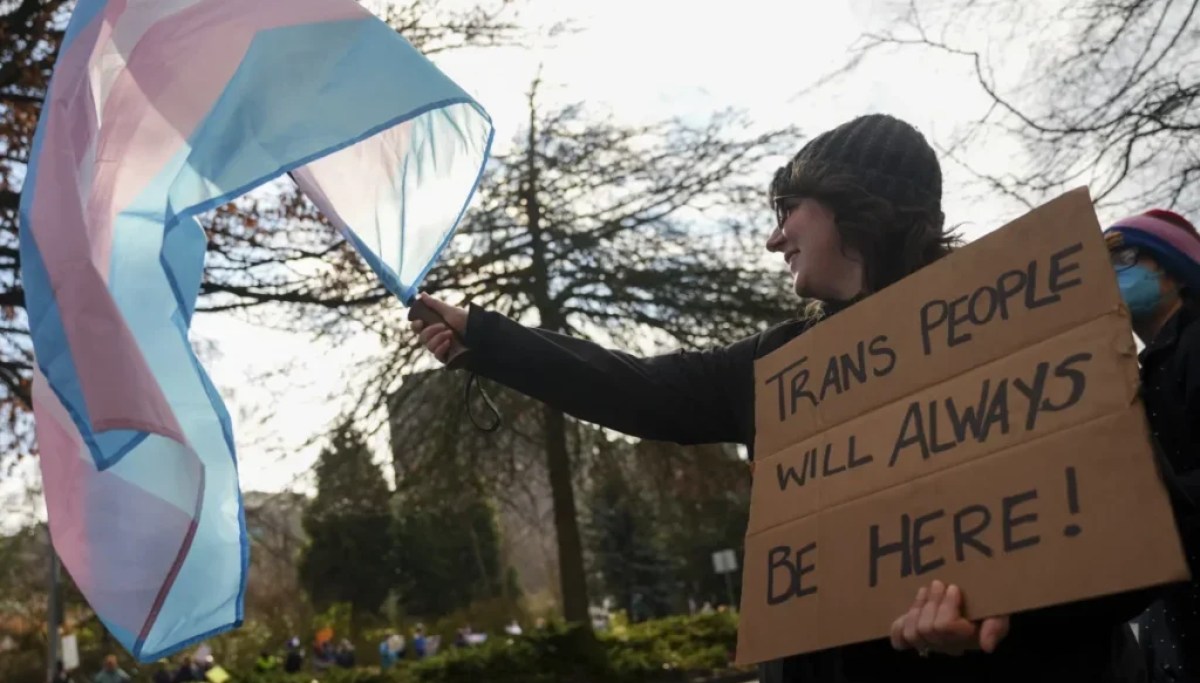
Measures to segregate school sports teams based on biological sex rather than gender identity were on the ballot in four states yesterday: Arizona, Colorado, Nebraska, and Washington.
asserted
Measures → ban → states
All have passed or seem likely to pass.
asserted
All → pass → ?
In Arizona, Proposition 318 says that "athletes of the male sex" cannot play on any school sports team designated for girls, women, or females and that people must use the school bathrooms or locker rooms designated for their sex, while defining sex as "an individual's biological status as male or female as recorded at birth."
asserted
people → say → birth
With all precincts reporting, 59 percent of Arizona voters have approved.
asserted
percent → report → voters
Colorado voters are on their way to passing a similar measure with Proposition 134, which says that school athletic teams designated for girls or women are not open to male participants and defines male as someone "whose biological reproductive system is organized around the production of sperm."
asserted
system → pass → sperm
With 80 percent of precincts reporting, it's winning 52 percent to 48 percent.
asserted
it → report → 48
Nebraska Initiative Measure 442, stipulating that "athletic teams or sports designated for females, women or girls shall not be open to students of the male sex," was approved by a whopping 68 percent of voters (with 95 percent of precincts reporting).
asserted
percent → stipulate → precincts
And, in Washington, a measure to ban "biologically male" students from competing in school girls' and women's athletic teams has passed by TKTKTK.
asserted
measure → ban → TKTKTK
Yes votes on Washington Initiative 638—which also requires all student athletes to "provide a statement from the student's healthcare provider verifying the student's biological sex, based on reproductive anatomy, genetic makeup, or normal endogenously produced testosterone levels"—stand at 57 percent as of this writing.
asserted
which → require → writing
I'm going to briefly list them:
asserted
I → go → them
Virginia Question 2: Voters chose to remove from the state constitution language that prohibits same-sex marriage.
asserted
that → choose → marriage
That language is currently irrelevant, given the Supreme Court's decision in Obergefell, but removing it ensures that same-sex marriage remains permitted in Virginia should Obergefell be overturned.
asserted
Obergefell → give → Virginia
…and 6 more, not listed.
 The Aporia