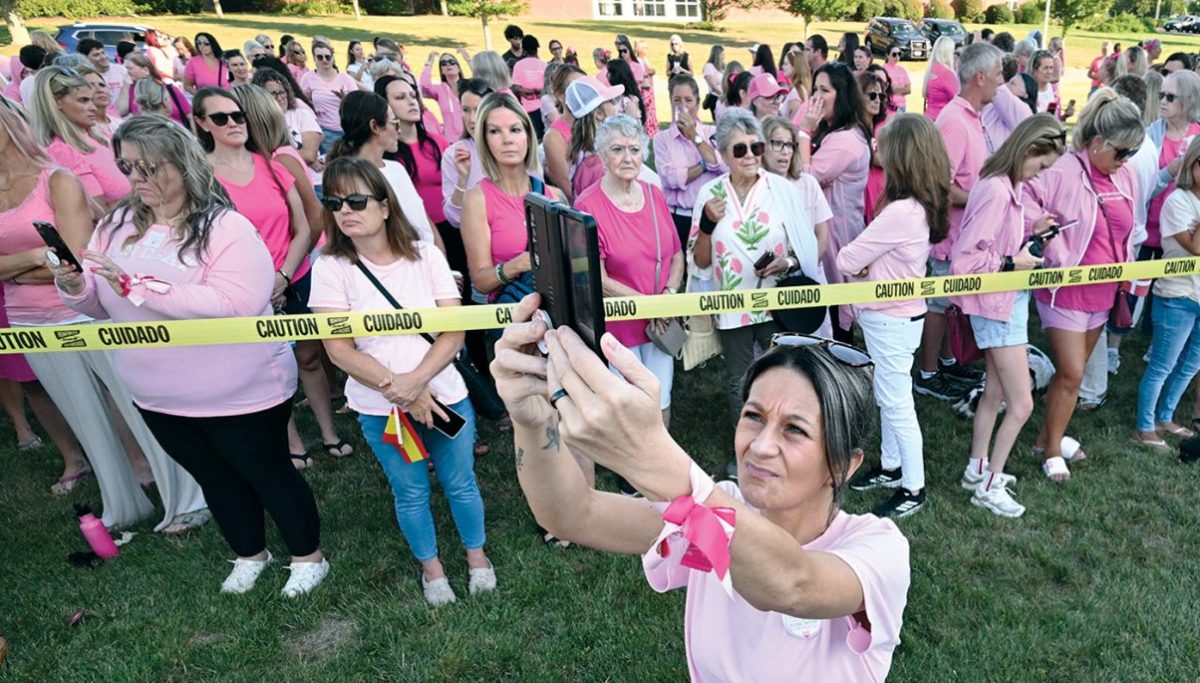
Hundreds of women looked at Lindsay Clancy, a mother who killed her three young children, and thought: That could have been me.
uncertain
That → look → children
As a psychotherapist, that identification concerns me.
asserted
identification → concern → me
Not because these women were supporting murder.
asserted
women → support → murder
Many recognized their own experiences with postpartum depression, anxiety, exhaustion, or feeling failed by doctors in Clancy’s story.
asserted
Many → recognize → story
But recognizing something familiar in another person’s suffering is very different from concluding that you could have become her.
uncertain
you → recognize → suffering
We’ve spent years talking about “toxic masculinity.”
asserted
We → spend → masculinity
The response to Clancy raises a less comfortable question: Is there such a thing as toxic femininity?
asserted
response → raise → femininity
I think there is.
asserted
I → think → ?
Not because femininity itself is toxic, any more than masculinity is, but because traditionally feminine virtues can become unhealthy when pushed beyond reason.
asserted
virtues → become → reason
Empathy can become over-identification, compassion can crowd out judgment, and loyalty can become an expectation that women defend other women simply because they’re women.
asserted
they → become → women
Women gathered outside the courthouse dressed in pink, carried signs saying “Believe,” and talked about their own struggles after childbirth.
asserted
Women → gather → childbirth
Many believe Clancy was profoundly ill, failed by the medical system, and shouldn’t be held criminally responsible if she was psychotic at the time.
asserted
she → believe → time
That’s a legitimate argument, and it’s essentially the question the jury couldn’t resolve when her trial ended in a mistrial.
asserted
trial → ’ → mistrial
But believing Clancy was psychotic is very different from believing that what happened to her could have happened to you.
uncertain
happened → believe → you
Postpartum depression affects roughly one in seven mothers.
asserted
depression → affect → mothers
Postpartum psychosis is far rarer, occurring in only one or two per 1,000 births.
asserted
psychosis → occur → births
Depression doesn’t simply become psychosis because it gets severe.
asserted
it → become → ?
Psychosis involves a loss of contact with reality, sometimes including delusions or hallucinations.
asserted
Psychosis → involve → delusions
Even then, most people who experience psychosis don’t become homicidal.
asserted
who → experience → psychosis
Blurring them can leave mothers with postpartum depression fearing that their illness is the beginning of something far more dangerous when, for nearly all of them, it isn’t.
asserted
it → blur → them
In trying to reduce the stigma around postpartum mental illness, we may inadvertently create more of it.
uncertain
we → try → it
Empathy doesn’t require erasing distinctions.
asserted
Empathy → require → distinctions
We can recognize something familiar in another person’s suffering while acknowledging that her experience and actions may be profoundly different from our own.
uncertain
experience → recognize → own
But once someone else’s story becomes our story, judgment gets harder.
asserted
judgment → become → ?
Questioning her can begin to feel like questioning ourselves.
asserted
Questioning → question → ourselves
We’ve turned “women supporting women” into a cultural virtue.
asserted
We → turn → virtue
Women have stood together against discrimination, abuse, and exclusion, sometimes when nobody else would stand with them.
asserted
nobody → stand → them
But solidarity loses its meaning when it becomes an obligation rather than choice.
asserted
it → lose → meaning
Solidarity can also become an expectation: Believe her.
asserted
Solidarity → become → her
Questioning another woman can start to look like betrayal.
asserted
Questioning → question → betrayal
This solidarity isn’t extended equally to all women.
asserted
solidarity → extend → women
Consider Riley Gaines, the former University of Kentucky swimmer who became an advocate for sex-based eligibility in women’s sports after competing against transgender swimmer Lia Thomas.
asserted
who → consider → Thomas
Gaines says she is defending fairness and opportunities for female athletes.
asserted
she → say → athletes
For doing so, she has faced intense criticism and accusations of intolerance.
asserted
she → do → intolerance
The very women we’re told should be heard and believed can quickly find that principle withdrawn when their views become inconvenient.
asserted
views → tell → ?
You can disagree with Gaines.
asserted
You → disagree → Gaines
But it’s difficult to miss the contradiction in a culture that celebrates women for finding their voices, then condemns some of them for what they say.
asserted
they → ’ → what
“Women supporting women” can end up meaning women supporting the right women.
asserted
Women → support → women
At that point, solidarity starts looking a lot more like conformity.
asserted
solidarity → start → conformity
None of this settles what should happen to Clancy.
asserted
what → settle → Clancy
…and 8 more, not listed.
 The Aporia