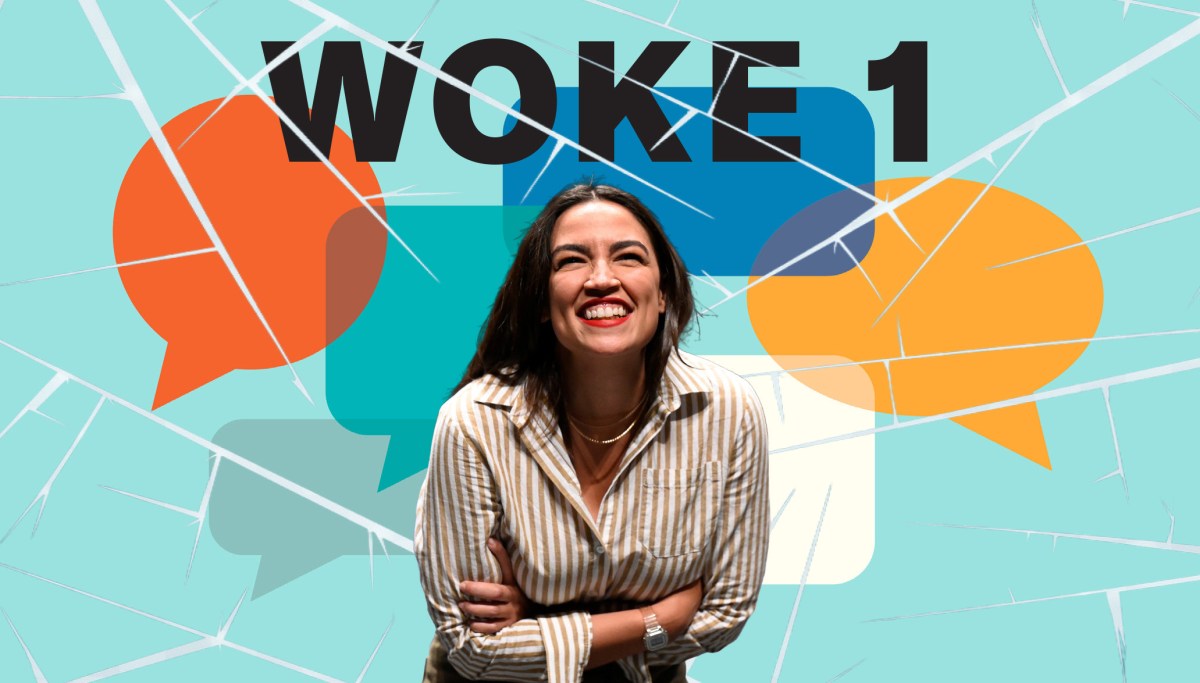
New York Democrat Rep. Alexandria Ocasio-Cortez recently borrowed the phrase from New York City Councilman Chi Ossé to describe the politics of 2020.
asserted
Cortez → borrow → 2020
"Woke 1" gives Democrats a convenient way to put ideas such as defunding the police and abolishing prisons in the past.
asserted
Woke → give → past
Consider how compartmentalization works in ordinary life.
asserted
compartmentalization → consider → life
A married man can have a wife and children at home and a girlfriend on the side, keeping the two lives separate enough that he rarely confronts the contradiction.
asserted
he → have → contradiction
Compartmentalization allows us to separate conflicting parts of our lives rather than reconcile them.
asserted
us → allow → them
That appears to be what Democrats are trying to do with 2020.
asserted
Democrats → appear → 2020
There is the Democratic Party of 2020, when progressive ideas that once sat outside the mainstream suddenly gained influence.
asserted
that → be → influence
Then there is the Democratic Party of 2026, talking about affordability, economic populism and winning back voters who recoiled from the cultural politics of the past several years.
asserted
who → be → years
"Woke 1" puts a neat dividing line between them.
asserted
Woke → put → them
Changing your mind requires confronting what you once believed.
asserted
you → change → what
Compartmentalization doesn’t.
asserted
Compartmentalization → do → ?
Many political beliefs in 2020 became tests of character.
asserted
beliefs → become → character
They didn’t just say what you believed.
asserted
you → say → what
They said what kind of person you were.
asserted
you → say → person
If people you dismissed six years ago turned out to have a point, you have more to reconsider than a policy.
asserted
you → dismiss → policy
Maybe you mistook disagreement for prejudice.
asserted
you → mistook → prejudice
Or you can call the whole thing Woke 1.
Except 2020 didn’t simply happen to the Democratic Party.
asserted
2020 → call → Party
Politicians embraced ideas, activists pushed them, and institutions decided which arguments deserved a hearing and which could be dismissed.
uncertain
which → embrace → hearing
People who challenged the prevailing views sometimes paid a price for it.
asserted
who → challenge → it
Calling all of this "Woke 1" makes those choices sound like the product of a strange moment everyone has since outgrown.
asserted
everyone → call → moment
If Democrats now reject positions they embraced or tolerated in 2020, voters can reasonably expect an explanation.
asserted
voters → reject → explanation
The key question is whether Democrats changed their minds or discovered that voters had.
asserted
voters → change → minds
Real change requires connecting what you believed then with what you believe now and acknowledging where you got it wrong.
asserted
it → require → what
Without that reckoning, voters are left to wonder whether the beliefs changed or the incentives did.
asserted
incentives → leave → reckoning
Democrats can compartmentalize 2020.
asserted
Democrats → compartmentalize → 2020
Voters don’t have to.
asserted
Voters → have → ?
A candidate may regard a six-year-old position as ancient history, but an opponent can revive it with an old interview, campaign questionnaire or social media post.
uncertain
opponent → regard → interview
"That was then" invites an obvious response: Yes, but that was you.
asserted
that → invite → response
Democrats aren’t unique in doing this.
asserted
Democrats → do → this
Every political party finds ways to distance itself from positions that become inconvenient.
asserted
that → find → positions
But 2020 poses a particular problem because so many political beliefs became tied to moral identity.
asserted
beliefs → pose → identity
Giving up a position can feel like admitting something about yourself, not just admitting that a policy was wrong.
asserted
policy → give → yourself
If Democrats now reject positions they embraced or tolerated in 2020, voters can reasonably expect an explanation.
asserted
voters → reject → explanation
The key question is whether Democrats changed their minds or discovered that voters had.
asserted
voters → change → minds
Democrats could acknowledge that 2020 drew attention to genuine problems while also producing bad ideas.
uncertain
2020 → acknowledge → ideas
They could concede that some rhetoric went too far and that some people were treated unfairly for challenging the prevailing consensus.
uncertain
people → concede → consensus
That doesn’t require abandoning concern about racism, police misconduct or inequality.
asserted
That → require → racism
It requires admitting that you can feel morally certain and still be wrong.
asserted
you → require → ?
The familiar Democratic argument is about whether the party should move left or toward the center.
asserted
party → move → center
"Woke 1" raises a more interesting question: Before Democrats decide where they are going, can they explain what they now think about where they have been?
asserted
they → raise → what
…and 3 more, not listed.
 The Aporia