Photo via South China Morning Post

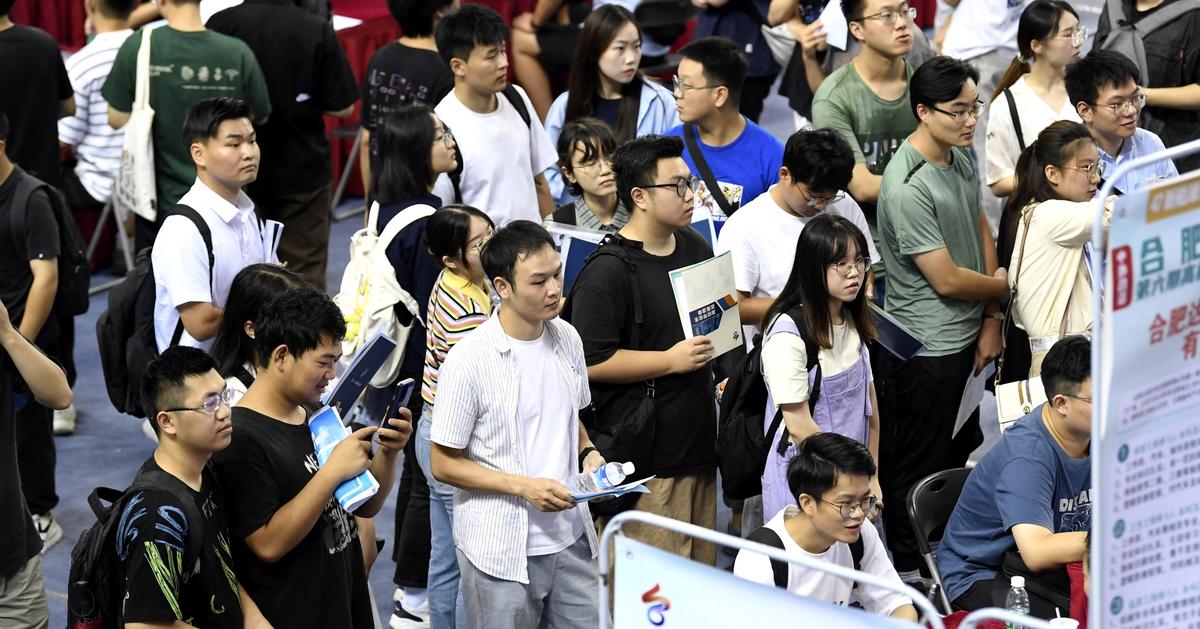
Record influx of university graduates pushes China’s youth unemployment rate to 18.9%

Read the original at South China Morning Post ↗
Cite

Wu, X. (2026, September 17). Record influx of university graduates pushes China’s youth unemployment rate to 18.9%. South China Morning Post. https://www.scmp.com/economy/economic-indicators/article/3367869/record-influx-university-graduates-pushes-chinas-youth-unemployment-rate-189?utm_source=rss_feed

Dated when The Aporia collected the article, usually within hours of publication. Check the original for its exact date and byline.

South China Morning Post · collected 2026-09-17 · by Xinyi Wu

Quick Summary

China’s youth unemployment rate for those aged 16 to 24 rose to 18.9% in August, up from 17.9% in July, according to data from the National Bureau of Statistics. This marks the highest rate since China revised its calculation methodology to exclude students this year. The increase is attributed to a record number of university graduates entering a job market constrained by weak domestic demand and the impact of artificial intelligence on entry-level roles.
Written by AI on 2026-09-17, from this article's own text only (the story summary below draws on all the coverage).

AI analysis

Story summary

In August 2023, China's urban youth unemployment rate for those aged 16 to 24 (excluding students) reached 18.9%, an increase from 17.9% in July and the highest since Beijing revised its calculation methodology to exclude students in 2023. This revision followed a peak of 21.3% under the old system reported in June 2023. The rising unemployment is attributed to a record influx of university graduates struggling to secure jobs amid weak domestic demand and growing AI adoption, exacerbating concerns about economic challenges for young people entering the workforce.

Written for “Chinese Youth Unemployment Rate Soars” on 2026-11-02, grounded in this article and the 0 other(s) covering the same event.

Story

📰 Chinese Youth Unemployment Rate Soars
Economy/Business · 1 article(s) covering the same event.

Compared with similar articles

This article reads leans left and hedges 25% of its claims. Each row says how that neighbour differs.
Semafor
⚖️ Leans left Hedges 1 of 5 claims Outlet record 59/100
“While both articles discuss the impact of AI on China's graduate job market and youth unemployment rates, they appear to describe different time periods or aspects of a broader trend rather than the same specific incident.”
How this article was measured signals, leaning charts, publisher record, byline, topics and claims

Signals How these are calculated →

Claims extracted
4
sentences that state something as happening or true
Uncertain
25%
1 of 4 hedged ("reportedly", "may", "according to")
Leaning
Leans left
of the writing, not the subject · beta estimate
Publisher signals
63/100
South China Morning Post's corrections and hedging, across everything collected from it. Not a measure of accuracy.
Outlets on this story
1
Economy/Business
Same framing elsewhere
1
articles that frame the event the way this one does
Analyzed 2026-09-17 · how these are computed

How this is being covered How these are calculated →

Article leaning vs. publisher reliability
Source leaning vs. consistency

Publisher

South China Morning Post · 3547 article(s) · 7 correction(s) detected
Running correction rate · 7 correction(s)

Who wrote this

Xinyi Wu
2 article(s) here · 0 carrying a prediction
🔮 If you were to add a new chapter to the book to reflect these changes, what would be its central theme?
Also by Xinyi Wu
Nothing else under this byline is closely related to this article, so these are simply their most recent.

Topics

Beijing China the National Bureau of Statistics

Subjects

China GPE · 2× Beijing GPE · 1× the National Bureau of Statistics ORG · 1×

Narrative

This figure, as well as the identical number from August last year, represents the highest reading since Beijing revised its calculation methodology to exclude students in 2023, following a peak of 21.3 per cent under the old rubric reported in June of that year.
framing: mixed · carried by 1 article(s) · first seen 2026-09-17
2026-09-17 · South China Morning Post
Record influx of university graduates pushes China’s youth unemployment rate to 18.9% · mixed framing

Claims (4 extracted, 1 hedged)

Record influx of university graduates pushes China’s youth unemployment rate to 18.9% Anxieties over AI’s growing threat to entry-level roles add to existing concerns about economic doldrums caused by weak domestic demand asserted
Anxieties → push → demand
China’s urban youth unemployment rose last month, as a record influx of university graduates struggles to find work in a job market weighed down by weak domestic demand and the growing adoption of artificial intelligence. asserted
influx → rise → intelligence
The jobless rate for those aged 16 to 24, excluding students, rose to 18.9 per cent in August from 17.9 per cent in July, according to data released by the National Bureau of Statistics on Thursday. uncertain
rate → age → Thursday
This figure, as well as the identical number from August last year, represents the highest reading since Beijing revised its calculation methodology to exclude students in 2023, following a peak of 21.3 per cent under the old rubric reported in June of that year. asserted
Beijing → represent → year
💬Give feedback
🕘History 🎫Support