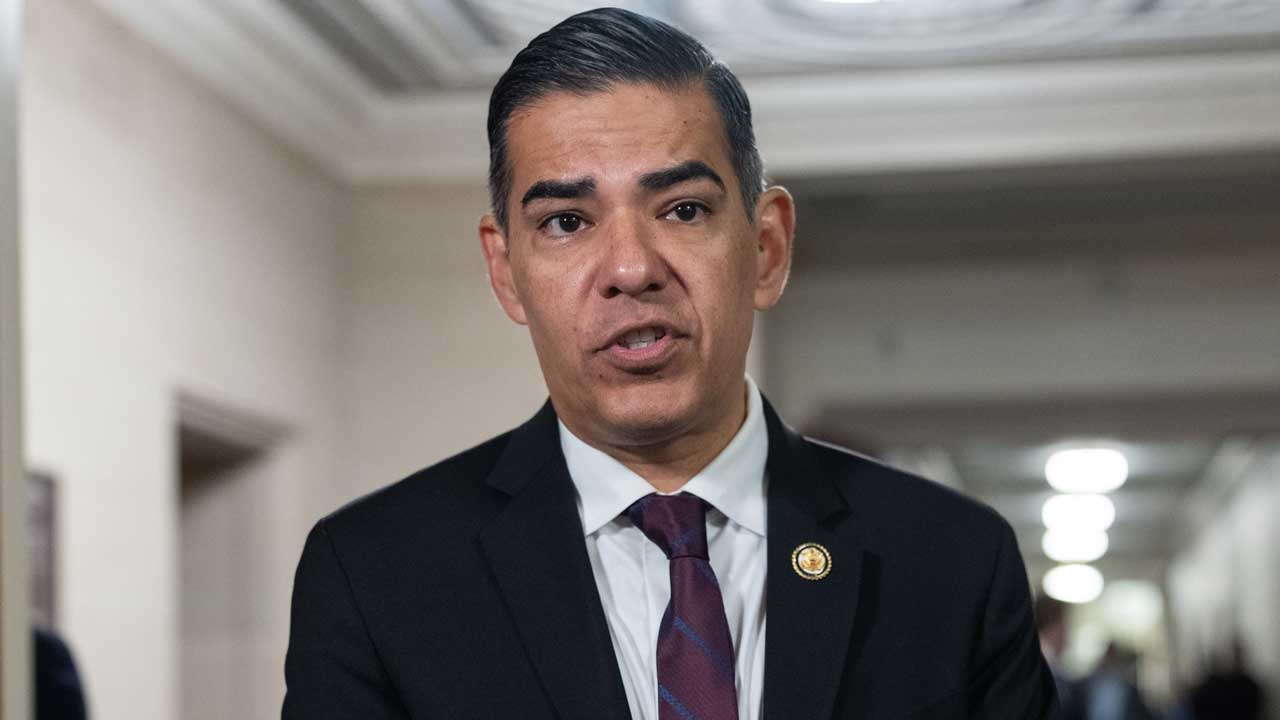
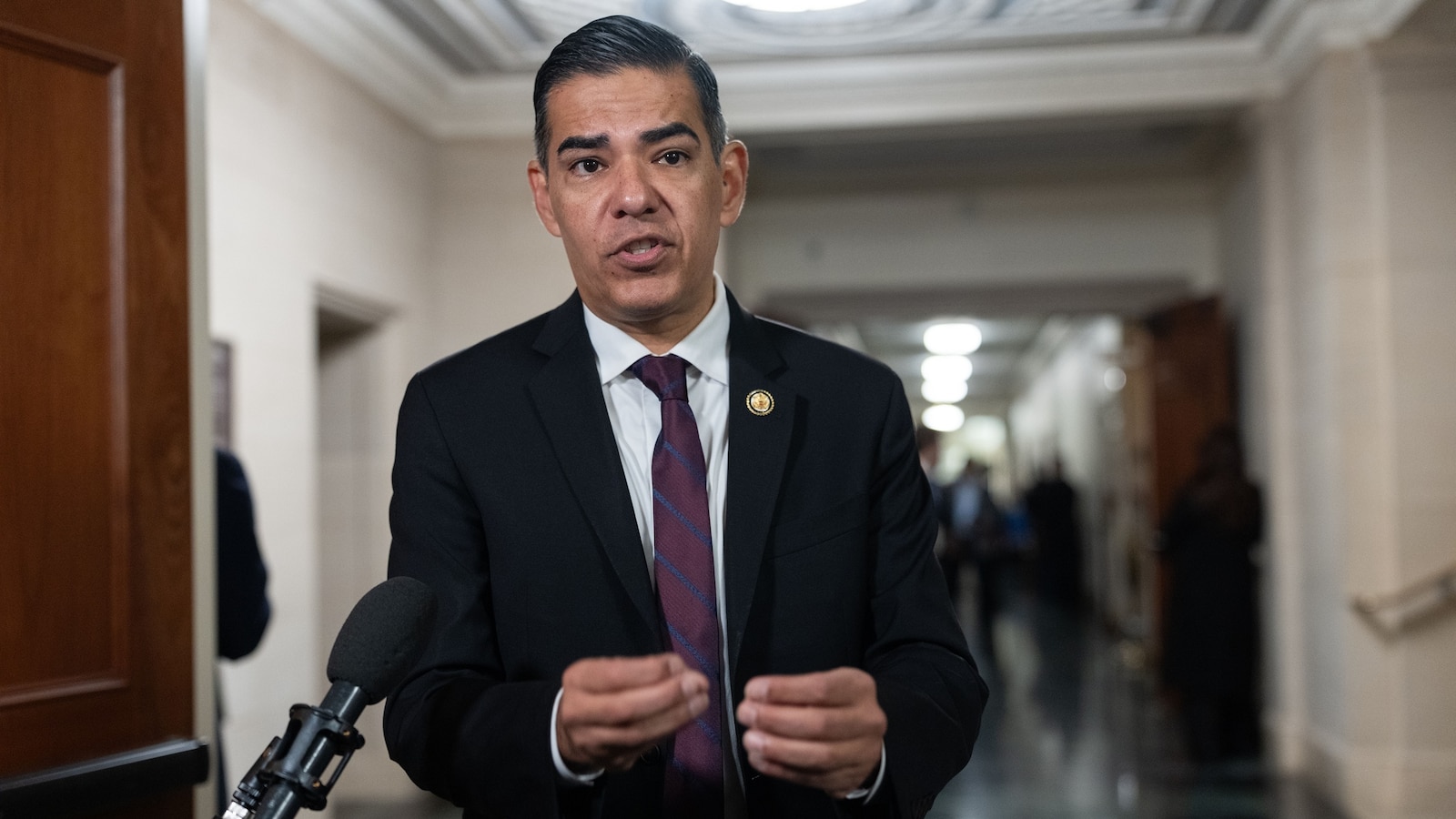
Counsel to the president William Scharf sent a letter to House Committee on Oversight and Government Reform ranking member California Democratic Rep. Robert Garcia Nov. 9, warning Democrats against running afoul of their allotted powers pertaining to investigations and subpoenas.
asserted
Scharf → send → investigations
The letter put Democratic lawmakers on notice to remind them of the "foundational limits that the Constitution imposes on congressional investigations and subpoenas" and suggesting that their actions could cross the line of criminal misconduct.
uncertain
actions → put → misconduct
Garcia, who is poised to chair the committee next year when Democrats gain the House majority, responded to the letter suggesting that the president has "something to hide."
asserted
president → poise → something
Legal experts from across the political spectrum who spoke to Fox News Digital suggested that, while the White House is within its rights to challenge individual subpoenas, it faces significant obstacles if it decides to seek criminal indictments related to Garcia's oversight activities.
uncertain
it → speak → activities
"In short, the administration can assert privileges, negotiate over requests and challenge particular subpoenas through the appropriate legal process, but criminal prosecutions are, to mix metaphors, a very different animal that face a higher bar," Ilya Shapiro, director of constitutional studies at the right-of-center Manhattan Institute, told Fox News Digital.
asserted
Shapiro → assert → Digital
Congressional investigations also enjoy protections under the Constitution's Speech or Debate Clause, which the Supreme Court has held shields lawmakers from judicial interference when their investigative activities fall within the legitimate legislative sphere.
asserted
activities → enjoy → sphere
Shapiro explained that Democrats who are "promising indiscriminate subpoenas are inviting challenges to their demands" as congressional committees "must act within their jurisdiction, respect witnesses’ constitutional rights and connect investigations to a legitimate legislative purpose."
Garcia, however, maintains that his calls for investigation are totally consistent with his constitutional authority as a lawmaker.
"
asserted
calls → explain → lawmaker
Let’s be clear: Congress' authority comes from Article I of the Constitution, not from the permission of the White House.
asserted
authority → let → House
Congress has wide latitude to conduct investigations and oversight, an authority inherent in the power to legislate," Garcia said in his statement.
asserted
Garcia → have → statement
"The American people voted overwhelmingly for us to pass laws to root out corruption and abuse.
asserted
us → vote → abuse
The Trump Administration continues to weaponize the government with threats of unconstitutional attacks on Congress.
asserted
Administration → continue → Congress
We are a co-equal branch of government and will not be deterred by baseless threats from a weaponized DOJ or from the President’s lawyers," Garcia stated.
asserted
Garcia → deter → lawyers
Scharf sent the letter a week after Democrats issued statements and social media posts on calling for subpoenas and impeachment trials for Trump administration officials after Republicans suffered a major loss during the 2026 midterms.
asserted
Republicans → send → midterms
At the time, some pointed out that Republicans used similar language to call for investigations into Democratic officials.
asserted
Republicans → point → officials
Hans von Spakovsky, a senior legal fellow at Advancing American Freedom and a constitutional law expert, told Fox News Digital that Scharf is correct in his assertion that Garcia's investigations cannot be motivated by simple spite, but suggested that the White House may run into problems if they try to get criminal charges to stick.
uncertain
charges → advance → problems
"Scharf is correct in his citation of Watkins v. U.S. that the Supreme Court has held that congressional investigations not connected to a legitimate legislative purpose and whose only intent is harassment and trying to seize personal, private information are unconstitutional and beyond the power of Congress," von Spakovsky wrote in an email.
asserted
Spakovsky → hold → email
"Problem is that I am not sure what criminal statutes, if any, could be applied.
uncertain
statutes → apply → ?
There are statutes over harassment of federal officials, 18 U.S.C. 111, 115, but those require physical threats.
asserted
those → be → threats
What the Watkins precedent holds is that the courts cannot enforce subpoenas issued by Congress that are part of an improper, unconstitutional investigation.
asserted
that → hold → investigation
"
"No statute makes oversight a crime, and Scharf’s letter doesn't say one does.
asserted
one → make → ?
Its point is that a committee's process doesn't shield conduct that would be a crime for anyone else.
asserted
that → shield → anyone
Conspiring to intimidate federal officers out of doing their jobs falls under 18 U.S.C. 372," Will Chamberlain, senior counsel at the right-of-center Article III Project, told Fox News Digital.
asserted
Chamberlain → conspire → Digital
There is no congressional power to expose for the sake of exposure and any investigation requires a valid legislative purpose.
asserted
investigation → be → purpose
Congressional investigative activity conducted in an official capacity wouldn't be prosecutable."
asserted
activity → conduct → capacity
He added that, what could be prosecutable, would be a separate conspiracy to intimidate federal officials "evidenced by threats, press releases, things of that nature."
uncertain
be → add → nature
Molly Nixon, a senior fellow at the libertarian Cato Institute, had broadly similar thoughts.
asserted
Nixon → have → thoughts
White House Counsel is correct that courts have required congressional investigations to serve a legitimate legislative purpose, though the constitutional boundaries of that requirement are not as clear as Scharf asserts.
asserted
Scharf → require → requirement
I don’t think the letter is on solid ground when it makes the leap to suggesting potential criminality," she told Fox News Digital.
asserted
she → think → Digital
"We are monitoring the abusive and capricious threats that are now proliferating from Democrat legislators who seek to abuse the legislative process to intimidate and to interfere with the lawful functioning of government.
asserted
who → monitor → government
Recent public statements underscore these concerns.
asserted
statements → underscore → concerns
You and your congressional colleagues have asserted that they will issue subpoenas to harass, threaten, and deter dedicated members of the Administration from further service," wrote Scharf.
asserted
Scharf → assert → service
"Compulsory process is a power Congress has for oversight functions, and only for oversight functions.
asserted
Congress → have → functions
Abusive threats and public statements about the indiscriminate issuance of subpoenas, along with threats directed at prospective targets within the Administration make it abundantly clear that any forthcoming investigative processes will be deployed to harass and aggrandize, rather than to advance any legitimate legislative end," the letter continued.
asserted
letter → direct → end
"Beyond being inconsistent with the clear, well-recognized constitutional limitations on your investigative functions, threats to executive branch officials designed to deter them from public service, or process designed merely to abuse or instill fear in the recipient may cross the line into blatant criminality," the letter continued.
uncertain
letter → recognize → criminality
"And issuing unlawful subpoenas with the intention of depriving citizens of their constitutional rights and privileges may warrant further investigation.
uncertain
issuing → issue → investigation
"
Those further investigations, however, are unlikely to result in criminal charges, according Devon Ombres, senior director for courts and legal policy at the left-of-center Center for American Progress.
asserted
investigations → result → Progress
"You know, I don't think that there is any reasonable basis for the administration to argue that Congress cannot undertake its constitutional obligations of conducting oversight, and I can't imagine that there's any type of criminal statute that would apply in this context
asserted
that → know → context
," he said in a phone call.
asserted
he → say → call
"That's not to say that this DOJ won't try and shoehorn something in, as they've already done, but I don't think that Scharf has a legal leg to stand on."
asserted
Scharf → say → leg
While criminal charges would face significant legal obstacles, Ombres says he fully expects the Trump administration to try blocking the subpoenas through lawsuits.
asserted
administration → face → lawsuits
…and 1 more, not listed.
 The Aporia